Dubai Mall: What to Expect, What to Skip, and How to Make the Most of It
Dubai Mall is one of the largest shopping and entertainment complexes on the planet, anchoring Downtown Dubai next to the Burj Khalifa. Free to enter and open late most nights, it rewards visitors who know where to look and when to go.
Quick Facts
- Location
- Financial Center Street, Downtown Dubai, UAE
- Getting There
- Burj Khalifa/Dubai Mall Metro Station (Red Line), air-conditioned walkway to mall
- Time Needed
- 2 hours (casual visit) to a full day (attractions + dining)
- Cost
- Free entry; paid attractions (aquarium, ice rink, VR park) priced separately in AED
- Best for
- Families, first-time Dubai visitors, rain/heat refuge, evening entertainment
- Official website
- thedubaimall.com
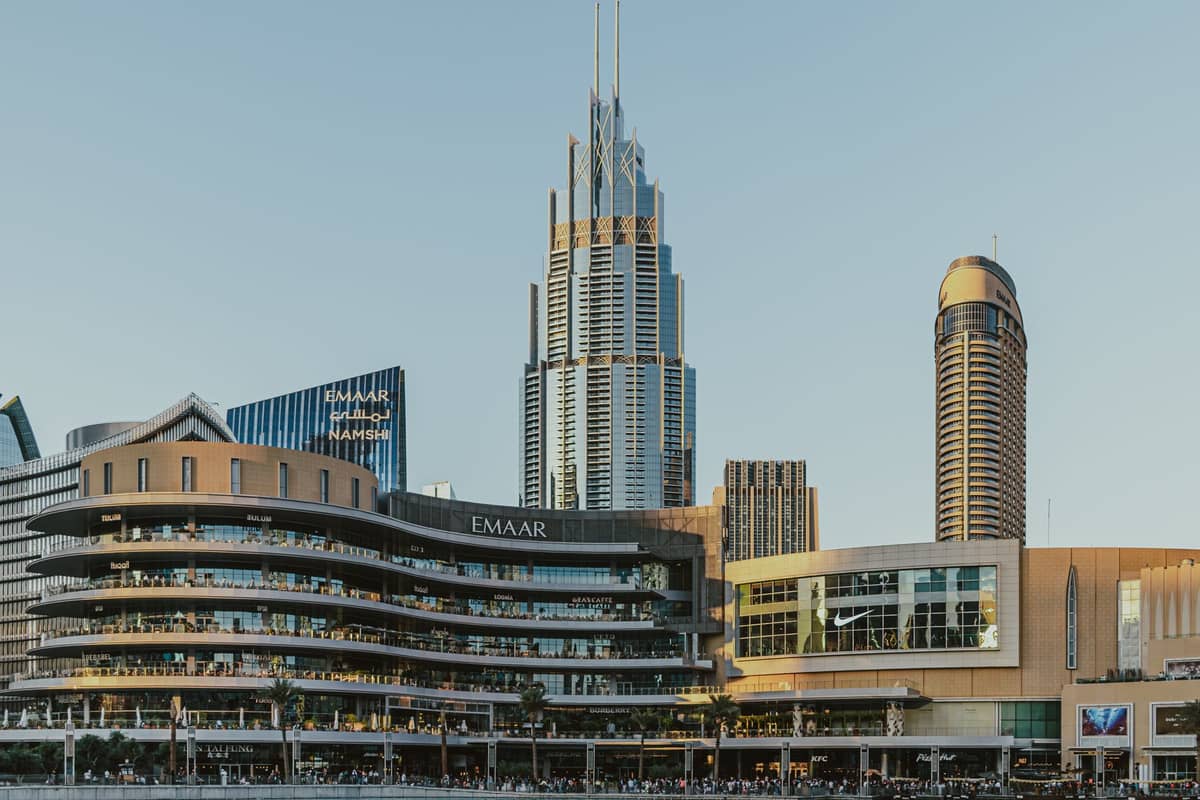
What Dubai Mall Actually Is
Dubai Mall opened on 4 November 2008 after a construction period stretching from 2004, and it has since become one of the most visited retail destinations in the world. The total floor area covers approximately 1,124,000 square metres, of which around 350,000 square metres is dedicated retail space housing more than 1,200 stores. The scale is not abstract: it takes a brisk 20-minute walk to cross from one end to the other, and even seasoned visitors occasionally lose their bearings on the upper levels.
This is not simply a shopping centre with a food court. The complex contains a full-size Olympic ice rink, a large aquarium, a VR entertainment zone, a rooftop observation connection to the Burj Khalifa, a cinema multiplex, an indoor waterfall, and a Fashion Avenue section that functions more like a luxury retail district than a mall corridor. Entry to the mall itself is free, but most of the headline attractions sell tickets separately.
The mall sits at the base of the Burj Khalifa in Downtown Dubai, and its southern entrance opens directly toward the Dubai Fountain boardwalk. That geographic position means a visit here naturally combines with two of Dubai's most photographed landmarks without needing to travel anywhere else.
💡 Local tip
The Burj Khalifa/Dubai Mall Metro Station (Red Line) connects to the mall via a long but fully air-conditioned elevated walkway. On hot days, this is far more comfortable than arriving by car and navigating the surface-level drop-off zones, which can be slow and disorienting.
How the Experience Changes by Time of Day
Arrive before noon on a weekday and the mall feels surprisingly navigable. The wide marble corridors carry almost no crowd noise before lunch, the waterfall atrium echoes clearly, and store staff are genuinely attentive rather than harried. This is the window for anyone who wants to move through the space with purpose: book a Burj Khalifa slot, check out the aquarium without queues, or browse the ground-floor luxury boutiques at a reasonable pace.
From around 4pm onwards, the energy shifts noticeably. School groups and families fill the food court levels, the ice rink viewing gallery gathers spectators, and the corridors leading to the Dubai Fountain entrance become congested by 6pm. On Thursday and Friday evenings, the volume of foot traffic in the central atrium areas can feel genuinely overwhelming if you are not expecting it. The Dubai Fountain show runs every 30 minutes from 6pm until around 11pm and draws large crowds to the outdoor terrace, making the surrounding restaurant strip feel packed for most of the evening.
Late evening between 10pm and midnight is one of the more interesting times to be here. The retail stores begin to close, but the dining floors and the outdoor boardwalk remain active. The Burj Khalifa is lit at full intensity, the fountain performs its final shows, and the crowd thins to a manageable level. On most days, the mall generally closes around 11pm, with hours extending slightly later on busy weekends and during major events.
The Attractions Worth Paying For
The Dubai Aquarium and Underwater Zoo occupies a dramatic position on the ground floor, with the main tank visible for free through a glass panel from the mall corridor. The tank itself is one of the largest suspended aquarium panels in the world. Paying for a ticket gets you access to the upper floors of the underwater zoo, where the layouts are more educational than spectacular, but families with children tend to find it worthwhile. The option to walk through a tunnel below the main tank is the headline paid experience.
The Olympic-size ice rink on the ground floor is operational year-round and genuinely popular with both residents and visitors. Watching from the railing above is free; skating requires a separate session ticket that includes skate rental. Sessions run throughout the day, and the rink gets noticeably busier from late afternoon.
The connection to the Burj Khalifa observation deck is via a dedicated ticketing desk inside the mall. Tickets for At the Top (Level 124) and At the Top Sky (Level 148) must generally be purchased in advance online, as walk-up availability is limited, especially during peak season from November to March. If the observation deck is on your list, treat it as a separate half-day activity rather than something to slot in between shopping.
ℹ️ Good to know
The waterfall sculpture in the Fashion Avenue section, known as the Dubai Waterfall, is a cascading installation several storeys tall. It costs nothing to see, creates a distinctive ambient sound in that wing, and makes for better photographs in the morning when natural light enters from the skylights above.
Getting Around Inside
The mall is divided into several distinct zones: Fashion Avenue (luxury brands), the Gold and Diamond Park section near the souk corridor, the food court levels, the entertainment wing housing the rink and aquarium, and the Fountain Views restaurant and cafe strip along the outer wall facing Burj Khalifa Lake. A printed map is available at every guest services desk, and the in-mall app provides turn-by-turn navigation. Both are worth using, because the layout is genuinely non-intuitive for first-time visitors.
There are around 14,000 parking spaces across the connected car parks, which sounds generous until the evening rush. Parking is metered, and the Zabeel car park extension accessed via the bridge is typically less congested than the primary structures adjacent to the main entrances. Valet parking is available at multiple entrance points.
Accessibility is well-considered throughout: elevators serve all levels, ramps are present at transitions where escalators are the primary option, and designated accessible parking bays are marked clearly in each car park structure. Guest service desks on each floor can assist with wheelchair loan and mobility queries.
Food, Drink, and What to Expect at the Table
The dining options span an enormous range, from budget food court chains to mid-range casual restaurants and a strip of waterfront tables with direct Burj Khalifa views. The Fountain Views dining strip is the most atmospheric in the evening, though pricing at those restaurants reflects the location: a meal for two at a mid-range restaurant facing the fountain will typically cost 200 to 400 AED without alcohol.
The lower-ground food court is practical and affordable, with a wide spread of Asian, Middle Eastern, and Western fast-casual options. At peak mealtimes (1pm to 2pm and again 7pm to 9pm), finding a seat can require patience. The Galeries Lafayette Food Hall on one of the upper levels is a better-quality alternative for a sit-down meal without the full restaurant price point.
Dubai Mall is not a place to find authentic local street food or traditional Emirati cuisine. For that kind of eating experience, the historic districts of Deira or Bur Dubai are the better destination. The mall excels at convenient, reliable, internationally branded dining with the option of a spectacular setting.
Practical Planning and Honest Caveats
The best months for a Dubai trip overall are November through March, when outdoor daytime temperatures usually stay between roughly the mid‑20s and low‑30s degrees Celsius and walking between the mall and the Burj Khalifa or the fountain boardwalk is comfortable. In summer (June through September), temperatures regularly exceed 40 degrees Celsius outdoors, which concentrates enormous numbers of people inside air-conditioned venues including this one. The mall becomes more crowded and feels noisier in those months despite the same opening hours.
During the Dubai Shopping Festival, which typically runs from late December through January, the mall operates extended hours and hosts in-mall promotions and events. Discounts can be genuine, but the crowd levels during this period are among the highest of the year. Budget significantly more time if visiting then.
Dubai Mall is the wrong choice for travellers seeking quiet, local, or off-the-beaten-track experiences. It is large-scale commercial infrastructure designed for high volumes of visitors, and it delivers exactly that. If the appeal of wandering an enormous, polished, well-cooled complex with access to global brands, an iconic view, and multiple entertainment options in one location sounds straightforward, that is because it is. The question is whether that matches what you are looking for in Dubai.
⚠️ What to skip
During the Dubai Shopping Festival and UAE public holidays, parking around Dubai Mall becomes severely congested. The Metro is the most reliable way to arrive and depart during these periods. Factor in a 10-15 minute walk through the elevated walkway from the station.
For visitors interested in understanding Dubai's architectural ambition more broadly, the Dubai architecture guide provides useful context on how Downtown Dubai developed around this precinct, and why the scale of Dubai Mall reflects a specific era of urban planning in the emirate.
Insider Tips
- The Burj Khalifa/Dubai Mall Metro exit drops you into an elevated walkway. Walk all the way to the end before descending: the mid-point corridor connects to a different part of the mall than the ground-level entrance, and arriving at the correct level saves 10 minutes of reorientation.
- The outdoor fountain boardwalk is accessible without entering the mall at all. If your only goal is the Dubai Fountain show, enter via the Souk Al Bahar bridge or the lakeside path and skip the mall interior entirely on busy evenings.
- Pre-book Burj Khalifa observation deck tickets online several days in advance during November to March. Walk-up slots sell out by mid-afternoon on most days in peak season.
- The Galeries Lafayette department store has a self-contained entrance and is noticeably calmer than the main mall corridors during evening rush periods. Its upper-level restaurant offers good Burj Khalifa views at slightly lower prices than the dedicated fountain-facing strip.
- If you are visiting with children, the ground-floor aquarium tank is visible for free through the glass wall on the mall side. Assess whether your children engage with it before committing to paid entry for the underwater zoo upstairs.
Who Is Dubai Mall For?
- First-time visitors to Dubai who want to see the Burj Khalifa, Dubai Fountain, and a major attraction in a single area
- Families with children looking for a half-day or full-day itinerary with multiple activity options under one roof
- Visitors arriving during the summer heat who need a comfortable, air-conditioned environment for extended periods
- Shoppers focused on international luxury brands or mid-range global retail in a single location
- Travellers wanting a base from which to combine an evening fountain show with dinner and a Burj Khalifa visit