Dubai Architecture Guide: Iconic Buildings & Design Landmarks
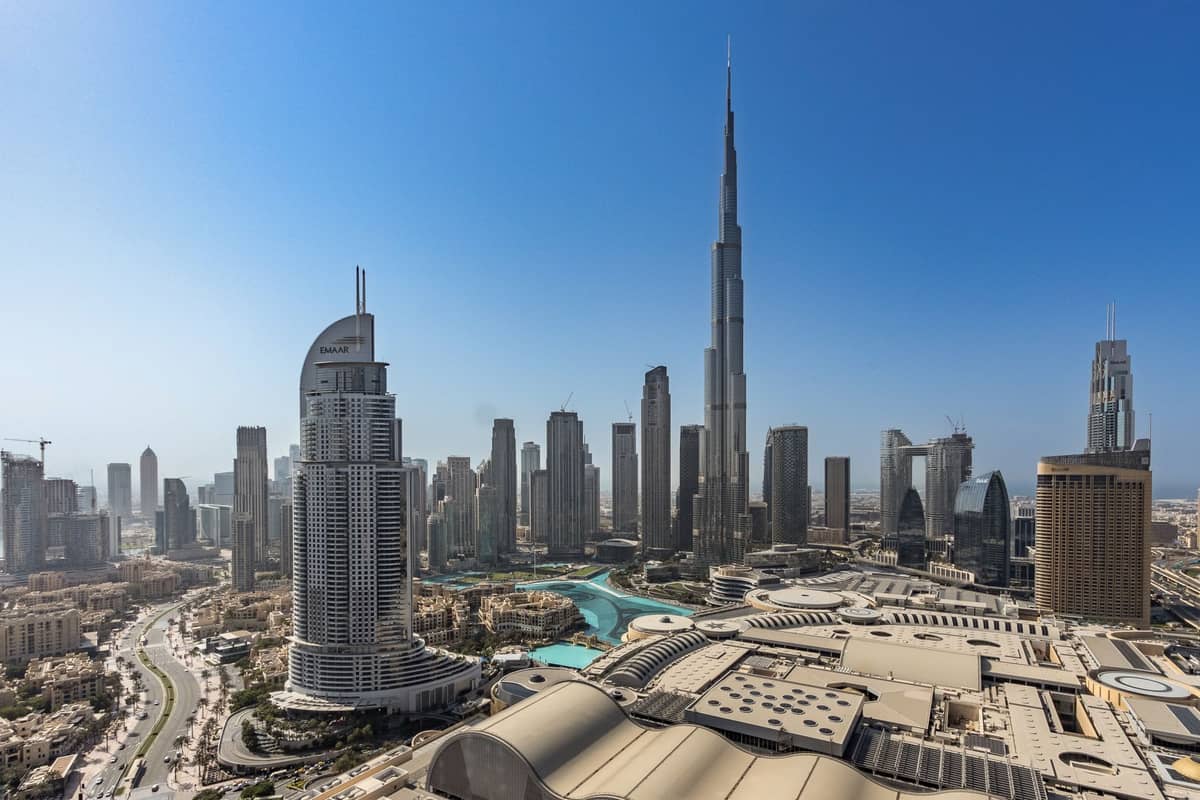
Dubai's skyline is one of the most recognizable on earth, built in under five decades through sheer ambition and engineering. This guide covers the city's most significant architectural landmarks, from record-breaking towers to heritage districts, with practical advice on visiting each one.
TL;DR
- Dubai's architecture spans from the 1970s Creek-side trading district to 21st-century icons like the Museum of the Future and Burj Khalifa.
- The best months for outdoor architecture walks are November to March, when daytime highs stay around 24–31°C. See the best time to visit Dubai for seasonal planning.
- Book Burj Khalifa and Museum of the Future tickets online in advance. Both have timed entry and sell out on busy days.
- Al Fahidi Historical Neighbourhood offers the most authentic pre-oil-boom architecture in the city, and it is free to walk.
- For a wider city overview, the best views in Dubai guide covers observation decks, rooftops, and waterfront vantage points.
Why Dubai's Architecture Matters
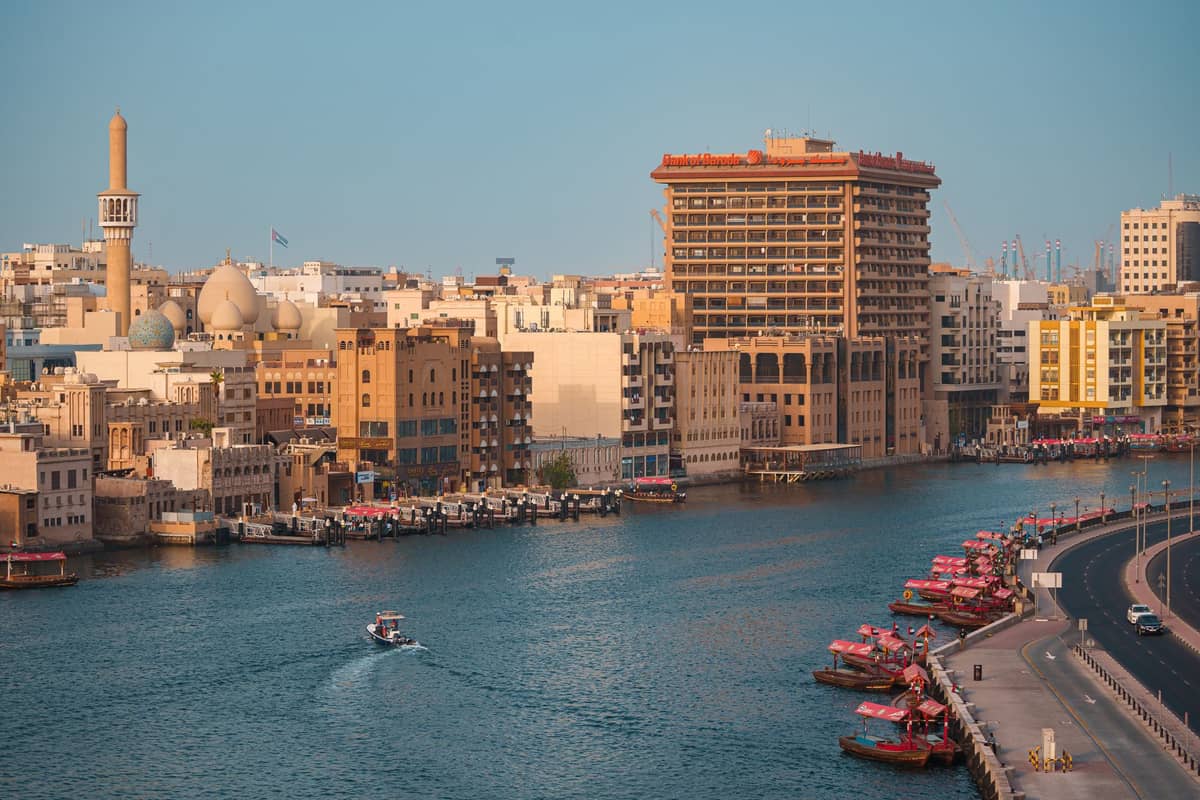
In 1971, when Dubai became part of the newly formed United Arab Emirates, the city's built environment consisted largely of wind-tower courtyard houses, a few colonial-era buildings, and low-rise trading districts on either side of Dubai Creek. What followed over the next five decades is one of the most compressed urban transformations in modern history. The emirate went from fishing village to global financial hub in a single generation, and the architecture reflects every stage of that shift.
Today, the Dubai skyline is not a single coherent style but a collision of eras and intentions. You have the glass-and-steel supertalls of Downtown Dubai, the nautical curves of the Burj Al Arab, the geometric precision of the Museum of the Future, and the wind-tower vernacular of Al Fahidi, all within 30 kilometres of each other. Understanding these layers makes any visit to the city more interesting, whether you are an architecture enthusiast or a first-time tourist trying to orient yourself.
The Supertalls: Record-Setting Towers You Should Actually Visit
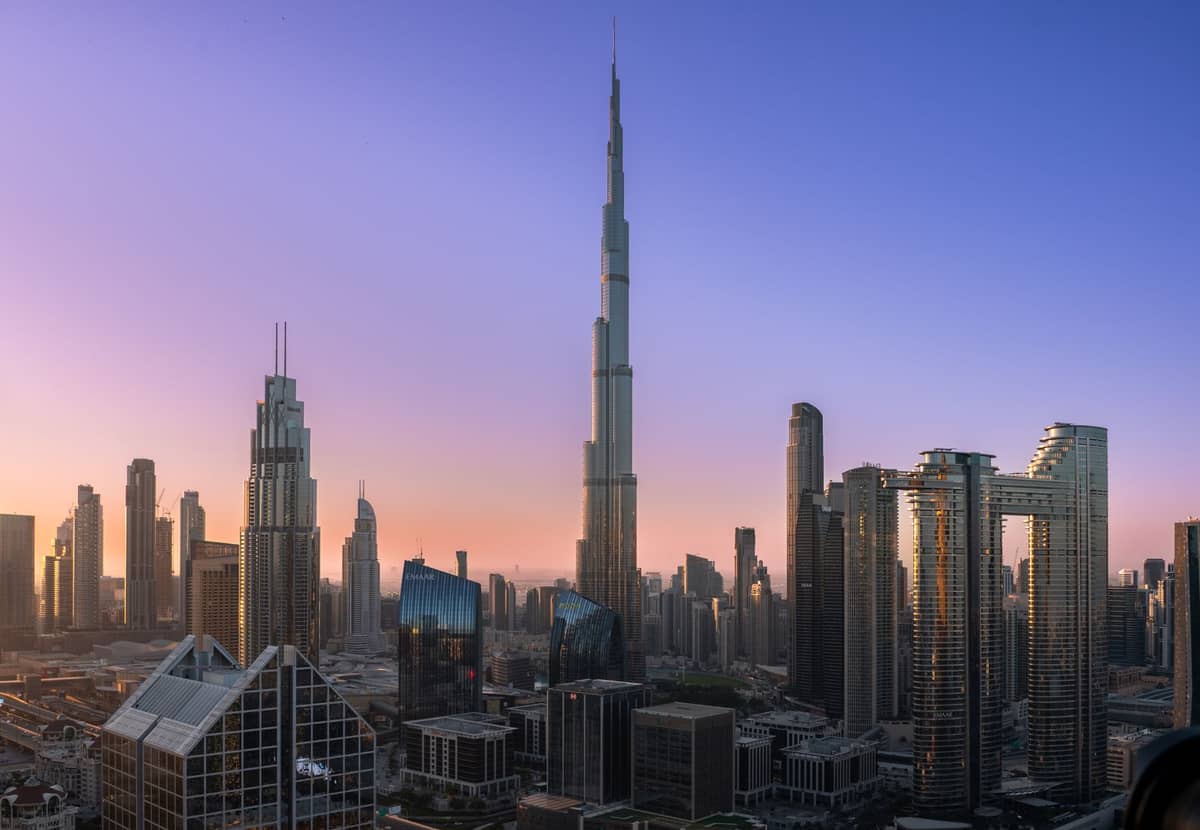
The Burj Khalifa remains the tallest building in the world at 828 metres. Designed by Skidmore, Owings and Merrill and completed in 2010, it draws on traditional Islamic architecture in its Y-shaped floor plan and tapering profile, a detail most visitors miss while gawking at the scale. The observation decks at Level 124 (At the Top) and Level 148 (At the Top SKY) are open daily from 08:30 to 23:00, with last entry around 22:30. Tickets are significantly cheaper booked online in advance and sell out on weekends and public holidays. Sunset slots are the most popular and the most expensive, often by 30–40 AED compared to midday.
⚠️ What to skip
The Burj Khalifa is not open 24 hours. Last entry is around 22:30. Arrive early or book a timed slot online to avoid queuing for walk-up tickets, which cost significantly more and are sometimes unavailable during peak periods.
A short walk from the Burj Khalifa sits the Dubai Frame, a 150-metre picture frame structure that frames the old city on one side and the new skyline on the other. It is deliberately symbolic and self-aware in a way that the city's more earnest supertalls are not. The glass-floored sky bridge between the two towers is the main draw. Tickets are available online; it is cheaper and faster than waiting at the gate.
Cayan Tower in Dubai Marina deserves attention from anyone interested in structural engineering. Its 75-storey residential tower rotates a full 90 degrees from base to top, creating a DNA helix silhouette. It cannot be entered by tourists, but the Marina Walk offers clean sightlines from ground level. Early morning visits, before 9:00, give you the tower without crowds and in softer light.
- Burj Khalifa 828m, world's tallest. Observation deck open 08:30–23:00. Book online. Y-shaped plan references Islamic geometric form.
- Dubai Frame 150m picture frame straddling old and new Dubai. Glass sky bridge. Budget 45–60 minutes for the full visit.
- Cayan Tower Twisting 75-storey residential tower in Dubai Marina. Exterior viewing only, best from Marina Walk at ground level.
- Sky Views Observatory Located on the Address Sky View hotel bridge connecting two towers. Includes an edge walk experience for those who want it.
Museum of the Future: The Most Photographed Building in the World
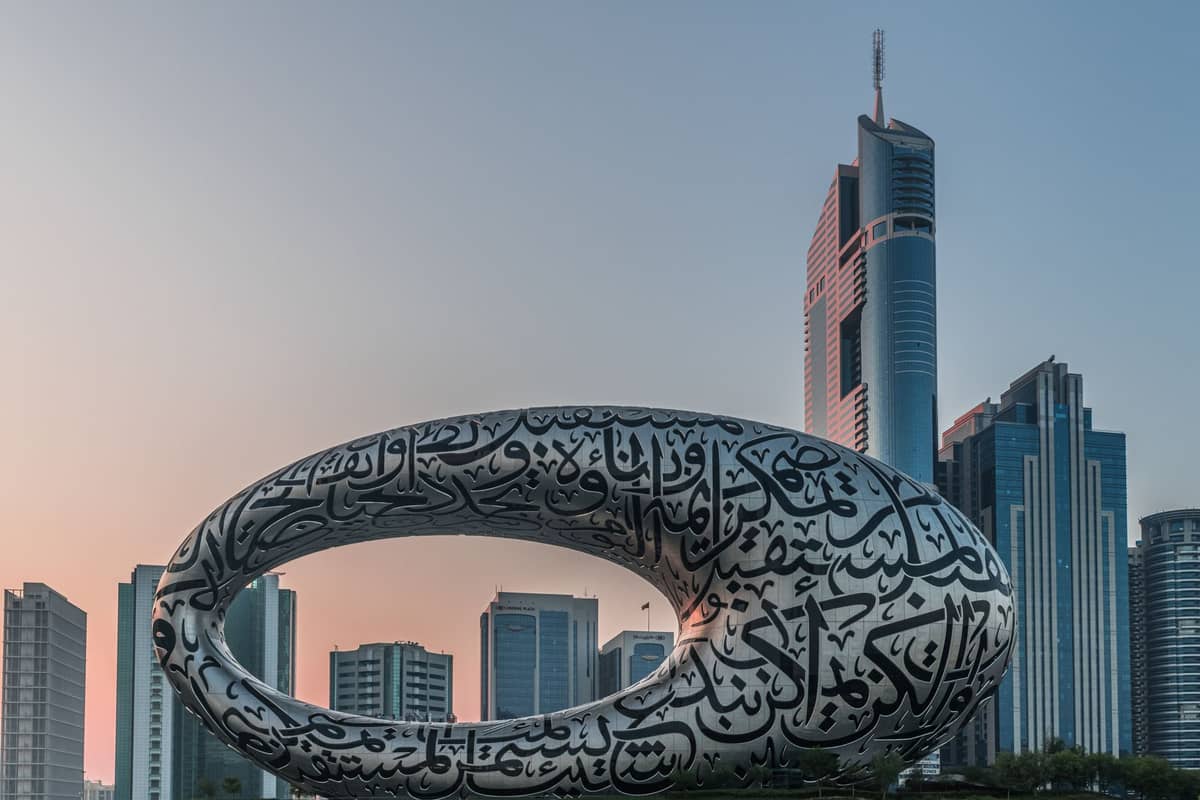
Opened in 2022, the Museum of the Future is the building that has most effectively captured global attention in recent years. Its torus shape, clad in stainless steel panels engraved with Arabic calligraphy by artist Mattar bin Lahej, is engineered to appear to float above a green hill. The calligraphy reads quotes from Sheikh Mohammed bin Rashid Al Maktoum and forms an intrinsic part of the facade design rather than decoration applied after the fact.
Inside, the experience is immersive and future-focused across seven floors, covering themes from AI to space exploration to sustainable living. It is more experience than traditional museum, which splits opinion. Architecture tourists who come expecting exhibits about the building itself leave disappointed; those expecting a theatrical, technology-forward journey through speculative futures generally enjoy it.
💡 Local tip
The Museum of the Future uses timed entry. Tickets are AED 169 for ages 4 and above, with children under 4 free. Standard hours are generally from around 10:00 AM to 7:30 PM for entry, with the museum closing at 9:30 PM, but hours change on public holidays and are reduced in summer (typically April through September). Book directly through the official site and confirm hours before visiting.
For the exterior shot most seen on social media, stand on the pedestrian bridge crossing Sheikh Zayed Road near the Emirates Towers Metro station. The museum's facade faces northeast, so morning light hits it directly. The surrounding Dubai Water Canal area and DIFC district are worth exploring on the same visit if you have a full day in this part of the city.
Statement Hotels: Burj Al Arab and Beyond
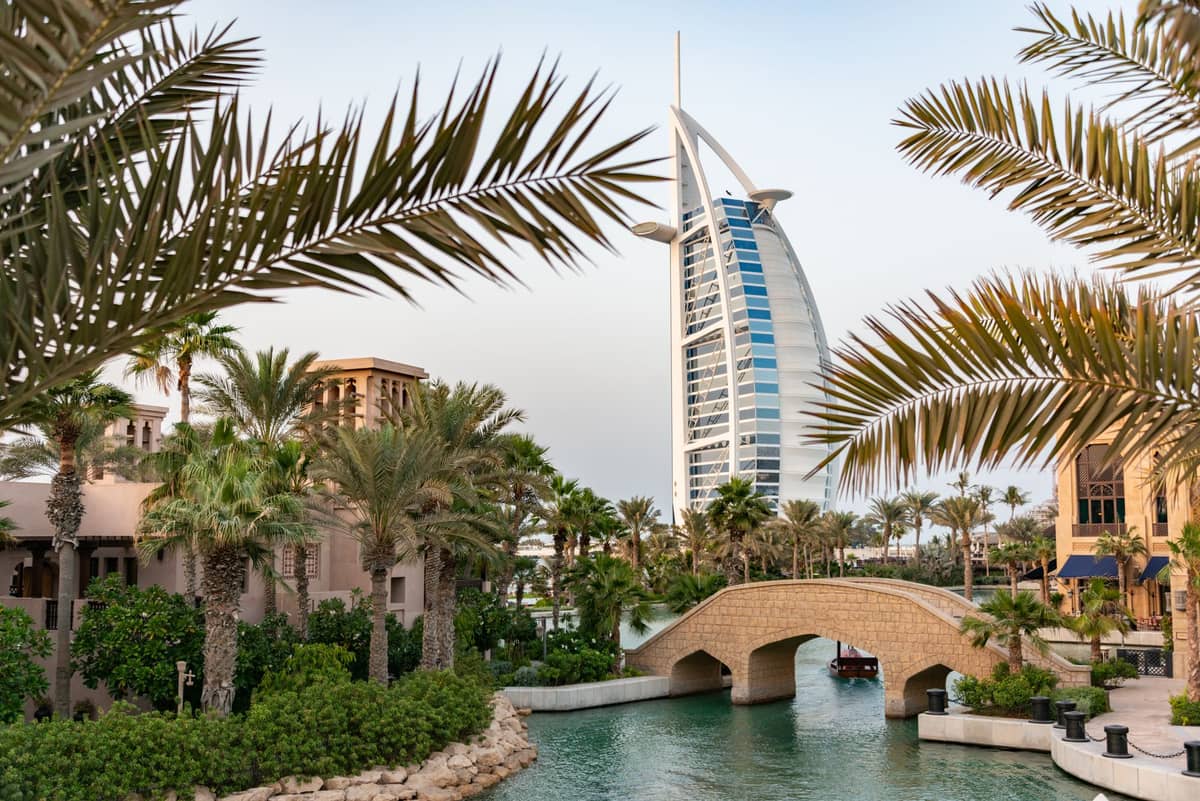
The Burj Al Arab is not the tallest or most technically complex building in Dubai, but it may be the most influential. Completed in 1999 and designed by Tom Wright of Atkins, it sits on an artificial island 280 metres offshore and takes the form of a billowing dhow sail. At 321 metres, it was the world's tallest hotel on completion. Access is restricted to hotel guests and those with dining reservations, so most visitors see it from the Jumeirah public beach or from Kite Beach, both of which give excellent views.
Atlantis The Palm on Palm Jumeirah is a very different kind of architectural statement: a Venetian-baroque resort complex on a man-made palm-shaped island that is itself one of the most audacious engineering projects of the 2000s. The island's creation involved dredging around 94 million cubic metres of sand. You can visit Aquaventure Waterpark without being a hotel guest, which gives access to the resort grounds and views of the Palm's trunk from the beach.
✨ Pro tip
To photograph the Burj Al Arab at its best, go to Kite Beach around 30 minutes before sunset. The building faces west and catches golden light directly. The Jumeirah beach area is more crowded and gives a slightly less clean angle.
Old Dubai: Wind Towers, Creek, and Heritage Architecture
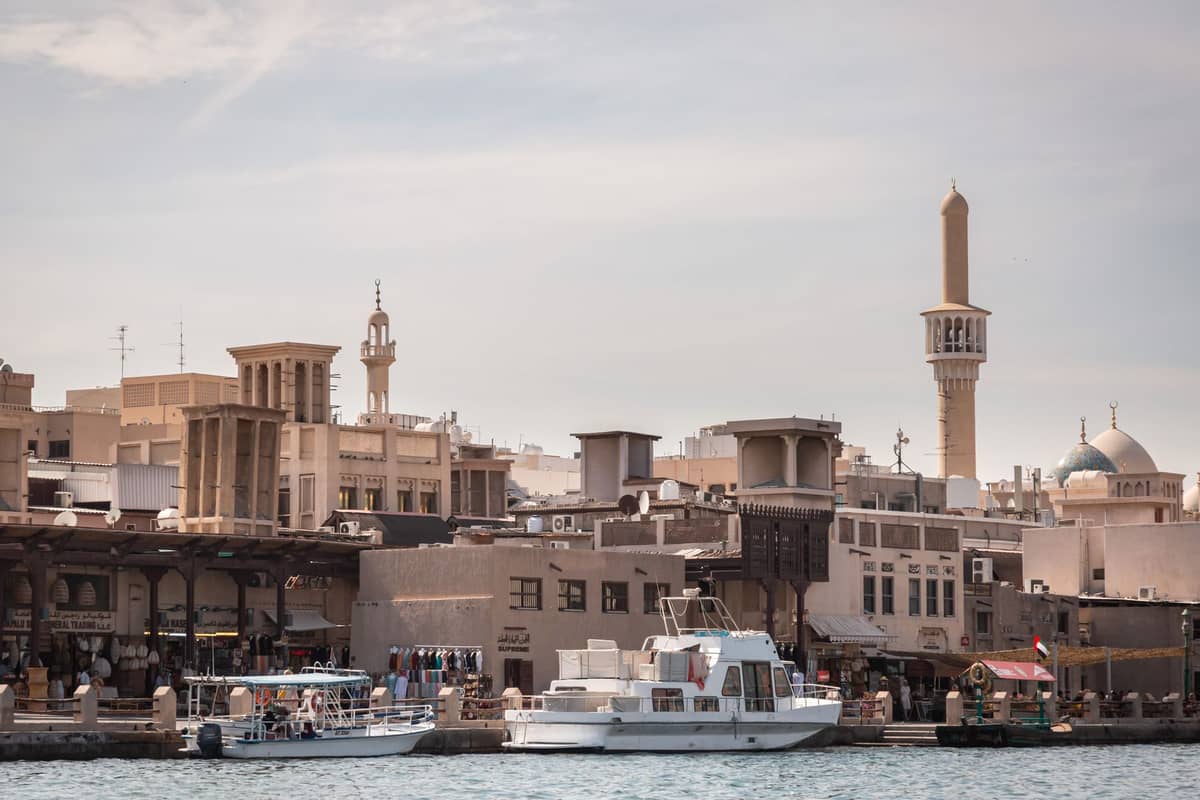
The most architecturally coherent district in Dubai is not Downtown but Al Fahidi Historical Neighbourhood in Bur Dubai. Dating from the late 19th and early 20th centuries, this preserved cluster of coral stone and mud-brick buildings features the barjeel, the traditional wind-tower system that channelled air down into rooms below as a form of passive cooling. The towers range from simple square shafts to elaborately perforated structures. It is the only place in Dubai where the pre-air-conditioning building logic of the Gulf is still legible at neighbourhood scale.
Within Al Fahidi, the Al Fahidi Fort houses the Dubai Museum, the emirate's oldest building still standing, dating to 1787. Nearby, the Shindagha Heritage District at the mouth of Dubai Creek has been extensively restored and includes the Sheikh Saeed Al Maktoum House, the former ruler's residence, which shows the courtyard-house typology at its grandest. Both areas are free or very cheap to enter and are most comfortable to visit in the morning before temperatures climb.
Across the Creek in Deira, the older commercial fabric is less curated but equally interesting. The Gold Souk and Spice Souk areas preserve a dense low-rise street pattern that contrasts sharply with the tower city 10 kilometres to the south. Taking an abra, the traditional wooden water taxi, across Dubai Creek for around 1 AED is both the cheapest and most atmospheric way to move between these districts.
- Al Fahidi Historical Neighbourhood: free to walk, wind-tower vernacular, best before 10:00 AM
- Dubai Creek abra crossing: 1 AED, connects Bur Dubai and Deira in under 10 minutes
- Shindagha Heritage District: restored, includes Sheikh Saeed Al Maktoum House and the Etihad Museum
- XVA Gallery within Al Fahidi: boutique art hotel set inside a traditional courtyard house, open to non-guests
Contemporary Architecture Beyond the Headlines
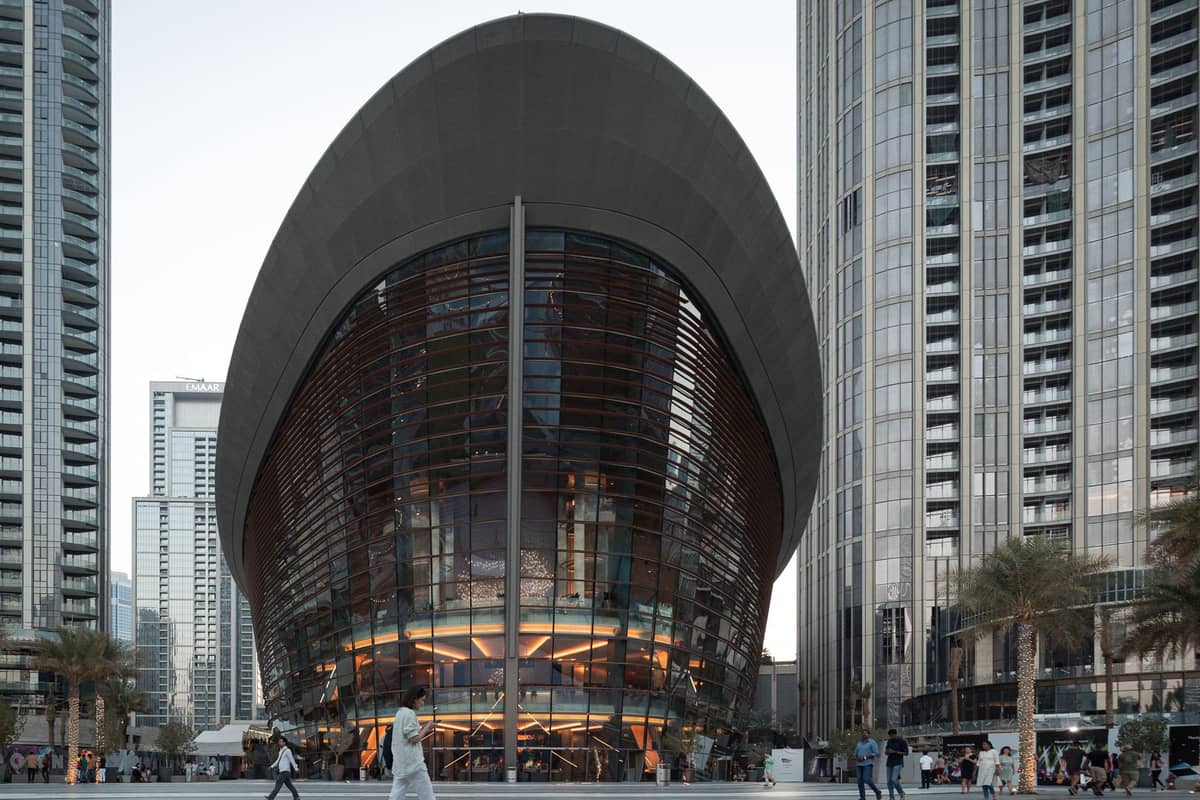
Dubai's architecture story extends beyond the headline towers. The Dubai Opera in Downtown Dubai is a 2,000-seat performing arts venue designed by Janus Rostock to resemble a dhow hull, with a retractable roof that allows the building to switch between concert hall and open-air venue. Its curved timber cladding and lakeside position next to the Burj Khalifa pool give it a scale and warmth that the surrounding glass towers lack.
The Museum of the Future sits near Emirates Towers, itself an interesting 2000s design comprising two triangular-plan glass towers of different heights connected at the base. The DIFC (Dubai International Financial Centre) district surrounding them has accumulated a dense cluster of contemporary office and gallery buildings worth examining on foot. Alserkal Avenue in Al Quoz is a converted industrial district that has become the centre of Dubai's contemporary art and design scene, with adaptive reuse warehouse spaces that offer a different architectural register entirely.
Expo City Dubai, built for the World Expo 2020 (held 2021–2022), preserves several major pavilions as a permanent district southwest of the city. The Al Wasl Plaza dome, a 130-metre diameter lattice dome covered in projection screens, is the centrepiece and remains operational as an events venue. Combined with the UAE Pavilion by Santiago Calatrava, which replicates the motion of a falcon's wings in its moving roof structure, the site gives serious architecture tourists two genuinely significant works in one visit. Check the Expo City Dubai page for current access and programming.
ℹ️ Good to know
Dubai's architectural landmarks are spread across a city roughly 35 km from end to end. Grouping visits by district saves significant time. Downtown Dubai and DIFC cover the modern towers and Museum of the Future. Bur Dubai and Deira cover the heritage areas. Dubai Marina and Jumeirah cover the Burj Al Arab, Cayan Tower, and Palm Jumeirah. Plan at least two separate half-days for these clusters.
Practical Tips for Visiting Dubai's Architecture Landmarks
November to March is the practical window for walking between outdoor landmarks comfortably. Summer temperatures regularly exceed 40°C with high humidity, making any extended outdoor time genuinely unpleasant. Interior attractions like the Burj Khalifa observation deck and Museum of the Future are air-conditioned and viable year-round, but the walk from a metro station or car park in July requires planning. Check the best time to visit Dubai for a month-by-month breakdown.
Getting between districts is straightforward. The Dubai Metro Red Line connects Dubai International Airport (DXB, around 15 km from the city centre) to key architecture stops: Dubai Mall and Burj Khalifa station for Downtown, Emirates Towers for the Museum of the Future and DIFC, and DAMAC Properties station for Dubai Marina. Metro fares range from around 5–8 AED per trip. Careem and Uber both operate in the city and are generally reliable for cross-district transfers. See the full getting around Dubai guide for route-specific advice.
- Book Burj Khalifa and Museum of the Future tickets online, ideally a week ahead during November to February peak season
- Carry water for any outdoor walking, even in winter: the sun is strong and distances between buildings are often larger than they appear on maps
- Photography of government buildings and security installations is restricted; stick to publicly designated viewpoints
- Dress modestly when entering heritage sites and mosques; standard tourist attire is fine for the towers and modern attractions
- The Dubai Metro does not run to the Burj Al Arab or Palm Jumeirah interiors; budget for Careem or taxi for those legs
FAQ
What is the best viewing point for the Burj Khalifa?
The Dubai Fountain boardwalk at the base of the Burj Khalifa gives the closest ground-level view and the best sense of scale. For a mid-range elevated perspective, the Sky Views Observatory on the Address Sky View hotel bridge frames the tower well. The observation decks inside the Burj Khalifa itself (Levels 124 and 148) offer the highest views, typically open from around 10:00 to midnight daily with timed tickets.
Is the Museum of the Future worth visiting?
It depends on what you expect. The exterior is one of the most striking buildings completed anywhere in the world in recent years, and the interior experience is immersive and ambitious. However, it is not a conventional museum with permanent collections you can revisit at your own pace. Timed entry is required, standard tickets are AED 169, and hours vary seasonally. For architecture tourists, the exterior alone justifies a visit; the interior is a bonus.
Can you enter the Burj Al Arab without a reservation?
No. The Burj Al Arab is accessible only to hotel guests and those with confirmed dining, spa, or official tour reservations. Prices for food and beverage experiences start high. For exterior views, Kite Beach and the Jumeirah public beach are the best free alternatives.
How do I see Old Dubai architecture?
Start at Al Fahidi Historical Neighbourhood in Bur Dubai, which is free to walk and contains the best-preserved cluster of wind-tower courtyard houses in the city. Take an abra across Dubai Creek to Deira for the souk district. The Shindagha Heritage District at the Creek mouth adds the Sheikh Saeed Al Maktoum House and Etihad Museum. Allow a full morning for this circuit, and go early before the heat builds.
How much time do I need to see Dubai's main architectural landmarks?
Realistically, three focused days cover the major sites: one day for Downtown Dubai including the Burj Khalifa, Dubai Frame, and Dubai Opera; one day for the heritage districts of Bur Dubai and Deira; and one day for Jumeirah, the Burj Al Arab exterior, Dubai Marina, and Cayan Tower. The Museum of the Future fits best into the Downtown day. If time is tight, a well-planned 3 days in Dubai itinerary can cover the highlights efficiently.