Expo City Dubai: The Complete Visitor Guide to Dubai's Innovation District
Expo City Dubai is the ambitious legacy of the 2020 World Expo, repurposed into a sprawling mixed-use district where sustainability pavilions, interactive museums, and open plazas coexist on the edge of Dubai South. It rewards visitors willing to explore slowly, but it demands planning to get the most from a large and still-evolving site.
Quick Facts
- Location
- Expo Road, Dubai South, Jebel Ali, Dubai, UAE
- Getting There
- Expo 2020 Station, Dubai Metro Red Line
- Time Needed
- 3–6 hours depending on pavilions visited
- Cost
- Public realm free; flagship pavilions such as Terra from AED 100 per adult (children under 4 free; People of Determination free)
- Best for
- Architecture lovers, families, sustainability-curious visitors, design enthusiasts
- Official website
- expocitydubai.com
What Is Expo City Dubai?
Expo City Dubai is the permanent urban legacy of Dubai's hosting of the World Expo 2020. Rather than allowing the Expo grounds to fall dormant after the event period in 2021–2022, the UAE government repurposed the 438-hectare site in Dubai South into a long-term innovation district, education hub, and visitor destination. The transformation was initiated under the direction of His Highness Sheikh Mohammed bin Rashid Al Maktoum and positioned as one of the most ambitious post-Expo redevelopment projects in the event's history.
Today the site retains many of the Expo's signature pavilions, now operating as permanent attractions or exhibition spaces. The public realm, plazas, and pedestrian pathways are free to access. Individual pavilions charge separate entry fees, and the overall experience can range from a light two-hour walk through the architecture to a full-day itinerary across multiple ticketed venues.
ℹ️ Good to know
The public areas of Expo City Dubai are free to enter. However, visiting pavilions such as Terra, Alif, the Vision Pavilion, or the Expo 2020 Museum each require a ticket. Check the official site for bundle passes, which often offer better value than individual admissions.
The Pavilions: What You Actually See Inside
The centerpiece of any visit is Terra, The Sustainability Pavilion. Architecturally striking from the outside, it rises from the desert ground with a canopy of solar panels and roots itself visually into the landscape through a layered design that references the relationship between nature and technology. Inside, the experience shifts between immersive environmental exhibits, sensory tunnels that replicate forest and ocean environments, and displays exploring the consequences of climate choices. The atmosphere is cool and deliberately dim in contrast to the outdoor heat.
The Vision Pavilion tells the story of Dubai's development through the ambitions of its leadership, using archival materials, large-format screens, and personal artefacts. Admission currently starts from AED 75 for adults, with visitors aged 12 and under and People of Determination admitted free of charge. It reads more as an institutional chronicle than a conventional museum, which may suit some visitors more than others. Those expecting a critical or multi-perspective account of Dubai's history may find the tone celebratory rather than exploratory.
Alif, The Mobility Pavilion, explores the history of human movement from ancient migration to electric aviation. It makes effective use of the large floor space with full-scale vehicles and interactive stations. Families with older children tend to find this pavilion the most engaging, given its mix of tactile experiences and accessible storytelling.
The Expo 2020 Museum documents the World Expo itself, its themes, and Dubai's preparation for the event. It functions as institutional memory more than a standalone attraction, making it most rewarding for visitors who attended the original Expo or have a specific interest in global expos as a phenomenon. For broader Dubai context, the Etihad Museum in Jumeirah provides a more foundational grounding in UAE history.
The Architecture and Outdoor Experience
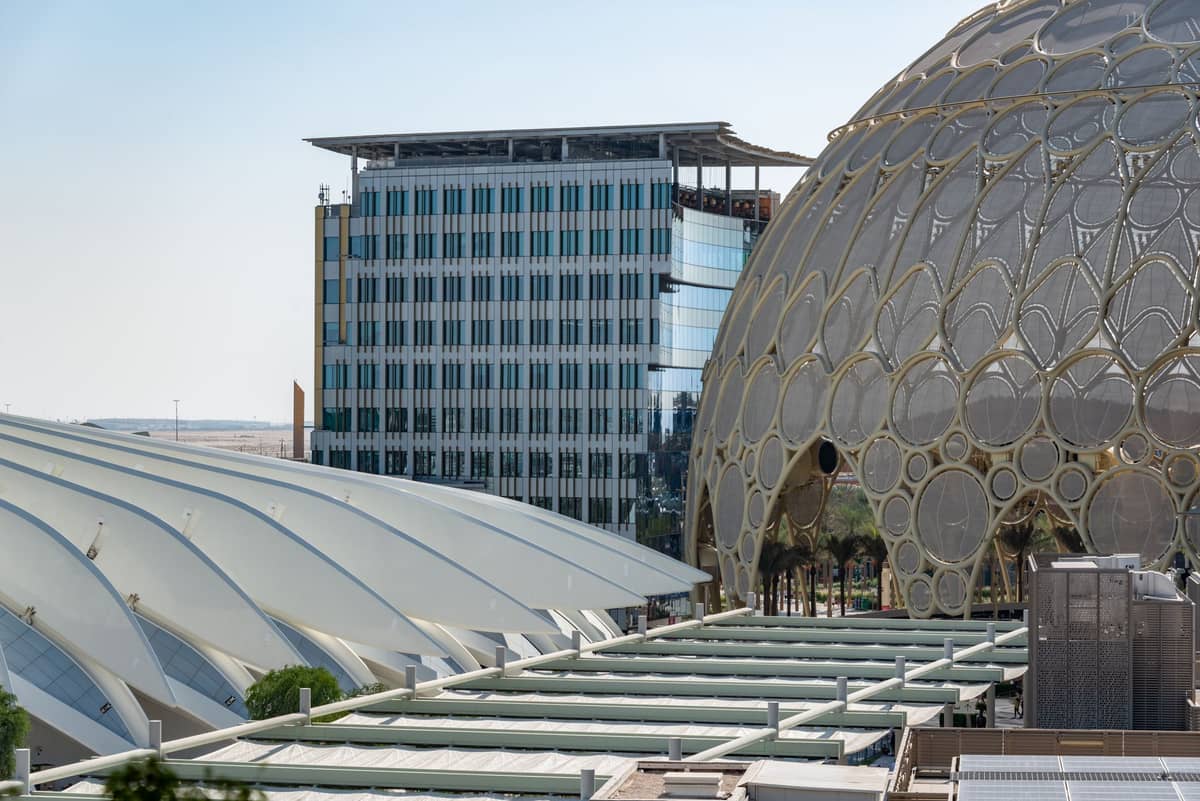
Even visitors who skip the ticketed pavilions entirely will find the outdoor environment worth an hour or two. The site's planners invested heavily in shade structures, pedestrian corridors, water features, and landscaping designed to make walking in Dubai's climate more tolerable. The Al Wasl Plaza dome, a geodesic structure at the heart of the site, is the visual anchor of the whole development. At night, when projection mapping activates across the dome's surface, it becomes one of the more spectacular light displays in the city.
The site's coherent urban design stands apart from much of Dubai's built environment, where landmarks are often separated by highways and car-dependent distances. Here, pavilions are within short walking distance of each other. Architecture enthusiasts who also follow Dubai's broader architectural landscape will find Expo City provides a rare opportunity to appreciate multiple statement buildings in a single, walkable precinct.
The Garden in the Sky, a glass gondola that lifts visitors around 55 metres above the site, often extends its operating hours into the evenings during summer months (commonly around 17:00 to 22:00) and offers panoramic views across the whole district. It is a separate ticketed experience and worth checking availability for in advance, particularly on weekends.
When to Visit: Time of Day and Seasonal Timing
Dubai's climate dictates a great deal about when outdoor attractions work. Expo City sits in an exposed location in Dubai South, with less natural shade than established urban areas. Between June and September, daytime temperatures regularly exceed 40°C, making outdoor movement genuinely uncomfortable between roughly 10:00 and 16:00. During summer, many indoor attractions, including Terra, continue to operate mainly in the daytime (currently 10:00 to 18:00), while selected outdoor experiences such as Garden in the Sky and playgrounds often run extended evening hours, commonly around 17:00 to 22:00. Summer evenings, when the heat drops to the low-to-mid 30s, can actually produce a pleasant atmosphere in the illuminated plazas.
The ideal visiting window is November through March, when daytime highs sit in the range of 24 to 31°C and the outdoor pathways can be enjoyed without discomfort. This aligns with the best time to visit Dubai more broadly. Arriving by 10:00 on a weekday gives you the cleanest experience inside the pavilions before school groups and tour buses arrive, typically between 11:00 and 13:00.
💡 Local tip
Weekday mornings in the cooler months are significantly less crowded than weekends. If you plan to visit Terra and Alif on the same day, do the indoor pavilions first during midday heat and save the Al Wasl Plaza and outdoor areas for the late afternoon.
Getting to Expo City Dubai
The site is served directly by the Dubai Metro Red Line via its Route 2020 branch at the dedicated Expo 2020 station. The metro is by far the most reliable way to arrive, avoiding the parking logistics and traffic that affect the surrounding road network on busy days. From central stations like Union or BurJuman, the journey typically takes around 60 minutes along the Red Line, depending on waiting times and any interchange. The station opens directly onto the Expo City main entrance, making the connection straightforward.
By car or taxi, Expo City is approximately 15 to 20 minutes from Dubai Marina and around 30 to 40 minutes from Downtown Dubai depending on traffic. Parking is available on site, with large car parks including Al Forsan Parking accessible without charge. Ride-hailing via Careem or Uber is reliable here and often the practical choice for visitors staying in areas with limited metro access.
⚠️ What to skip
Expo City is located in Dubai South, well outside the main tourist corridor. Budget travel time accordingly: from Deira or Al Fahidi, you are looking at around 60 minutes by metro. Do not combine this with a packed same-day itinerary across the city unless you are comfortable with long transit stretches.
Practical Logistics: Tickets, Accessibility, and What to Bring
The public realm requires no ticket. Pavilion tickets are purchased separately online or at the venue. At the time of writing, the Vision Pavilion lists adult entry from around AED 75, with visitors aged 12 and under and People of Determination admitted free of charge. Bundled Expo City passes, including options offered via products such as the Dubai Pass, can provide access to multiple pavilions at a combined rate and often represent better value if you plan to visit more than two paid attractions. Pricing and bundle compositions change seasonally, so confirm directly via the official site before visiting.
Visitors of Determination, meaning those with disabilities, receive free entry to many paid attractions. The site was built to strong accessibility standards: wheelchair-accessible pathways cover the entire precinct, wheelchair rental and electric wheelchair charging are available, Braille signage is in place, induction loops operate in key venues, and accessible parking is designated close to entrances. The official accessibility page on the Expo City Dubai website provides sensory ratings for individual pavilions, which is genuinely useful for visitors with sensory sensitivities or those traveling with children who have specific needs.
Comfortable walking shoes are essential given the distances between pavilions. Sunglasses, sunscreen, and a refillable water bottle matter even in winter. The site has food and beverage outlets at various points, but options vary by day and season. If you are combining Expo City with a broader day out, note that it pairs logistically with little else on the Red Line given its position at the southern terminus. For a full day built around this part of the emirate, the Ibn Battuta Mall is a few stops north and makes a practical complement for the afternoon.
Honest Assessment: Who Will Love It and Who Might Not
Expo City Dubai is not a conventional tourist attraction with a single headline experience. It is a district, and it rewards visitors who approach it that way. People with genuine interests in sustainable design, contemporary architecture, or the history of global expos will find considerable substance here. Families with children who engage well with interactive exhibits, particularly in Terra and Alif, tend to report it as one of the better full-day options in Dubai.
Visitors expecting a theme park energy, a compact itinerary, or a string of Instagram moments with little effort will likely find the site underwhelming. The sheer scale requires walking. The pavilion content is often educational in tone. And the location in Dubai South, far from the waterfront and heritage areas covered in an Old Dubai itinerary, means it will not appeal to travellers focused on cultural immersion in the city's historic core.
First-time visitors to Dubai with only two or three days should consider whether Expo City competes effectively for their time against the Burj Khalifa observation deck, the creek districts, or the broader waterfront experiences. It is a strong choice for return visitors or those spending five or more days in the emirate.
Insider Tips
- Book pavilion tickets online before arriving. Walk-up queues at Terra and Alif can be long on weekends and school-holiday periods, and online booking lets you choose a timed entry slot.
- The Al Wasl Plaza dome projection show runs on certain evenings and is free to watch from the surrounding plaza. Check the schedule on the Expo City Dubai website before your visit, as timings vary by season and event calendar.
- The summer evening schedule (June to mid-September, 17:00 to 22:00 for outdoor areas) is one of the genuinely underrated ways to experience the site. The light, the cooler air, and the reduced crowds create an atmosphere that is quite different from the daytime visitor experience.
- If you are purchasing individual pavilion tickets, compare against the Dubai Pass bundle before committing. Depending on which pavilions you want, the bundle can save a meaningful amount, particularly for groups of four or more.
- People of Determination receive free entry to many paid attractions. Bring relevant documentation such as a disability card or medical letter to present at the ticket counters.
Who Is Expo City Dubai For?
- Architecture and design enthusiasts interested in post-Expo urban legacy projects
- Families with children aged 6 and above who engage with interactive, educational exhibits
- Sustainability-focused travellers curious about built environment and technology
- Return visitors to Dubai looking for experiences beyond the standard itinerary
- Groups who want a structured full-day outing in a walkable, cohesive environment