Etihad Museum: Where the UAE Began
Built on the very ground where seven emirates signed the union that created the UAE in 1971, Etihad Museum is Dubai's most historically significant cultural institution. It combines thoughtful architecture, immersive galleries, and a rare collection of original documents to tell the story of a nation's birth.
Quick Facts
- Location
- Jumeira St. at 2nd December St., Jumeirah, Dubai, UAE
- Getting There
- Taxi or ride-hailing recommended; on-site parking available
- Time Needed
- 1.5 to 2.5 hours
- Cost
- Approx. AED 25 adults / AED 10 students and older children (with children under 5 free) — verify on official site
- Best for
- History lovers, first-time UAE visitors, families with older children
- Official website
- etihadmuseum.dubaiculture.gov.ae/en/Pages/default.aspx
What Is the Etihad Museum?
The Etihad Museum sits on a plot of land in Jumeirah that carries more symbolic weight than almost any other square metre in the country. This is where, on 2 December 1971, the rulers of seven sheikhdoms signed the declaration that created the United Arab Emirates. What was then a modest Union House is now a 25,000 m² museum complex that uses architecture, objects, and multimedia to explain how one of the world's most unlikely nation-building stories actually happened.
The museum opened in 2016 under the stewardship of Dubai Culture and Arts Authority, and it remains the UAE's primary institution dedicated to the founding of the federation. For a country that is barely five decades old, it punches well above its weight in terms of curatorial ambition. Unlike many Gulf heritage sites that lean heavily on tribal nostalgia, Etihad Museum engages directly with political history: treaties, negotiations, and the personalities behind them.
ℹ️ Good to know
Guided tours are typically offered daily at set times, such as late morning and late afternoon; check current schedules on arrival or on the official website, and if this is your first encounter with UAE history, joining a guided tour is strongly recommended over a solo walk-through.
The Architecture: A Building That Tells the Story Before You Step Inside
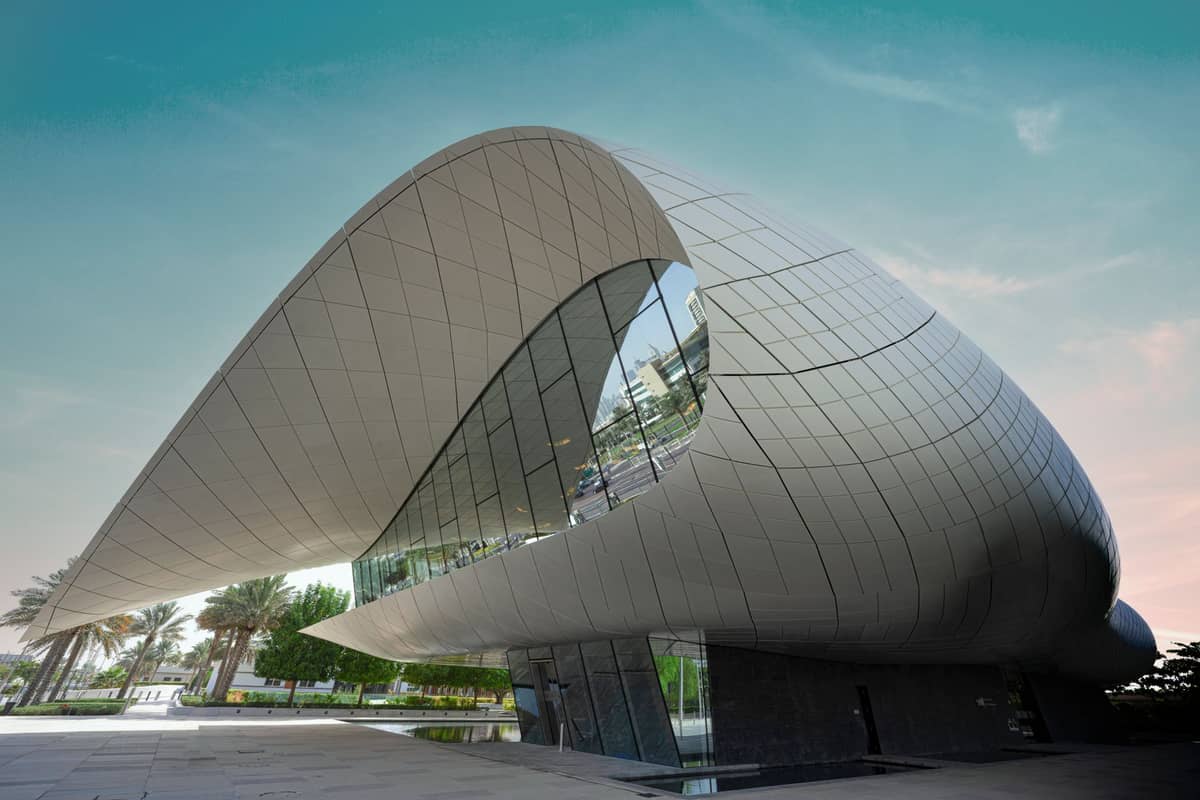
The building itself is the first exhibit. Designed to reference the seven original documents signed during the union, the structure features seven curved manuscript-like forms rising from the ground, each one representing a founding emirate. From street level, the roof lines arc and twist in a way that reads as almost calligraphic, a deliberate choice by architects Moriyama and Teshima in collaboration with Witness ID.
The facade changes tone through the day. In the morning, the pale concrete picks up the blue of the sky and looks almost translucent. By late afternoon, the low desert sun catches the curved surfaces and turns sections a warm amber. If you arrive around 4:00 PM in the cooler months, November through March, you get the best photographic light on the exterior without the midday glare.
The surrounding grounds are landscaped and walkable, with the original Union House preserved as a separate pavilion within the complex. If you are already planning a day exploring heritage Bur Dubai, the museum fits naturally into a route that also takes in the Al Fahidi district a short drive away.
Inside the Galleries: What You Actually See
The interior is divided into themed galleries that move chronologically from pre-union life on the Arabian Peninsula through to the formation of the federation and the decades of development that followed. The exhibition design is polished but not overwhelming. Lighting is kept deliberately low in the document rooms to protect originals, so allow your eyes a moment to adjust.
The centrepiece display is the original constitution of the UAE alongside the actual instruments of accession. Seeing a handwritten document under glass that effectively created a modern state, complete with ink signatures and official seals, is the kind of moment that gives the whole visit its weight. The objects are not replicas. The archival seriousness of this section distinguishes Etihad Museum from the more theatrical attractions elsewhere in the city.
Multimedia installations reconstruct what daily life looked like in the Trucial States before oil revenue transformed the region. Pearl diving, trade routes, and the relationship between the coast and the desert interior are all addressed. Some of the oral history recordings, older residents speaking in Arabic with subtitles, are genuinely moving. The pace of change depicted is almost impossible to absorb in a single visit.
Visitors interested in going deeper on the broader heritage context of old Dubai will find this museum pairs logically with the Al Fahidi Fort and its associated museums, which cover the longer sweep of Dubai's pre-oil trading history.
How the Experience Changes Through the Day
Morning visits, between 10:00 AM and noon, are quietest. Schoolgroups arrive in waves on weekday mornings, particularly Sunday through Wednesday, so if you prefer the galleries without children running commentary in multiple languages, aim for a Thursday or Friday morning or any weekday after 2:00 PM when school groups have typically left.
Mid-afternoon, from around 2:30 PM onward, the museum draws a calmer crowd: tourists, expat families, and the occasional researcher. The air conditioning is consistent throughout, which matters more than it sounds when you consider that stepping outside into 38-degree heat in summer makes a cool gallery feel like a genuine refuge rather than just a cultural obligation.
The museum is open daily from 10:00 AM to 8:00 PM with last entry at 7:00 PM, which makes an evening visit possible during cooler months. The exterior is lit after dark, and if you are arriving from a dinner in the Jumeirah area, a late visit can work well. The galleries are never as quiet as they are in that final hour before closing.
💡 Local tip
The best overall slot is 3:00 PM to 6:00 PM on a weekday. You catch a guided tour, avoid the school rush, and leave as the evening light hits the exterior.
Getting There and Practical Logistics
The museum is located on Jumeira Street at the intersection with 2nd December Street, a name that itself commemorates the date of the union. There is on-site parking for both cars and coaches, which makes it straightforward if you are driving or arriving by taxi. Careem and Uber both service this area reliably, and from most central Dubai hotels you are looking at roughly a 10 to 20 minute ride depending on traffic.
There is no direct metro station within comfortable walking distance, particularly in summer. The nearest metro access point would require a taxi or bus connection onward. If you are relying entirely on public transport, factor in transfer time and check the RTA journey planner before visiting.
If you are building a full day in the area, the museum pairs well with a morning walk through Al Seef along Dubai Creek, followed by an afternoon at Etihad Museum, keeping distances manageable and the historical thread intact.
⚠️ What to skip
Ticket prices quoted widely online as AED 25 for adults and AED 10 for students and older children should be verified directly on the official museum website before your visit, as admission fees and age brackets can change.
Honest Assessment: Is It Worth Your Time?
For visitors whose primary interest is spectacle, Etihad Museum will underdeliver. It does not have the visual drama of the Museum of the Future, the adrenaline of a desert safari, or the sheer scale of the Dubai Mall complex. What it has is substance. If you want to understand why Dubai looks the way it does, why decisions were made the way they were, and what the people who shaped this country were actually thinking, this is where that conversation happens.
Families with children under about eight will find the content too text-heavy and conceptual to hold attention across a full visit. The multimedia elements help, but this is fundamentally a museum of ideas and documents, not interactive play. Teenagers and adults, particularly those on their first visit to the UAE, tend to leave with a noticeably clearer understanding of the country they are in.
Visitors who enjoy this kind of institution tend to also appreciate the Sheikh Saeed Al Maktoum House in the Shindagha district, which covers the life and era of Dubai's pre-union rulers and provides useful biographical context for what Etihad Museum describes at the national level.
For a broader sense of what Dubai's cultural institutions have to offer, the best museums in Dubai guide places Etihad Museum within the wider landscape of heritage and contemporary institutions across the emirate.
Insider Tips
- Join one of the scheduled guided tours rather than exploring solo. The guides contextualise the documents and photographs with personal and political detail that the labels alone do not convey.
- The Union House, the original building where the declaration was signed, is preserved separately within the complex grounds. Many visitors walk through the main galleries without realising they can also step inside this structure. Do not skip it.
- Photography is permitted in most gallery areas, but flash is prohibited near archival documents. The low lighting in the constitution room means you will need a steady hand or a phone with a good night mode.
- The museum cafe and gift shop are worth a few minutes. The gift shop stocks publications on UAE history that are difficult to find elsewhere in Dubai, including bilingual Arabic-English editions.
- Dress in layers. The air conditioning is aggressive, particularly in the lower galleries. A light jacket or scarf is worth having even in summer.
Who Is Etihad Museum For?
- First-time visitors to the UAE who want genuine historical context before they engage with the rest of the country
- History and political science enthusiasts with an interest in modern state formation and Gulf diplomacy
- Families with children aged ten and above who can engage with documentary and multimedia content
- Architecture admirers interested in how contemporary Gulf buildings negotiate between symbolism and function
- Travellers building a heritage-focused day in Bur Dubai and the Jumeirah waterfront area