Al Fahidi Fort and Dubai Museum: Dubai's Oldest Surviving Building
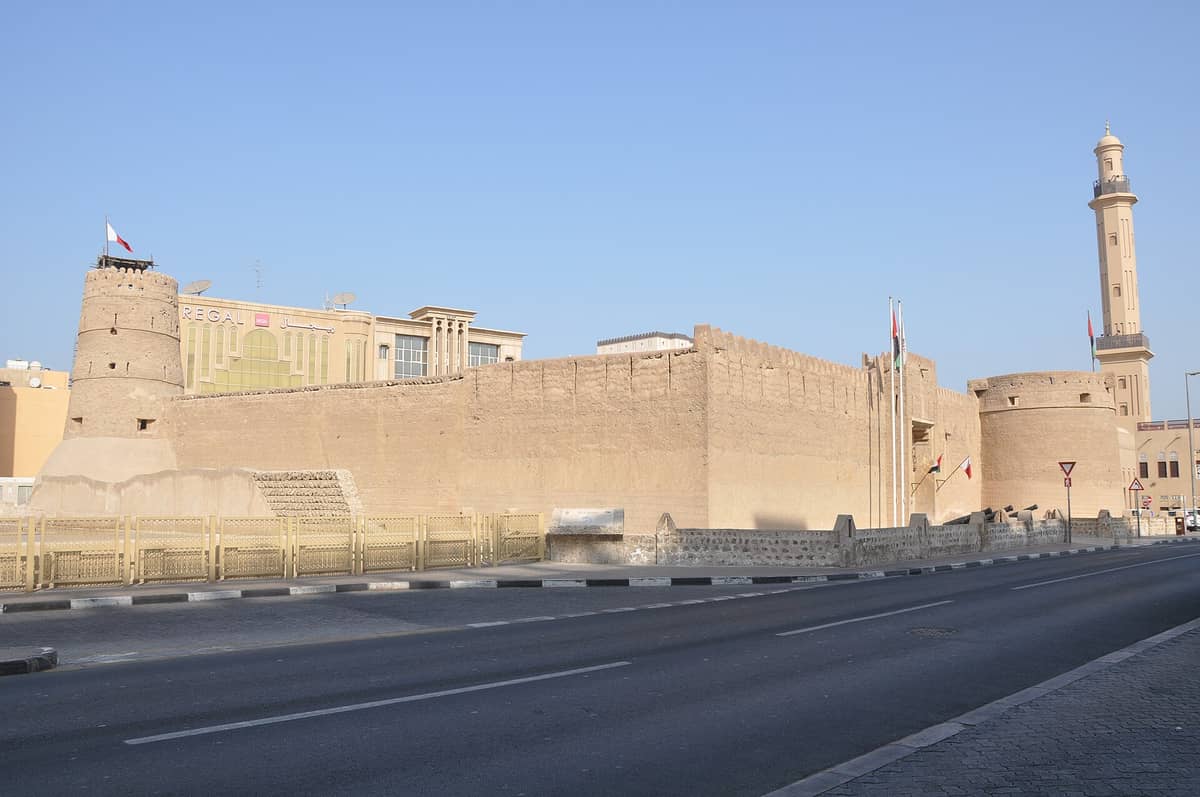
Built in 1787 and opened as a museum in 1971, Al Fahidi Fort is the oldest standing structure in Dubai. Its thick mud-brick walls and courtyard displays offer a ground-level counterpoint to everything else the city does at scale. The fort is Dubai's oldest standing structure, but as of September 2026 the museum remains closed for rehabilitation; confirm reopening and any new ticket prices before visiting.
Quick Facts
- Location
- Al Fahidi Street, Bur Dubai, Dubai, UAE — near the Grand Mosque in the Al Fahidi historical neighbourhood
- Getting There
- Al Fahidi Metro Station (Green Line), approx. 10-minute walk; alternatively, BurJuman Station (Red/Green Line interchange)
- Time Needed
- 1 to 1.5 hours for the full museum circuit; allow extra time to explore the surrounding Al Fahidi Historical Neighbourhood
- Cost
- Historically AED 3 per adult; closed for rehabilitation as of September 2026 — confirm reopening and current fees before visiting
- Best for
- History and culture seekers, first-time visitors wanting context for the city, budget travellers
- Official website
- dubaiculture.gov.ae
Why Al Fahidi Fort Matters in a City That Rarely Looks Backwards
Dubai is a city that has spent much of the last four decades erasing its own past in favour of something taller and newer. Al Fahidi Fort is the exception. Built in 1787 to defend the mouth of Dubai Creek, it is the oldest surviving structure in the emirate and one of the few places in the city where you can stand inside walls that predate every tower on the skyline by roughly two centuries.
After a restoration in 1970, the fort was officially inaugurated as Dubai Museum on 12 May 1971, months before the UAE was formally established as a federation of seven emirates. That timing is not incidental. The museum and the nation were born in the same year, and the fort was chosen as the repository for the story Dubai wanted to tell about itself: a pearl-diving settlement that became a global city.
For visitors who arrive with only the city's present in their field of view, a visit here reframes everything else. After this, the towers of Downtown Dubai read differently. The scale of ambition becomes legible when you understand what it replaced.
⚠️ What to skip
IMPORTANT: As of early 2026, the Government of Dubai and local media reported Al Fahidi Fort as undergoing rehabilitation, with a planned reopening in the first half of 2026. Confirm the current status via dubaiculture.gov.ae or by calling ahead before making a special trip. Third-party sites continue to list regular hours, but on-site verification is strongly recommended.
The Architecture: What You Are Actually Looking At
The fort covers approximately 1,535 square metres and is built from the materials that defined pre-oil Gulf construction: gypsum mortar, coral stone, and mud brick. The walls are thick enough to muffle street noise almost entirely once you step inside the courtyard, which is a physical reminder of what these structures were engineered to do — resist heat and projectiles in roughly equal measure.
Four watchtowers mark the corners of the fort, each with a tapered cylindrical form that is recognisable across the broader Gulf region. The wooden cannon displayed in the courtyard is original-era hardware, and the flagpole at the centre of the open-air space gives the interior the feeling of a parade ground that has been slightly softened by time. The ground underfoot is packed earth in places, uneven in others — practical footwear makes a difference.
If you want to understand how this style of fortified architecture fits into the wider story of Dubai's built environment, the surrounding Shindagha Heritage District and the Al Fahidi historical neighbourhood extend the conversation considerably. The wind-tower buildings of the neighbourhood — many now converted into galleries and cafes — were constructed using the same basic logic as the fort: passive cooling through thick walls and vertical ventilation shafts.
Inside the Museum: What the Displays Actually Cover
The museum is organised chronologically and thematically across a series of rooms and underground galleries. The above-ground courtyard level sets the scene with outdoor artefacts: traditional boats (including a full-size wooden dhow), period weapons, and household objects that date to the pre-oil era of the late 19th and early 20th century.
The underground section, added during a later expansion, is where the bulk of the interpretive content sits. Dioramas reconstruct scenes of Bedouin camp life, a souk market, a mosque interior, a traditional home, and crucially, the pearl-diving industry that was the economic engine of the region before oil was discovered in commercial quantities. The displays include period diving equipment — weighted stones, nose clips, mesh bags for collecting oysters — that make the physical demands of the trade immediately apparent.
The lighting in the underground galleries is deliberately dim and atmospheric, which helps the diorama scenes read as immersive rather than clinical. Some of the mannequins and scene-setting techniques are now decades old and show their age, but this does not undermine the content itself. The narrative arc from fishing village to modern emirate is told with enough specificity to be genuinely informative.
💡 Local tip
The pearl-diving section is the strongest part of the museum. Spend time here rather than rushing through to exit. The explanatory panels on how the diving season was organised — the financial arrangements between boat captains and divers, the social structure of the fleet — provide context that is hard to find elsewhere in the city.
When to Visit and How the Experience Shifts by Time of Day
Third-party sources report opening hours of Saturday to Thursday, 8:30 AM to 8:30 PM, and Friday 2:30 PM to 8:30 PM, with likely variations during Ramadan and public holidays; these typically match recent visitor information, but verify before visiting given the fort's rehabilitation programme.
Early morning, from opening until around 10 AM, is consistently the quietest window. The courtyard is shaded on the eastern side at this hour, and the temperature difference between inside and outside the walls is perceptible even in winter. If you are visiting between June and September, when daytime temperatures in Dubai regularly exceed 40°C, the underground galleries are genuinely cool and become a relief rather than merely an attraction.
Mid-afternoon, particularly on weekends, brings school groups and larger tour parties. The courtyard can feel crowded in a way that reduces the atmosphere the space is trying to create. Evening visits from around 6 PM onward have a different quality: the harsh light softens, the stone walls hold a pleasant warmth, and the surrounding neighbourhood becomes noticeably more active as residents and visitors circulate through the lanes.
For the broader neighbourhood experience, pair an evening museum visit with a walk along the Al Seef waterfront afterward. The promenade runs along Dubai Creek just a few minutes' walk from the fort and offers an atmospheric evening setting that complements rather than duplicates what you have just seen.
Getting There and Practical Logistics
The fort is on Al Fahidi Street in Bur Dubai, directly across from the Grand Mosque. The Al Fahidi Metro Station on the Dubai Metro Green Line puts you within a ten-minute walk. BurJuman Station, where the Red and Green lines intersect, is also walkable and gives more flexibility if you are coming from the airport or from further along the Red Line corridor.
Taxis and ride-hailing services via Careem or Uber are straightforward and inexpensive from most central areas. If you are self-navigating, the neighbourhood's narrow lanes are not well-suited to driving; drop-off on Al Fahidi Street itself is the most practical approach.
The fort is only partially accessible for wheelchair users and pushchairs. The underground galleries involve steps, and the courtyard surface is uneven in places. This is an inherent constraint of the heritage structure rather than an oversight, but it is worth knowing in advance.
ℹ️ Good to know
Dress modestly when visiting Al Fahidi Fort and the surrounding neighbourhood. Shoulders and knees covered is the standard guidance for heritage and religious sites in Dubai. This applies year-round regardless of the heat.
Honest Assessment: What This Place Is and Is Not
Al Fahidi Fort is not a world-class museum by the standards of purpose-built institutions with modern curation budgets. Some of the displays are dated, and the interpretive panels are not always as detailed as a curious visitor might want. The physical space is compact, and for anyone arriving with high expectations of immersive technology or interactivity, it will feel modest.
What it is, genuinely, is the most affordable and accessible way to understand the historical foundation of what you are looking at everywhere else in Dubai. When it reopens, historically modest entry fees made it one of the most accessible heritage visits in the city — confirm current pricing. It is also one of the few spaces in the city where quiet and unhurried attention are actually possible.
Visitors who want more architectural and cultural depth in this part of the city should also consider the Sheikh Saeed Al Maktoum House nearby, which offers a comparable entry price and a different perspective on the same historical period, focused on the ruling family's domestic and administrative life. Both can be done in a single half-day alongside the lanes of the Al Fahidi Historical Neighbourhood.
People who should probably skip this: those with very limited time in Dubai who have already decided the city is purely about contemporary architecture and spectacle, or anyone for whom the physical constraints of an old fort with steep stairs and uneven ground present genuine difficulty. For everyone else, this is a worthwhile, low-cost, and often underutilised part of any Dubai itinerary.
Insider Tips
- Check dubaiculture.gov.ae before visiting. The fort was listed as under rehabilitation with a 2026 reopening target, and on-the-ground status may differ from what third-party booking sites show.
- Combine the fort with the XVA Gallery, the coffee houses, and the art spaces embedded in the wind-tower buildings of the Al Fahidi Historical Neighbourhood immediately to the north. These lanes take about 45 minutes to explore properly and are free to walk through.
- The Friday opening is afternoon-only (from 2:30 PM according to recent listings), so plan accordingly if visiting mid-week. Ramadan hours will also differ significantly — confirm locally during that period.
- Photography inside the underground galleries is generally permitted but flash is usually discouraged given the diorama lighting. The courtyard in early morning light photographs well from the watchtower staircases if access is available during your visit.
- If you are travelling with children under 6, entry is AED 1 (with infants often free) and the outdoor courtyard with the wooden cannon and the dhow tends to hold their attention before you descend into the underground galleries, which are darker and better suited to older kids.
Who Is Al Fahidi Fort & Dubai Museum For?
- First-time visitors to Dubai who want historical context before exploring the rest of the city
- Budget travellers seeking substantive cultural experiences at minimal cost
- Architecture and heritage enthusiasts interested in pre-oil Gulf building traditions
- Families with school-age children looking for an educational and shaded midday stop
- Travellers exploring Old Dubai on foot who want an anchor point for the Al Fahidi neighbourhood