Downtown Dubai
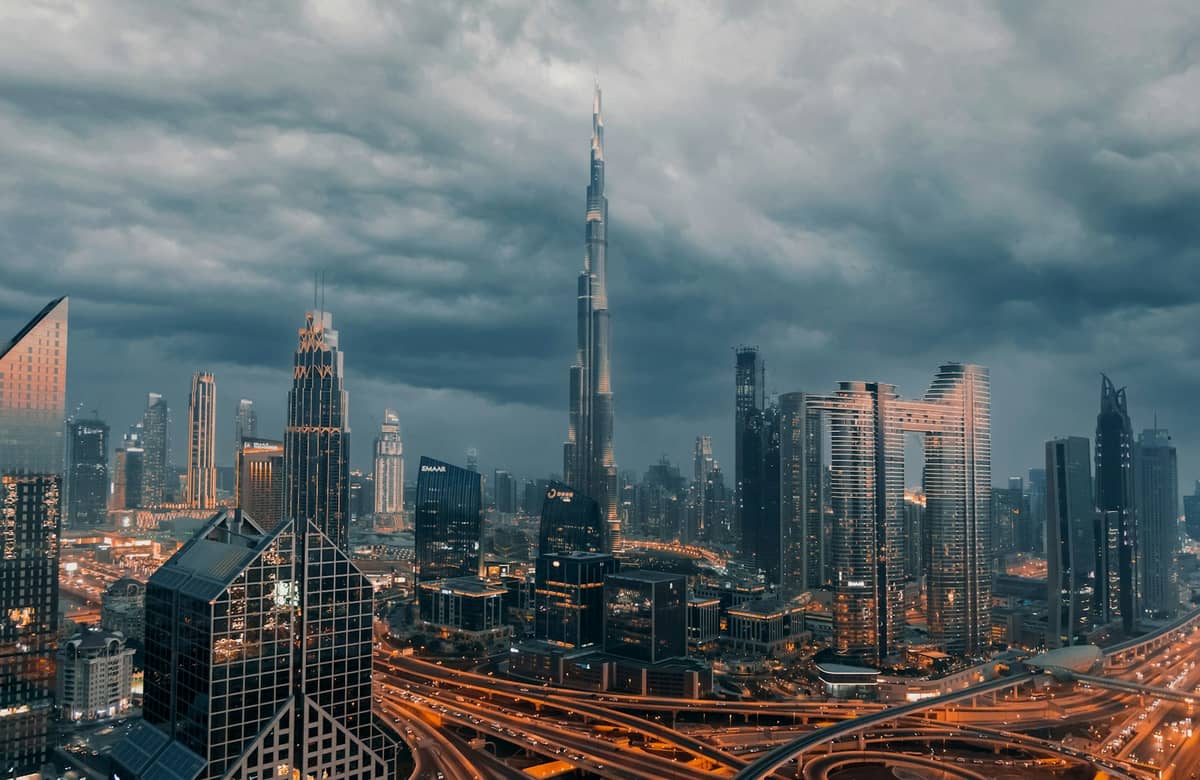
Downtown Dubai is the emirate's most recognizable district, built around the Burj Khalifa and Dubai Mall on a roughly 500-acre development along Sheikh Zayed Road. It delivers world-record architecture, choreographed fountains, and a concentrated hit of luxury retail and dining within walking distance of a single metro station.
Located in Dubai
Overview
Downtown Dubai is where the city's ambitions are written in concrete and glass at 828 metres. Anchored by the Burj Khalifa, Dubai Mall, and the Dubai Fountain, this Emaar-built district along Sheikh Zayed Road functions as both the commercial heart of Dubai and its most photographed square kilometre. It is polished, expensive, and relentlessly vertical, but it rewards visitors who look past the obvious landmarks.
Orientation
Downtown Dubai occupies roughly 500 acres of prime central real estate, developed by Emaar Properties from the early 2000s onward. It sits on the eastern side of Sheikh Zayed Road (E11), the highway spine that connects Dubai International Airport in the north to Abu Dhabi in the south. Financial Centre Road (D71) forms the northeastern boundary, separating Downtown from the Trade Centre district and Zabeel. To the south and southwest, the district transitions into Business Bay, Dubai's dense commercial canal district. The Dubai International Financial Centre (DIFC) lies to the east, behind the Emirates Towers.
The district's internal layout is more legible than it first appears. Mohammed Bin Rashid Boulevard forms the main pedestrian loop around Burj Lake. The Burj Khalifa tower sits at the center of this loop, with Dubai Mall attached to its base on the eastern side. The Opera District, which includes Dubai Opera and a cluster of upmarket restaurants, occupies the southern end of the Boulevard. Everything is within comfortable walking distance of everything else, which is unusual for a Dubai neighborhood, where distances often demand a car.
Downtown Dubai connects naturally to several other neighborhoods worth building into an itinerary. Business Bay to the south has good mid-range hotels and canal-side cafes. DIFC to the east is where the serious dining and late-night bar scene concentrates. If you want older Dubai, Bur Dubai and the Al Fahidi historical district are about 10 minutes by metro from the Burj Khalifa station.
Character & Atmosphere
Early mornings in Downtown Dubai belong to hotel guests, joggers on the Boulevard, and the construction crews perpetually finishing something nearby. The air is cooler, the light falls at a low angle that turns the Burj Khalifa gold from base to antenna, and the lake promenade is quiet enough that you can hear the water. This is genuinely the best time to photograph the area and to understand its scale without a crowd obscuring the foreground.
By mid-morning, Dubai Mall opens and the district shifts into a different gear entirely. The interior of the mall becomes its own microclimate: air-conditioned, bright, and moving at the pace of several thousand shoppers simultaneously. Outside, between October and April, the Boulevard terraces fill with brunch crowds and coffee drinkers. Between May and September, the heat above 40 degrees Celsius drives almost everyone indoors by 10am, and the outdoor spaces feel abandoned until after sunset.
Evenings are when Downtown earns its reputation. The Dubai Fountain show runs every 30 minutes from 6pm to 11pm, and the lakeside promenade packs in observers from every background: tourists with tripods, families on evening walks, residents who have watched the show dozens of times and still stop. The Opera District's restaurants fill up around 8pm and stay busy past midnight. Weekend nights around the Burj Khalifa plaza can be genuinely difficult to navigate on foot, particularly during the Dubai Shopping Festival or New Year's Eve, when crowd density becomes a practical concern.
⚠️ What to skip
New Year's Eve in Downtown Dubai is one of the busiest events in the region. Roads around the Burj Khalifa close hours in advance, public transport runs at crush capacity, and the lakeside promenade becomes nearly impassable. If you are staying in the neighborhood, plan to be in position early. If you are visiting from elsewhere, weigh whether the fireworks spectacle justifies the logistical effort.
The practical reality of Downtown Dubai is that it is a heavily curated environment. The streets are clean, the signage is bilingual, and the security presence is visible and consistent. It does not have the layered, organic character of Deira or the low-key beach rhythm of Jumeirah. What it offers instead is efficiency: the most famous things to do in Dubai are concentrated here, accessible on foot or by a single metro line, and the infrastructure handles large visitor numbers competently.
What to See & Do
The Burj Khalifa is the obvious starting point. At 828 metres it remains the world's tallest building, and the observation decks on the 124th floor (At the Top) and 148th floor (At the Top SKY) offer views that extend to the Gulf coastline, the desert interior, and on clear days toward Abu Dhabi. Booking tickets in advance is not optional during peak season: walk-up availability is limited and the elevator queue without a reservation can take the better part of an afternoon.
Below the tower, the Dubai Fountain on Burj Lake is worth watching from multiple angles. The promenade view is the most crowded; the upper floors of the Dubai Mall food court, which overlooks the lake, offer a surprisingly good elevated perspective without fighting for railing space. Shows run at 1:00pm and 1:30pm from Saturday to Thursday and at 2:00pm and 2:30pm on Fridays during the day, then every 30 minutes from 6:00pm until 11:00pm in the evening.
The Dubai Mall is more than a shopping centre. The Dubai Aquarium and Underwater Zoo inside the mall is one of the largest suspended aquariums in the world, visible through its acrylic panel from the ground floor without paying admission. The mall also contains an Olympic-size ice rink, a VR park, a dinosaur skeleton, and more dining options than most small cities.
Dubai Opera, the dhow-shaped 2,000-seat performing arts venue at the southern end of the Boulevard, hosts opera, ballet, concerts, comedy, and Broadway productions throughout the year, with the busiest programme typically between September and May. Checking the schedule before your trip is worthwhile. The surrounding Opera District is also the best stretch of the neighborhood for restaurant quality. For views from above, Sky Views Observatory at the Address Sky View hotel offers a glass slide and a sky bridge between two towers.
- Burj Khalifa observation decks (124F and 148F): book well in advance
- Dubai Fountain: free to watch from the promenade, paid abra rides on the lake
- Dubai Mall: aquarium, ice rink, cinema, fashion, food court with lake views
- Dubai Opera: performing arts venue, check schedule for current productions
- Mohammed Bin Rashid Boulevard: walkable loop with outdoor dining and fountain views
- Sky Views Observatory: glass slide and sky bridge at Address Sky View hotel
- Dubai Frame: nearby landmark with views toward old and new Dubai (short taxi ride)
💡 Local tip
The Dubai Mall food court upper level overlooks Burj Lake directly. If you want to watch the fountain show with a meal rather than standing on the promenade, this is one of the best free vantage points in the area. Get there 15 minutes before a show to secure a window position.
Eating & Drinking
Downtown Dubai has one of the highest concentrations of restaurants per square kilometre anywhere in the UAE, which does not automatically mean the best value. The Boulevard and the Opera District are where the better independent and international restaurants cluster, while Dubai Mall's lower levels are dominated by international chains and fast food at prices inflated by location and footfall.
The Opera District, particularly the stretch along the Boulevard facing the Opera building, has higher-end restaurant options covering Japanese, Italian, Mediterranean, and contemporary Middle Eastern cuisine. Many restaurants here have terrace seating with fountain views, which explains the premium pricing. Expect to spend 200 to 400 AED per person for a full dinner with drinks at the better spots. Reservations on Thursday and Friday evenings are close to essential.
For more accessible pricing, the food court inside Dubai Mall covers everything from Emirati-influenced fast food to international chains, with most meals in the 40 to 80 AED range. The mall's lower ground floor has a dedicated street food-style section. The Souk Al Bahar, the Arabic-style retail and dining mall adjacent to the lake, has mid-range restaurants with outdoor terrace seating and better fountain views than much of the Boulevard at comparable prices.
Alcohol is served at licensed hotel bars and restaurants throughout the district. The rooftop bars at the area's hotels are among the most sought-after in Dubai, offering Burj Khalifa views with cocktails priced accordingly, typically 80 to 140 AED per drink. Non-alcoholic options are extensive and well-executed: the specialty coffee scene in Downtown is strong, and the district has several cafes doing proper espresso alongside the usual branded chains.
ℹ️ Good to know
During Ramadan, eating and drinking in public areas is restricted during daylight hours. Most restaurants in Dubai Mall and hotel venues remain open for residents and visitors, but outdoor dining on the Boulevard pauses until iftar. The Ramadan atmosphere in Downtown, with evening illuminations and late-night activity after iftar, is worth experiencing on its own terms.
Getting There & Around
The Burj Khalifa / Dubai Mall Metro Station on the Red Line is the main transit access point for the neighborhood. It sits on the eastern edge of the area, connected to the mall by a long air-conditioned walkway, roughly a 10-minute walk from the station entrance to the mall's main doors. The Red Line runs from Centrepoint near the airport through Union Square in Deira, continuing south to Dubai Marina and Expo City. Journey time from Dubai International Airport (DXB) is approximately 35 to 40 minutes.
From the airport, the metro fare to Burj Khalifa / Dubai Mall station using a Nol card costs roughly 8 AED depending on zone classification. You will need a Nol card to ride; single-use paper tickets are available at station machines. For taxis and ride-hailing apps, the journey from DXB to Downtown takes 20 to 35 minutes depending on traffic, costing approximately 50 to 80 AED by metered RTA taxi. Uber and Careem are both active and generally comparable in price. For full transport options across the city, the getting around Dubai guide covers routes and costs in detail.
Within the neighborhood, walking is entirely practical between October and April. The Boulevard loop is about 3 kilometres and flat throughout. In summer, the covered walkways connecting the metro to the mall and the mall's internal climate control mean you can move between major attractions without significant heat exposure, but walking between hotels and restaurants on the Boulevard in July or August midday is genuinely uncomfortable and not recommended.
Taxis and ride-hailing apps are the practical choice for getting from Downtown to other neighborhoods. The RTA taxi rank outside Dubai Mall's main entrance and the valet areas at major hotels typically have cars available. Sheikh Zayed Road provides direct highway access to Dubai Marina (approximately 25 minutes without traffic) and to Deira via the city's internal road network. Driving to and parking in Downtown for daytime visits is possible but expensive and congested on weekends: paid parking operates throughout the district.
Where to Stay
Downtown Dubai has a dense concentration of four and five-star hotels, most of which position themselves around the Burj Khalifa view corridor. The Address brand hotels, operated by Emaar, are the most integrated into the district: Address Downtown sits directly on the Boulevard with unobstructed fountain views, while Address Sky View offers the sky bridge experience. Both carry premium pricing that spikes significantly during peak season from November to March and around major events.
The Armani Hotel, located inside the Burj Khalifa itself, is one of Dubai's most exclusive addresses. The Vida Downtown is a more contemporary, slightly more accessible option that draws a younger, design-conscious clientele. For visitors whose priority is the Burj Khalifa view, a room on a high floor facing the tower is worth specifying at booking: many rooms in the area have partial or no view despite the hotel's apparent proximity.
Downtown Dubai suits travelers who want to walk to their main sightseeing targets and have convenience as a top priority. It is not the right base if budget is a primary concern: mid-range accommodation is limited, and you will generally get more room for your money in Business Bay or near Dubai Marina. Families with children benefit from the proximity to Dubai Mall's entertainment options. For couples on a Dubai honeymoon, a fountain-view suite at one of the Boulevard hotels is as iconic an experience as the city offers.
If you are trying to decide between Downtown and other neighborhoods, the where to stay in Dubai guide sets out the trade-offs across the city's main districts clearly.
Practical Notes
Downtown Dubai operates on UAE dirham (AED). Card payments are widely accepted everywhere in the district, including at street-level cafes and market stalls, so carrying large amounts of cash is unnecessary. The area uses Type G electrical sockets (three rectangular pins, British-style) at 230V. Dress code expectations in the district are relatively relaxed by UAE standards given the international tourism focus, but modest dress remains the appropriate default for shopping malls and public spaces.
Dubai is generally a safe city for tourists, and Downtown's heavy security presence and CCTV coverage make it one of the lowest-risk areas in the emirate. The main practical hazards are the multi-lane Sheikh Zayed Road, which pedestrians should never attempt to cross outside designated underpasses, and the crowd density at major fountain events. For general advice on navigating Dubai as a visitor, including legal norms and customs, the rules for tourists in Dubai guide covers what you need to know before you arrive.
The best months to visit Downtown Dubai align with the city's overall travel window. November to March brings temperatures between 24 and 31 degrees Celsius, making the Boulevard terraces, fountain promenade, and outdoor attractions genuinely pleasant. For detailed climate breakdown and timing advice, see the best time to visit Dubai guide.
TL;DR
- Downtown Dubai is the right base for first-time visitors who want to cover Dubai's headline landmarks efficiently, all within walking distance of a single metro station.
- The Burj Khalifa, Dubai Mall, Dubai Fountain, and Dubai Opera are the core draws. The Opera District is the best area for quality dining on the Boulevard.
- Accommodation is predominantly four and five-star, with pricing to match. Budget travelers will find better value in Business Bay or Dubai Marina.
- The Red Line metro connects Downtown directly to the airport, Bur Dubai, and Dubai Marina. The neighborhood is walkable from October to April; in summer, plan around air-conditioned routes.
- Crowd management is a real consideration: fountain shows, New Year's Eve, and Shopping Festival periods make the lakeside area difficult to navigate without planning. The neighborhood rewards early mornings and weekday visits over weekend evenings.
Related Travel Guides
Related Travel Guides Downtown Dubai are coming soon.