Getting Around Dubai: The Complete Transport Guide
Dubai has one of the most developed public transport networks in the Middle East, but navigating it for the first time can be confusing. This guide breaks down every option — metro, taxi, bus, tram, ride-hailing — with real fare data, practical tips, and honest advice on what actually works for tourists.
TL;DR
- The Nol card is the single most important thing to get on arrival — it covers metro, tram, buses, some marine routes, and even paid parking.
- The Dubai Metro Red Line connects Dubai International Airport (DXB) directly to Downtown and beyond — it's the cheapest and often fastest airport transfer at around AED 6-7.50 per trip. See our Dubai airport guide for the full breakdown.
- RTA taxis are metered, reliable, and widely available — but airport pickups start at a fixed AED 25 surcharge, so factor that in.
- Both Careem and Uber operate in Dubai; prices are comparable to taxis but surge during peak hours and events.
- Summer heat (May–September) makes outdoor walking between stops genuinely punishing. Plan your itinerary around air-conditioned transport corridors, especially if you're visiting Dubai Marina or Downtown Dubai.
The Nol Card: Your Transport Foundation
Before anything else, get a Nol card. The Roads and Transport Authority (RTA) operates Dubai's entire public transport network under one unified ticketing system, and the Nol card is how you pay for almost all of it — metro, tram, public buses, selected marine routes, and even RTA-managed paid parking. Trying to navigate Dubai without one is like visiting London without an Oyster card: technically possible, but needlessly expensive and slower.
- Red Ticket A single-use paper ticket. Fine for one or two journeys, but costs more per trip than reloadable cards. Buy at any metro station ticket machine.
- Silver Nol Card The standard reloadable card for most visitors. Available at metro stations for a AED 25 deposit (includes AED 19 credit). Works on all public transport.
- Gold Nol Card Same as Silver but gives access to Gold Class carriages on the metro. Fares are exactly double the Silver rate — worth it only if you want a guaranteed seat in a quieter carriage during peak hours.
- Blue Nol Card Concessionary card offering around 50% discount for students, seniors, and some other categories. People of Determination may travel free with a Personal Nol card.
Standard Nol fares are zone-based. A journey within one zone costs AED 3 on a Silver card (AED 4 on a Red ticket). Two adjacent zones cost AED 5 (Silver) or AED 6 (Red). Any journey spanning more than two zones costs AED 7.50 (Silver) or AED 8.50 (Red). Gold class doubles the Silver fare across the board. Children aged 5 and under travel free when accompanied by a paying adult. For longer stays, monthly passes on Silver cards run approximately AED 140 for one zone, AED 230 for two zones, and AED 350 for all zones — good value if you're commuting or moving between districts daily.
💡 Local tip
Top up your Nol card at any metro station, at RTA service centres, or via the RTA app. Keep at least AED 7.50 on the card at all times — you cannot tap out of a long journey if your balance is insufficient, and you'll be flagged at the exit gate.
Dubai Metro: Routes, Hours, and What It Actually Covers
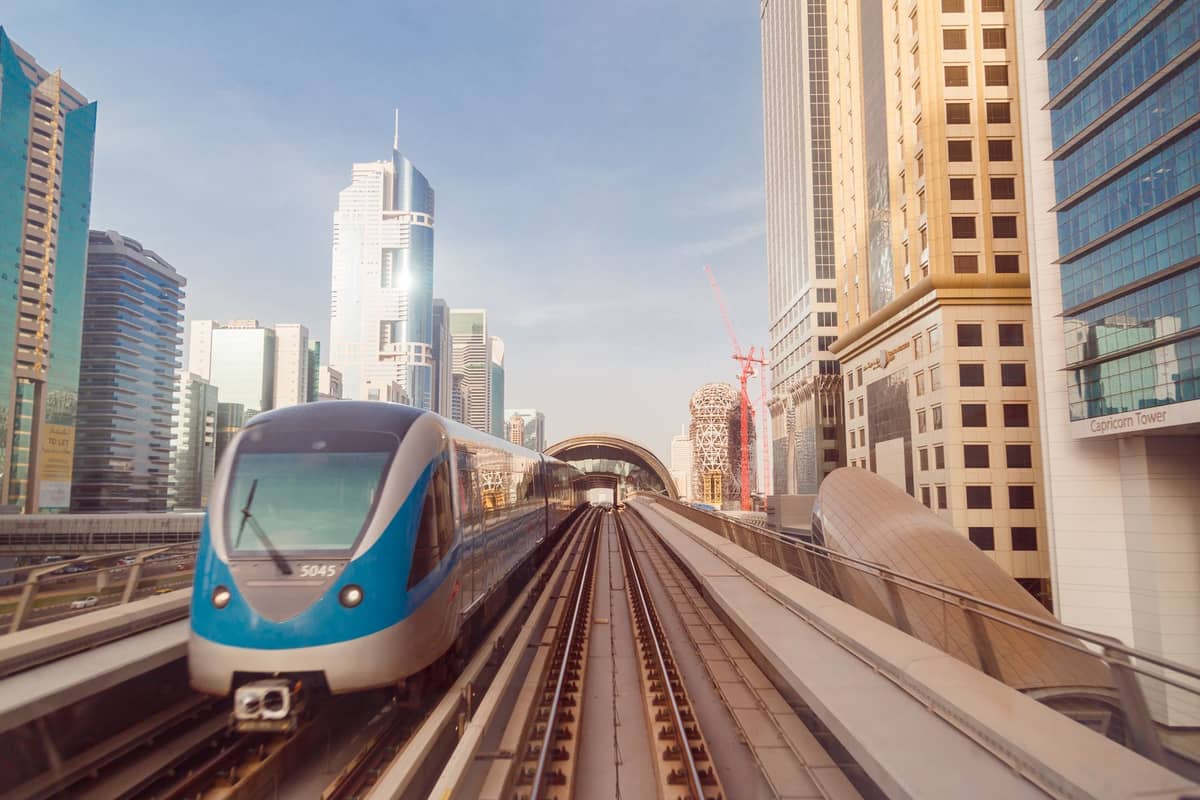
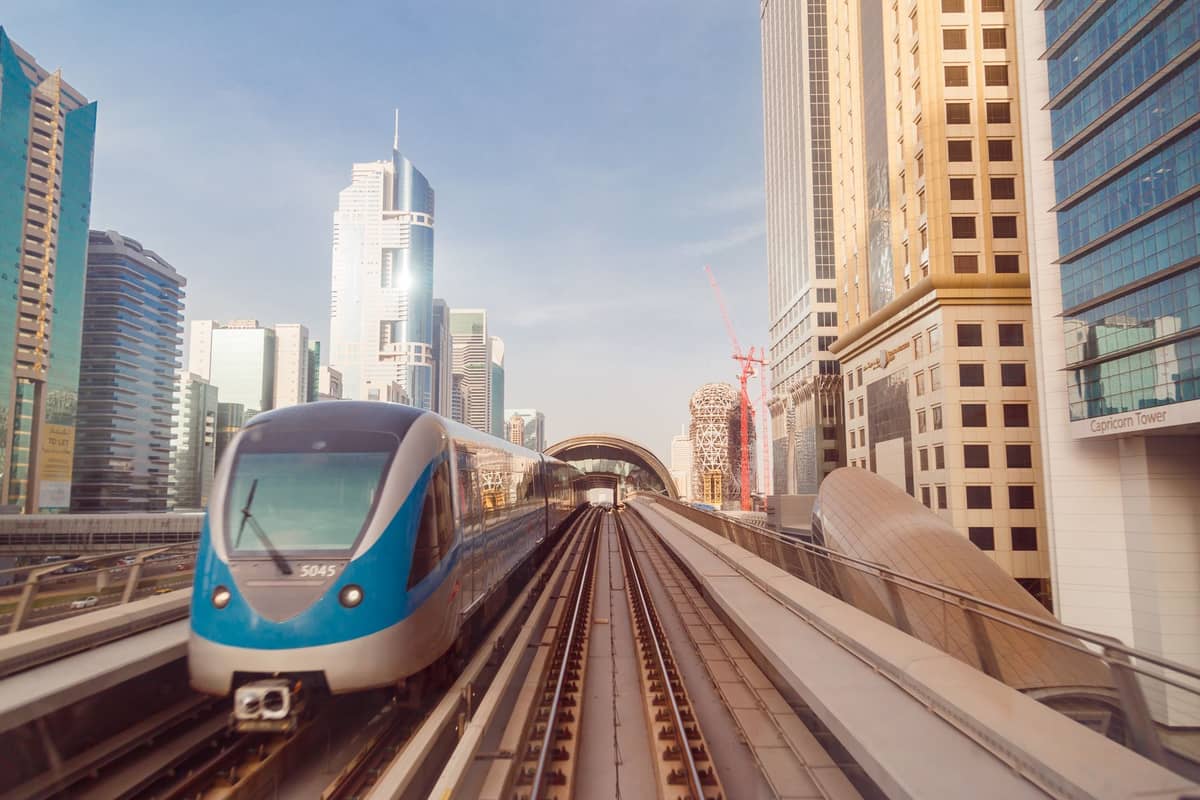
The Dubai Metro is fully automated, air-conditioned, and genuinely efficient along the corridors it serves. The Red Line is the workhorse for tourists — it runs from Rashidiya in the east (near Dubai International Airport terminals 1 and 3) through Deira, Union, BurJuman, Business Bay, Downtown Dubai, and out to Dubai Marina, Jumeirah Beach Residence, and all the way to UAE Exchange near the Abu Dhabi border. The Green Line crosses the Red at Union and BurJuman stations, extending north into Deira and south into Bur Dubai and Al Fahidi.
Metro operating hours on the Red and Green lines run approximately 05:00 to midnight Monday through Thursday and Saturday, with a later finish around 01:00 on Fridays to accommodate the weekend. On Sundays, trains run from 08:00 to midnight instead of the 05:00 start on other weekdays. Trains run every 3-5 minutes during peak hours and about 7-8 minutes off-peak, so you're rarely waiting long. The metro gets genuinely crowded during rush hours (roughly 07:30-09:30 and 17:30-20:00), particularly around stations like Dubai Mall/Burj Khalifa and Union. If crowds are a concern, Gold Class is a legitimate upgrade for peace of mind.
The metro's biggest limitation is coverage. It doesn't reach Jumeirah's beachfront villas, Palm Jumeirah's western fringe, or many of the residential areas tourists want to access. For anything off the main Red or Green Line corridors, you'll need to combine metro with a taxi, bus, or the Dubai Tram.
ℹ️ Good to know
Each metro train has a dedicated Women and Children carriage at the front of the train, and a Gold Class carriage. Using these areas without the correct ticket or eligibility will result in a fine. The signage is clear on platforms.
Dubai Tram, Buses, and Marine Transport
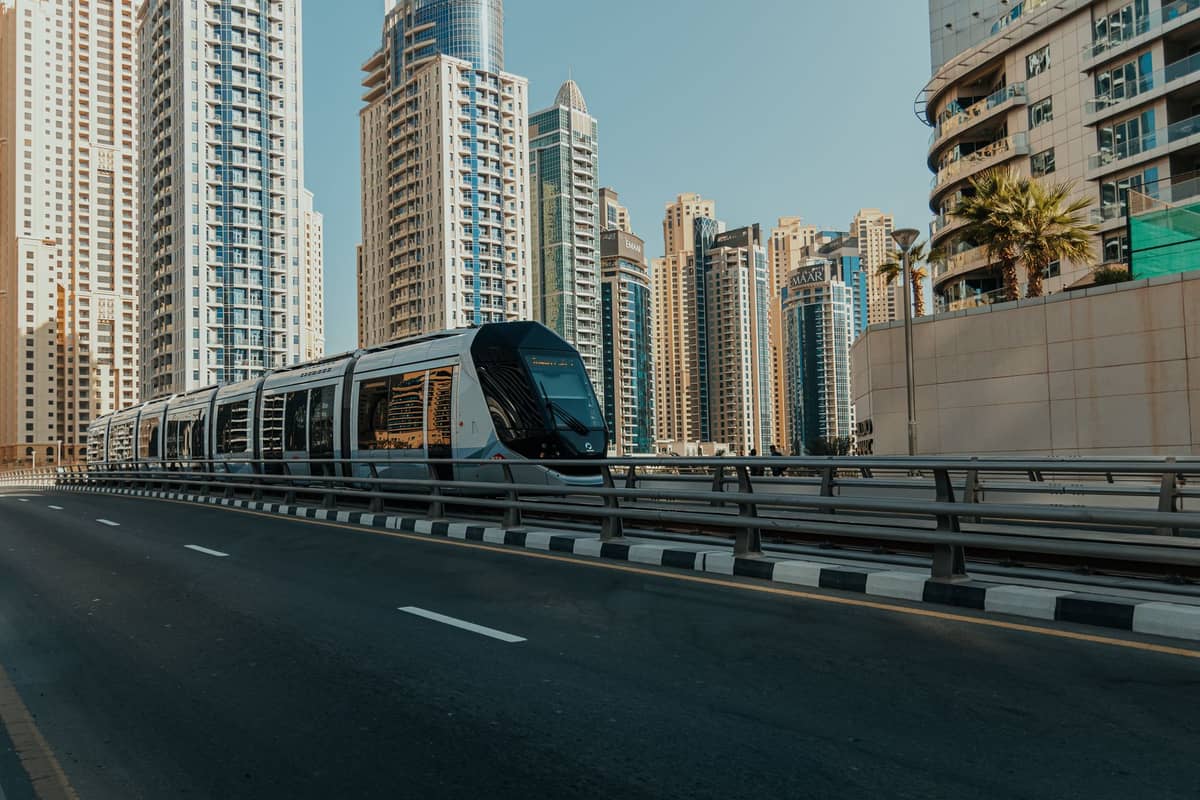
The Dubai Tram connects Dubai Marina and Jumeirah Beach Residence to the metro network via the DAMAC/FIRST interchange station on the Red Line. It runs along Al Sufouh Road between Al Sufouh and the Marina/JBR area with around a dozen stops, not far into inland districts like Al Quoz. Tram operating hours are generally 06:00 to 01:00, with a later start around 09:00 on Sundays. It uses the same Nol card as everything else, making transfers seamless. For anyone staying in or exploring the Marina area, the tram is far more practical than waiting for a taxi.
RTA's bus network is extensive but slower and harder to navigate for first-time visitors. Buses are air-conditioned and use Nol card payment. Some routes connect DXB to areas like Deira, Bur Dubai and New Dubai, but specific route numbers and paths change periodically, so always check the latest information before relying on a bus from the airport. Journey times on buses between the airport and central areas typically run 40-60 minutes. Unless you're on a tight budget or your destination is specifically bus-served, most visitors use buses primarily to reach areas the metro doesn't cover. The RTA's S'hail app (the official public transport journey planner) can map combined metro-bus routes clearly. For a broader look at getting between major areas, the Old Dubai guide covers local transport options in the Deira and Bur Dubai districts.
Marine transport is an often-overlooked option. The Abra (traditional wooden water taxi) crosses Dubai Creek between Deira and Bur Dubai for AED 1 in cash — it's the most atmospheric way to cross the Creek and one of the few transport experiences in Dubai that hasn't changed in decades. RTA also operates air-conditioned Water Bus and Water Taxi services along Dubai Creek and the Dubai Water Canal, which accept Nol cards and are more comfortable than abras for longer stretches.
Taxis: Metered, Reliable, and Not Always Cheap
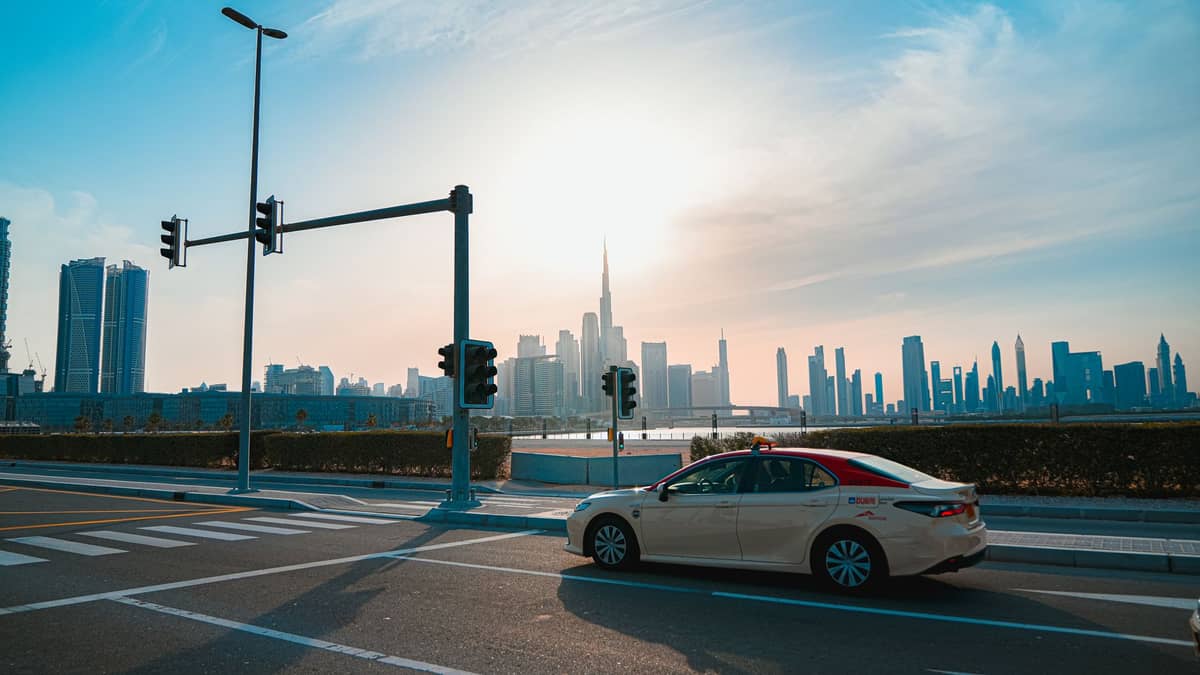
RTA taxis are cream-coloured, metered, and available throughout Dubai around the clock. The standard daytime base fare is around AED 5, with per-kilometre charges of approximately AED 2.2. At night (roughly 22:00 to 06:00), the minimum fare increases slightly. The most important thing to know: airport pickups carry a fixed AED 25 starting fare before the meter even begins running. A taxi from Dubai International Airport to Downtown Dubai typically costs AED 50-90 depending on traffic, time of day, and exact destination.
Hailing a taxi on the street works in most areas, but designated taxi stands outside malls, hotels, and major attractions are much more reliable than flagging one mid-road. During peak hours in congested areas like Downtown or the Marina, waiting times at stands can stretch to 15-20 minutes. At those moments, Careem or Uber is often faster to book.
⚠️ What to skip
Avoid unlicensed private drivers who approach you in the arrivals hall at DXB. Official RTA taxis queue outside the terminal and have meters. Unlicensed transfers are both illegal and unregulated — there's no recourse if the price changes.
Ride-Hailing: Careem and Uber
Both Careem and Uber operate in Dubai and are deeply integrated into how the city moves. Pricing is broadly similar to metered taxis, but both apps show upfront estimates before you confirm — useful for budgeting. Airport pickups from DXB via Careem or Uber typically cost AED 50-100 to central areas, depending on demand. During major events (Dubai Shopping Festival, New Year's Eve at the Fountain, large concerts), surge pricing can push costs significantly higher. During those windows, a metered taxi is often the more predictable choice.
App-based taxi bookings through RTA's own Hala platform (integrated with Careem) carry a minimum fare of around AED 12. The practical advantage of apps over street-hailing is being able to share your route with someone and having a digital record of the journey. For anyone exploring multiple districts in a day, combining metro legs with a Careem or Uber for the last mile is often the most efficient and cost-effective approach. If you're planning a desert trip or heading to Hatta, private transfers or car hire make more sense than public transport.
Getting From Dubai International Airport Into the City
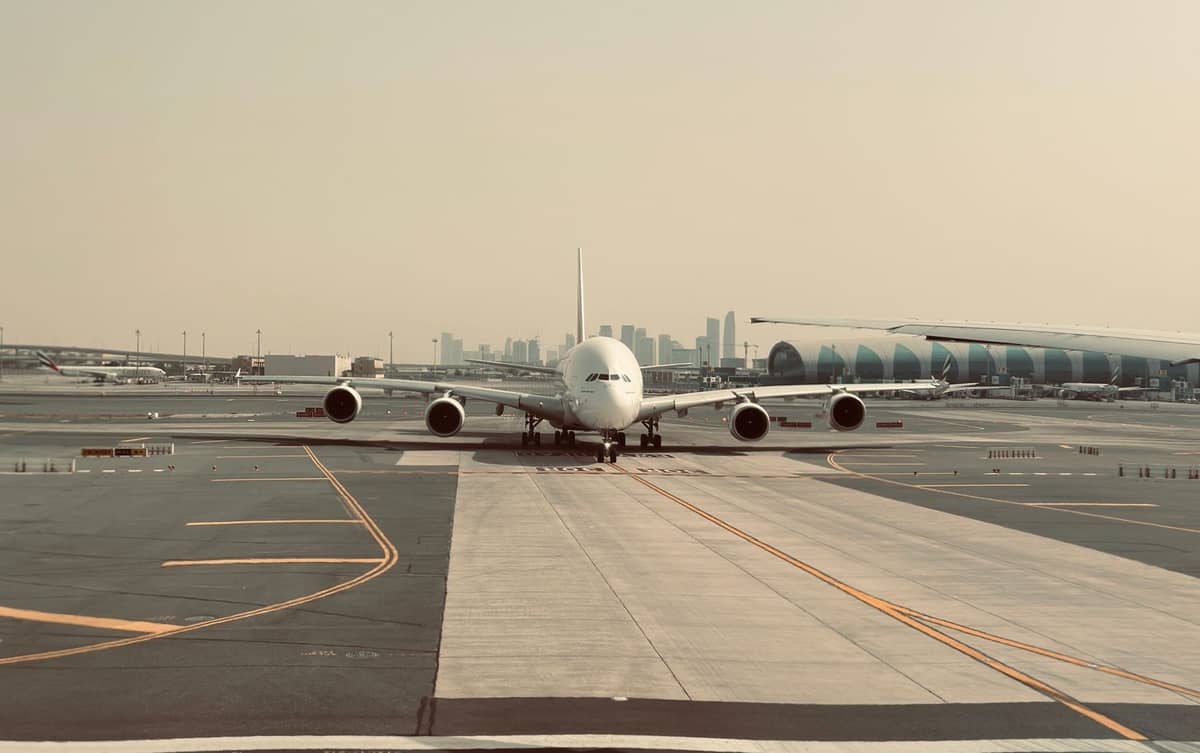
Dubai International Airport (DXB, IATA code) sits roughly 15 km from central Dubai, with typical road journey times of 20-40 minutes depending on traffic. The airport has three terminals: Terminal 1 and Terminal 3 both have direct Dubai Metro Red Line stations. Terminal 2 (primarily used by flydubai and some other carriers) is not metro-connected and requires a bus or taxi. Always confirm which terminal your flight uses before you land.
- Metro (Red Line) — Best Value AED 6-7.50 per person with a Nol card. Roughly 25-35 minutes to central stations like BurJuman or Union. Runs until midnight (01:00 on Fridays). Not ideal with heavy luggage, but perfectly manageable with a carry-on.
- RTA Taxi — Most Flexible AED 50-90 to Downtown, with the AED 25 airport surcharge included in that range. 20-40 minutes depending on traffic. Available 24/7 from the official taxi rank outside arrivals.
- Careem / Uber — Good Middle Ground AED 50-100 to central areas. Upfront pricing, but subject to surge. Best booked from the designated ride-hailing collection points inside the terminal, not at the kerb.
- RTA Bus — Budget Only Routes X22 and C13 connect DXB to Dubai Marina/Mall of the Emirates and Bur Dubai respectively. Cost AED 3-8. Journey time 40-60 minutes. Not recommended if you have significant luggage or are arriving late at night.
- Pre-Booked Private Transfer — Stress-Free AED 90-250 depending on vehicle type and provider. Driver meets you in arrivals. Worth it for families, early-morning arrivals, or if you're staying somewhere the metro doesn't serve well.
✨ Pro tip
If you're arriving on a weekend evening or during a major festival, road traffic from DXB can be severe. The metro bypasses all of it. Even with luggage, the metro is often the fastest option during those windows — and costs a fraction of a taxi.
Practical Tips for Getting Around Dubai Day-to-Day
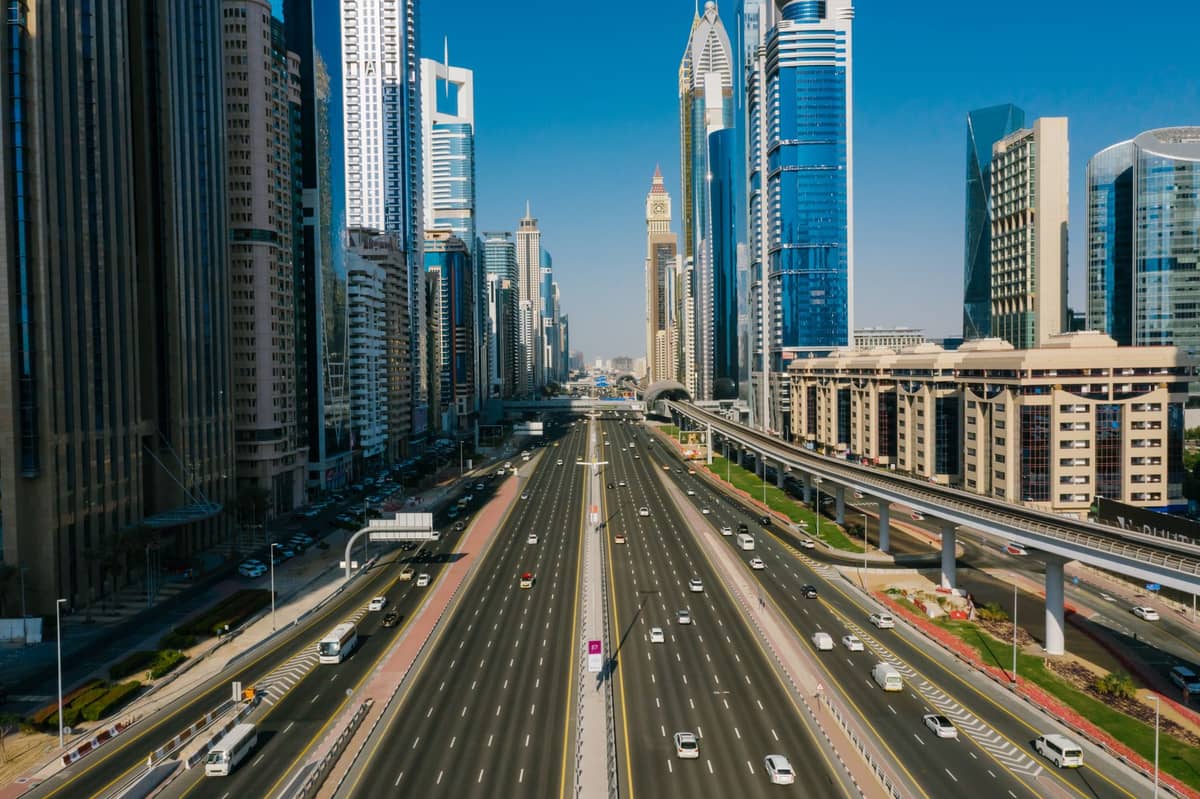
Dubai is a large, spread-out city. The distance from Deira in the north to Dubai Marina in the south is around 35 km, and driving or taking the metro end-to-end takes 45-60 minutes. Factor this into your itinerary planning: trying to visit Al Fahidi in the morning and Atlantis on the Palm in the afternoon in the same day is technically possible but genuinely tiring.
- Download the RTA S'hail app before arrival — it's the official multi-modal journey planner and covers metro, bus, tram, and taxi in one place.
- The Palm Jumeirah Monorail connects the Dubai Tram at Al Sufouh to Atlantis The Palm. It uses its own ticketing system rather than Nol cards and is the most practical way to reach the Palm's tip without a taxi.
- During summer months (May–September), plan your outdoor movement for early morning or evening. The metro and tram are fully air-conditioned, but walking between stations in 42°C heat with high humidity is exhausting and potentially risky.
- Major events at the Dubai Mall, Dubai Marina, or the Expo City area cause significant road congestion. On those days, the metro is not just cheaper — it's faster.
- Car hire is widely available and relatively affordable (from around AED 100-150 per day for a compact car), but parking in Downtown Dubai and the Marina can be expensive and difficult during peak hours. Factor in Salik road toll charges as well — Dubai's toll system charges a base AED 4 per gate crossing off-peak, with higher rates during peak hours.
- The Dubai Creek crossing at Shindagha Tunnel and Al Maktoum Bridge can back up significantly. The Abra crossing or metro via BurJuman/Union is often quicker for moving between Deira and Bur Dubai.
For budget-conscious travellers, the metro combined with occasional taxis covers the vast majority of what Dubai offers tourists. If you're visiting on a tighter budget, our Dubai on a budget guide covers the full transport cost breakdown alongside free and low-cost attractions. For those planning multiple day trips — to Abu Dhabi, Hatta, or Al Ain — private transfers or car hire are more practical than public transport, since inter-emirate bus services are limited and slow.
One underrated option for exploring the old parts of the city is simply walking — but only in the cooler months (November to March). The Al Fahidi historical district, Dubai Creek, the Gold Souk, and the Spice Souk are all within walking distance of each other in Deira and Bur Dubai, making that area genuinely pleasant to explore on foot when temperatures allow.
FAQ
What is the cheapest way to get from Dubai Airport to the city centre?
The Dubai Metro Red Line is the cheapest option, costing AED 6-7.50 per person with a Nol card. The journey to central stations like BurJuman or Union takes about 25-35 minutes. Both Terminal 1 and Terminal 3 have direct metro access. If you're arriving at Terminal 2, you'll need to take a bus or taxi instead.
Is the Dubai Metro good enough for tourists, or do you need a car?
The metro is genuinely good for most tourist destinations along the Red Line corridor — Downtown Dubai, Dubai Mall, Dubai Marina, and the airport are all well-served. But it doesn't cover Palm Jumeirah's western side, most of Jumeirah's beach areas, or outlying attractions. A combination of metro and occasional taxis or Careem covers the vast majority of what tourists want to see, without needing a rental car.
How does the Nol card work and where do I buy one?
The Nol card is Dubai's unified transport card, accepted on metro, tram, public buses, and some marine routes. Buy a Silver Nol card at any metro station ticket machine — it costs AED 25 (including AED 19 of pre-loaded credit). Top it up at stations, RTA service centres, or via the RTA app. Keep enough balance for your longest likely journey: AED 7.50 covers any distance within the network.
Are taxis in Dubai metered or do you negotiate the price?
All official RTA taxis in Dubai are fully metered — you never negotiate a price. The daytime base fare is around AED 5, plus roughly AED 2.3 per kilometre. Airport pickups carry a fixed AED 25 starting fare. Avoid anyone in the arrivals hall offering an unofficial fixed-price ride; these are unlicensed and unregulated.
Is it safe to use Uber or Careem in Dubai?
Yes, both Careem and Uber are legal and widely used in Dubai. Careem is the dominant app in the region. Pricing is broadly similar to metered taxis, but both apps show upfront estimates. Surge pricing applies during peak hours and events. For airport pickups, use the designated app-based vehicle collection zones inside the terminal rather than the kerb.