Hatta
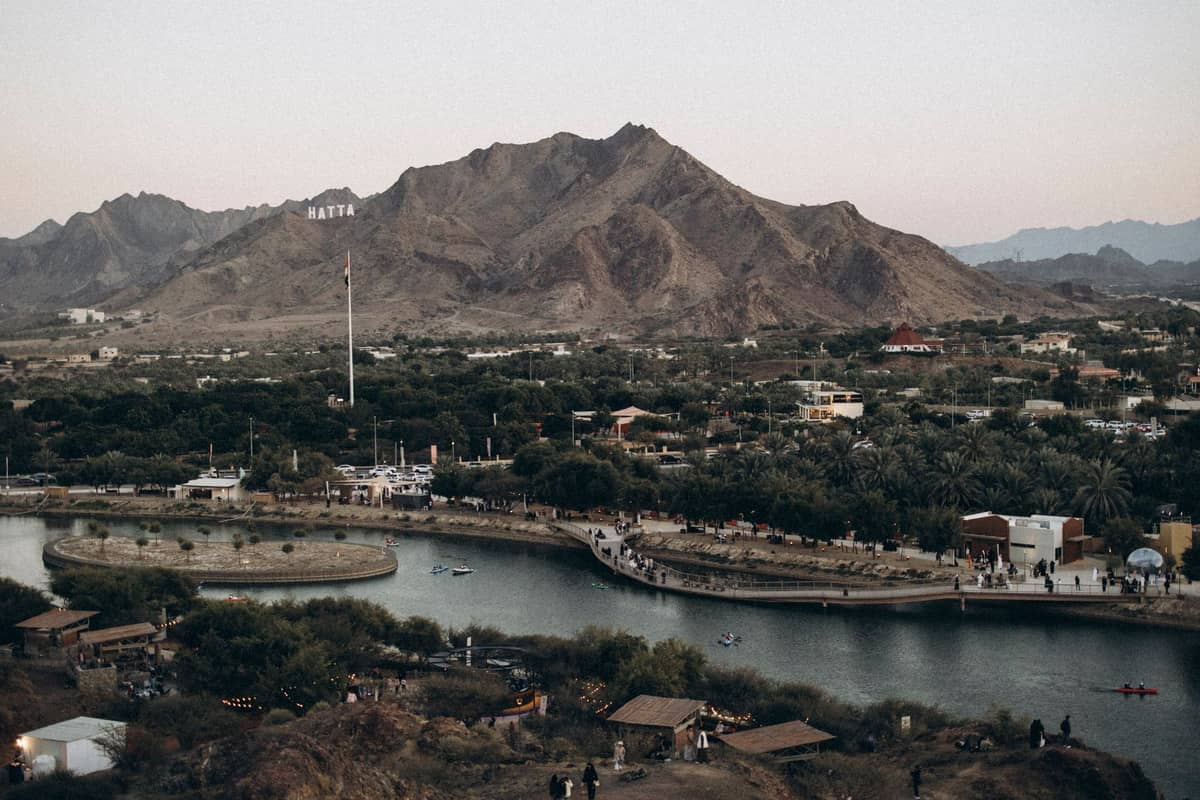
Perched in the Hajar Mountains roughly 130 km southeast of Dubai city, Hatta is a Dubai exclave that feels like a different world. Cooler air, rocky ridgelines, a turquoise reservoir, and restored mud-brick villages replace the coastal city's glass towers and beach clubs. It rewards visitors who want outdoor adventure, cultural depth, or simply a change of pace from urban Dubai.
Located in Dubai
Overview
Hatta is Dubai's mountain exclave, a compact town wedged between Oman and the Hajar Mountains where the emirate's desert ambitions meet dramatic rocky terrain. It sits about 130 km southeast of Dubai city, and the contrast could not be sharper: red-rock ridgelines, a deep-green reservoir, mountain biking trails carved into the hillsides, and a restored heritage village that predates the UAE itself. This is not a neighborhood you wander into accidentally. You make the trip deliberately, and it consistently delivers.
Orientation
Hatta is unlike any other part of Dubai. While the emirate's main territory stretches along the Arabian Gulf coast, Hatta is a geographically separate exclave located deep in the Hajar Mountains, bordered by Oman to the east and south and the Ajman enclave of Masfout to the west; nearby Ras Al Khaimah territory lies to the north within the same mountain region. It is, in every practical sense, an island of Dubai surrounded by other jurisdictions.
The drive from Dubai city takes roughly 90 minutes to two hours via the E44 Dubai-Hatta Highway, a well-maintained dual carriageway that passes through stretches of flat desert before the landscape abruptly shifts as you enter the mountains. The road quality is good, and the route is clearly signed from multiple points across Dubai. Arriving by road is the most common approach, and the journey itself, once the mountains begin, is part of the experience.
The town of Hatta is small and compact, with most visitor infrastructure concentrated around three main clusters: the Hatta Wadi Hub adventure area to the north of the reservoir, the Hatta Dam and its shoreline, and the Hatta Heritage Village in the older residential quarter. Hatta Hill Park sits on elevated ground and offers panoramic views over the entire area. The Hatta Bus Station on the E44 serves as the central transport node connecting these sites.
ℹ️ Good to know
Hatta is a Dubai exclave and remains under Dubai government jurisdiction, but you will pass through territory associated with other emirates on the drive. No border checkpoints apply for UAE residents and most visitors, but carry your passport or Emirates ID as standard practice when traveling between emirates.
Character & Atmosphere
The first thing you notice arriving in Hatta is the temperature. Even in late October, when Dubai city sits at 35°C and climbing, Hatta's higher elevation delivers noticeably cooler, drier air. In winter months, temperatures can drop to single digits overnight, and mornings carry a genuine chill. This climate difference is not trivial: it is the reason Hatta has historically served as a retreat for Dubai residents seeking relief from coastal heat and humidity.
In the early morning, the mountains surrounding the reservoir catch golden light from the east, turning the rocky faces amber and rust. The Hatta Dam sits still, its blue-green water almost impossibly calm before the kayaks launch. Birdsong carries clearly in the thin air. By mid-morning, families and groups arrive at the Wadi Hub, and the trails fill with mountain bikers in gear ranging from casual to serious. The sound shifts to wheels on gravel and the hum of e-bike motors on the steeper climbs.
Afternoons in Hatta have a slower rhythm than Dubai's urban core. The Heritage Village, shaded by old trees and thick mud-brick walls, stays cool well into the afternoon. The lanes between the restored falaj irrigation channels and the old watchtowers feel genuinely quiet, not the curated quiet of a theme park but the actual stillness of a place where few people are rushing anywhere. By late afternoon, day-trippers begin their return drive, and the area around the dam takes on a more local character, with residents walking along the shoreline as the light fades.
Hatta after dark is not a nightlife destination. The village essentially closes down by early evening. What you get instead is a sky full of stars, the kind that is invisible from Dubai's light-polluted coast. If you are staying overnight, this is one of the genuine rewards.
What to See & Do
Outdoor activity is the core draw, and the infrastructure has matured considerably in recent years. The Hatta Wadi Hub is the organized hub for most adventure activities, offering mountain biking on trails graded for different skill levels, archery, axe throwing, zip-lining, and kayaking on the reservoir. Trail quality is high, with routes ranging from easy gravel paths suitable for casual cyclists to technical single-track descents that attract serious riders from across the UAE.
The Hatta Dam is the visual centerpiece of any visit. The reservoir sits behind a broad concrete dam wall and reflects the surrounding mountain ridges in colors that shift from blue-green to deep teal depending on the season and time of day. Kayaks and pedal boats are available for hire directly at the shoreline, and even a slow paddle out toward the dam wall gives a perspective of the mountains that no viewpoint on land can match.
The Hatta Heritage Village is worth at least an hour. The village was restored by Dubai Municipality and displays the traditional architecture of the Hajar Mountain settlements: circular and rectangular mud-brick structures, wooden-doored storage rooms, and the falaj water channels that sustained the community for centuries. There is a small museum section with weapons, tools, and household items. Entry is free, and the site is compact enough to explore thoroughly without rushing.
- Mountain biking at Hatta Wadi Hub: trails for all levels, bike rental available on-site
- Kayaking and pedal boating on the Hatta Dam reservoir
- Hiking trails through the surrounding wadis and rocky terrain
- Hatta Heritage Village: free-entry open-air museum with traditional architecture
- Hatta Hill Park: panoramic viewpoint accessible by car or on foot
- Archery, axe throwing, and zip-lining at the Wadi Hub activity centre
- Stargazing after dark from campsite areas or elevated viewpoints
For those interested in broader context, Hatta makes an ideal base for understanding Dubai's history beyond the coast. The Old Dubai guide covers the creek-side origins of the emirate, which pairs well with a visit to Hatta's heritage sites to see how inland mountain communities lived in parallel with the coastal traders.
💡 Local tip
Book mountain bike rentals and kayaking slots in advance if visiting on a Friday or Saturday. Weekends fill quickly, especially from October through March when the weather is at its best.
Eating & Drinking
Hatta's food scene is small and honest. The Wadi Hub area has cafes and casual dining outlets suited to post-activity refueling: grilled meats, fresh juices, sandwiches, and simple Emirati dishes. Prices are reasonable by Dubai standards, and portions are generous. Expect to spend AED 40-80 per person for a solid meal at one of the hub outlets.
The Hatta Fort Hotel, one of the oldest resort properties in the emirate, has on-site dining that offers a more formal option and is open to non-guests for meals. The setting, surrounded by manicured gardens against the mountain backdrop, is one of the more pleasant lunch spots in the area. The menu leans toward international comfort food with some regional dishes. Reservations are advisable for dinner, especially on weekends.
There are small local restaurants and cafeterias in the town center serving Pakistani, Indian, and Arabic fare at genuinely local prices, around AED 15-30 per person. These are workday lunch spots for residents and workers rather than visitor-oriented establishments, but they serve reliable, filling food. If you want fresh fruit or snacks for a hike, there are small grocery stores near the heritage village.
Alcohol is available at the Hatta Fort Hotel for guests and diners, but Hatta's general character is quiet and conservative compared to Dubai's coastal strip. Do not expect bars or nightlife venues. The evening winds down early, and that is very much part of the appeal.
Getting There & Around
The most practical way to reach Hatta from Dubai city is by car. The E44 Dubai-Hatta Highway connects directly, and the journey from central Dubai takes roughly 90 minutes to two hours depending on traffic and your starting point. Driving gives you flexibility to stop at viewpoints along the mountain approach and to move between the dam, heritage village, and Wadi Hub on your own schedule. Parking is available at all major sites.
The Hatta Express (Route H02) runs daily from Dubai Mall Bus Station to Hatta Bus Station, departing roughly every two hours from 7:00 to 19:00 with a fare of approximately AED 25 per person. A second route, E16, connects Al Sabkha Bus Station in Deira with Hatta Bus Station, also with a fare of approximately AED 25 per person. Journey time on both routes is approximately two hours.
Once at Hatta Bus Station, the Hatta Hop On Hop Off bus (Route H04) provides a circular tourist service connecting the four main visitor sites: Hatta Wadi Hub, Hatta Hill Park, Hatta Dam, and Hatta Heritage Village. Buses run approximately every 30 minutes, with a fare of around AED 2 per stop. This is a practical and affordable circuit for day-trippers arriving by public bus.
⚠️ What to skip
Bus fares and schedules are subject to RTA updates. Verify current timings and prices on the RTA website or app before traveling. Services may be reduced or altered on public holidays.
Ride-hailing services including Careem and Uber operate in Dubai, but coverage in Hatta itself is limited. If you arrive by bus and find the hop-on-hop-off service insufficient for your plans, local taxis may be available near the bus station but are not guaranteed. For full flexibility, a rental car or a guided tour from Dubai is the more reliable option.
Where to Stay
Most visitors to Hatta come on day trips from Dubai city, and this is entirely feasible. A well-organized day, departing by 8:00 from central Dubai, gives you six to seven hours on-site before the return drive. However, staying overnight transforms the experience significantly.
The Hatta Fort Hotel is the established option, a low-rise resort set in landscaped grounds that has operated for decades and remains the reference point for accommodation in the area. It suits couples, families, and anyone wanting a comfortable base with resort amenities including pools, tennis courts, and direct access to the surrounding terrain. Rates are moderate to upper-moderate by UAE standards.
The Hatta Wadi Hub also offers glamping-style accommodation in bubble tents, dome tents, and other elevated camping formats pitched near the reservoir. These book out quickly on weekends and provide an immersive mountain experience at a more accessible price point than the Fort Hotel. Sleeping under canvas with mountain ridges on three sides and the dam below is a genuinely different kind of Dubai accommodation.
For travelers weighing all of Dubai's accommodation options, the broader where to stay in Dubai guide covers the city's main districts, but Hatta is worth considering as a one or two-night alternative if your trip is long enough to absorb it.
Practical Considerations
Hatta is one of the safest areas in the UAE. It has historically recorded very low crime figures, and the combination of small-town character, active tourism infrastructure, and mountain isolation means it draws a demographic that is predominantly family and outdoor-activity oriented. Solo travelers, couples, and families with children all move through the area comfortably.
The mountain terrain requires appropriate preparation for hiking and trail activities. Footwear matters: sandals are fine for the Heritage Village and dam shoreline, but trails require closed shoes with grip. Carry more water than you think you need, particularly from March through October when heat builds quickly on exposed rock. The UV index at elevation is high year-round.
The best months to visit are October through March, aligning with Dubai's broader winter season. Hatta's elevation makes it genuinely cold in January and February nights, so pack a layer even if you are coming from warm coastal Dubai. Summer visits are possible but the heat, even at altitude, is significant, and several outdoor activities reduce hours or close temporarily.
For context on behavior and customs expected across Dubai and the UAE, the Dubai rules for tourists guide covers public conduct, dress expectations, and key legal considerations. Hatta follows the same standards as the rest of the emirate.
💡 Local tip
The drive along E44 through the mountains is scenic enough to justify slowing down. There are informal pull-off points with views of the Hajar foothills that make worthwhile photo stops, particularly in the hour before and after sunrise when the light is at its most dramatic on the rock faces.
If you are building a broader itinerary that combines Hatta with other outdoor experiences, the day trips from Dubai guide covers the full range of options including Al Qudra, the desert conservation areas, and cross-border excursions to Abu Dhabi.
TL;DR
- Hatta is Dubai's mountain exclave, about 130 km southeast of the city via E44, offering a complete contrast to the coastal emirate in climate, terrain, and pace.
- Best for: outdoor enthusiasts (mountain biking, kayaking, hiking), families wanting a nature break, cultural travelers interested in pre-modern Emirati heritage, and anyone needing a genuine change of scenery from urban Dubai.
- The ideal visit is October through March when temperatures are comfortable; summer is manageable but outdoor activities are limited by heat.
- Day trips are viable from Dubai city, but an overnight stay, especially in the glamping options at the Wadi Hub, adds significant depth to the experience.
- Not suited to visitors primarily seeking dining, nightlife, or shopping: Hatta's food scene is functional rather than exciting, and evenings close down early.
Related Travel Guides
Related Travel Guides Hatta are coming soon.