Where to Stay in Dubai: Best Areas & Hotels Guide
Dubai's neighborhoods each offer a completely different experience, and choosing the wrong area can cost you hours of travel time and hundreds of dirhams in taxis. This guide breaks down every major district, honest pricing by season, transport logistics, and which type of traveler belongs where.
TL;DR
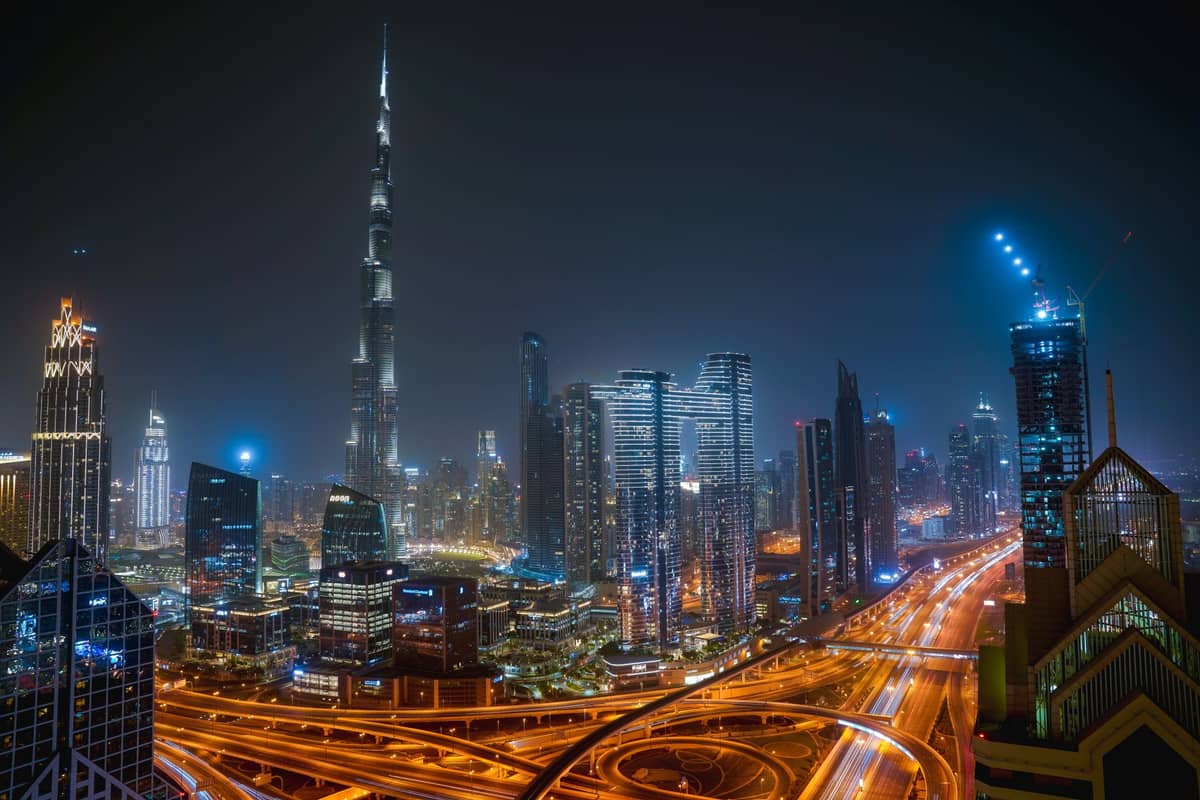
- Downtown Dubai is the best all-round base: central, metro-connected, and close to the Burj Khalifa and Dubai Mall.
- Dubai Marina and JBR suit beach-focused travelers and those who want a lively waterfront atmosphere without the ultra-luxury price tags of Palm Jumeirah.
- Hotel prices swing dramatically by season: expect to pay up to US$591/night in February and as little as US$140/night in September. See the best time to visit Dubai for a full seasonal breakdown.
- Deira and Bur Dubai offer the cheapest central accommodation and the best access to Old Dubai's souks and heritage sites.
- Wherever you stay, proximity to a Dubai Metro station is the single most important factor for getting around cheaply and efficiently. Check our guide to getting around Dubai before you book.
Understanding Dubai's Layout Before You Book
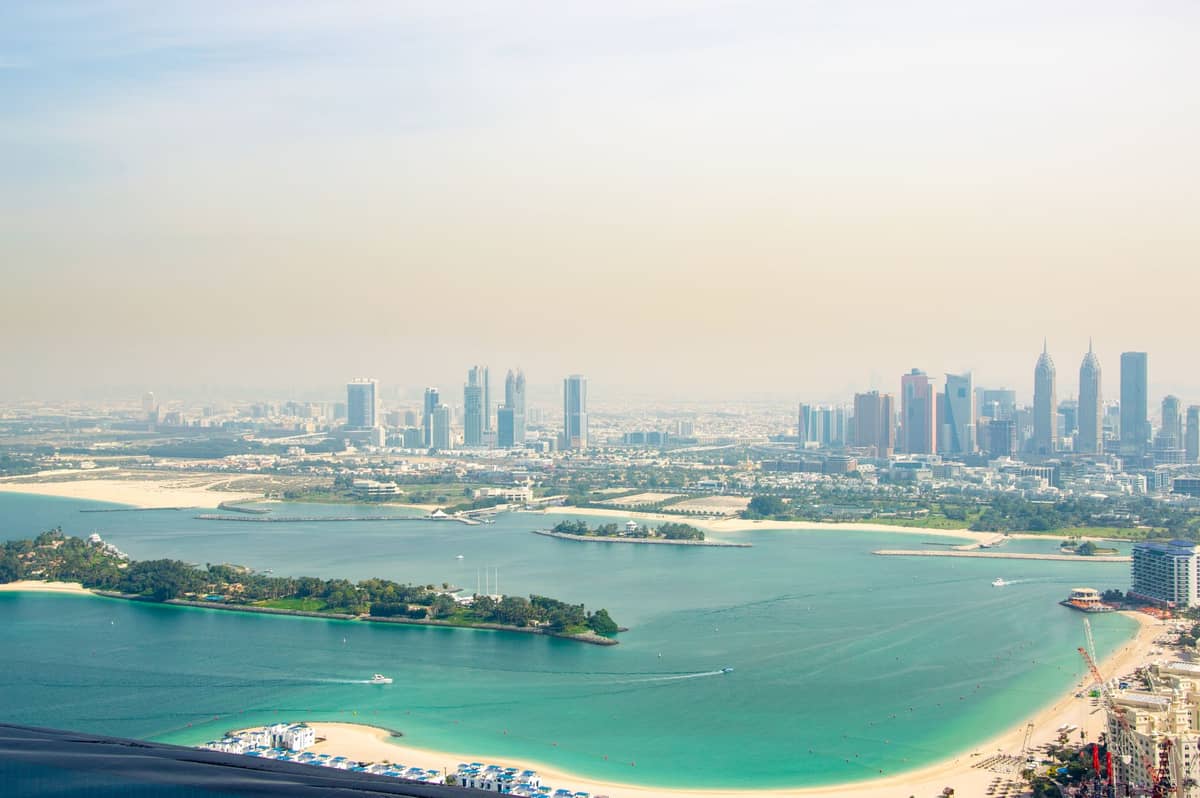
Dubai stretches roughly 35 km along the Persian Gulf coast, and the city is not designed to be explored on foot between neighborhoods. The distance from Deira in the north to Dubai Marina in the southwest is around 35 km. What this means practically: where you stay matters enormously. If you book a hotel in Deira and spend most of your time at the Marina, you will clock up significant taxi or metro time every single day.
The Dubai Metro Red Line is the backbone of the city's transport network and runs through most of the main tourist areas: Deira, Bur Dubai, Business Bay, Downtown Dubai, and all the way out to Dubai Marina. Staying within walking distance of a metro station cuts your daily transport costs dramatically and eliminates dependence on taxis during peak hours.
💡 Local tip
Before booking, map your planned attractions against the metro map. Hotels one or two stops from your main sights are almost always worth slightly more than a cheaper property that requires a taxi for every trip.
Best Areas to Stay in Dubai: Neighborhood by Neighborhood
Dubai's main tourist districts each have a distinct character and price range. Here is an honest look at what each area actually delivers, including the trade-offs most guides skip over.
- Downtown Dubai The most central and convenient base for first-time visitors. Home to the Burj Khalifa, Dubai Mall, and Dubai Fountain, with excellent metro access at the Burj Khalifa/Dubai Mall station. Hotels range from mid-range business hotels around AED 500-800/night to ultra-luxury properties well above AED 2,000/night. The area is heavily commercial and lacks charm in the evenings once the mall crowds thin out.
- Dubai Marina and JBR The best area for a beach holiday combined with nightlife, restaurants, and the Walk at JBR. Ain Dubai on Bluewaters Island is minutes away. Metro access via the Dubai Marina and DMCC stations. Prices are slightly lower than Downtown for comparable quality. The only real drawback is traffic congestion on weekends, which can make taxis painfully slow.
- Palm Jumeirah For travelers who want a resort-within-a-resort experience: Atlantis, One&Only, and several Waldorf Astoria properties sit here. The Palm Monorail connects to the mainland metro, but it is a slow and limited link. If you are not staying at a property with its own beach and dining, Palm Jumeirah can feel isolating and expensive to leave. Not recommended as a base if you plan to explore widely.
- Deira and Bur Dubai Old Dubai on both sides of the Creek. This is where budget travelers and those interested in Dubai's pre-oil history get the most value. Hotels are significantly cheaper, food is better and more affordable, and the Gold Souk, Spice Souk, and Al Fahidi Historical Neighbourhood are all walkable. The metro connects both districts to the rest of the city.
- Business Bay A practical choice for business travelers and anyone who wants Downtown access without Downtown prices. The area itself is still developing and lacks atmosphere, but the metro station and proximity to both DIFC and Downtown make it functional. Several good mid-range and upper-mid-range chain hotels operate here.
- Jumeirah A low-rise, villa-dominated residential strip with some of Dubai's best beach hotels. The Burj Al Arab and Jumeirah Beach Hotel anchor the strip. The area has no metro access, so you are taxi-dependent for everything. Suits travelers who plan to spend most of their time at a single beach resort and do not need to move around the city much.
Hotel Prices in Dubai: What to Actually Expect
Dubai has a reputation as an expensive destination, but the pricing reality is more nuanced. The city's hotel market swings dramatically between seasons, and the same room that costs US$591 per night in February can drop to US$140 in September. Budget travelers who are comfortable with extreme summer heat can find genuinely affordable stays at properties that would be well out of reach in winter.
As a rough baseline: 3-star hotels often start around US$60 per night, 4-star properties around US$75-130, and 5-star hotels frequently run US$220 and up. However, these averages mask huge peaks. February, driven by the post-New Year peak season and events like the Dubai Shopping Festival, consistently sees the highest rates. September is typically the cheapest month, sitting at roughly 40-50% below peak winter pricing.
- Peak Season (December to February) Highest demand and prices. Book 3-4 months in advance for good options. Average nightly rates for 5-star properties can exceed US$400-500. Weather is at its best: 24-28°C with low humidity.
- Shoulder Season (March to May and October to November) Good balance of manageable prices and decent weather. November is particularly strong: temperatures around 28-31°C, prices beginning to rise but not yet at peak. October offers value as temperatures cool from summer.
- Summer Season (June to September) Daytime highs regularly exceed 40°C with high humidity. Outdoor activities are largely impractical. However, hotels drop prices by 40-50%, malls and indoor attractions are uncrowded, and some luxury properties become accessible to mid-range budgets. Worth considering for mall-and-beach-club travelers who can handle the heat.
⚠️ What to skip
Avoid booking non-refundable rates too far in advance during peak season without checking the Dubai events calendar. Major events like the Dubai Shopping Festival, New Year's Eve fireworks, and the Dubai World Cup send prices sharply higher and can make certain nights nearly impossible to book late.
Getting From the Airport to Your Hotel
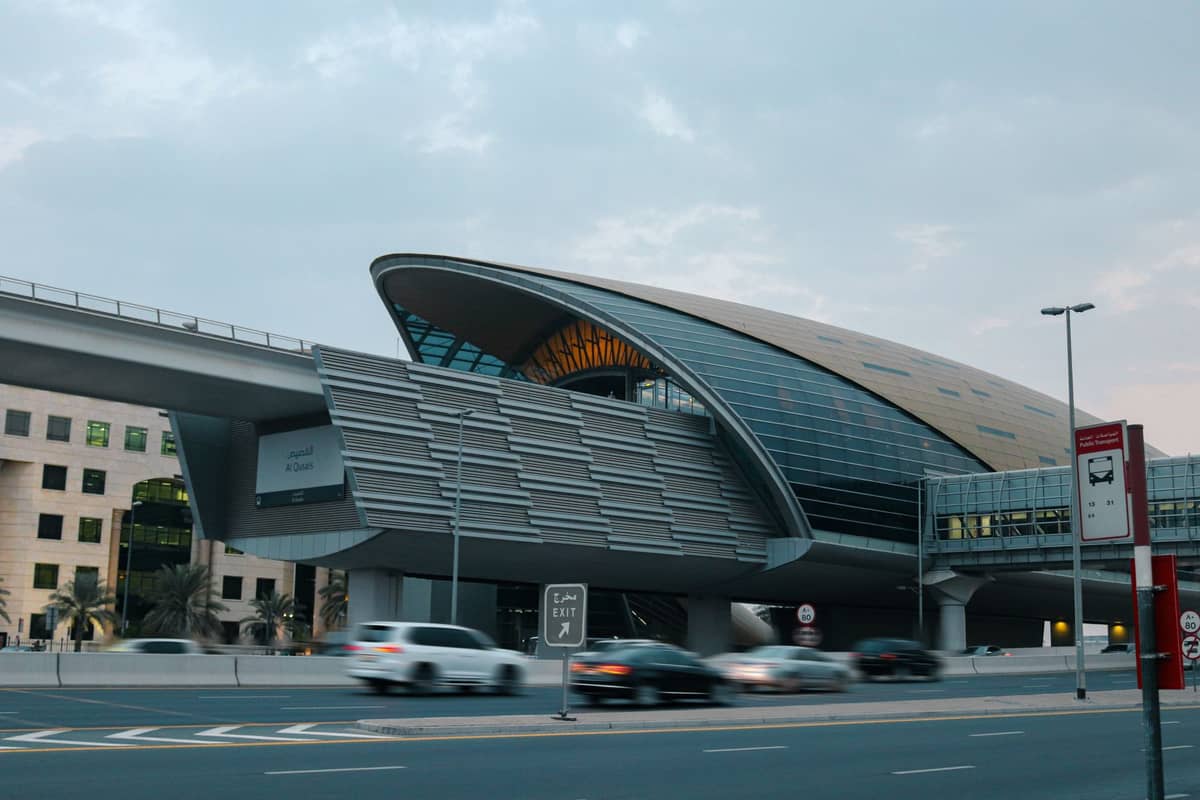
Dubai International Airport (DXB, IATA code) sits around 15 km from the city centre, with most journeys to central hotels taking 20-30 minutes depending on traffic and destination. The airport has its own metro stations on the Red Line, serving Terminals 1 and 3. For travelers staying in Downtown Dubai or along the Sheikh Zayed Road corridor, the metro is the fastest and cheapest option at around 5-7 AED per person, with journey times of 25-35 minutes to central stations.
Taxis from DXB to central Dubai typically cost 50-90 AED with a 25 AED airport surcharge applied at departure. Careem and Uber both operate from the airport, generally pricing similarly to metered taxis at 50-100 AED depending on destination and time of day. Pre-booked private transfers run from around 90-150 AED for standard vehicles. The bus network is cheap at 3-8 AED but slow at 40-60 minutes and not practical with heavy luggage.
✨ Pro tip
If you are staying anywhere along the Red Line metro route, take the metro from the airport. It is air-conditioned, reliable, and costs a fraction of a taxi. Buy a Nol card at the airport station for tap-on tap-off convenience throughout your stay. Taxis make more sense for Palm Jumeirah, Jumeirah beach strip, and other areas without metro access.
Practical Tips for Choosing Where to Stay
The single best question to ask before booking is: what will I actually be doing each day? If your itinerary is heavy on Burj Khalifa, Dubai Mall, and Dubai Fountain, Downtown is the obvious base. If you are spending most of your time at the beach, Dubai Marina or JBR beats paying a premium for Palm Jumeirah. If you want to explore Old Dubai's heritage districts, Deira or Bur Dubai saves both money and commuting time.
Dubai is a city where upgrading your room category at a hotel often delivers less value than upgrading your hotel's location. A standard room at a well-located 4-star near a metro station will serve most travelers better than a suite at a 5-star that requires a 200 AED taxi every time you want to go anywhere.
- Always check whether the hotel has a shuttle to the beach or mall. Many mid-range JBR and Marina hotels offer free shuttles that make beachless properties workable.
- Apartment-style hotels (often called 'hotel apartments') are common in Dubai and can offer significantly better value for stays of 3+ nights, especially in Business Bay and Barsha.
- Ramadan changes the city noticeably. Daytime eating in public is restricted, and nightlife is reduced. Hotels adjust their service patterns significantly. Check our guide to Ramadan in Dubai before booking if your dates overlap.
- All Dubai hotels must be licensed and will ask for passport details at check-in. Unmarried couples can share hotel rooms legally; this is not an issue at any licensed hotel property.
- Rooftop pools are common in Dubai hotels but beware: many are small and can get crowded. If pool access is important to you, check reviews specifically on pool size and access hours before booking.
For travelers on a tight budget, the options are real but require realistic expectations. Deira has the highest density of budget and mid-range hotels, including several international chains at their entry-level price points. The area is noisier and less polished than Downtown or the Marina, but it is safe, central, and connected. For more budget strategies, see our full guide to visiting Dubai on a budget.
Luxury vs. Mid-Range vs. Budget: Setting Honest Expectations
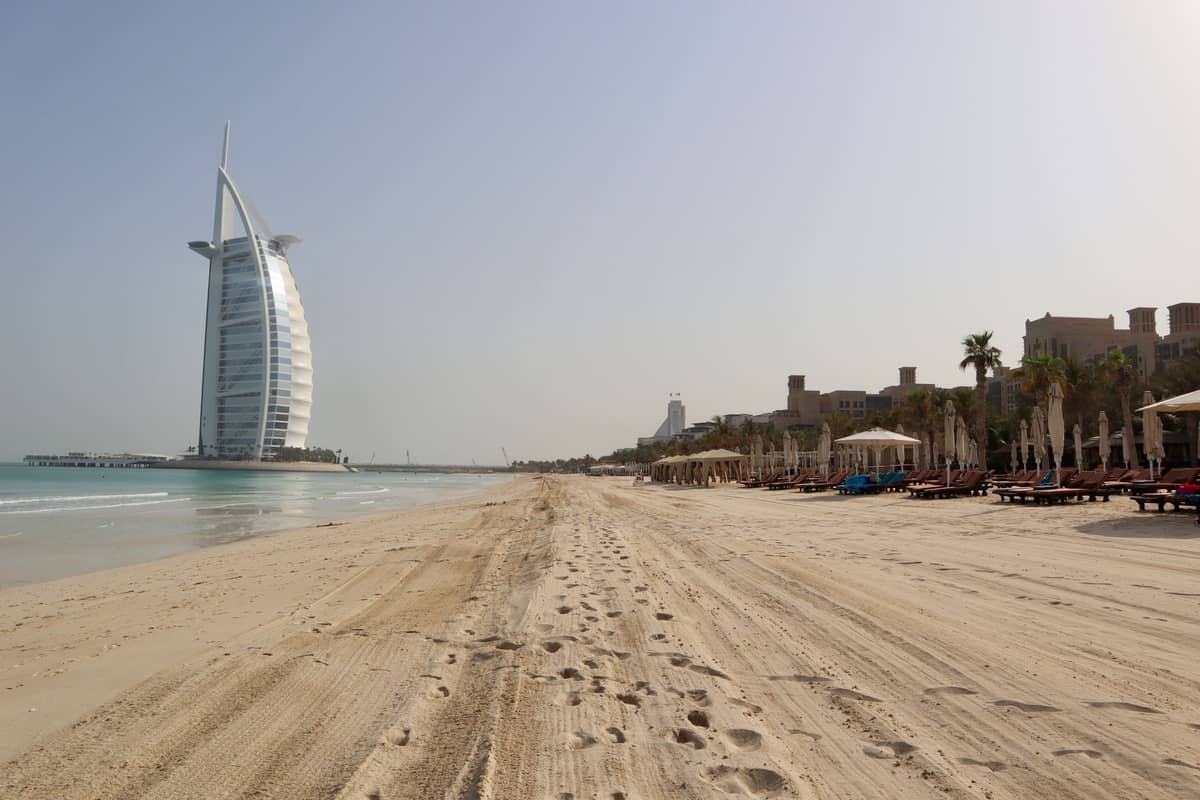
Dubai's luxury hotel market is genuinely world-class. The Burj Al Arab, FIVE Palm Jumeirah, Atlantis The Royal, and several Waldorf Astoria and Four Seasons properties compete at the very top of the global hospitality market. If budget allows, the beach resort experience in particular, combining a private beach, multiple pools, and high-end dining, is hard to match anywhere in the Middle East.
Mid-range travelers (roughly US$100-200 per night) actually have excellent options in Dubai, especially outside peak season. Business Bay, Downtown's periphery, and Dubai Marina all have solid 4-star properties with pools, gyms, and decent breakfast spreads. The luxury Dubai guide covers the top-end options in detail for those who want to go further up the scale.
Budget accommodation in Dubai tends to cluster in Deira and around Al Barsha near Mall of the Emirates. Expect clean, functional rooms at 3-star international chains for US$50-80 per night in shoulder and summer seasons. These same rooms can cost US$120-150 in winter peak. Hostels exist but are not as developed or widespread as in European cities; most budget travelers opt for 2-3 star hotel rooms rather than dorms.
ℹ️ Good to know
Dubai uses AED (UAE dirham) as its currency. At the time of writing, 1 USD converts to approximately 3.67 AED, and this rate has been extremely stable due to the dirham's peg to the dollar. Budget calculations in USD translate directly and reliably to AED prices.
FAQ
What is the best area to stay in Dubai for first-time visitors?
Downtown Dubai is the most practical choice for first-timers. It sits at the geographic and tourist center of the city, with the Burj Khalifa, Dubai Mall, and Dubai Fountain all walkable from most hotels, plus a direct metro connection to the airport and the rest of the city. If beach access is your priority, Dubai Marina and JBR is the stronger alternative.
How much does a hotel in Dubai cost per night?
It depends heavily on the season. In peak months (December to February), expect to pay US$150-300 per night for a solid 4-star hotel and US$300-600+ for 5-star properties. In summer (June to September), those same hotels often drop to US$80-150 and US$150-250 respectively. The overall average sits around US$185 per night midweek, but that figure is heavily skewed by the premium winter season.
Is it better to stay near the Burj Khalifa or Dubai Marina?
It depends on what you want. Downtown Dubai (Burj Khalifa area) is better if you want to explore the city broadly: it is more central, better metro-connected, and closer to most major non-beach attractions. Dubai Marina is better if your holiday is primarily beach, waterfront dining, and the JBR area. Both are around 25–30 minutes from the airport by metro to Downtown and roughly 45–55 minutes to the Marina.
Is Dubai safe for solo travelers and couples staying in hotels?
Yes. Dubai is consistently ranked among the safest cities in the world for tourists. Unmarried couples can share hotel rooms without legal issues at any licensed hotel. Solo female travelers generally report feeling safe in all main tourist areas, though standard city-awareness applies as anywhere. All licensed hotels require passport registration at check-in.
When is the cheapest time to book a hotel in Dubai?
September is typically the cheapest month for hotels, with average rates around US$140 per night compared to up to around US$591 in peak February. The entire summer period from June to September sees prices drop 40-50% below winter rates. If you can tolerate extreme heat (40°C+) and plan to spend most of your time in air-conditioned spaces, this is when Dubai's luxury hotels become genuinely accessible on a mid-range budget.