What to Wear in Dubai: Packing & Dress Code Guide
Dubai has more nuance to its dress code than most travelers expect. This guide breaks down what to wear in every setting, from the souks of Deira to rooftop bars in Downtown, with seasonal packing advice based on real temperature ranges.
TL;DR
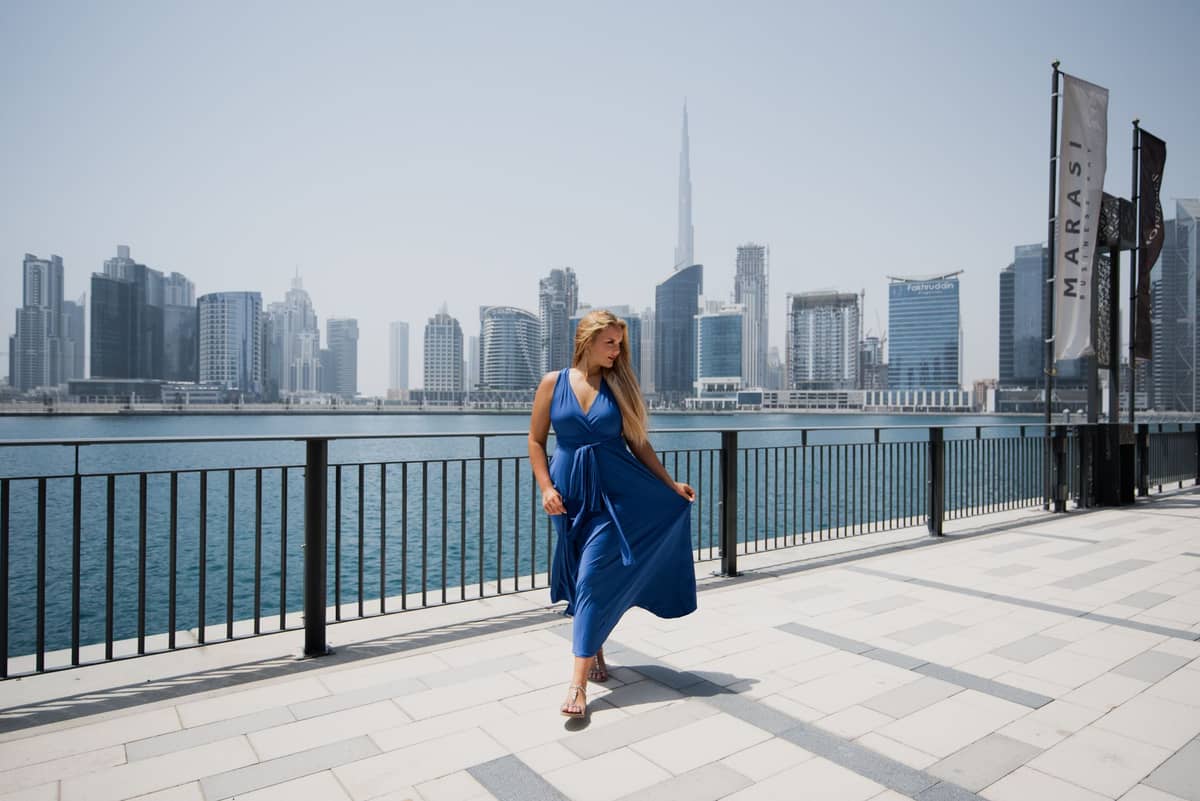
- Modest clothing (shoulders and knees covered) is the standard for malls, souks, government buildings, and public streets.
- Swimwear is fine at beaches and hotel pools, but should not be worn walking to or from those locations through public areas.
- Women do not need to wear an abaya or cover their hair in public — that rule applies only at mosques and religious sites.
- Pack for two climates: the heat outside (up to 41°C in summer) and aggressively air-conditioned interiors.
- Check the full tourist rules for Dubai before travel — dress codes are one part of a broader set of public conduct expectations.
Understanding Dubai's Dress Code: The Basics
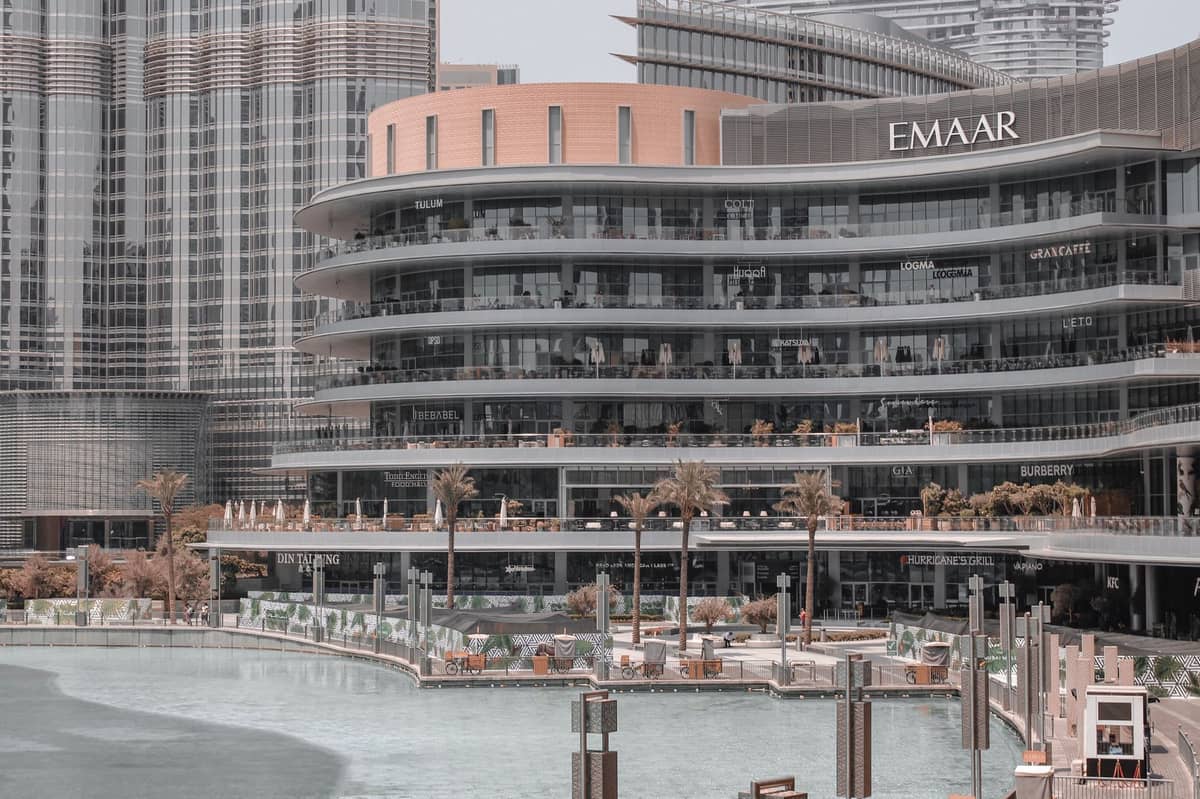
Dubai does not have a single citywide dress code written into law for tourists. What it has is a social and legal expectation of modesty in public spaces, backed by UAE federal guidelines stating that clothing should not be transparent, should not expose the body indecently, and should not display offensive imagery or slogans. In practice, this means dressing modestly in malls, markets, and on the street. The interpretation is fairly relaxed in tourist-heavy areas, but enforcement can happen, and the embarrassment of being asked to cover up or leave a venue is easily avoided.
The most important thing to understand is context. Dubai Marina and JBR Beach operate at a different register than the Gold Souk in Deira or a government office in Bur Dubai. The same city contains rooftop bars with dress codes requiring heels and upscale nightlife attire, and mosques requiring full coverage from head to ankle. Knowing which rules apply where saves you from either over-packing or ending up in the wrong outfit.
ℹ️ Good to know
A common misconception: women do not need to wear an abaya or cover their hair anywhere in Dubai except inside mosques. Western women in sleeveless tops and fitted jeans are a normal sight in Dubai malls, restaurants, and hotel lobbies.
Dress Codes by Location
Breaking down the rules by venue type is far more useful than any general statement. Here is how the dress code actually works across Dubai's main settings.
- Malls and Shopping Centers Shoulders and knees should be covered. Fitted clothing is fine; very short shorts or a bikini top is not. The Dubai Mall and Mall of the Emirates post reminders at entrances. You will not be turned away for a sleeveless dress, but a crop top combined with very short shorts pushes the boundary.
- Souks and Heritage Areas Apply a slightly more conservative standard in the Gold Souk, Spice Souk, and the Al Fahidi Historical Neighbourhood. Loose trousers or a midi skirt plus a light shirt works well, and this is also smart dressing for the heat in those narrow, less air-conditioned lanes.
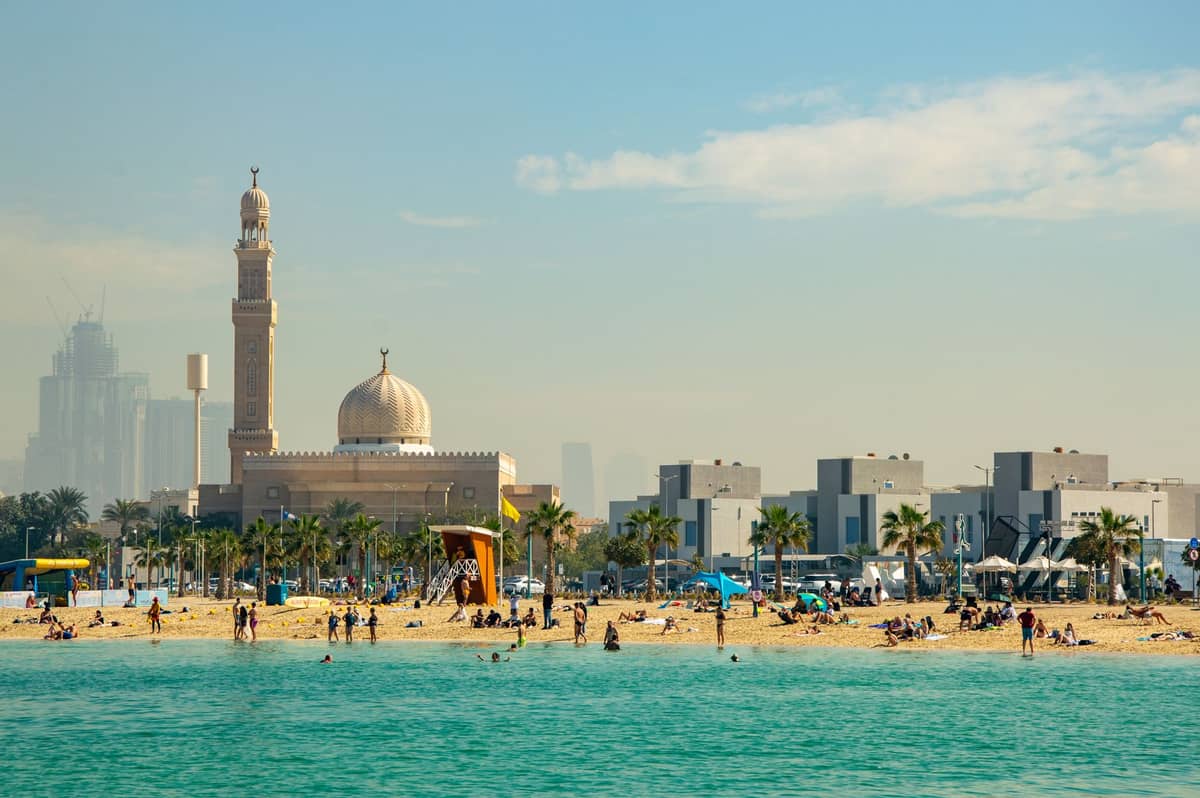
- Beaches and Hotel Pools Swimwear is completely acceptable, including bikinis, at public beaches like Jumeirah Beach and Kite Beach, as well as at private hotel pools. The line is drawn at walking through a mall or restaurant in a wet bikini on your way back.
- Mosques Jumeirah Mosque, the only mosque in Dubai that regularly welcomes non-Muslim visitors, requires women to cover arms, legs, and hair completely. Men must avoid shorts and sleeveless tops. Abayas and sheilas (head scarves) are available to borrow at the door. This is the one place where head covering is genuinely required.
- Restaurants and Cafes Casual restaurants and coffee shops have no written dress code — just be dressed. Fine dining venues in hotels and upscale areas like DIFC may specify smart casual or no beachwear, and a few require closed-toe shoes for men. Check the specific venue if you are dressing up for a special occasion.
- Nightclubs and Rooftop Bars Some venues have the reverse problem: they are stricter than the rest of the city. Upscale clubs in Media City, DIFC, and hotel venues sometimes enforce a dress code that excludes trainers, shorts, or casual sandals for men. Dressing up matters more here than anywhere else in Dubai.
⚠️ What to skip
Do not walk from a beach or pool through public streets, malls, or restaurants in swimwear. This applies to both women and men. Cover up with a sarong, shorts, or a shirt before leaving the beach or pool area. Repeated reports suggest this is where tourists most commonly attract attention from authorities.
Packing for Dubai's Climate: Season by Season
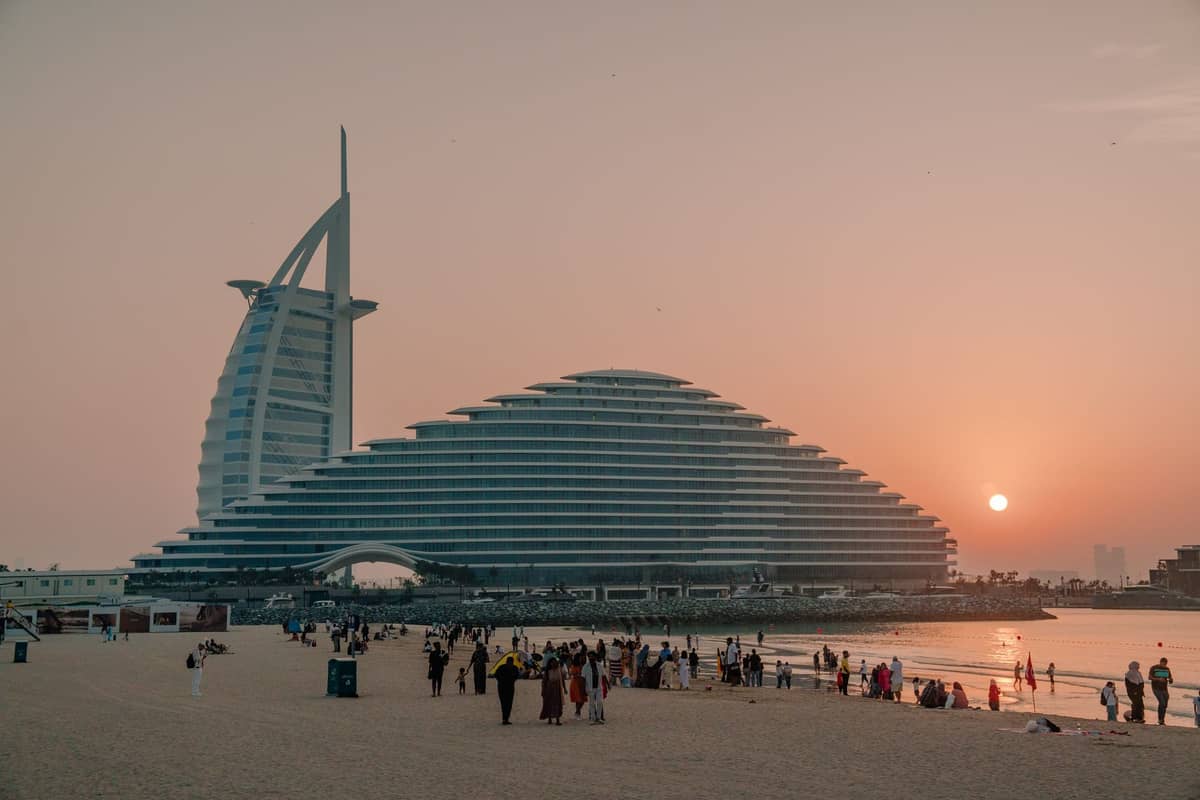
What to wear in Dubai is not just about dress codes — it is about surviving the temperature. The climate is a hot desert classification, meaning summers are extreme and winters are genuinely pleasant. Packing the wrong fabrics can make an otherwise enjoyable trip uncomfortable.
Winter (November through March) is mild, with daytime highs of around 24–27°C in January and up to 31°C in March. Evenings can drop to 14–18°C, which genuinely calls for a light layer. Lightweight jeans, cotton shirts, and a thin jacket or cardigan for evenings are practical. You will not need a heavy coat, but do not come with only summer clothing — a cool evening by the water at the marina can feel cold to someone dressed for the beach.the most comfortable time to visit Dubai, with daytime highs of around 24–27°C in January and up to 31°C in March. Evenings can drop to 14–18°C, which genuinely calls for a light layer. Lightweight jeans, cotton shirts, and a thin jacket or cardigan for evenings are practical. You will not need a heavy coat, but do not come with only summer clothing — a cool evening by the water at the marina can feel cold to someone dressed for the beach.
Summer (May through September) is a different situation. Daytime temperatures regularly hit 37–41°C, and the humidity along the coast compounds that significantly. Lightweight, loose, breathable fabrics in natural fibres like linen and cotton are the only sensible choice outdoors. But the indoor AC is set aggressively low — malls, taxis, hotel lobbies, and offices can feel like refrigerators. Carrying a light layer in your bag for indoor settings is essential even in July.
- Linen or cotton trousers: light enough for outdoor heat, modest enough for souks and malls
- Loose cotton shirts or blouses in light colours: reflect heat and dry fast
- A lightweight cardigan, denim jacket, or pashmina: essential for air-conditioned interiors year-round
- Midi or maxi dress or skirt: covers knees without effort and feels cooler than trousers in high heat
- Comfortable walking shoes with closed toes: cobbled lanes in Al Fahidi and long days in the Dubai Mall punish flip-flops
- Sandals for beach and casual use
- One smart outfit per person for upscale dining or a nightlife venue
- Swimwear: one or two sets, as most visitors spend time at a beach or pool
✨ Pro tip
Pack a lightweight pashmina or scarf regardless of season. It covers shoulders for an impromptu mosque visit, doubles as a layer in freezing malls, and takes up almost no bag space. A single piece of fabric solves multiple dress code and temperature problems.
What Women Should Know
Women visiting Dubai have considerably more flexibility than many guides suggest. The practical baseline for public spaces — malls, streets, and restaurants — is that shoulders and knees should be covered. A loose shirt and trousers, a knee-length dress, or a maxi skirt all meet that standard without any effort. Sleeveless tops in a mall are tolerated in practice, particularly in very touristy parts of the city, but covering up is the safer and less stressful approach.
At Dubai's beaches, including Kite Beach and Jumeirah Beach, bikinis are normal and widely worn. Beach clubs and hotel pools operate on international norms. The dress code concern only kicks in when leaving those areas. Women do not need to carry or wear an abaya at any point during a general tourist visit. Bringing one is entirely optional and largely unnecessary unless you have a specific interest in visiting a mosque on short notice without advance preparation.
What Men Should Know
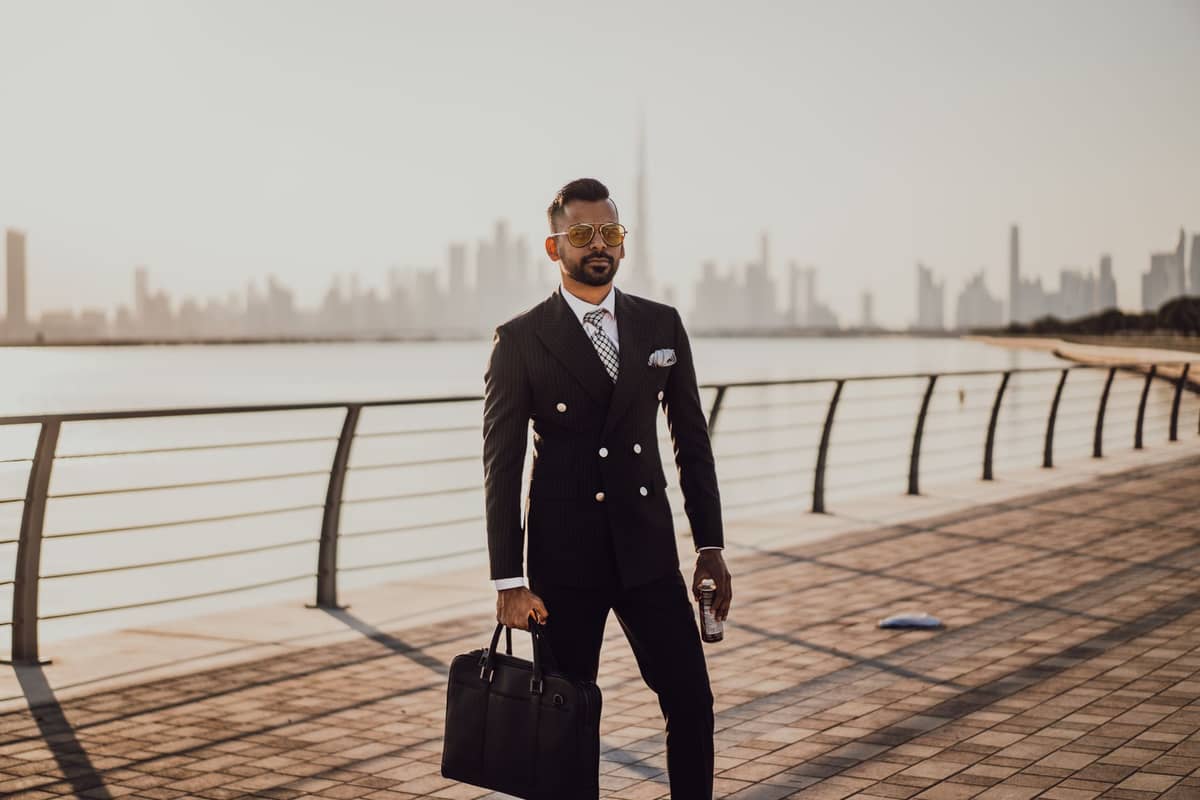
Men have fewer specific rules but are not exempt from the modesty expectation. Shorts are fine in tourist areas, malls, and on the street, provided they are not extremely short. Sleeveless tops and tank tops are generally accepted in casual settings but look out of place in smarter venues. At mosques, long trousers and a shirt with sleeves are required — no exceptions.
The practical issue men face more often is nightlife. Upscale clubs and hotel bars in Dubai sometimes enforce a smarter dress code for male guests specifically: no trainers, no shorts, no casual sandals. Packing one pair of smart trousers and a collared shirt covers this without adding much to a bag. Sneakers are sometimes acceptable if they are clean and clearly not athletic, but plain leather shoes are safer.
Visiting During Ramadan: Adjust Your Approach
If your visit coincides with Ramadan, dress more conservatively than usualIf your visit coincides with Ramadan, dress more modestly throughout the emirate, not just at religious sites. The expectation of modesty increases significantly during the holy month. Both men and women should ensure arms and legs are covered in public spaces as a sign of respect, beyond the usual baseline.
Eating, drinking, and smoking in public during daylight hours during Ramadan is prohibited under UAE law. This is worth knowing but is separate from dress — the two rules simply point in the same direction: be more thoughtful about public behaviour during this period, including how you are dressed.
FAQ
Can women wear shorts in Dubai malls?
Technically, UAE public decency guidelines ask for knees to be covered in public spaces including malls. In practice, knee-length shorts are generally tolerated, particularly in heavily touristy areas. Very short shorts attract attention and occasionally prompts from mall staff. Midi shorts or trousers are the lower-friction choice.
Do I need to cover my hair in Dubai as a tourist?
No. Women do not need to cover their hair anywhere in Dubai except inside mosques. This is one of the most common misconceptions about visiting the city. Abayas are available to borrow at the Jumeirah Mosque entrance for visitors who need them.
Can I wear a bikini in Dubai?
Yes, at beaches and hotel pools. Bikinis are normal and widely worn at public beaches like Kite Beach and Jumeirah Beach, as well as at beach clubs and private hotel pools. Wearing a bikini while walking through a mall, restaurant, or public street is not acceptable. Carry a cover-up and use it when leaving the beach.
What should I pack for a Dubai trip in winter?
Light layers work best. Daytime temperatures in January and February average around 24–27°C, so cotton or linen shirts, lightweight trousers, and comfortable shoes are the core. Add a light jacket or cardigan for evenings (it can drop to 14–18°C), and include one smart outfit if you plan to dine at an upscale restaurant or visit a nightlife venue.
Are there any clothing items I should not bring to Dubai?
Clothing with offensive graphics, slogans, or imagery is explicitly covered by UAE public decency guidelines and should be left at home. Beyond that, there are no banned fabrics or styles — the focus is on coverage and decency rather than specific garment types.