Jumeirah Beach: Dubai's Iconic Free Public Shoreline
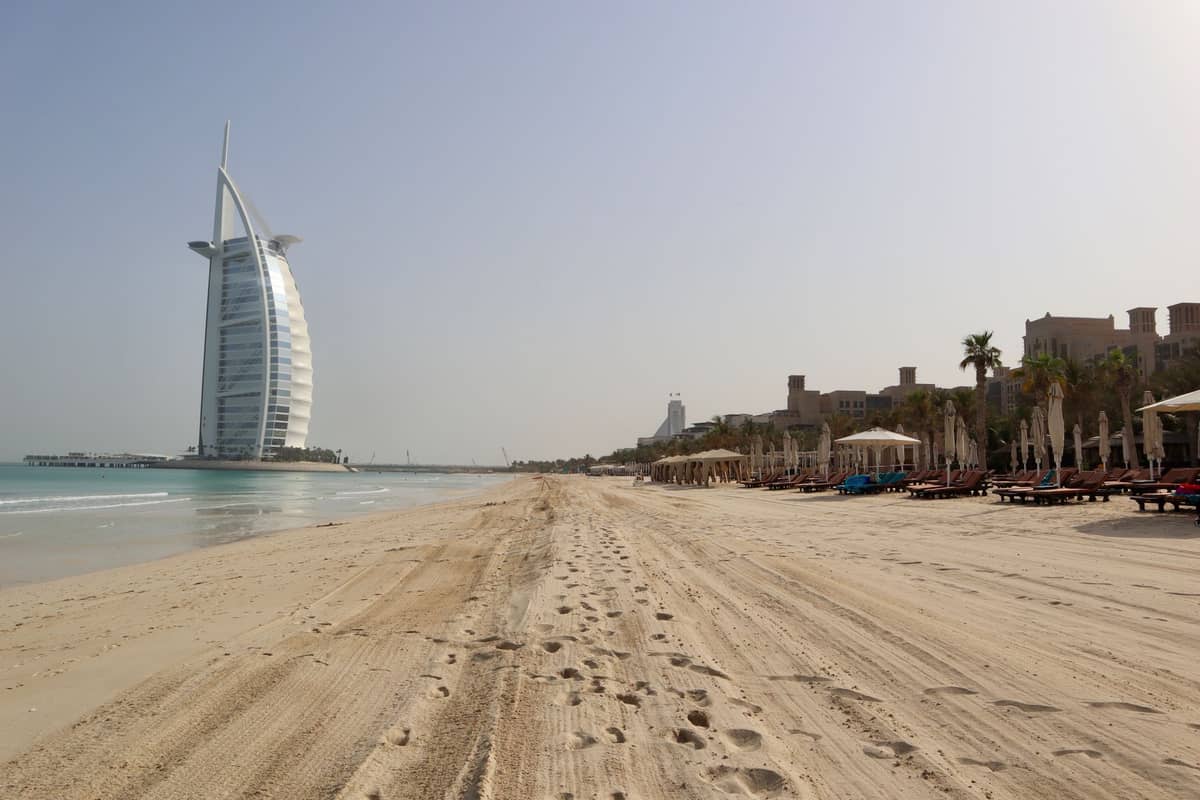
Jumeirah Beach is a long stretch of white sand along Dubai's Arabian Gulf coast, offering free public access, calm waters, and one of the city's most recognizable backdrops. It draws everyone from early-morning joggers to families spending full afternoons by the water, with the Burj Al Arab visible in the distance.
Quick Facts
- Location
- Jumeirah Beach Road, Jumeirah district, Dubai, UAE
- Getting There
- Red Line to DMCC, then taxi (~15 min); or Bus 8, 81, 88, F55A
- Time Needed
- 1.5 to 3 hours
- Cost
- Free entry (public beach)
- Best for
- Families, casual swimmers, morning walkers, photographers
What Jumeirah Beach Actually Is
Jumeirah Beach (شاطئ جميرا in Arabic) is a public beachfront running along the western coastline of Dubai's Jumeirah district, facing the Arabian Gulf. It is one of the longest and most accessible free beaches in the city, bordered by the upscale hotel corridor of Jumeirah Road on one side and the open Gulf on the other. The sand is pale and fine, the water is typically calm and shallow near the shore, and the view westward across the Gulf is wide and unobstructed.
Unlike some Dubai beaches that are attached to paid beach clubs or resort properties, the public sections here cost nothing to access. There are no gates and no wristbands. You show up, find a spot, and stay as long as you like. That accessibility is a large part of why the beach draws such a wide cross-section of visitors: Dubai residents on their lunch break, families with children, tourists from nearby hotels, and fitness regulars doing dawn runs along the waterfront.
ℹ️ Good to know
Jumeirah Beach 2 holds Gold Accessibility Certification from the World Disability Union, with adapted access routes and inclusive facilities. Dubai authorities report that 90% of the city's beaches now have accessibility features for visitors with disabilities and senior citizens.
The Burj Al Arab View and Why It Matters
One detail that consistently surprises first-time visitors: the Burj Al Arab is visible from sections of Jumeirah Beach, positioned slightly to the south on its artificial island. That sail-shaped silhouette rising over the Gulf is one of Dubai's most photographed scenes, and from the beach you can see it without queuing, without paying, and without being inside anything. The light is best in the late afternoon, when the sun drops behind the structure and creates a clean outline against the sky.
If that iconic view is part of your Dubai agenda, this is the simplest way to get it. For more context on how the city's skyline has evolved, the Dubai architecture guide covers the broader story of the emirate's coastal development.
How the Beach Changes Through the Day
The feel of Jumeirah Beach shifts significantly depending on when you arrive. From around 6am until 9am during cooler months (November through March), the waterfront is at its quietest and most pleasant. The light is low and golden, the air is cool, and you will mostly find joggers, dog walkers, and a handful of early swimmers. The sand is undisturbed and the water is often glassy before the afternoon winds pick up.
By mid-morning, families start arriving and the beach fills steadily. Between 11am and 2pm on weekends, particularly during peak season, popular sections near beach access points can become genuinely crowded. If you want space, walk further along the shoreline away from the main entry points. The crowd thins considerably within a few hundred metres.
Late afternoon into early evening is the other strong window. The temperature drops, the light turns warm, and the beach gets busy again with a different crowd: residents finishing work, couples, and people there specifically for the sunset. The Burj Al Arab photographs best at this hour. Lifeguard hours vary by season and location, so follow posted signage about swimming safety.
💡 Local tip
Go on a weekday morning between November and February for the most comfortable conditions. Weekend afternoons in winter are popular but workable. Summer visits (June to September) are genuinely difficult: daytime temperatures regularly exceed 40°C, humidity is high, and the beach is largely empty for good reason.
The Surrounding Area and How to Approach Your Visit
Jumeirah Beach sits within a broader coastal residential area defined by low-rise villas and mid-rise buildings, with Jumeirah Beach Road running parallel to the shore. The overall atmosphere is calmer than the more commercial waterfront areas further north or south, and the Jumeirah district has a genuinely residential character that separates it from tourist-heavy zones.
The beach is close to several other things worth combining into a single outing. Kite Beach is a few kilometres to the south and offers more organised facilities, food trucks, and a dedicated stretch for watersports. It is a better option if you want amenities and activity, while Jumeirah Beach is the better choice if you want a quieter, less structured experience.
To the north, the The Walk at JBR and Jumeirah Beach Residence promenade offer a completely different atmosphere: outdoor dining, retail, and a beachfront that is significantly more commercial and busy. Many visitors combine both in a day, moving between the quieter public beach and the busier entertainment strip.
Getting There
Jumeirah Beach is not directly on the Dubai Metro. The most practical public transit route involves taking the Red Line to DMCC station, then a taxi (roughly 15 minutes, fare will vary). Alternatively, you can take the Red Line to DMCC, transfer to the Dubai Tram, alight at Jumeirah Beach Residence 1 or 2, then walk approximately 10 to 20 minutes to the public beach sections.
Buses 8, 81, 88, and F55A serve the Jumeirah Beach area with stops near Jumeirah Beach Residence and beach access points. Check current RTA route maps before travelling, as schedules and stop locations are updated periodically. By car from central Dubai, Jumeirah Beach Road takes 15 to 25 minutes depending on traffic; parking is available in the area but can fill up on weekend afternoons during peak season.
⚠️ What to skip
There is no direct metro station at Jumeirah Beach. Anyone expecting a short walk from the nearest metro will be disappointed. Budget for a taxi leg or plan the tram connection carefully.
What to Wear, Bring, and Know Before You Go
Swimwear is appropriate on the beach itself. Dubai has public decency norms that apply across the emirate, so cover up when moving through surrounding streets or entering shops nearby. A light cover-up or shirt and shorts over a swimsuit is the standard approach. Topless sunbathing is not permitted on public beaches in Dubai.
Bring sunscreen, water, and cash if you plan to use nearby food vendors. The beach has shaded areas in some sections and open sun in others. Shade becomes critical between May and September. There are shower and changing facilities at various points along the beach, though the quality and upkeep varies. The accessibility facilities at Jumeirah Beach 2 are notably good for visitors with mobility needs, in line with the Gold Accessibility Certification the site has received.
For a full overview of what to pack and how to dress across different Dubai settings, the Dubai outfits guide covers both beach visits and city-centre days in practical terms.
Photography at Jumeirah Beach
The Burj Al Arab is the dominant photographic draw here. For clean shots of the structure over water, position yourself in the sections of beach south of the main Jumeirah Beach Road stretch and shoot facing south-southwest. Golden hour before sunset produces the most dramatic contrast. Morning light works well for wide, calm water shots with fewer people in frame.
The beach itself photographs cleanly in the early morning: undisturbed sand, low light, and an empty stretch that is harder to find in the afternoon. If you are after shots of the water and skyline without crowds, plan to be there between 6:30am and 8am on a weekday during November through February. Drone photography is subject to UAE Civil Aviation Authority regulations and requires permits; casual drone flying on beaches in Dubai is not permitted without authorization.
Who Should Skip This Beach
Jumeirah Beach is not the best choice for visitors who want facilities, organised activities, or an energetic atmosphere. There are limited on-site amenities compared to commercial beach clubs or dedicated spots like Kite Beach. If you want sun loungers, food service, and watersport rentals in one place, a beach club or the JBR waterfront will serve you better.
Visitors travelling in summer (June to September) should recalibrate expectations: the heat makes extended outdoor time at any Dubai beach genuinely uncomfortable and sometimes unsafe. If you are visiting in summer and still want beach time, early morning is the only realistic option. For a broader look at how season affects the entire city, the best time to visit Dubai guide lays out the tradeoffs clearly.
Insider Tips
- The stretch of beach closest to the Burj Al Arab view is often quieter than the sections nearer to JBR. Walk south from the main entry points and the crowds thin within minutes.
- Jumeirah Beach 2 has the best accessible facilities on this stretch, including adapted access routes. If you or someone in your group has mobility requirements, head specifically to that section.
- Parking fills up on Friday and Saturday afternoons during winter. Arrive before 10am or after 5pm to find a spot without circling. Weekday visits avoid this entirely.
- The water temperature in the Arabian Gulf is warm year-round, averaging around 24 to 28 degrees Celsius in cooler months and higher in summer. Winter swimming is genuinely comfortable here compared to most European beaches.
- There are no lockers at the public beach sections. Leave valuables at your accommodation or keep them in a bag with someone in your group when swimming.
Who Is Jumeirah Beach For?
- Families with young children who want calm, shallow water and free access
- Photographers targeting the Burj Al Arab from a public vantage point
- Residents and early risers who want an uncrowded morning run or swim
- Budget travellers who want a genuine beach day without paying for a club
- Visitors who want a relaxed alternative to the busier JBR and Marina waterfront