The Walk at JBR: Dubai's Favourite Beachfront Promenade
The Walk at Jumeirah Beach Residence is Dubai's most social outdoor boulevard, stretching along the seafront in Dubai Marina with restaurants, cafes, shops, and direct beach access. Entry is free, the strip runs daily from 8am to 3am, and the atmosphere changes completely between a breezy morning stroll and a packed Friday night.
Quick Facts
- Location
- Jumeirah Beach Residence (JBR), Dubai Marina, Dubai, UAE
- Getting There
- Dubai Tram: JBR stop. Also walkable from DMCC Metro (Red Line) via tram connection.
- Time Needed
- 1.5 to 3 hours for a full stroll with stops; half a day if you add the beach
- Cost
- Free entry. Individual dining and retail costs vary.
- Best for
- Evening walks, seafront dining, families, people-watching
- Official website
- jbr.ae/en
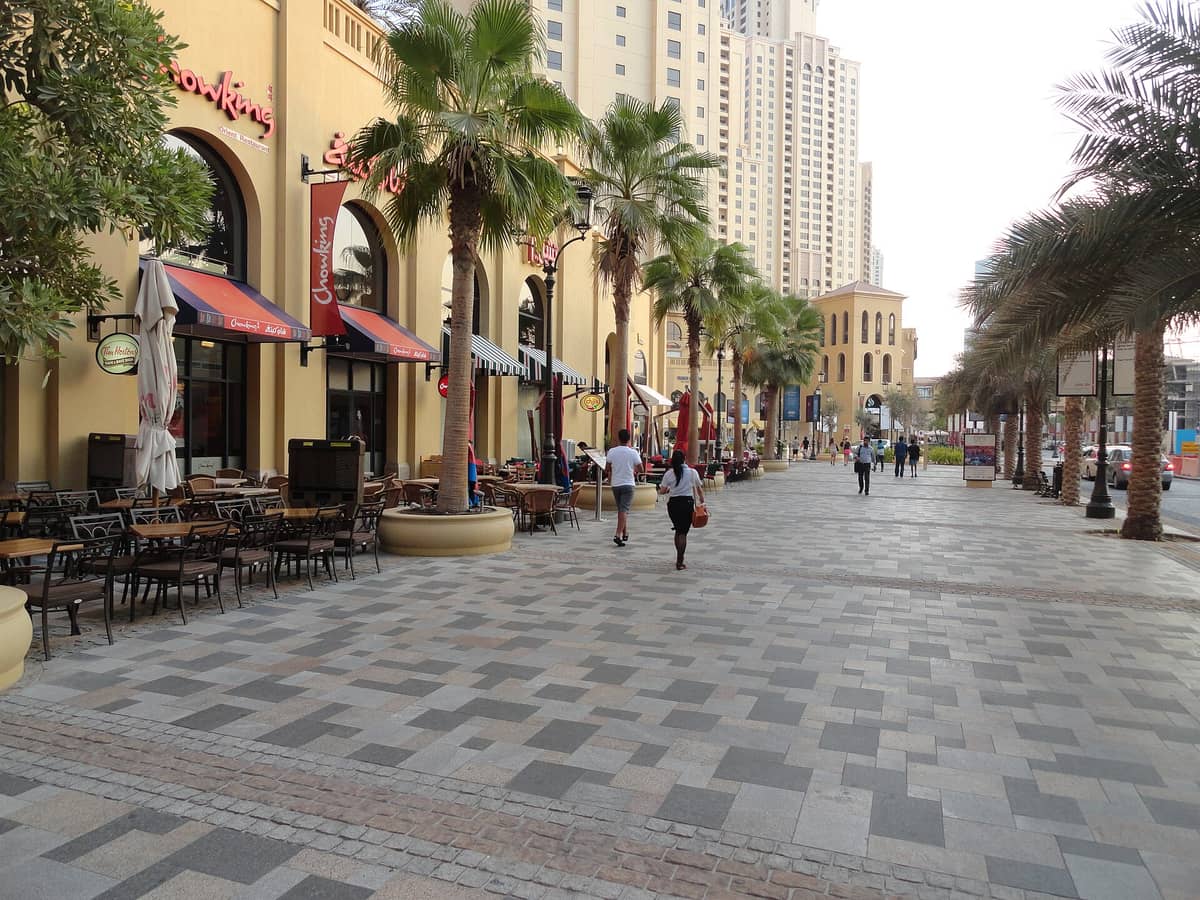
What Is The Walk at JBR?
The Walk at Jumeirah Beach Residence is a ground-level retail and dining promenade that runs along the base of JBR's cluster of residential towers, parallel to the Arabian Gulf. It sits in the Dubai Marina district of the Emirate of Dubai, United Arab Emirates, and functions as the social spine of the JBR development: a broad, flat boulevard where apartments, hotels, restaurants, cafes, and shops all face the street at eye level.
Unlike Dubai's indoor malls, this is an outdoor strip designed for slow movement. The promenade is pedestrian-only, open to the breeze off the Gulf, and directly connected to JBR Beach on its western edge. There is no admission charge: you simply walk in from any direction. The outdoor space itself is publicly accessible around the clock, though most shops operate from around 10:00 to 23:00, and restaurants push toward midnight or later on weekends. The broader promenade hours run 08:00 to 03:00 daily according to JBR's official fact sheet.
💡 Local tip
The tram is the fastest way to arrive. Board at Dubai Marina Mall or Media City Tram stops and alight at the JBR stop. The journey from Dubai Marina Mall takes about five minutes and drops you directly at the northern end of The Walk.
How the Experience Changes by Time of Day
Morning visits, roughly 8am to noon, belong to a specific crowd: joggers, dog walkers, hotel guests heading to the beach, and early-opening cafe regulars. The pavement is wide and unhurried at this hour. The Gulf light is flat and white, the temperature manageable even in spring, and the smell of salt air is noticeably stronger before the midday heat bakes it off. Several bakeries and breakfast spots open by 9am, and seating outside is actually pleasant from October through April.
From midday to around 5pm in the cooler months, the strip fills steadily with families, leisure visitors, and beach traffic crossing between the towers and the sand. In summer (June through September), midday is genuinely uncomfortable outdoors, with temperatures regularly exceeding 40 degrees Celsius and high humidity coming off the Gulf. At that time of year, most serious footfall shifts indoors until dusk.
Sunset and the two hours after it represent The Walk at its most photogenic and most crowded. The towers behind the promenade catch the orange light, the beach fills with people, and every outdoor restaurant table faces a queue. Friday and Saturday evenings draw the largest numbers: families with pushchairs, groups of friends, and tourists mixing freely. The noise level rises accordingly, with music from open-fronted restaurants, the rumble of the tram, and the general hum of a working promenade. If you prefer quiet, this is not your window.
Late evening, from around 10pm to midnight, is arguably the best time for unhurried dining. Tables turn over after dinner, restaurants have their full menus available, and the air cools to something genuinely comfortable from November through March. After midnight, The Walk quietens considerably, though it does not empty entirely.
What You Actually See and Do
The Walk functions as a long outdoor shopping and dining corridor. The retail offer leans international: international fashion chains, sportswear, sunglasses and accessories, pharmacy and convenience outlets, and a range of souvenir shops sit alongside the restaurants. It is not a destination for serious shopping in the way that the Dubai Mall or Mall of the Emirates is. The value here is atmosphere and location, not retail depth.
Dining is the stronger draw. The promenade covers a wide range of cuisines and price points, from casual shwarma counters and coffee kiosks through to sit-down seafood restaurants and international brands. If you want a longer food-focused evening in the area, the nearby Marina Walk extends the dining strip further around the waterfront canal, and the two are easily combined in one outing.
Beyond the strip itself, direct access to JBR Beach is the main draw for daytime visitors. The beach is publicly accessible and free, with paid sun lounger rental available from operators stationed along the sand. The water here is the Arabian Gulf, generally calm, and warmer than most visitors expect. Facilities including showers, changing rooms, and food vendors are positioned along the beach.
Across the road from The Walk, the Ain Dubai observation wheel on Bluewaters Island is visible from much of the promenade and a short walk away via the pedestrian bridge from the northern end. It makes a natural extension to any visit, particularly in the evening when the wheel is illuminated.
Getting There and Getting Around
The most straightforward approach by public transport is the Dubai Tram, which runs along the JBR and Marina waterfront and has a dedicated JBR stop. The tram itself connects to the Dubai Metro Red Line at DAMAC Properties station and DMCC station, making it reachable from the airport, Downtown Dubai, and the rest of the city without a car. Metro and tram fares are paid using a Nol card, the standard contactless payment used across RTA transport in Dubai. Fares are subject to change, so check the RTA website or app before travel.
Taxis and ride-hailing apps including Careem and Uber operate freely in Dubai and can drop you directly at the entrance to The Walk. Give the driver 'JBR Walk' or 'Jumeirah Beach Residence' as your destination. Parking is available at paid lots in the Murjan and other JBR clusters for those arriving by car, but be aware that Friday and Saturday evenings create significant congestion in the surrounding road network.
⚠️ What to skip
Weekend evenings (Friday and Saturday nights in Dubai's local weekend calendar) bring heavy vehicle traffic to the JBR access roads. Public transport or arriving on foot from Dubai Marina are both significantly faster than driving between 7pm and 10pm on these nights.
The promenade itself is entirely flat and step-free, making it straightforward for pushchairs and wheelchair users along the main boulevard. The transition points to the beach involve sand, which presents the usual surface challenges, but the paved promenade sections are consistently accessible.
Climate, Best Visiting Months, and What to Wear
Dubai has a hot desert climate with very limited rainfall. For an outdoor attraction like The Walk at JBR, this matters considerably. The window from November through March is reliably comfortable, with daytime temperatures typically between 24 and 31 degrees Celsius, manageable humidity, and pleasant evenings. November is widely regarded as the strongest month overall for outdoor activity in Dubai. For more on planning around the city's seasons, the best time to visit Dubai guide covers the month-by-month breakdown in detail.
From June through September, visiting The Walk at midday is genuinely punishing. Humidity from the Gulf compounds the heat. If you are visiting during summer, plan any outdoor time for after 6pm, when temperatures begin to drop and the sea breeze picks up. The restaurants are air-conditioned; the pavement is not.
Dress code on The Walk is relaxed by Dubai standards. Beachwear is acceptable near the beach itself, and general resort or casual clothing is appropriate on the promenade. That said, Dubai is part of the United Arab Emirates and public decency norms apply: overly revealing clothing away from the beach is generally considered inconsiderate. If you are unsure about what is appropriate across different settings in the city, the Dubai outfits and dress code guide provides practical guidance.
Photography and Practical Notes
The Walk photographs best at two moments: golden hour just before sunset, when the tower facades behind the promenade catch warm light, and after dark when the strip is lit and the reflections across the beach are cleaner. Midday sun creates harsh shadows and washed-out colours on the white paving.
The Ain Dubai wheel is visible from The Walk and provides a useful focal point for wide shots. Looking south along the promenade in the evening gives a clean perspective down the corridor of towers and restaurant facades. Photography of individuals in public is generally permitted, but pointing cameras at people without acknowledgment is considered impolite.
If photography of Dubai's skyline and waterfront is a priority for your trip, this area offers solid views but not the most elevated perspectives. For a broader overview of where to find the city's best vantage points, the best views in Dubai guide covers both ground-level and elevated options.
Honest Assessment: What the Walk Is and Is Not
The Walk at JBR is one of Dubai's most visited outdoor areas, and it earns that consistently. It works well as an evening destination, a beach-access point, and a comfortable place to eat outdoors in the cooler months. It does not require more than a half-day, and most visitors cover the main strip in under two hours.
It is not a place for cultural depth or architectural spectacle. The towers of JBR are large-scale residential buildings, functional rather than iconic. The retail offer is similar to what you would find in any upscale international mall. If you are looking for a sense of Dubai's history or traditional character, this is not the right destination. For that, the older districts across the Creek offer a fundamentally different experience.
Visitors who dislike crowds and noise will want to approach with realistic expectations, particularly on weekend evenings. Solo travellers seeking a quiet walk or those wanting to avoid tourist-density areas may prefer the Kite Beach further south along the Jumeirah coastline, which has a more local, relaxed character.
Insider Tips
- The northern end of The Walk, closest to Bluewaters Island, tends to be less crowded than the central and southern sections. Start there and walk south if you want to ease into the crowd gradually.
- Several restaurants on The Walk offer better value at lunch than dinner, with set menus and lower prices during quieter midday hours. If budget matters, this is the window to use them.
- The pedestrian bridge to Bluewaters Island and Ain Dubai is accessed from the northern end of The Walk and adds very little time to your visit. Crossing it at dusk gives you a clean elevated view back along the promenade and beach.
- On weekend evenings, restaurant wait times can run 30 to 60 minutes without a reservation. Most Walk restaurants accept WhatsApp or phone bookings made earlier in the day. A quick call in the afternoon will save you a long wait.
- JBR Beach directly behind The Walk is free and publicly accessible, but sun lounger rental fills up fast on Fridays and Saturdays. Arrive before 10am if you want a prime spot without a lengthy search.
Who Is The Walk at JBR For?
- Families with children who need space to move around safely in a pedestrianised environment
- Couples looking for an evening seafront dinner without booking a formal restaurant in advance
- First-time visitors to Dubai who want to see what the modern waterfront residential lifestyle looks like
- Beach-goers who want a wide range of food options immediately adjacent to the sand
- Visitors who prefer outdoor socialising over mall-based leisure