Jumeirah Mosque: Dubai's Most Accessible Window Into Islamic Culture
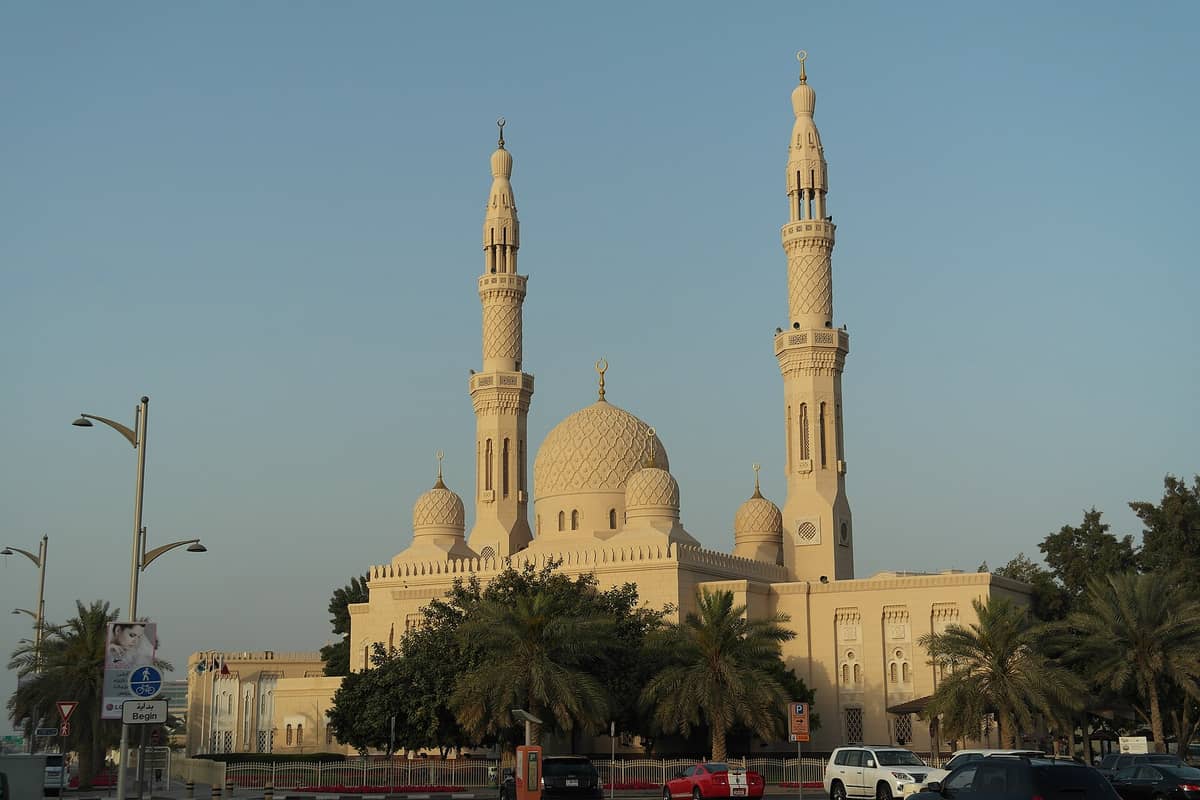
Jumeirah Mosque is one of the very few mosques in Dubai that welcomes non-Muslim visitors through guided interior tours. Built in white stone in the Fatimid tradition, with a central dome and twin minarets, it offers a rare chance to ask real questions about Islamic practice in a respectful, structured setting. The guided experience, run by the Sheikh Mohammed Centre for Cultural Understanding, is as educational as it is architecturally rewarding.
Quick Facts
- Location
- Jumeirah Beach Road, Jumeirah 1, Dubai, UAE
- Getting There
- No direct metro stop. Take a taxi, Careem, or Uber from Downtown (10–15 min). Public buses run along Jumeirah Beach Road — check current RTA routes.
- Time Needed
- 1.5–2 hours including the guided tour
- Cost
- AED 45 per person on the official Jumeirah Mosque visit page, including Majlis hospitality. Verify current pricing before visiting.
- Best for
- Curious travelers, first-time visitors to Dubai, cultural exchanges, photography
- Official website
- www.jumeirahmosque.ae
What Jumeirah Mosque Actually Is
Jumeirah Mosque is not a museum. It is an active place of worship that also happens to be one of the very few mosques in the Emirate of Dubai that formally opens its doors to non-Muslim visitors. That distinction matters. You are not walking through a heritage site frozen in time. The call to prayer still sounds five times a day, worshippers still gather at the designated hours, and the atmosphere inside carries the quiet weight of a functioning sacred space.
Non-Muslim visits are organized through the Sheikh Mohammed Centre for Cultural Understanding (SMCCU) under their "Open Doors, Open Minds" program. This is not a self-guided walk-around. You join a structured tour led by a knowledgeable guide who explains the five pillars of Islam, the architectural symbolism of the building, and the daily rhythms of Muslim life in Dubai. Crucially, questions are actively encouraged — and the guides are genuinely good at answering them without deflection.
ℹ️ Good to know
Tours typically run Saturday through Thursday with a morning session starting at 10:00 and an afternoon session at 14:00. The mosque is closed to non-Muslim visitors on Fridays. Confirm the current schedule at jumeirahmosque.ae before planning your visit.
The Architecture: What You're Looking At
The building is constructed in white stone and follows the Fatimid architectural tradition, a style originating in medieval Egypt and North Africa. The composition is immediately readable from Jumeirah Beach Road: a large central dome flanked by two tall, tapering minarets. At ground level, the façade is covered in finely carved geometric and floral ornamentation that rewards close inspection. The level of detail on the exterior stonework is more visible in the morning, when the sunlight hits the carved surfaces at an angle and throws the patterns into relief.
The mosque is often cited as one of the most photographed buildings in Dubai. That reputation is deserved but worth contextualizing. The building is genuinely beautiful and photogenic, particularly in the early morning when the stone glows in the low sun and the surrounding road is quiet. By late morning, tour groups and general foot traffic increase noticeably. The interior space includes a large prayer hall with rich carpeting, ornate chandeliers, and an intricately worked mihrab (the niche indicating the direction of Mecca). Natural light filters through latticed screens, creating soft patterns on the floor.
For context on how Jumeirah Mosque fits into Dubai's broader architectural landscape, the Dubai architecture guide covers everything from Fatimid-influenced structures to the modernist towers that now define the skyline.
The Guided Tour: What Actually Happens
Visitors gather outside the main entrance before the tour begins. Abayas and headscarves are available on loan at no extra charge for those who need them, which removes the stress of sourcing appropriate clothing in advance. Shoes are removed before entering the prayer hall. If you have not done this before, watch where you place your shoes: there are designated areas, and keeping them together in a bag or specific spot saves confusion when leaving.
Inside, the guide typically begins with a brief overview of Islamic faith, then moves through the physical elements of the mosque, explaining the role of each: the minbar (pulpit), the mihrab, the ablution areas, and the separation of spaces. The question-and-answer format means the tour length varies depending on the group, but budget at least 75 minutes. The guides handle difficult or sensitive questions — about women's roles, about misconceptions from Western media, about interfaith relations — with patience and specificity. This is not a PR exercise. It is a genuine exchange.
💡 Local tip
Think of one or two questions before you arrive. The guides are most engaged when visitors come curious rather than passive. The tour works best as a conversation.
Dress Code and Practical Preparation
The dress requirements are non-negotiable and apply to all visitors regardless of gender. For women: full-length clothing covering the arms and legs, plus a headscarf once inside the mosque. For men: long trousers and a shirt that covers the shoulders. Singlets, shorts, and sleeveless tops will get you turned away. As noted, abayas and scarves are available to borrow at the entrance, so if you are caught short, it is not a wasted journey — but arriving already dressed appropriately is smoother.
Footwear should be easy to slip on and off. Laced boots or complicated buckles create unnecessary delays. The interior floor surfaces are carpeted, so walking barefoot or in socks is comfortable. Photography is generally permitted inside during tours — confirm with your guide at the start. Avoid photographing worshippers who are praying without their consent.
If you are uncertain about what to wear elsewhere in Dubai beyond the mosque itself, the Dubai outfits and dress code guide covers the city's varying expectations by location and activity.
Timing, Crowds, and Honest Caveats
The morning tour at 10:00 draws the most visitors. Groups can be large on weekends and during peak travel months (November through March). If the idea of doing a cultural tour with thirty other people does not appeal to you, this attraction has a real limitation: the format is a fixed group tour, not an individual wander. The content and quality of the experience depend heavily on the guide assigned that day and the composition of the group.
The experience outside the formal tour is also worth noting. The mosque's exterior, the courtyard, and the surrounding landscaping along Jumeirah Beach Road are accessible to view without entering. Many visitors stop to photograph the exterior even if they are not taking the tour. Early morning, before 09:00, the area is peaceful and the light is exceptional. By midday, particularly in summer months when temperatures regularly exceed 40°C, lingering outside becomes uncomfortable quickly.
The best time to visit Dubai is generally November through March, when daytime highs sit between 24 and 31°C. Visiting Jumeirah Mosque in these months means you can walk the exterior grounds and take your time before and after the tour without the summer heat compressing your experience.
⚠️ What to skip
The mosque is closed to non-Muslim visitors on Fridays. Do not arrive unannounced expecting access — the guided tour format requires you to join an organized visit at 10:00 or 14:00 Saturday through Thursday. Check jumeirahmosque.ae or the SMCCU website for current tour times and booking requirements before you go.
Getting There and Getting Around Afterwards
Jumeirah Mosque sits on Jumeirah Beach Road in the Jumeirah 1 area. There is no Dubai Metro station within walking distance. The most practical options are taxi, Careem, or Uber, which take around 10 to 15 minutes from Downtown Dubai and cost roughly 25 to 40 AED depending on starting point and traffic. Public buses run along Jumeirah Beach Road, but the frequency and specific stops should be confirmed with the RTA before relying on them.
After the mosque, the surrounding stretch of Jumeirah is worth exploring. The Jumeirah neighborhood runs along the coast and combines open beach access with low-rise cafés and independent shops that feel noticeably different from the mall-heavy rest of the city. Kite Beach is a short drive south and offers a genuinely good stretch of public coastline. Jumeirah Beach itself is nearby and accessible for a post-tour walk.
Who Should Skip This
Visitors who have limited patience for structured group formats, or who are primarily interested in the building as a photo opportunity rather than as a cultural institution, may find the obligatory tour format frustrating. You cannot simply walk in and explore independently. If the educational component does not interest you, the exterior photographs from Jumeirah Beach Road will largely satisfy the visual appeal, and the interior can be skipped.
Families with very young children should think carefully. The interior space requires quiet and attentiveness, and the question-and-answer format does not hold young children's interest well. Children under 12 enter free, but keeping them engaged for 75 to 90 minutes in a reverent space is a realistic challenge.
Insider Tips
- The exterior is best photographed between 07:00 and 09:00, before the tour groups arrive. The white stone picks up the morning light beautifully, and Jumeirah Beach Road is quiet enough that you can frame the building cleanly without pedestrian clutter.
- Abayas and headscarves are available to borrow at the entrance, but they come in standard sizes. If you prefer a better fit or a specific color, bring your own lightweight scarf — a large pashmina works perfectly.
- The SMCCU also runs cultural breakfasts that pair a mosque tour with a traditional Emirati meal. These are worth considering if you want more time to ask questions in a smaller, more relaxed setting than a standard group tour.
- Sit near the front of the group during the tour. The guides speak clearly but some prayer hall acoustics can make it harder to follow from the back when there are large groups.
- If you are visiting during Ramadan, timings and access rules change significantly. Confirm arrangements directly with the SMCCU before planning a Ramadan visit.
Who Is Jumeirah Mosque For?
- First-time visitors to Dubai who want cultural context beyond shopping malls and skyline views
- Travelers with a genuine interest in Islam, Islamic architecture, or interfaith dialogue
- Photographers seeking iconic white-stone architecture in the early morning light
- Students, educators, and anyone visiting Dubai for cultural or professional exchange purposes
- Couples and solo travelers comfortable with structured group tours