Burj Al Arab: Inside Dubai's Iconic Sail Hotel
The Burj Al Arab is Dubai's most recognizable landmark, a 321-metre sail-shaped tower on its own artificial island in Jumeirah. Visiting requires a ticket or reservation, but the interior experience delivers architecture and opulence that genuinely matches the hype.
Quick Facts
- Location
- Jumeirah Beach Road, Umm Suqeim 3, Dubai, UAE
- Getting There
- No metro stop nearby; taxi or ride-hailing (Careem/Uber) recommended from Mall of the Emirates metro station
- Time Needed
- 1.5 to 2 hours for the general admission tour
- Cost
- From AED 249 for general admission (verify current pricing before visiting)
- Best for
- Architecture lovers, first-time Dubai visitors, special occasions
- Official website
- www.burjalarabdubai.ae/en
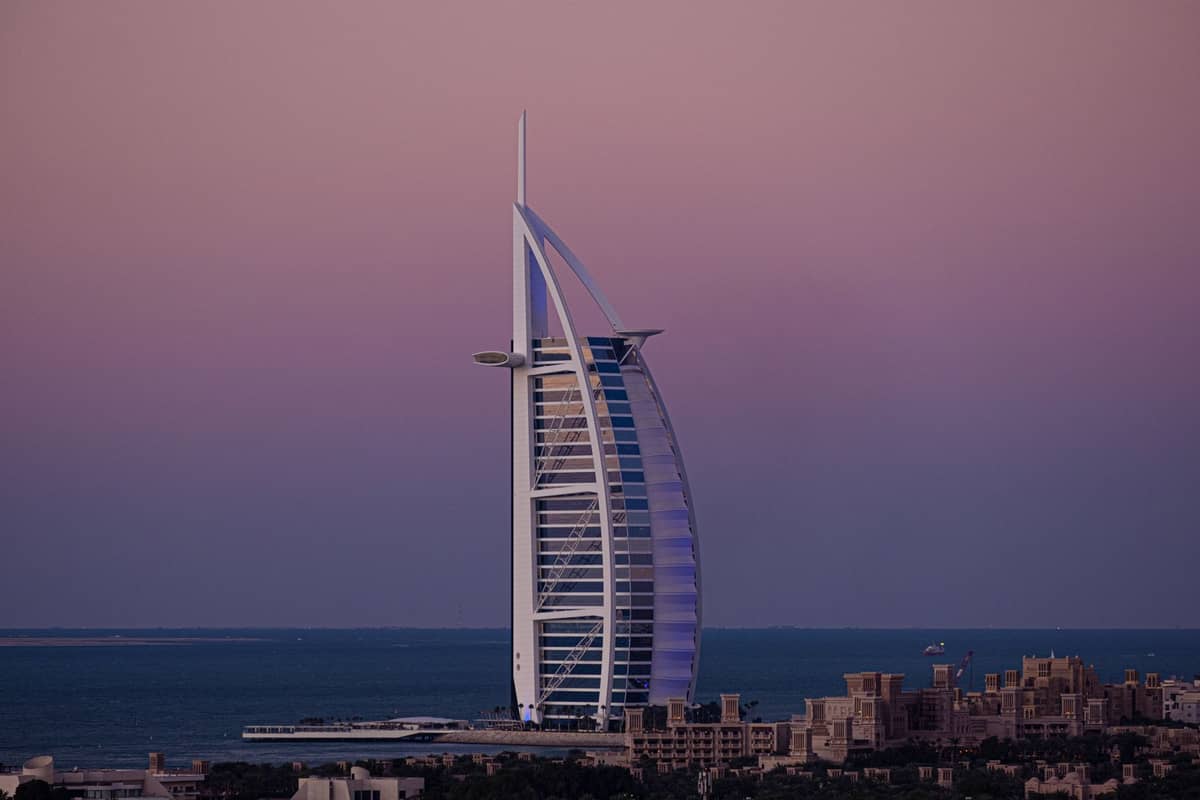
What the Burj Al Arab Actually Is
The Burj Al Arab Jumeirah opened on 1 December 1999 and immediately changed what people imagined a luxury hotel could look like. At 321 metres tall, it stands on a purpose-built island 280 metres offshore, connected to the Jumeirah coastline by a private curved causeway. The building's form replicates the billowing sail of a traditional dhow, a design that architect Tom Wright of Atkins developed to give the tower an instantly readable silhouette from sea, land, and air.
It is often described as the world's only seven-star hotel, though that rating is unofficial and self-applied. What is accurate is that it operates entirely in the ultra-luxury tier: every unit is a two-floor suite, the lowest of which starts at several thousand dollars per night. The vast majority of visitors come not as guests but as day visitors on structured tours, which is exactly what the general admission ticket covers.
ℹ️ Good to know
Access to the Burj Al Arab is controlled. You cannot walk across the causeway without a valid reservation or ticket. General admission tours depart from the Inside Burj Al Arab Ticketing Lounge at the adjacent Jumeirah Beach Hotel. Book in advance, especially during peak season (November to March).
The Exterior: What You See Before You Go In
From Jumeirah Beach Road, the tower appears different depending on the time of day. In the morning, the white Teflon-coated fibreglass facade reflects the sun harshly, giving the structure a bleached, almost clinical brightness. By late afternoon, the glass panels on the atrium side catch the orange light and the entire western face shifts in colour. After dark, the exterior is lit dynamically, and the hotel frequently uses projections and colour changes for national holidays and international events.
The best exterior viewing point is from Jumeirah Beach, which sits directly across the water. From the beach, you get an unobstructed low-angle view of the tower and the causeway. The angle is better here than from the road, and the beach is public and free. Photographers generally prefer the golden hour window from about 30 minutes before sunset, when the tower picks up warm light without harsh shadows.
The hotel's helipad on the 28th floor has become a cultural object in its own right, having hosted a tennis match between Andre Agassi and Roger Federer in 2005 and a golf shot by Tiger Woods in 2004. You won't access it on the general tour, but you'll look up at it from inside the atrium.
The Interior Tour: What General Admission Covers
The general admission experience is ticketed from AED 249 (verify current pricing at the official site before visiting, as it is subject to change). Tours operate with an official visiting timetable of 09:30 to 20:00, open year-round, though schedules may be adjusted during Ramadan or private events. The experience begins at the Inside Burj Al Arab Ticketing Lounge in the Jumeirah Beach Hotel, a short walk from the causeway entrance.
Once inside, the central atrium is the visual centrepiece. At 180 metres, it is one of the tallest atrium spaces in the world. The interior palette is heavy: gold leaf, deep reds, aquamarine, and floor-to-ceiling columns dressed in contrasting materials. It is maximalist by design, not by accident. The aesthetic reflects the early-2000s vision of what luxury should feel like, and it has aged in an interesting way: it now reads simultaneously as a period piece and as a genuinely extraordinary engineering achievement.
The tour takes visitors through the lobby, the atrium floors, and selected areas of the hotel. The scale rewards slow walking. Look up at the atrium roof and at the escalators, which are colour-backlit and visible through the full height of the building. Sound travels oddly in the space: the marble floors and tall ceilings create a reflective environment, but the building is rarely loud because visitor numbers are managed.
💡 Local tip
Dress smartly. The Burj Al Arab enforces a dress code for day visitors. Swimwear, beachwear, and overly casual clothing are not permitted. Smart casual at minimum: covered shoulders and knee-length tailored shorts or long trousers for men is the safe approach.
How the Experience Changes by Time of Day
Morning visits, particularly before 11:00, have the lightest crowds. The atrium receives natural light through the east-facing glass panels, and the colours of the interior appear more varied and less overwhelmed by artificial lighting. This is the better window for interior photography.
Midday to late afternoon is the busiest period. Tour groups arrive steadily, and the lobby can feel crowded near the reception areas. The atrium itself is large enough that it never feels claustrophobic, but the experience is quieter and more considered early in the day.
Evening visits, in the final two hours before the 20:00 close, offer a different atmosphere. The exterior is starting to light up and the transition from daylight to the hotel's interior lighting creates an interesting contrast. If you are having dinner at one of the hotel's restaurants, the evening light on the atrium is dramatic.
Dining as an Alternative to the Tour
Reserving a table at one of the hotel's restaurants is another way to gain access, and in some cases it replaces the general admission ticket entirely. The hotel operates several dining venues, including Al Muntaha on the 27th floor, which offers views over the Gulf, and Al Mahara on the lower levels, notable for a floor-to-ceiling cylindrical aquarium at the centre of the dining room. Restaurant reservations typically require minimum spend commitments rather than a fixed entry fee, and the experience is fundamentally different from the tour: slower, quieter, and with better access to specific parts of the building.
Afternoon tea is a popular middle option. It is less expensive than dinner, allows access to the interior, and runs across a sociable time window. Check the official website for current menus and pricing, as both change seasonally.
⚠️ What to skip
Restaurant reservations do not automatically include a full building tour. If seeing the atrium and multiple floors is a priority, confirm exactly what access is included when booking through the hotel directly.
Getting There and Practical Logistics
The Burj Al Arab sits on Jumeirah Beach Road in Umm Suqeim 3. There is no metro station nearby. The closest metro option is Mall of the Emirates on the Red Line, from which a taxi or Careem/Uber ride takes approximately 10 to 15 minutes depending on traffic.
Driving yourself is an option if you have a vehicle, but be aware that access to the causeway requires verification of your reservation. Parking is available at the Jumeirah Beach Hotel, where the ticketing lounge is located. If you are combining the visit with the surrounding area, Wild Wadi Waterpark and Souk Madinat Jumeirah are both within a short drive and make natural companions for a half-day in this part of Jumeirah.
Accessibility is catered for. The hotel and its associated ticketing lounge include ramps, lifts, and accessible restrooms. Wheelchair users can contact the hotel directly to confirm specific arrangements for their visit date.
Dubai's climate makes timing important. The city has a hot desert climate, and summer months from June through September see temperatures regularly exceeding 40°C. The Burj Al Arab tour is almost entirely indoors and air-conditioned, so heat is less of a factor here than at outdoor attractions, but the walk between venues and transport can be uncomfortable. Most visitors find the November to March window most pleasant overall. See our guide to the best time to visit Dubai for a full seasonal breakdown.
Is the Burj Al Arab Worth It?
At AED 249 for general admission, the Burj Al Arab is not cheap by Dubai standards, and you are paying for a hotel visit rather than a traditional attraction. The honest answer is that it depends entirely on what you want from the experience. If architecture and design interest you, the interior is genuinely extraordinary, and the scale of the atrium is not replicated anywhere else in the city. If you are looking for panoramic city views, the nearby Sky Views Observatory or The View at the Palm give better return for the money.
For a first-time visitor to Dubai, particularly one with an interest in how the city presents itself to the world, the Burj Al Arab is a coherent and memorable experience. It is one of a small number of buildings in Dubai that genuinely justifies the phrase 'unlike anything else'. Pair it with a broader understanding of the city's development arc by reading our Dubai architecture guide for context on what came before and after it.
Who should skip it: travellers on a tight budget, those with no particular interest in interiors or architecture, or anyone expecting a conventional tourist attraction with exhibits and displays. The Burj Al Arab is a working luxury hotel that admits day visitors to controlled areas. It is not a museum, and it should not be treated as one.
Insider Tips
- Book your general admission ticket directly through the official Burj Al Arab website rather than third-party resellers. Prices and availability are most accurate there, and you avoid markup fees.
- The ticketing lounge at the Jumeirah Beach Hotel opens at 09:30. Arriving at opening gives you the quietest lobby, the best natural light for atrium photography, and the smoothest entry process before tour groups arrive.
- Bring a wide-angle lens or use your phone's ultra-wide mode inside the atrium. The space is so tall and narrow at the base that a standard focal length cannot capture the full height from ground level.
- If you are visiting in the evening, the causeway view of the hotel lit up against the dark sky is worth stopping for. There is a small public pullout area on Jumeirah Beach Road where you can photograph the exterior without being on private grounds.
- The hotel's dress code is applied at the causeway checkpoint, not inside the lobby. If you are turned away, there is no easy workaround on the day. Check the official dress guidelines when you book.
Who Is Burj Al Arab For?
- First-time visitors to Dubai wanting to understand the city's architectural ambition
- Architecture and interior design enthusiasts
- Couples celebrating a special occasion, particularly those booking afternoon tea or dinner
- Photographers focused on large-scale interior spaces
- Travellers with a specific interest in late-20th-century Gulf modernism