Dubai Spice Souk: What to Expect at Deira's Most Atmospheric Market
The Spice Souk in Deira is one of Dubai's oldest trading markets, tracing its roots to around 1850. Free to enter and a short walk from Al Ras Metro Station, it offers an unfiltered look at the city's merchant heritage, with sacks of saffron, cinnamon bark, dried rosebuds, and frankincense resin stacked floor to ceiling in narrow covered alleyways.
Quick Facts
- Location
- Baniyas Street, Al Ras, Deira, Dubai, UAE
- Getting There
- Al Ras Metro Station (Green Line); buses 27, C07, C09, C28, E16 stop at or near Deira Old Souk / Baniyas Road
- Time Needed
- 45 minutes to 1.5 hours
- Cost
- Free entry; purchases priced in AED and vary by stall
- Best for
- Culture seekers, food lovers, photographers, and shoppers looking for authentic souvenirs
What the Spice Souk Actually Is
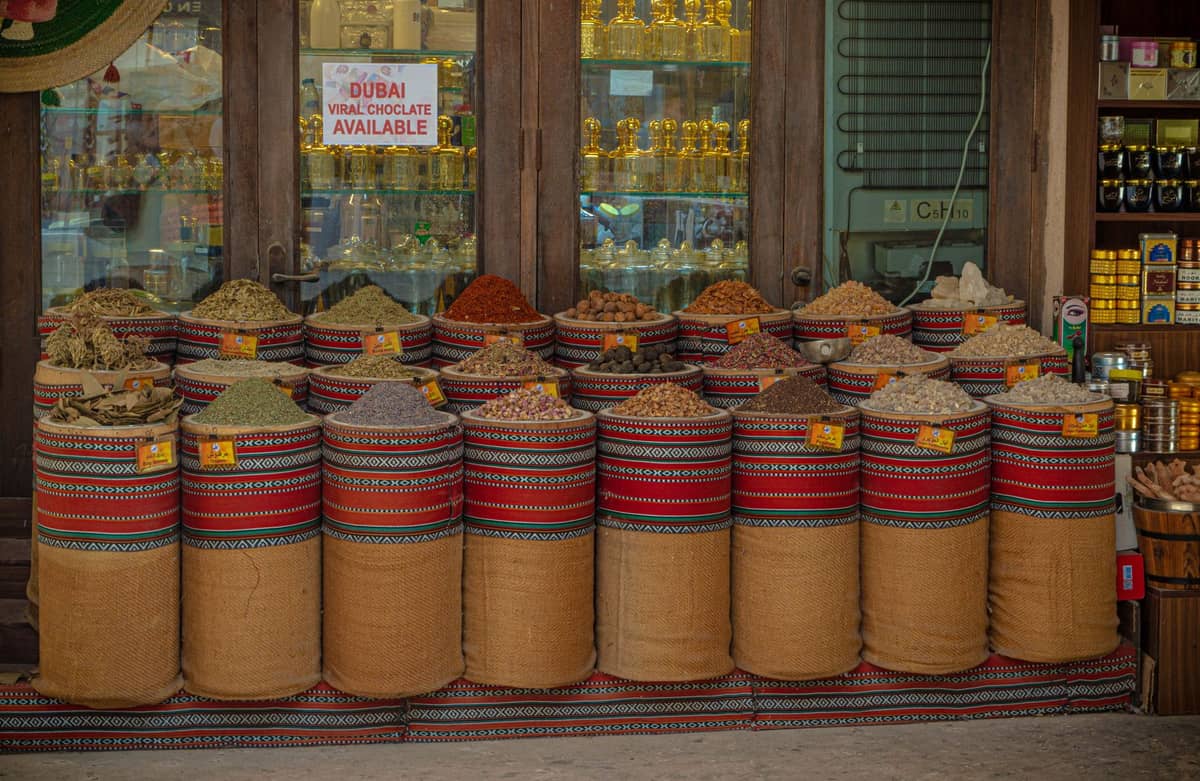
The Dubai Spice Souk, known in Arabic as Souq Al-Tawabel, is a traditional open-air market occupying a network of narrow, partially covered alleys in the Al Ras district of Deira. It is one of the oldest functioning markets in the emirate, with its roots tracing back to around 1850, when dhow traders from India, Persia, and East Africa began unloading cargo at the adjacent Dubai Creek moorings. Unlike many of Dubai's modern attractions, this souk has not been rebuilt or dramatically reimagined. The wooden shopfronts, the overhanging fabric canopies, and the practice of piling goods at the entrance to lure passersby are all inherited from decades of continuous trading.
The souk developed as part of what was historically called Al Kabeer, the 'big market', and its proximity to the creek was no accident. Spices arrived by boat and moved directly into the hands of merchants who supplied households and traders across the region. That geography still shapes the experience today. Walk a few minutes east and you reach the water's edge where wooden abras still ferry passengers across to Bur Dubai.
The Spice Souk sits adjacent to the Gold Souk and the Textile Souk, making it easy to combine all three into a single half-day circuit through old Deira. Together, these markets form the commercial heart of Deira, and the contrast they offer with the glass towers of Downtown Dubai is genuinely striking.
What You See, Smell, and Hear
The sensory experience of the Spice Souk begins before you enter it. From a full block away, the air carries layered notes of cumin, dried rose petals, and a faint sweetness from the incense burning inside many of the shops. As you move deeper into the alleyways, the smell shifts depending on which stall is in front of you. One doorway will hit you with the sharp earthiness of dried black limes, another with the almost medicinal intensity of whole cloves, and another with the warm vanilla undertone of Madagascan cinnamon bark.
Visually, the market rewards slow movement. Sacks and baskets of goods are arranged at threshold height, with the most photogenic items positioned to catch natural light filtering through the wooden latticework and fabric canopies above. You will find mounds of turmeric in deep orange-yellow, coarse sea salt crystals, dried hibiscus flowers in dark burgundy, saffron threads in small cellophane packets, and frankincense resin in white and amber chunks. Some stalls also sell dried fruits, nuts, rosewater, and traditional incense blends (known locally as bakhoor).
The sounds are equally layered. Merchants call out to passersby in English, Hindi, Urdu, and Arabic, often simultaneously. Trolleys loaded with sacks rumble over uneven stone. The distant call to prayer drifts across from nearby mosques. On busy afternoons, the alleyways are narrow enough that two groups of tourists passing each other require some sideways shuffling.
💡 Local tip
Photography tip: The best natural light falls into the alley interiors between 9:00 and 11:00 on weekday mornings. Later in the day, the canopies and crowd density make it harder to get clear sightlines. Ask permission before photographing shopkeepers or other people up close.
How the Experience Changes by Time of Day
Morning visits, particularly on weekdays before noon, are the most rewarding. The souk is noticeably quieter before 11:00. Shopkeepers are restocking and arranging their displays, the alleyways are cooler, and you can move freely without the press of tourists. This is also the best window for unhurried conversations with merchants, who tend to be more patient and willing to explain what they sell, where specific products come from, and how to use unfamiliar spices.
Between 13:00 and 16:00 from Saturday through Thursday, many individual stalls close for breaks and prayer. The market is not entirely shut, but coverage becomes patchy and the overall energy drops. Avoid planning your main visit in this window if you want full access. Friday is a special case: the souk generally does not open until 16:00 on Fridays, in observance of the weekly Islamic holy day, and then trades until around 22:00.
Evening visits have a different character. By 19:00, local residents and expat shoppers replace the tourist groups. The lighting inside the stalls shifts from harsh afternoon glare to softer artificial light, the temperature drops considerably from October to March, and the atmosphere feels more like a genuine neighborhood market than a sightseeing stop. If you want authenticity without crowds, a weekday evening between October and March is hard to beat.
⚠️ What to skip
Summer visits (June through September) are genuinely difficult. The Deira alleyways retain heat, humidity is high, and the narrow covered lanes limit airflow. The souk is manageable in early morning or after dark, but not in the middle of the day. Visit between November and March for comfortable outdoor conditions.
What to Buy and How to Buy It
The souk carries spices that range from the everyday to the genuinely hard to find elsewhere. Saffron, available in multiple grades, is one of the most purchased items. Iranian saffron is common here and can be significantly cheaper than equivalent quality in Western countries, though it pays to compare a few stalls before committing. Other popular purchases include cardamom pods, za'atar blends, dried black limes (loomi), sumac, harissa, and Himalayan pink salt. For visitors interested in traditional perfumery, several stalls sell oud chips, bakhoor incense blends, and rose attar.
Bargaining is normal here and mildly expected, particularly for larger quantities. For single small purchases, the price is often fixed or close to it. A reasonable approach is to ask the price, compare it mentally with adjacent stalls for the same product, and then negotiate if buying more than one item. Merchants are experienced in reading whether a visitor actually wants to haggle or is just going through the motions. Being direct and polite works better than theatrical offers.
Packaging and portability are worth thinking about before you buy. Loose spices purchased in open bags are fine for a same-day drive or short trip, but they can shift and spill during a long flight. Ask stalls to double-bag or seal items if you are buying for international travel. Most international airports permit packaged dry spices, but check your destination's import rules before buying large quantities.
Getting There and Practical Logistics
The most convenient public transport option is the Dubai Metro Green Line to Al Ras Station. The station exit puts you less than a five-minute walk from the souk entrance on Baniyas Street. Several RTA bus routes also serve the area, including lines 27, C07, C09, C28, and E16, stopping at Deira Old Souk stops along Baniyas Road. Taxis and Careem or Uber rides drop off on Baniyas Street along the perimeter, as the interior alleyways are pedestrian-only.
For visitors combining the Spice Souk with other old-city attractions, the area is walkable and well-connected. The Gold Souk is a three-minute walk to the north. A short abra ride across Dubai Creek (costing around 1 AED per person) connects you to the Textile Souk and the Al Fahidi Historical Neighbourhood on the Bur Dubai side.
If you are building a broader old Dubai itinerary, the Old Dubai guide covers the most efficient routes between the creek-side markets, heritage sites, and the Shindagha Heritage District, which is a short walk from the Bur Dubai abra landing.
ℹ️ Good to know
Opening hours (reported, verify before visiting): Saturday to Thursday 10:00 to 22:00, with a break roughly 13:00 to 16:00 in many shops. Friday 16:00 to around 22:00. Entry is free. Individual shop hours vary.
Accessibility and Honest Limitations
The Spice Souk is a historic market environment, not a purpose-built tourist attraction. The alleyways are narrow, the paving is uneven in places, and there are occasional low steps at shop entrances. No formal step-free access route has been mapped or published for this souk. Visitors using wheelchairs or those with significant mobility difficulties should be aware that navigation will be challenging in the interior lanes. The perimeter street on Baniyas Street offers a partial view of some stalls without entering the covered alleyways.
It is also worth setting honest expectations about what kind of attraction this is. The Spice Souk is a working commercial market, not a museum or a choreographed experience. Some shops have a strong sales pitch and can feel persistent. The spice quality varies between stalls. And while the setting is genuinely atmospheric, it is compact: the main market area covers a relatively small footprint and most visitors have seen everything within 45 to 90 minutes. Travelers expecting an expansive, immersive heritage quarter may find it smaller than anticipated.
For a broader sense of how Dubai's historic districts fit together, the Dubai Creek and the surrounding Al Seef waterfront promenade offer more space and context for understanding the city's trading heritage.
Insider Tips
- Cross to Bur Dubai via the abra (wooden ferry) from the Old Souk Abra Station, a two-minute walk from the Spice Souk. The 1 AED-per-person crossing is one of the cheapest and most atmospheric things you can do in Dubai, and connects you directly to the Textile Souk on the other bank.
- If you are buying saffron, ask the merchant to let you smell it before purchasing. Genuine high-grade saffron has a distinctive honey-like and slightly metallic aroma. Dull-smelling or odourless saffron is usually low quality. Check the colour: good threads are deep red with slightly orange tips.
- Weekday mornings between October and March are the single best window to visit. Temperatures are comfortable for an outdoor walk, tourist numbers are low before 11:00, and shopkeepers are more relaxed and conversational than during the lunchtime rush.
- Some stalls near the main entrance cater primarily to tourists with pre-packaged souvenir sets at premium prices. Walk three or four shops deeper into the alleyways to find merchants trading with local buyers, where pricing tends to be more honest and the product range more varied.
- Bring cash in UAE dirhams. Some stalls accept cards, but smaller merchants often prefer cash, and having dirhams avoids the awkward back-and-forth of finding a machine or paying a foreign transaction fee.
Who Is Spice Souk For?
- Food and cooking enthusiasts who want to stock up on spices unavailable or expensive at home
- Culture-focused travelers looking for a market experience that reflects Dubai's pre-skyscraper commercial identity
- Photographers interested in colour, texture, and street-level urban detail in a traditional setting
- Visitors combining a half-day tour of old Deira with the Gold Souk, Dubai Creek, and a creek crossing by abra
- Travelers seeking affordable, distinctive souvenirs: quality saffron, frankincense resin, or bakhoor incense make far more personal gifts than mall retail