Textile Souk Dubai: The Complete Guide to Bur Dubai's Fabric Market
The Textile Souk in Bur Dubai is one of Dubai's oldest and most atmospheric traditional markets, lining the southern bank of Dubai Creek with bolts of silk, linen, cotton, and embroidered fabric. Free to enter and easy to reach by abra, it offers a genuine slice of pre-skyscraper Dubai that still functions as a working trading hub.
Quick Facts
- Location
- Ali Bin Abi Talib Street, Bur Dubai, Dubai, UAE (southern bank of Dubai Creek)
- Getting There
- Abra (water taxi) to Bur Dubai Abra Station — directly opposite the souk; or taxi/rideshare to Al Fahidi area
- Time Needed
- 45–90 minutes for browsing; longer if you plan to negotiate and buy fabric
- Cost
- Free entry; you only pay for purchases. Abra crossing from Deira: approx. 1 AED
- Best for
- Fabric shoppers, culture seekers, photographers, and anyone wanting Old Dubai atmosphere
- Official website
- www.visitdubai.com/en/places-to-visit/the-textile-souk
What Is the Textile Souk?
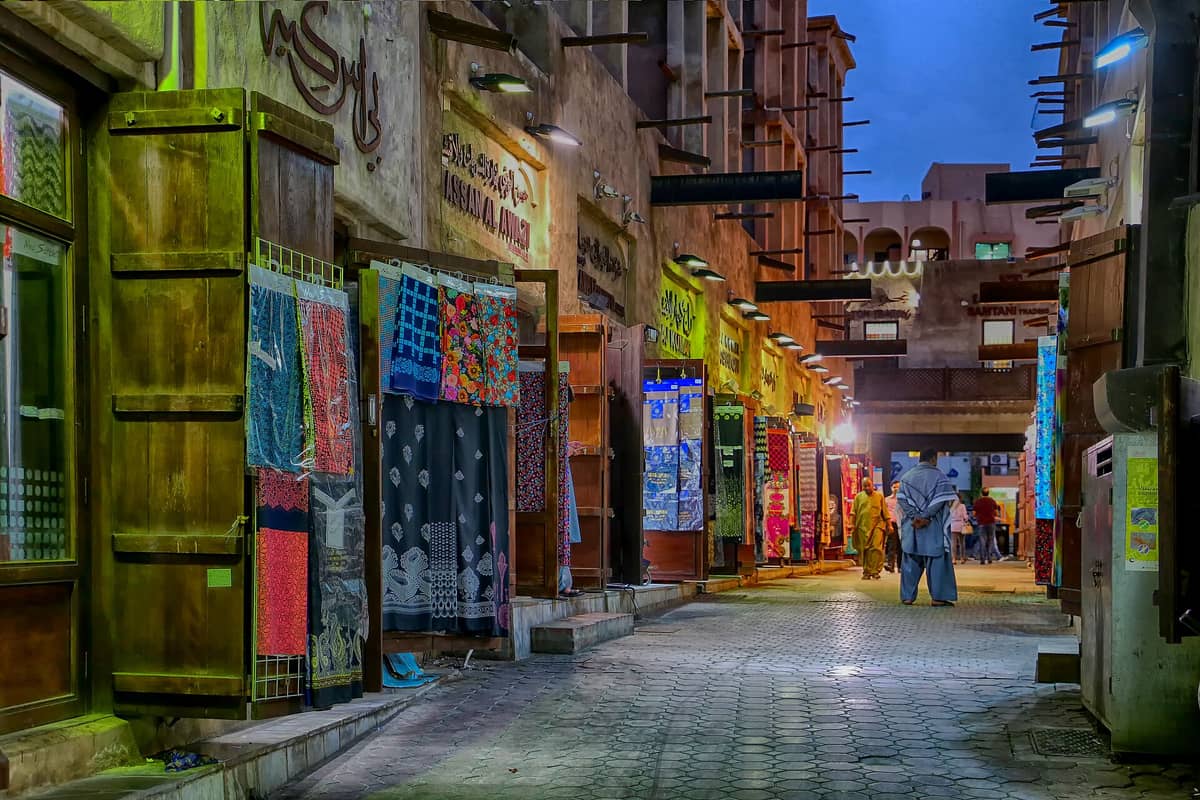
The Dubai Textile Souk — also known as Bur Dubai Souk or the Old Souk — is a traditional covered market stretching along Ali Bin Abi Talib Street on the southern shore of Dubai Creek. It is one of the oldest commercial areas in the city, and the physical structure reflects that: a long wooden arcade with latticed wind towers overhead, the kind of architecture that predates Dubai's glass-and-steel era by generations. Inside, hundreds of small shops are stacked floor-to-ceiling with bolts of fabric — silk organza, raw linen, printed cotton, polyester brocade, heavily embroidered fabrics from South Asia, and lightweight synthetics that catch the light in strips of gold and copper. It is the go-to destination in Dubai for tailors, dressmakers, costume designers, and anyone looking to have something custom-made. You can read more about the surrounding heritage precinct in our guide to Bur Dubai.
This is not a tourist reconstruction. The Textile Souk still functions as a working supply market for the garment trade, which means the atmosphere is transactional and unpolished in the best possible way. Traders will call out to passing pedestrians, rolls of fabric overhang doorways, and the narrow corridors fill with fabric dust and the faint smell of dye and cedar wood. If you are looking for a curated shopping experience with air-conditioned comfort and fixed prices, this is not that. If you want to understand how Dubai traded long before the skyscrapers arrived, this is exactly where to start.
ℹ️ Good to know
Opening hours are not officially standardised and vary by individual shop. Most traders operate roughly 9:00–14:00 and 16:00–21:00, Saturday through Thursday, with reduced activity or full closure on Fridays and Sundays. Verify with specific shops before a dedicated shopping trip.
The Architecture and Atmosphere of the Covered Arcade
The souk's covered walkway is one of its most recognisable features: a long, low-ceilinged wooden arcade with a distinctive wind-tower design above certain sections. The wind towers (barjeel) are a traditional Gulf cooling system — tall rectangular chimneys that funnel air downward — and while they are more decorative than functional today, they remain one of the clearest architectural links to Dubai's pre-air-conditioning past. The wooden lattice work overhead filters direct sunlight without closing off airflow, which matters considerably in a city where afternoon temperatures can exceed 40°C in summer.
The architectural language of the Textile Souk is closely related to what you will find in the Al Fahidi Fort and the Al Fahidi Historical Neighbourhood a short walk away. Both belong to the same era of coral-and-gypsum construction that defined Bur Dubai before the 1960s oil-era boom. Walking the arcade gives you a reasonable sense of the scale and texture of old commercial Dubai — narrow, functional, built for shade and cross-ventilation rather than spectacle.
How the Experience Changes by Time of Day
Morning visits — arriving around 9:30 to 10:30 — tend to be the most productive for shopping. Shopkeepers are freshly opened, the arcade is not yet crowded, and traders are generally more willing to spend time discussing fabric types and showing you options from the back of the shop. The light is also better for assessing true colours before the midday glare turns everything flat.
By early afternoon, most shops shutter for a break. The arcade empties out significantly between roughly 13:30 and 16:00, and the few shops that stay open are usually the larger, more tourist-oriented ones at the creek end. If you arrive during this window, do not assume the souk is permanently quiet — it is simply resting. The evening reopening from around 16:00 brings a different energy: cooler air drifts in from the creek, the overhead wooden lattice casts longer shadows, and the mix of shoppers shifts to include more locals buying fabric for tailoring commissions.
The late evening hours, particularly from 19:00 to 21:00, are among the most atmospheric. The artificial lighting in the shops amplifies the metallic sheen of embroidered fabrics, the creek breeze keeps temperatures manageable, and the foot traffic is lively without becoming oppressive. This window works particularly well for photography.
💡 Local tip
Avoid visiting on Friday afternoon — this is the traditional prayer and rest period, and many shops remain closed. Saturday mornings are busy but reliably open, and the energy suits first-time visitors well.
What You Can Buy: Fabrics, Prices, and Bargaining
The range of fabric on offer is genuinely broad. Common finds include silk organza in solid colours and printed patterns, dupioni silk, chiffon, cotton voile, denim, stretch jersey, heavy upholstery fabric, lace, and a substantial selection of Indian and Pakistani embroidered fabrics, including chikankari, zardozi, and sequinned ceremonial cloth. Many shops also carry ready-made fabric accessories, kaftans, and modest wear alongside their bolts.
Prices are quoted per metre and are almost always negotiable. The initial price offered to a tourist is typically higher than what a regular customer would pay — this is standard practice and not particular to this souk. A calm, unhurried counter-offer is the appropriate response. Shops that display fixed price tags tend to mean them; shops without visible pricing are generally open to negotiation. It is worth walking the full length of the arcade before buying, because the same fabric type can vary in price and quality between shops.
If you are planning a custom garment, there are tailors operating in and around the souk, and many shops can refer you to nearby stitching services. For broader context on fabric shopping and gold accessories to complement your purchases, the Dubai gold shopping guide covers the connected souk district across the creek in Deira.
Getting Here: The Abra Crossing
The most practical and atmospheric way to reach the Textile Souk is by abra — the traditional wooden motorised boat that crosses Dubai Creek between Deira and Bur Dubai. The crossing takes roughly five minutes and costs approximately 1 AED per person. Abras depart continuously throughout the day from the Deira Old Souk Abra Station, directly opposite the Bur Dubai Abra Station. Step off the boat and the souk entrance is immediately in front of you. This short crossing is worth doing regardless of whether you plan to shop — it is one of the best two-minute views of Old Dubai available and connects neatly with the Gold Souk and Spice Souk on the Deira side.
By road, the souk is accessible by taxi or rideshare (Careem or Uber) to the Al Fahidi or Bur Dubai Waterfront area. Parking is limited on the surrounding streets and traffic on Ali Bin Abi Talib Street can be heavy during peak hours, so self-driving is the least convenient option. The nearest metro station is BurJuman on the Red Line, roughly a 10–15 minute walk from the souk entrance along the creek promenade.
Practical Notes: Weather, Dress, and Photography
Dubai operates on Gulf Standard Time (GST, UTC+4) and has a hot desert climate. The best months to visit the Textile Souk outdoors are November through March, when daytime temperatures sit between roughly 24–31°C and the short walk from the abra station to the souk is comfortable. In summer (June to September), temperatures regularly exceed 40°C, and while the covered arcade provides shade, the heat between the abra dock and the souk entrance, and the narrower internal passageways without strong air conditioning, can be genuinely draining. Summer visits are manageable if you plan around early morning or evening hours. For broader seasonal guidance, see the best time to visit Dubai.
Dress modestly when visiting the souk area. This is both respectful of local custom and practical — the Bur Dubai souk district is a functioning commercial neighbourhood, not a resort zone. Covered shoulders and knees are appropriate for both men and women. For more detail on what to wear across different Dubai contexts, the Dubai outfits guide covers the full spectrum.
Photography inside the souk is generally tolerated, but ask before photographing individual shopkeepers or their customers. The most visually compelling shots tend to come from the creek-facing entrance in early morning light, or from inside the arcade in the evening when the shop lights reflect off the metallic fabrics. A wide-angle lens captures the depth of the wooden arcade well. A phone camera is entirely sufficient.
⚠️ What to skip
The paths through the souk are generally flat but narrow and can be uneven in places. Pushchairs and wheelchairs may struggle in the more crowded internal sections. There are no dedicated accessible facilities documented in current visitor guides — contact individual sections via Visit Dubai if this is a concern before your trip.
Who Should Skip This Attraction
The Textile Souk is not for everyone. Visitors who dislike active haggling, or who feel uncomfortable with persistent sales approaches, may find the experience stressful rather than enjoyable. Families with very young children may find the narrow, crowded passageways difficult to navigate. Those with no interest in fabric, tailoring, or traditional markets will get more from their time at nearby heritage sites rather than browsing shop after shop of cloth. It is also worth being honest about this: the souk has a few shops that have tilted toward selling tourist knick-knacks alongside fabric — scarves, pashminas, and generic souvenirs — so the entirely pure fabric-trade experience requires walking past those toward the deeper sections of the arcade.
Insider Tips
- Walk the full length of the arcade before buying anything. Prices and fabric quality vary noticeably between shops, and the shops furthest from the creek entrance tend to be less tourist-oriented and more competitive on price.
- Bring cash in UAE dirhams (AED). Some larger shops accept cards, but smaller traders operate cash-only, and having exact or near-exact change speeds up transactions.
- If you want fabric cut to a specific length, bring your measurements written down. Shopkeepers are accustomed to working with tailoring clients and will cut to order on the spot, but having precise numbers saves time.
- The abra crossing to Deira takes about five minutes and runs throughout the day. Once you have finished in the Textile Souk, use it to continue to the Spice Souk and Gold Souk on the opposite bank — the three together make a logical half-day circuit of Old Dubai.
- For the best light and least crowds, aim to arrive at 9:30 on a weekday morning. By 11:00, tour groups start arriving and the narrow arcade becomes significantly more congested.
Who Is Textile Souk For?
- Fabric buyers and home sewers looking for a wide variety of materials at competitive prices
- Travellers interested in Old Dubai's trading heritage and pre-modern architecture
- Photographers seeking authentic market atmosphere along Dubai Creek
- Visitors planning custom-made garments who want to source fabric locally
- Anyone pairing the souk with an abra crossing and a full Old Dubai circuit including Al Fahidi and the Deira souks