Dubai Opera: What to Know Before You Visit
Dubai Opera is a 2,000-seat performing arts venue in the heart of Downtown Dubai, designed to resemble a traditional Arabian dhow. From grand opera and ballet to stand-up comedy and classical concerts, the program shifts constantly, making this one of the most versatile cultural stages in the Middle East.
Quick Facts
- Location
- Sheikh Mohammed Bin Rashid Boulevard, Opera District, Downtown Dubai, UAE
- Getting There
- Burj Khalifa / Dubai Mall Metro Station (Red Line), approx. 20-25 min walk
- Time Needed
- 2-3 hours for a performance; 1 hour for the Grand Tour
- Cost
- Event tickets vary by performance and seat; Grand Tour pricing is set per tour (verify before booking)
- Best for
- Culture seekers, date nights, architecture lovers, family performances
- Official website
- www.dubaiopera.com
What Dubai Opera Actually Is
Dubai Opera opened in 2016 as the anchor of The Opera District in Downtown Dubai, a planned cultural quarter developed alongside the Burj Khalifa and The Dubai Mall. It is a 2,000-seat, multi-configuration performing arts venue capable of transforming between a traditional theatre layout, a flat-floor concert hall, and a full opera house with orchestra pit. No other performing arts venue in the region offers the same range of configurations under one roof.
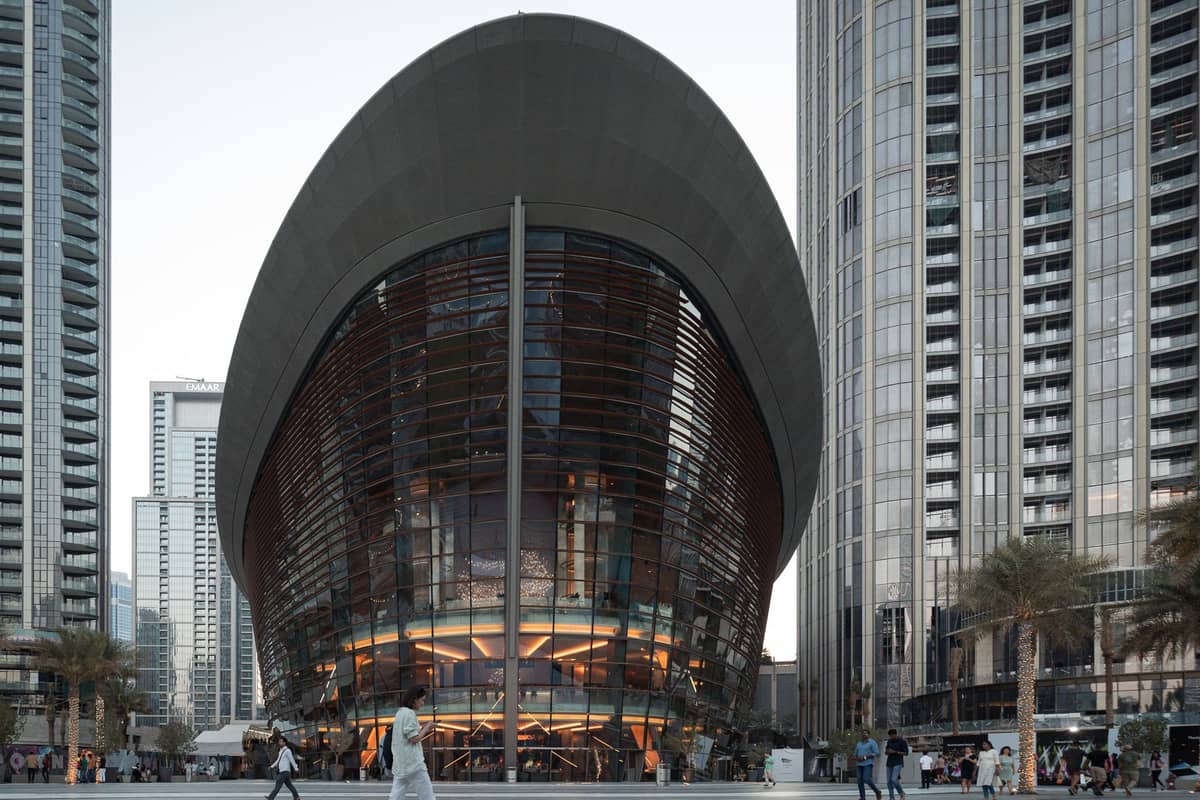
The building itself is as much a talking point as anything happening inside it. Designed by Atkins, the dhow-shaped structure references the traditional wooden sailing vessels that once defined Dubai Creek's commercial identity. The steel hull curves up from street level like the hull of a ship being built in dry dock, with a latticed facade that shifts appearance depending on the angle and the time of day. At dusk, when the light drops behind the Burj Khalifa and the building's warm exterior lighting activates, the effect is genuinely striking.
The venue sits within easy walking distance of the Burj Khalifa and the Dubai Fountain, which means an evening at Dubai Opera can anchor a full night out in Downtown without requiring a taxi between attractions.
The Architecture Up Close
Most visitors photograph the building from the far end of Sheikh Mohammed Bin Rashid Boulevard, where the full dhow profile is visible. That is the right instinct. From up close, the building reads more as an abstract mass of steel and glass. Step back to the fountain-side promenade and the proportions resolve: the raised bow at the northern end, the long curving flank, and the terraced roof line that allows for an outdoor performance space above.
That rooftop terrace is worth noting. On select evenings when performances are not scheduled, it opens for events and dining with a direct sightline to the Burj Khalifa. The views from this level are among the less-publicized vantage points in Downtown Dubai, partly because access depends on what is scheduled.
💡 Local tip
Photography tip: The best exterior shots of Dubai Opera are from the boulevard facing north, around 30 minutes after sunset when the building's lights are on but the sky still holds some colour. The Burj Khalifa is visible directly behind it.
If the architecture of Dubai's contemporary build interests you, the Dubai architecture guide covers how buildings like Dubai Opera fit into the city's broader urban development story, from the Creek district to Downtown and beyond.
What's On and How the Programming Works
Dubai Opera does not have a resident company. It is a rental and booking venue, which means the program is diverse to the point of being unpredictable in the best way. A single month's schedule might include a full production from an international opera company, a Russian ballet touring company, a stand-up comedy night, a classical piano recital, and a Broadway-style musical. The venue actively pursues international touring productions, and major names across classical music, pop, and theatre have performed here since 2016.
This programming model also means that the experience varies significantly depending on what you attend. A full opera evening in the traditional horseshoe configuration feels formal, with tiered balconies, a lowered orchestra pit, and acoustics calibrated for unamplified vocal performance. A flat-floor concert night feels entirely different: the stalls seating is removed, the stage extends, and the venue functions more like a standing concert hall. If you are attending specifically for the architecture and atmosphere, an evening opera or ballet production gives the most representative experience of the space.
ℹ️ Good to know
Box office hours: 11:00–20:00 daily. Venue doors typically open two hours before a performance, with the main auditorium opening 30 minutes before curtain. Check the official website for current listings, as schedules are event-driven and change seasonally.
Ticket prices are set per event and vary by performance type and seating category, including individual seats and box options at different levels. All tickets are priced in UAE dirhams (AED) and sold through the official website. The Grand Tour of the building, which provides access to backstage areas, the auditorium, and the rooftop, is offered separately and is worth considering if you want to see the space without committing to a full evening performance.
How to Get There
By metro, take the Red Line to Burj Khalifa / Dubai Mall Station. The walk from the station to Dubai Opera is approximately 20 to 25 minutes along Sheikh Mohammed Bin Rashid Boulevard, which is a pleasant enough route in cooler months (November to March) but genuinely uncomfortable in the summer heat. Factor this in when planning an evening out: in July or August, the walk after a 22:00 show finish is still warm and humid. In that case, take a taxi or use Careem or Uber for the last stretch.
By car, the venue is accessible from Sheikh Zayed Road (E11) via Financial Center Road, then onto Sheikh Mohammed Bin Rashid Boulevard. Underground parking is available at P3, and the venue's directions page specifies the entry points in detail. Parking in Downtown can be tight on busy event nights, so allow extra time or use the Burj Khalifa car park as an overflow option.
⚠️ What to skip
If you are visiting during summer months (June to September), avoid the metro-to-opera walk in formal clothing. Temperatures regularly exceed 35°C at night. A short taxi from the metro station costs a few dirhams and is the sensible option.
What a Visit Actually Feels Like
Arriving an hour before curtain gives you enough time to absorb the building without rushing. The ground-floor promenade level has a bar and dining options, and the atmosphere before a performance evening is sociable rather than stuffy. The audience demographic at Dubai Opera is genuinely mixed: tourists, Dubai residents of many nationalities, corporate groups, and couples on date nights all share the same lobby. Formal wear is worn by some attendees for gala performances and opening nights, but for most evenings, smart casual is the norm and nobody looks out of place in it.
Inside the auditorium, the acoustic quality is immediately noticeable. For classical performances, the absence of electronic amplification in the stalls seats is something audiences accustomed to pop concerts sometimes find surprising in a positive way. The sound is direct and unmediated. The sight lines from the first balcony level are excellent for theatre and opera, where the full stage picture matters. The upper balcony provides a more distant view but remains within the scale of the room.
After the show, the neighbourhood rewards a slow walk. The Dubai Fountain runs shows on the half hour and hour until late, and the Dubai Mall is a short walk away for those who want to extend the evening.
Dress Code, Accessibility, and Practical Notes
Dubai Opera does not publish a strict dress code, but the general standard for performances is smart casual or above. At international opera and ballet productions, a portion of the audience dresses formally. At comedy nights and pop concerts, the atmosphere is noticeably more relaxed. Wearing modest dress is consistent with the wider norms of public spaces in Dubai.
The venue is accessible to wheelchair users. Designated wheelchair seating areas with companion seats are available in selected parts of the auditorium. Accessible restrooms are located across multiple levels, including the Promenade Level and both balcony levels. Elevators, escalators, and a stairlift provide access between floors. Ten designated parking spaces for people with disabilities are located in Basement 2 Plaza Parking. Wheelchair bookings and additional assistance requests should be arranged in advance through the box office.
💡 Local tip
If you want to see the auditorium but are not attending a performance, the Dubai Opera Grand Tour provides backstage and rooftop access. Book directly through the official website. Verify current pricing, as tour rates can change.
Is Dubai Opera Worth Your Time?
As a cultural institution, Dubai Opera operates at a level that competes credibly with mid-tier international performing arts venues. The programming is uneven across the year, with peak season (October to April) delivering the strongest international productions and summer months offering a sparser schedule. If your visit coincides with a major production, attending is worthwhile on its own terms, not just as a sightseeing exercise.
As an architectural landmark, the building earns a look even if you are not attending a performance. The boulevard approach on foot, particularly in the evening, frames the dhow profile well against the Burj Khalifa backdrop. This is one of the more photogenic building facades in Downtown Dubai, which is not a low bar.
Travellers who are primarily interested in culture across Dubai should also look at the best museums in Dubai for a broader overview of the emirate's cultural offerings, and consider how Dubai Opera fits into a wider itinerary that might include the Museum of the Future or heritage sites in Al Fahidi.
Who should skip it: visitors with no interest in live performance and limited time in Dubai will find the Grand Tour underwhelming compared to the city's other immersive experiences. Families with young children should check whether the specific performance is suitable before booking, as not all events are programmed for children.
Insider Tips
- Check the programming at least two weeks before your visit. The best international touring productions sell out well in advance, particularly for opening nights and weekend shows during the October to April season.
- The rooftop terrace occasionally hosts external events and sunset gatherings separate from the main performance programme. Follow Dubai Opera's social channels for pop-up announcements, as these are not always listed prominently on the ticketing site.
- For the clearest view of the dhow-shaped facade with the Burj Khalifa in the background, position yourself at the southern end of the boulevard and shoot with a wide lens. The alignment only works from this specific angle.
- If you are travelling in a group and considering boxes, the side boxes on the first balcony offer a different social dynamic than stalls seating and are worth the price difference for special occasions, but the sight lines to the stage can be angled depending on the seat within the box.
- Arrive at least 45 minutes before curtain to use the promenade bar without rushing. Late arrivals are typically held in the lobby until a suitable break in the performance, which for opera can mean waiting a full act.
Who Is Dubai Opera For?
- Couples looking for a high-quality evening out in Downtown Dubai
- Culture and arts travellers who want to see what the UAE's performing arts scene looks like at its most ambitious
- Architecture enthusiasts interested in contemporary Gulf design
- Visitors during the October to April season when international touring productions are most frequent
- Travellers combining a Downtown evening with the Dubai Fountain and Burj Khalifa area