Dubai Water Canal: The City's Most Walkable Waterfront
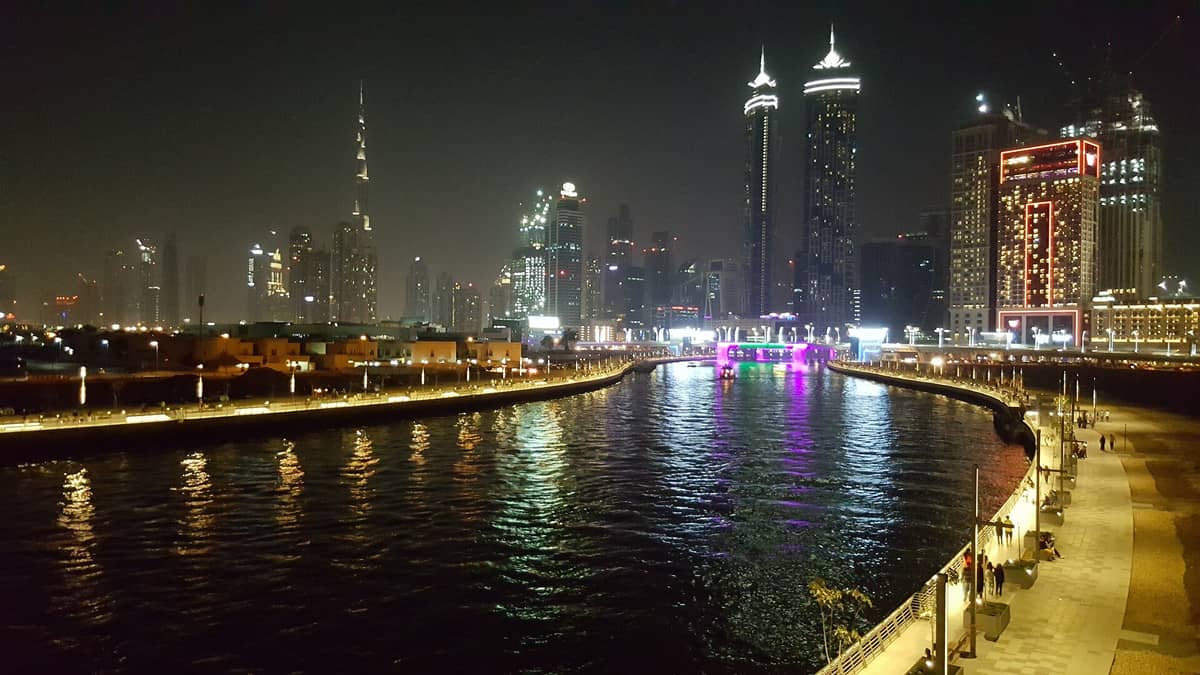
The Dubai Water Canal is a 3.2-kilometer engineered waterway cutting through Business Bay to the Arabian Gulf, flanked by a wide promenade, cycling tracks, pedestrian bridges, and a dramatic waterfall beneath Sheikh Zayed Road. Entry is free, it runs 24 hours, and it rewards visitors most at dusk when the city lights reflect off the water.
Quick Facts
- Location
- Business Bay to Jumeirah 2, Dubai — runs from Dubai Creek through Business Bay to the Arabian Gulf
- Getting There
- Business Bay Metro Station (Red Line); RTA water bus stops along the canal route (AED 2 per stop; ferry services to/from Dubai Canal station are higher)
- Time Needed
- 1–2 hours for a promenade walk; half a day if cycling the full route or combining with nearby attractions
- Cost
- Free (promenade, bridges, cycling tracks). Canal water bus: from AED 2 per stop (RTA marine transport; ferry routes to/from Dubai Canal station cost more).
- Best for
- Evening walkers, cyclists, photography, couples, and anyone wanting a free alternative to Dubai's ticketed attractions
- Official website
- www.visitdubai.com/en/places-to-visit/dubai-water-canal
What the Dubai Water Canal Actually Is
The Dubai Water Canal is a purpose-built waterway approximately 3.2 kilometers long and 6 meters deep, officially opened in November 2016. It extends Dubai Creek westward through the Business Bay district, passes beneath the ten lanes of Sheikh Zayed Road, and opens into the Arabian Gulf at Jumeirah 2. The project was announced in October 2013 and represented one of the most ambitious urban waterfront developments in the emirate's modern history.
Unlike Dubai Creek, which evolved organically over centuries of trade, the canal is entirely engineered — every bridge, promenade section, and marina berth placed by design. That distinction matters when you visit: this is not a place steeped in historic atmosphere. It is a contemporary urban waterfront, and it succeeds on exactly those terms. The infrastructure is well-maintained, the paths are wide, and the views across the water toward Business Bay's tower cluster are genuinely striking.
💡 Local tip
The canal promenade and all pedestrian bridges are open 24 hours a day, 7 days a week, at no cost. There are no gates, no ticketing booths, and no timed entry. Just show up.
How the Experience Changes Throughout the Day
Early mornings, roughly 6:00 to 8:30 am, belong to residents. Joggers and cyclists from the surrounding Business Bay and Jumeirah towers claim the promenade before the heat settles in. The light at this hour is flat and cool, the water glassy, and the tower reflections clean and undistorted. It is the calmest the canal ever gets, and worth experiencing if you happen to be staying nearby.
Midday between June and September is genuinely difficult. Temperatures can exceed 40°C, and the promenade offers limited shade. If you are visiting in summer, confine your outdoor time to early morning or after 7:00 pm. From November through March, midday is perfectly comfortable — 24 to 28°C with low humidity — and the canal sees a steady flow of walkers and families throughout the afternoon.
Dusk is when the canal performs best. From about 5:30 pm onward, the light turns amber across the water and the Business Bay towers begin to illuminate from the top floors down. By the time the sky is fully dark, the promenade lights are on, boat wakes catch the reflections, and the whole waterfront takes on a different quality. The Sheikh Zayed Road waterfall activates around 8:00 pm and typically runs until 10:00 pm — it pauses automatically when boats pass beneath it, triggered by motion sensors. Evening is also when the canal is most lively, with food and beverage outlets open along the promenade and families spreading out across the wider sections.
ℹ️ Good to know
The waterfall beneath Sheikh Zayed Road typically operates from approximately 8:00 pm to 10:00 pm daily. It pauses automatically when vessels pass underneath, so your view of it will depend partly on boat traffic.
The Sheikh Zayed Road Waterfall: What to Expect
The waterfall is the canal's most photographed feature. Water cascades over the edge of the Sheikh Zayed Road bridge, framing the waterway as boats pass beneath. At night, it is illuminated, and the combination of the flowing water, bridge lights, and surrounding tower glow makes for a strong composition. The best vantage points are from the promenade on either side of the bridge, looking directly down the canal toward the fall.
It is worth being honest about scale: the waterfall is impressive in context, but visitors expecting something on the order of the Dubai Fountain may find it quieter than anticipated. There is no musical performance, no show schedule to plan around. It is simply a well-designed piece of infrastructure that looks good after dark. For photography, a wide-angle lens and a tripod will serve you much better than a phone camera alone, particularly on the long exposures needed to capture water movement against the lit towers.
Walking and Cycling the Promenade
The promenade runs along both banks of the canal for significant stretches, with multiple pedestrian bridges allowing you to cross and change sides. The surface is smooth and well-maintained, with dedicated cycling lanes separated from the walking path — a detail that makes the experience more comfortable than many of Dubai's other waterfront areas where cyclists and pedestrians compete for space.
A full out-and-back walk along the promenade takes roughly 60 to 90 minutes at a relaxed pace. Cyclists can cover the route considerably faster, and rental bikes are available in the vicinity. The route passes through landscaped sections with palm planting, cafe terraces, and rest seating at regular intervals. Multiple access points mean you can join or exit at different spots depending on where you have parked or where your accommodation is.
The canal also connects to the broader Safa Park area to the east, making it possible to combine both into a single outdoor half-day. Families with children who need to cover more ground often treat the canal walk as an add-on to a park visit rather than a standalone outing.
Getting There and Getting On the Water
The Business Bay Metro Station on the Red Line is the most practical public transit option for reaching the northern end of the canal near the Business Bay district. From the station it is a 10 to 15-minute walk down to the waterfront. Taxis and Careem or Uber drop-offs along Sheikh Zayed Road work well, and there is roadside parking available at various points along the canal for those arriving by car.
The RTA operates a marine transit service along the canal with stops at designated stations. The water bus fare is AED 2 per stop, and some roundtrip options are available at around AED 25 per person, with children under five travelling free. This is a practical and inexpensive way to see the canal from the water itself rather than just from the promenade. It is not a sightseeing cruise — it functions as public transport — but the perspective from water level looking back at the bridges and towers is worth the modest fare.
For those wanting a more leisurely cruise experience, private dhow and yacht operators run tours along the canal, often extending out toward Dubai Creek. Prices and schedules vary significantly by operator. If a cruise is a priority for your trip, consult a guide to Dubai dhow cruises before booking to understand what is included.
💡 Local tip
The RTA marine service is genuinely underused by tourists. A short basic water bus trip from the Business Bay stop down toward the Gulf-end of the canal costs AED 2 per stop and gives you a view of the waterfall and bridges that you simply cannot replicate from the promenade.
Practical Details: What to Know Before You Go
Dress code along the outdoor promenade follows Dubai's general public space norms — modest clothing is appropriate, meaning shoulders and knees covered. That said, the canal is a secular leisure space, not a religious site, and enforcement is not stringent. Sportswear worn by joggers and cyclists is widely seen throughout the morning hours.
Photography is unrestricted from the promenade and bridges. The canal is one of Dubai's more photogenic free public spaces, particularly for architectural shots combining water, towers, and bridge geometry. Evening and blue hour — the 20-minute window after sunset before full dark — produce the richest light conditions. For drone photography, UAE airspace regulations apply and many sections near Sheikh Zayed Road are restricted; check with the General Civil Aviation Authority before bringing a drone.
Accessibility is reasonable along the main promenade sections, which are step-free and wide enough for wheelchairs. Some bridge crossings involve slopes or surface changes, and accessibility at marine transit stations varies. The RTA website is the most reliable source for current accessible transit information before your visit.
The canal sits in a broader part of Dubai that rewards a half-day of exploration. Downtown Dubai is nearby, as are the Dubai Fountain and City Walk, making it easy to build a connected itinerary without long transfers.
Who Should Manage Their Expectations
The Dubai Water Canal is not an immersive cultural or historical attraction. Visitors hoping for the layered atmosphere of old Dubai's trading corridors or the storytelling depth of a museum will not find it here. The canal is urban infrastructure built for leisure — it does that well, but it does not pretend to be more. Travelers with only one or two days in Dubai should weigh it against higher-priority experiences unless waterfront walking is specifically something they value.
If authentic historic character is what you are after, Al Seef along the Creek or the Shindagha Heritage District will be more rewarding. The canal is best treated as a complement to those places, not a substitute.
Insider Tips
- Position yourself on the promenade south of the Sheikh Zayed Road bridge by 7:45 pm so you are already in place when the waterfall activates at 8:00 pm. The crowd thins out noticeably on the southern bank compared to the northern viewing spot.
- The RTA marine transit stop near the waterfall bridge gives you a water-level view of the cascade that the promenade cannot match. The AED 2 fare is one of the best-value viewpoint upgrades in the city.
- Cyclists should start at the Jumeirah 2 Gulf end in the morning and ride toward Business Bay with the sun behind them — this keeps glare off the water for better visibility and more pleasing photos on the return.
- Several of the casual restaurants along the mid-canal promenade have terrace seating directly over the water. Arrive before 7:00 pm on weekends to avoid long waits for outdoor seats during the cooler months.
- In summer (June to September), skip the canal entirely during daylight hours. Come specifically for the 8:00 pm waterfall activation and plan to leave by 10:00 pm when the waterfall shuts off — there is little reason to stay later unless dining nearby.
Who Is Dubai Water Canal For?
- Evening walkers and joggers who want a flat, well-lit, car-free route through a visually interesting part of the city
- Photographers chasing reflections of Business Bay towers on water, particularly during blue hour and early night
- Cyclists wanting dedicated lanes and a route that connects across multiple neighborhoods
- Couples looking for a free after-dinner walk with good atmosphere and without the weekend crowds of the marina or beach areas
- Budget travelers who want to experience Dubai's modern infrastructure and skyline without spending on ticketed attractions