City Walk Dubai: What to Expect at the City's Most Walkable Lifestyle District
City Walk Dubai is an open-air mixed-use district developed by Meraas, where European-style low-rise streetscapes meet Dubai's appetite for dining, shopping, and entertainment. Entry is free, the layout is pedestrian-friendly, and there is more to do here than a single visit can cover.
Quick Facts
- Location
- Al Safa Road / Al Wasl Road junction, Jumeirah, Dubai, UAE
- Getting There
- Burj Khalifa/Dubai Mall Metro Station (Red Line), then taxi or bus to City Walk
- Time Needed
- 2 to 4 hours for browsing; a full evening if dining
- Cost
- Free entry; individual venues (cinema, Coca-Cola Arena) charge separately
- Best for
- Evening strolls, casual dining, families, people-watching
- Official website
- www.citywalk.ae/en
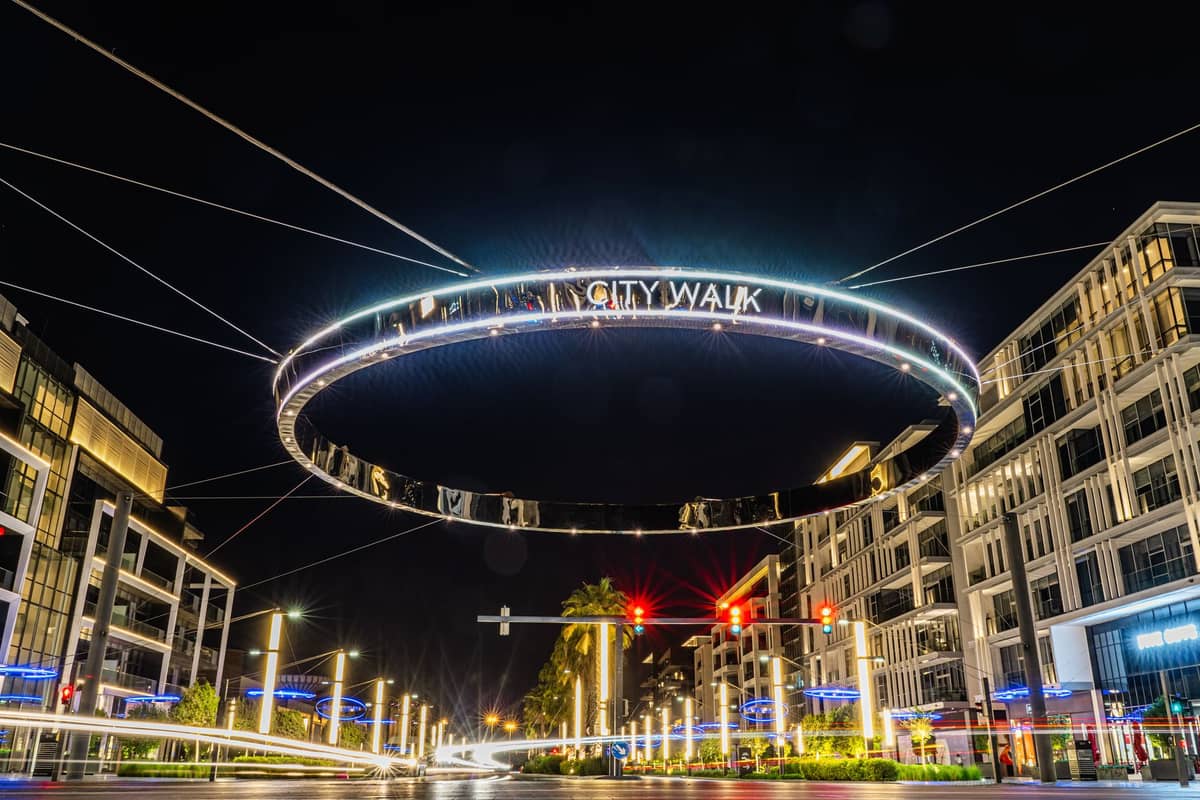
What City Walk Actually Is
City Walk Dubai is a low-rise outdoor lifestyle district developed by Meraas, occupying a sizable plot near the Al Safa Road and Al Wasl Road junction in Jumeirah. Unlike the vertical mega-malls that define Dubai's retail landscape, City Walk is deliberately horizontal: wide pedestrian boulevards, ground-floor shopfronts with outdoor seating, and apartment towers rising above that give the whole place a genuinely urban feeling rather than a theme park one.
The development combines retail, restaurants, a cinema, residential buildings, and the Coca-Cola Arena, Dubai's largest indoor entertainment venue, all within walking distance of each other. Entry to the district itself is free. You pay only at individual venues, restaurants, or if you use the on-site paid parking. This makes City Walk one of the more accessible options in a city where many leisure destinations come with upfront costs.
ℹ️ Good to know
Retail stores open Monday to Friday 10:00–22:00, Saturday to Sunday 10:00–23:00. Restaurants and cafés usually run later: until 23:00 on weekdays and midnight on weekends. Hours shift during Ramadan and on public holidays, so check the official City Walk website before visiting during those periods.
How the District Looks and Feels at Ground Level
The streetscape borrows a lot from mid-century European pedestrian zones: consistent building heights, continuous shade from awnings and trees, outdoor terraces where chairs face the street rather than a carpark. The architecture is predominantly white and grey concrete with strong graphic murals covering entire building facades, a deliberate design choice that makes certain corners genuinely photogenic without trying too hard.
During the day, especially in summer months when temperatures regularly exceed 40°C, the outdoor sections feel harsh. The district is partially air-conditioned in covered walkways and indoor sections, but the fully open-air stretches are best avoided between about 11:00 and 16:00 from June through September. In winter, the same streets feel entirely different: cool air, golden late-afternoon light on the white walls, and crowds that move at a noticeably more relaxed pace.
The smell of the district shifts throughout the day. By mid-morning the coffee shops are at full roast, and the outdoor terraces carry that aroma through the street. By evening, grills from the restaurant strips and shisha from the lounges give the air a heavier, spiced quality. There is always a low hum of background music, usually Arabic pop transitioning to international commercial tracks by late evening.
Morning to Late Night: How the Crowds Change
City Walk between 10:00 and 13:00 is almost quiet by Dubai standards. Shops are freshly opened, staff are still setting up outdoor displays, and the few visitors tend to be residents from the nearby towers rather than tourists. This is the window for unhurried browsing and photography without bodies in your frame.
The afternoon plateau from roughly 14:00 to 17:00 on weekdays attracts a mix of families and remote workers taking café breaks. Weekends bring heavier lunch-hour crowds from about 13:00 onward. If you are visiting on a Friday or Saturday and want a restaurant table without a wait, aim for 12:30 before the post-Friday-prayer lunch surge.
The district hits its stride after sunset. From around 19:00 through to 22:00 on weekdays and closer to midnight on weekends, City Walk operates as a genuine social hub. Groups gather at outdoor tables, children use the open plazas as impromptu play spaces, and the whole atmosphere becomes noisier and more interesting. If you only have one visit, this is the version of City Walk worth experiencing.
💡 Local tip
The best evenings at City Walk fall between October and April. November and March are particularly good: temperatures are comfortable, terraces fill up without becoming overwhelming, and the lighting across the murals looks especially sharp after dark.
What to Do Here: Retail, Dining, and Entertainment
Retail at City Walk skews toward international mid-to-premium brands with a handful of concept stores and local labels mixed in. It is not a destination for bargain hunting, and it is not trying to compete with the scale of Dubai Mall. The offering suits someone looking for a focused shop in a more relaxed environment than a full mega-mall requires.
The restaurant selection is one of the stronger reasons to come. City Walk has attracted credible standalone restaurants across Lebanese, Italian, Japanese, and pan-Asian cuisines alongside international chains. If you are planning a longer evening out, this district pairs logically with a concert or event at the Coca-Cola Arena next door. For a broader overview of where City Walk sits within Dubai's dining and leisure landscape, the things to do in Dubai guide gives useful context for planning your time across the city.
Cinema and entertainment anchor the eastern end of the district. The Reel Cinemas multiplex shows standard commercial releases as well as Arabic-language and international art-house titles. For visitors traveling with children, the indoor climate-controlled sections and cinema make City Walk a sensible wet-weather or peak-summer option when outdoor Dubai is genuinely uncomfortable.
City Walk also houses Green Planet Dubai, a bio-dome built around a roughly 25-metre artificial tropical tree that recreates a rainforest environment and houses hundreds of animal species. This attraction has separate ticketing and requires a dedicated visit. It is one of the more unusual things to do in the district and appeals strongly to families. You can read more in the full Green Planet Dubai guide.
Getting There and Getting Around
City Walk does not have a dedicated Metro station. The closest option on the Red Line is Burj Khalifa/Dubai Mall, from which you will need a taxi or ride-hailing app (Careem or Uber are both reliable) to cover the remaining distance. The ride typically takes around 10 minutes outside of peak traffic hours. Direct buses from various parts of the city do serve the Al Wasl Road corridor, but checking the current RTA route map before travel is advisable since routes and fares are updated periodically.
By car, City Walk is directly accessible from Al Wasl Road and Al Safa Street, and on-site paid parking is available across multiple structures. On weekend evenings, parking fills quickly from around 19:30 onward, so arriving earlier or using a ride-hailing drop-off point is more practical. For a broader look at moving around the city, the getting around Dubai guide covers all transport modes in detail.
Practical Details Worth Knowing Before You Go
Dress code at City Walk follows standard Dubai public norms: modest and comfortable clothing is appropriate. The district is not a beach or a luxury hotel pool, so swimwear and very revealing clothing are out of place. Smart casual works for both daytime browsing and evening dining. For guidance on what visitors typically wear across different Dubai environments throughout the year, the Dubai outfits guide covers this well.
Weather matters more here than at an indoor mall. City Walk's outdoor sections are genuinely enjoyable only during the cooler months. If you are planning a trip and want to time it right, November through March is the window when outdoor venues across Dubai are at their most comfortable. The best time to visit Dubai guide breaks down the trade-offs by month, including how shoulder periods like October can offer better value.
Accessibility throughout City Walk is generally good. The terrain is flat, pathways are wide, and the district is designed for stroller and wheelchair use. The Coca-Cola Arena has dedicated accessible facilities for visitors of determination. ATMs and customer service points are available within the district. All payments are in UAE dirhams (AED), and card payment is accepted widely at every venue.
⚠️ What to skip
City Walk's outdoor sections are uncomfortable in summer (June to September). If you are visiting during these months, plan to arrive after 18:00 when temperatures drop, or focus your time on indoor venues like Green Planet, the cinema, or air-conditioned retail. The district does not disappear in summer, but it becomes a very different experience from the cool-season evenings it is designed for.
Is City Walk Worth Your Time?
City Walk is often described in promotional material as though it were unique in the world, which it is not. Outdoor lifestyle districts with restaurants, retail, and entertainment exist in most major cities. What makes this version worth a visit in Dubai is the contrast it provides: compared to the enclosed, climate-controlled scale of Dubai Mall or Mall of the Emirates, City Walk feels proportionate and walkable in a way that is genuinely pleasant.
It is not a historic or cultural destination. There is nothing here that tells you about Dubai's past or its identity beyond its ambitions as a modern city. If you are interested in that kind of depth, the older parts of the city, particularly the Al Fahidi neighbourhood and the surrounding Shindagha Heritage District, offer something that City Walk cannot.
For a visitor spending several days in Dubai, City Walk earns a half-evening slot: arrive around 18:30, walk the main boulevard, have dinner at one of the terrace restaurants, and leave before the full weekend crowd arrives. That is the experience the district does best, and it delivers it consistently.
Who should skip it: visitors with very limited time who want to see the most architecturally or culturally distinctive parts of Dubai will find more rewarding options elsewhere. City Walk is also not the right choice for anyone on a strict budget, since dining and entertainment here skew toward mid-to-upper price points and there is little free entertainment beyond the street itself.
Insider Tips
- The murals across City Walk's building facades are among the most photographed in Dubai. The best light on the white walls falls in the 30 minutes after sunset, when the ambient glow is warm but the sky is not fully dark. Bring a wide-angle lens or use your phone's portrait mode against the lit facade sections.
- If you are planning to attend an event at the Coca-Cola Arena, the restaurants directly facing the Arena entrance get heavily booked on event nights. Book at least 48 hours ahead, or choose a restaurant one street back where tables are more available.
- Parking on weekends after 19:00 is genuinely difficult. The most efficient option is a drop-off via Careem or Uber using the designated ride-hailing zones near the main entrance, which avoids circling the car park structures.
- Green Planet Dubai, located inside City Walk, sells out on weekend afternoon slots during school holidays. Book tickets online in advance if you are visiting with children between December and March.
- The indoor-outdoor balance shifts significantly in summer. In July and August, treat City Walk as an air-conditioned retail and dining destination rather than a strolling district. The pleasant outdoor version of this place only fully exists between October and April.
Who Is City Walk For?
- Couples looking for an evening out with dining and a walk in a well-designed urban setting
- Families who want a manageable, flat, pedestrian-friendly environment with multiple activity options including Green Planet and cinema
- Visitors who find Dubai's mega-malls overwhelming and prefer a smaller-scale, street-level retail experience
- Travelers with a free afternoon or evening who want something easy to reach and explore without planning ahead
- Anyone attending an event at the Coca-Cola Arena who wants to eat nearby before or after the show