Dubai Miracle Garden: The World's Largest Flower Garden, Honestly Assessed
Dubai Miracle Garden in Al Barsha South 3 is the world's largest natural flower garden, covering over 72,000 square meters of sculpted floral displays. Open only during the cooler months, it draws enormous crowds on weekends and transforms completely in the morning light. This guide covers what the experience actually looks and feels like, who it suits, and how to avoid its biggest frustrations.
Quick Facts
- Location
- Al Barsha South 3, Dubai, UAE
- Getting There
- No direct metro; take the Red Line to Mall of the Emirates, then RTA Bus 105 or a taxi / Careem (approx. 15–20 min drive)
- Time Needed
- 2–3 hours
- Cost
- Approx. AED 100 adults / AED 30–50 children (verify on official site before visiting)
- Best for
- Families, photography, seasonal spectacle
- Official website
- www.dubaimiraclegarden.com
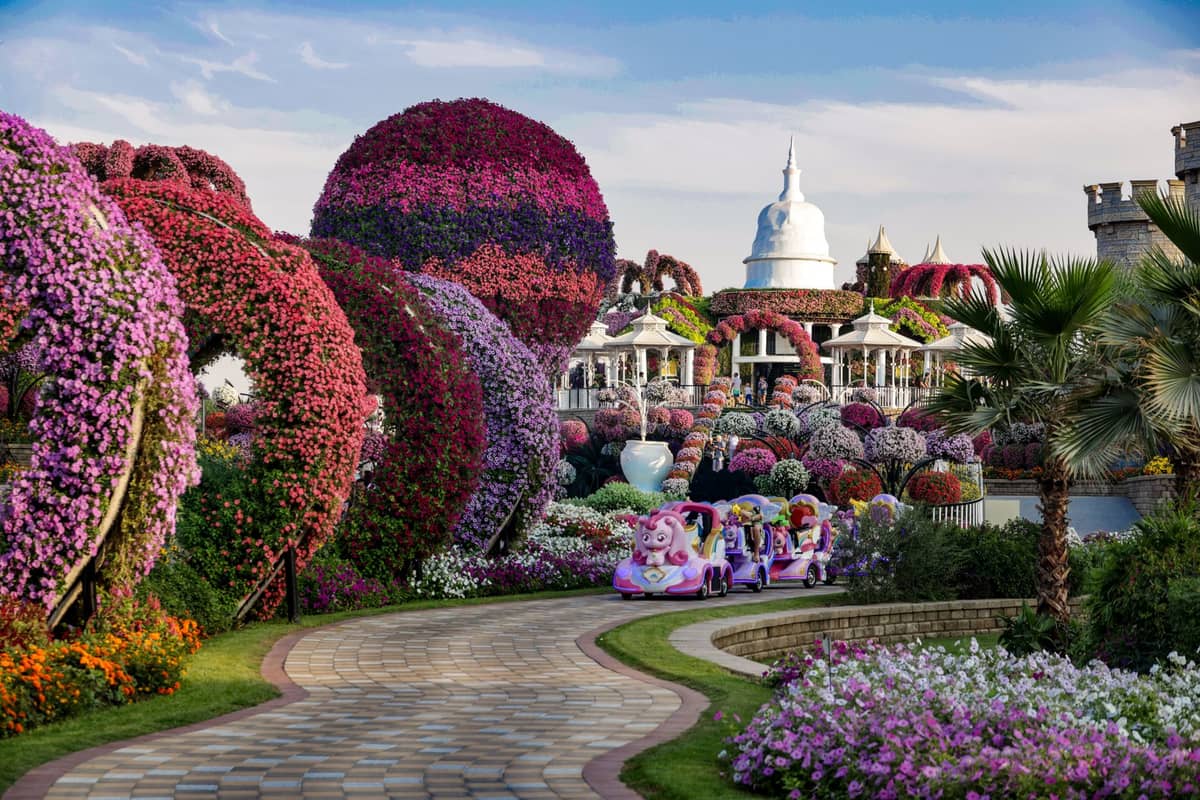
What Dubai Miracle Garden Actually Is
Dubai Miracle Garden is billed as the world's largest natural flower garden, and that claim is not marketing exaggeration. Spread across Al Barsha South 3 in the Dubailand district, it covers an area large enough that many visitors underestimate how long it takes to walk through properly. The garden is built around sculpted floral structures: arches, pyramids, heart-shaped towers, life-size Emirates aircraft covered in flowers, Disney-character installations, and winding pathways edged with color on both sides. Tens of millions of flowers are planted each season, and the arrangements are changed or refreshed annually, so repeat visitors often find something different.
This is not a botanical garden in the traditional sense. There are no interpretive signs about plant species, no curated ecological displays, and no particular educational angle. What it is, unapologetically, is a large outdoor spectacle designed to be photographed and walked through. On that basis, it delivers. The sheer density of color, the scale of the installations, and the care in the layout produce something genuinely impressive, particularly in the first hour of the morning when the light is soft and the crowds have not yet arrived.
ℹ️ Good to know
The garden is seasonal and typically opens between October or mid-November and April or mid-May, closing during the hottest months. Always check the official website for the current season's opening dates before planning your visit.
How the Experience Changes by Time of Day
Arriving at or just after 9:00 AM on a weekday is the single most effective decision you can make about this visit. The air is still cool, the pathways are mostly empty, and the morning light hits the floral structures at a low angle that makes colors appear saturated and vivid in photographs. By 11:00 AM, particularly on weekends, the central pathways fill considerably. By early afternoon on busy days, the main photo spots have queues, and navigating the crowds with children or a stroller becomes tiring.
Late afternoon brings a different mood. The temperature drops slightly as the sun descends, and the garden transitions into evening lighting around dusk. Some visitors find the illuminated garden charming, though the artificial lighting flattens the floral displays somewhat compared to natural daylight. If you are visiting primarily for photography, morning is the clear winner. If the atmosphere and a more relaxed pace matter more than photos, an early evening visit on a weekday can be pleasant.
Peak season runs from roughly November through April, coinciding with Dubai's cooler winter months when daytime highs sit between 24 and 31 degrees Celsius. Visiting in late March or April means warmer temperatures and some wilting in older floral sections, particularly in the afternoons. The most visually complete experience tends to be in December and January, when the season is well underway but not yet showing seasonal wear.
⚠️ What to skip
Avoid Friday and Saturday afternoons during peak season. These are the busiest periods by a significant margin, and crowds can make the central areas genuinely uncomfortable. Schools and large tour groups also tend to arrive mid-morning.
What You Will See: A Practical Walkthrough
The garden is laid out in rough concentric zones radiating outward from a central area. The main entrance leads directly into the heart of the displays, where the largest and most photogenic structures are concentrated. The Emirates A380 aircraft installation, covered in around five million flowers, is consistently the most photographed single feature. It sits toward the rear of the central section and requires some walking to reach. Arriving early means you can photograph it without crowds in the frame.
Beyond the central showpieces, the pathways wind through themed sections: floral walls, umbrella canopies hung with petals, elaborate archways, and seasonal character installations. The scent varies across sections. Near densely planted rose sections, the air carries a noticeable fragrance. In the more architectural floral installations, the smell is lighter, more generically green and fresh. The pathways are paved and generally flat throughout, with no significant elevation changes, which makes the garden accessible for wheelchair users and prams.
There are food stalls and small cafes inside the garden, selling drinks, light snacks, and ice cream. The prices are higher than outside, which is standard for an enclosed attraction. If you are visiting with children, bringing a water bottle is sensible, as hydration costs add up quickly. The garden sits in the broader Dubailand district and is not far from other family-oriented attractions. For context on how it fits into a broader Dubai itinerary, see our guide on visiting Dubai with kids.
Getting There Without Frustration
Dubai Miracle Garden is located on Sheikh Mohammed Bin Zayed Road (E311) in Al Barsha South 3. There is no direct metro connection. The practical options are a taxi or ride-hailing app from the Mall of the Emirates metro station on the Red Line, which takes roughly 15 to 20 minutes by road depending on traffic, or the seasonal RTA Bus 105 that runs directly from the station to the garden during operating months.
On peak days, parking at the garden itself can fill up, and some visitors report waiting in slow traffic on the approach roads. If you are driving, arriving before 10:00 AM avoids most of this. The official address is Dubai Miracle Garden, Al Barsha South 3, Dubai, which maps correctly on Google Maps and most navigation apps. Do not rely on older GPS data, as the surrounding road network in Dubailand has changed significantly in recent years.
For a broader sense of how to move around Dubai efficiently during your trip, the getting around Dubai guide covers metro routes, taxi options, and ride-hailing in detail.
Is It Worth the Ticket Price?
At around AED 100 per adult, Dubai Miracle Garden is priced in line with other major Dubai attractions, though it offers a fundamentally different kind of experience from, say, an observation deck or a waterpark. There is no single moment of drama or adrenaline. The value comes from the sustained visual impact of walking through something genuinely unlike anything most visitors have seen before. For first-time visitors, particularly those traveling with family or with an interest in photography, that value is real.
For a second visit, the calculation changes. While displays do change between seasons, the overall format remains consistent, and the novelty factor that drives the experience on a first visit is harder to recapture. Repeat visitors or those who have seen similar floral attractions elsewhere may find the experience less compelling relative to the cost.
If your Dubai time is limited and you are weighing the garden against other outdoor options, consider that the garden works best as a morning activity combined with something nearby in the afternoon. Dubai's outdoor offering is broader than many visitors expect. The free things to do in Dubai guide is worth scanning if budget is a consideration.
Photography, Accessibility, and Practical Notes
For photographers, morning light between 9:00 and 11:00 AM provides the best conditions. The garden faces multiple directions across its expanse, so there is usually a well-lit section regardless of exactly where the sun sits. A wide-angle lens captures the scale of the larger installations; a standard zoom is more useful for the detail work in the floral walls and close-up textures. Tripods are not necessary given the light levels during daytime.
The garden is described as wheelchair accessible, with flat paved pathways throughout the main circuit. Some smaller side paths and interior areas of certain installations may have limited access. Visitors with mobility considerations should plan the route around the main central pathways, which are wide and consistently flat.
Dress practically: comfortable walking shoes, sun protection, and layers in the early morning when temperatures can feel brisk, particularly in December and January. The garden is entirely outdoors, so there is no sheltered area to retreat to during an unexpected shower, though rainfall in Dubai's winter months is infrequent.
💡 Local tip
Check the official website for any evening or themed events during your visit window. The garden occasionally hosts special installations or seasonal events that change the standard experience.
Insider Tips
- Book tickets online in advance during peak weekends to avoid potential entry queues and secure your preferred time slot.
- The Emirates A380 installation is at the far end of the central section. Walk there first on arrival while the crowds are thin, then work your way back through the other displays.
- Bring a portable phone charger. The garden is visually intense and most visitors exhaust their battery photographing it. There are no obvious phone charging stations inside.
- The best floral conditions are in December and January. By March, some sections begin to show seasonal wear, particularly in the afternoons when heat accelerates wilting.
- If you are visiting with toddlers, the garden can feel long. The circuit is large and there are few places to sit in the central sections. Identify the benches and shaded rest spots near the food stalls early in your walk.
Who Is Dubai Miracle Garden For?
- Families with children aged 4 and above, who respond to the scale and color of the displays
- Photographers and content creators looking for unusual, high-color backdrops
- First-time Dubai visitors wanting an attraction that is genuinely unlike anything available elsewhere
- Couples visiting during the cooler months who want a relaxed outdoor morning walk with strong visual payoff
- Visitors combining it with a half-day itinerary that includes nearby Dubailand attractions