Deutz sits directly across the Rhine from Cologne's old town, offering some of the most dramatic views of the cathedral skyline in the city. Once an independent town, today it combines major event infrastructure with riverside parkland and a residential core that most visitors walk straight past.
Deutz is the neighborhood that gives you the best view of Cologne without being part of the postcard. Sitting on the right bank of the Rhine, directly opposite the cathedral, it is the city's primary event and trade-fair district, but it also has a quieter residential side that rarely appears in travel guides.
Orientation
Deutz occupies the right bank of the Rhine in Cologne's Innenstadt area, even though it feels like a separate world from the cathedral quarter across the water. The Rhine forms most of its western boundary. To the south lies Poll, a quieter residential district, while Mülheim borders it to the northeast. The area is bisected by major infrastructure: the trade-fair grounds of Koelnmesse and the LANXESS Arena dominate the northern half, while a softer residential neighborhood fills the southern section around Siegburger Strasse.
Deutz was an independent town until 1888, when it was incorporated into Cologne. That history matters for understanding the neighborhood's layout: it has its own internal logic, its own street grid, and its own civic identity, rather than simply being an extension of the left bank. The Romans established a fortified bridgehead here. Layers of that past sit beneath what is now one of Germany's busiest event zones.
The two districts are connected by two of Cologne's most recognizable bridges. The Hohenzollern Bridge carries both rail traffic and pedestrians, and it deposits you directly at Cologne's main station on the left bank. The Deutzer Brücke, a road bridge a short distance south, connects the neighborhood to the Altstadt. Together they make Deutz one of the most physically accessible districts in Cologne, even if most visitors only cross through it briefly.
Character & Atmosphere
The character of Deutz depends almost entirely on what is happening at Koelnmesse or LANXESS Arena. On trade-fair weeks, the streets around the fairgrounds fill with delegates in lanyards, shuttle buses, and catering trucks by 8am. The area between Köln Messe/Deutz station and the fair entrance takes on a corporate, transactional energy: coffee to go, quick lunch, fast taxi. It is efficient rather than pleasant.
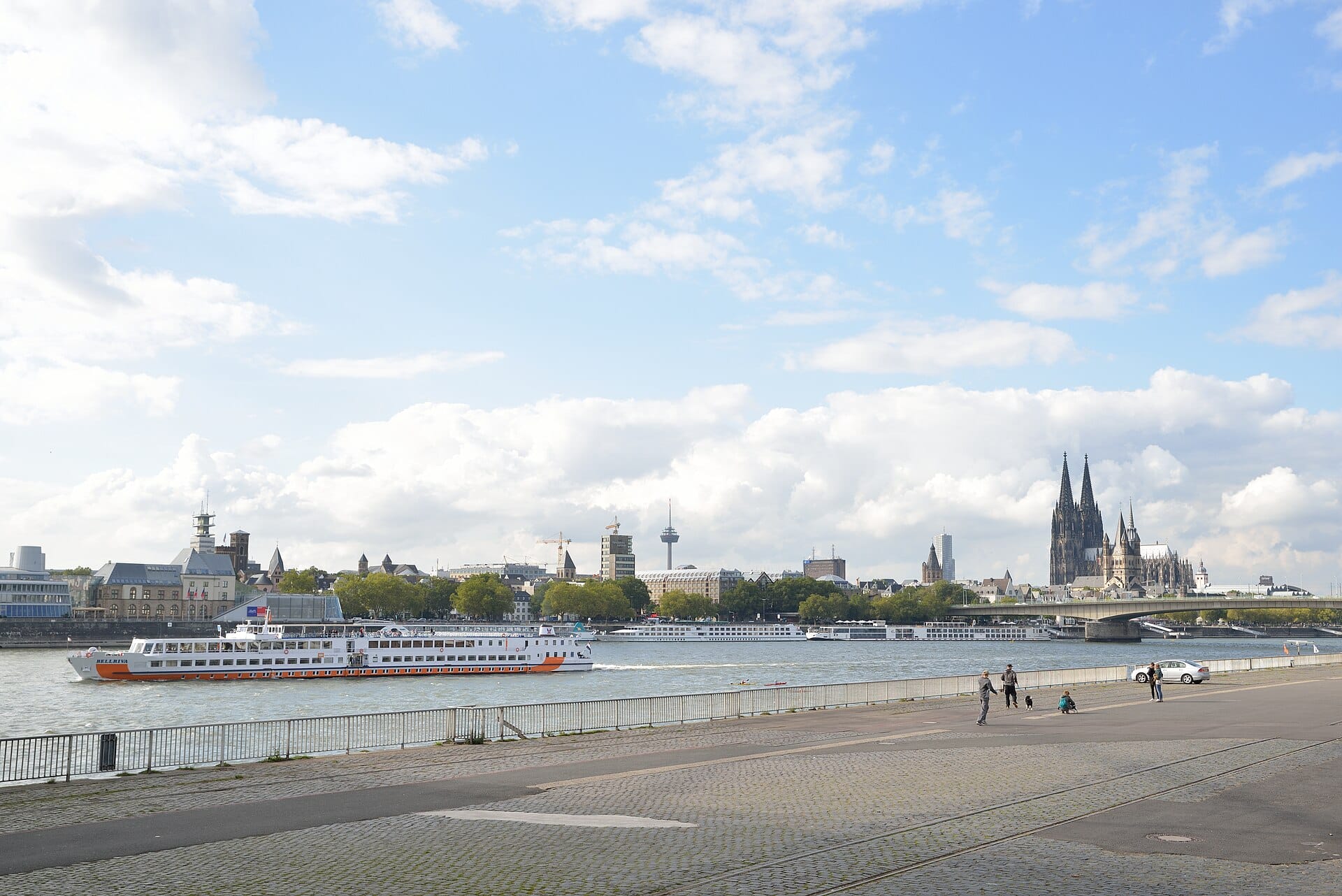
On quieter days, and especially on weekends, the atmosphere shifts considerably. The Rhine promenade running along the western edge of Deutz is one of Cologne's best walks, with the cathedral and the Altstadt skyline sitting directly across the water. Morning light hits the twin spires from this side in a way that no viewpoint on the left bank can match. Cyclists and joggers are out early, and by mid-morning families and couples settle on the grassy banks of Rheinpark to the north.
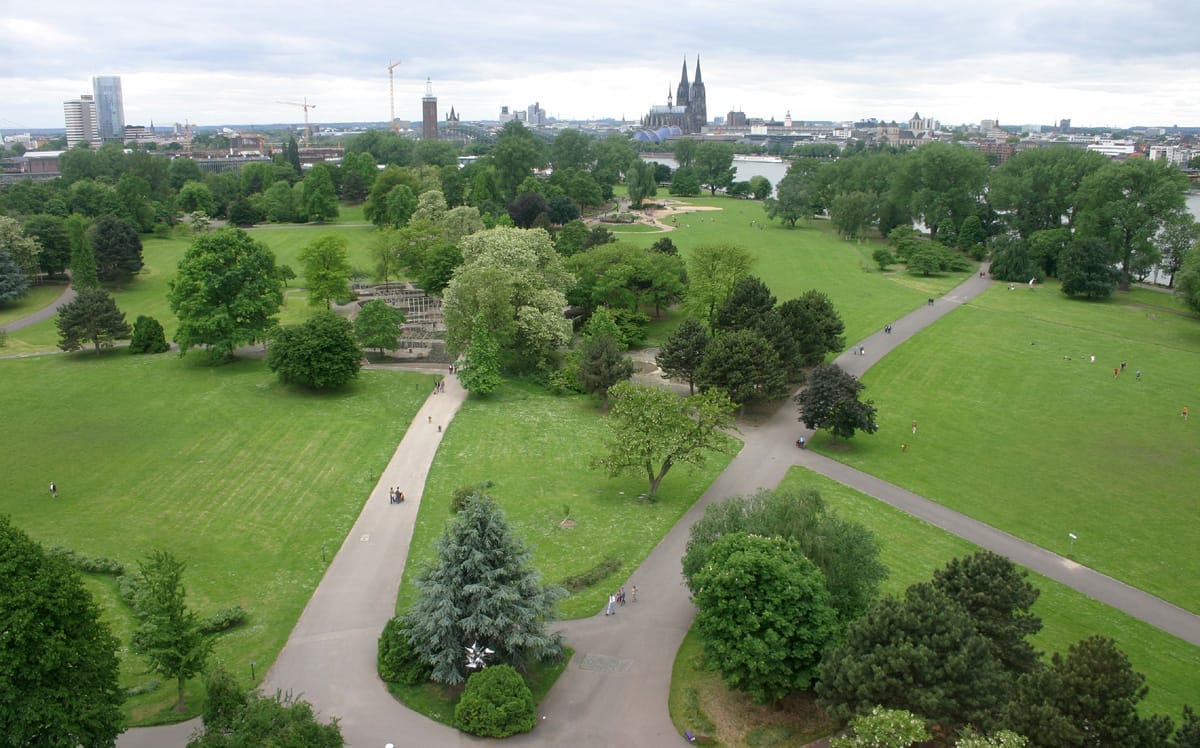
The Rheinpark anchors the northern end of Deutz and is one of Cologne's most used green spaces. It is a broad, open park running along the Rhine with lawns, trees, and a small Japanese garden. Families arrive here in force on warm weekend afternoons, and the Tanzbrunnen, an open-air stage within the park, hosts concerts and events from spring through autumn. This end of Deutz feels genuinely relaxed and local, especially compared to the trade-fair zone a few blocks away.
After dark, Deutz splits again. Concert nights at LANXESS Arena bring tens of thousands of people to the neighborhood's streets, which can feel overwhelming near the venue exits. The Rhine promenade stays pleasant for evening walks, with the cathedral lit up across the water. The residential streets further south are quiet by 9pm and have little nightlife to speak of.
ℹ️ Good to know
The view of Cologne Cathedral from the Deutz riverbank is arguably the best in the city, particularly in the late afternoon when the light comes from the west. It is free, accessible at any hour, and only a short walk from Köln Messe/Deutz station.
What to See & Do
The most compelling reason to cross into Deutz for most visitors is the view. Standing on the Rhine promenade with the Cologne Cathedral framed directly across the water is a genuinely striking experience. The Hohenzollern Bridge in the foreground, with its thousands of padlocks on the railings, completes a view that appears on almost every photograph of the city.
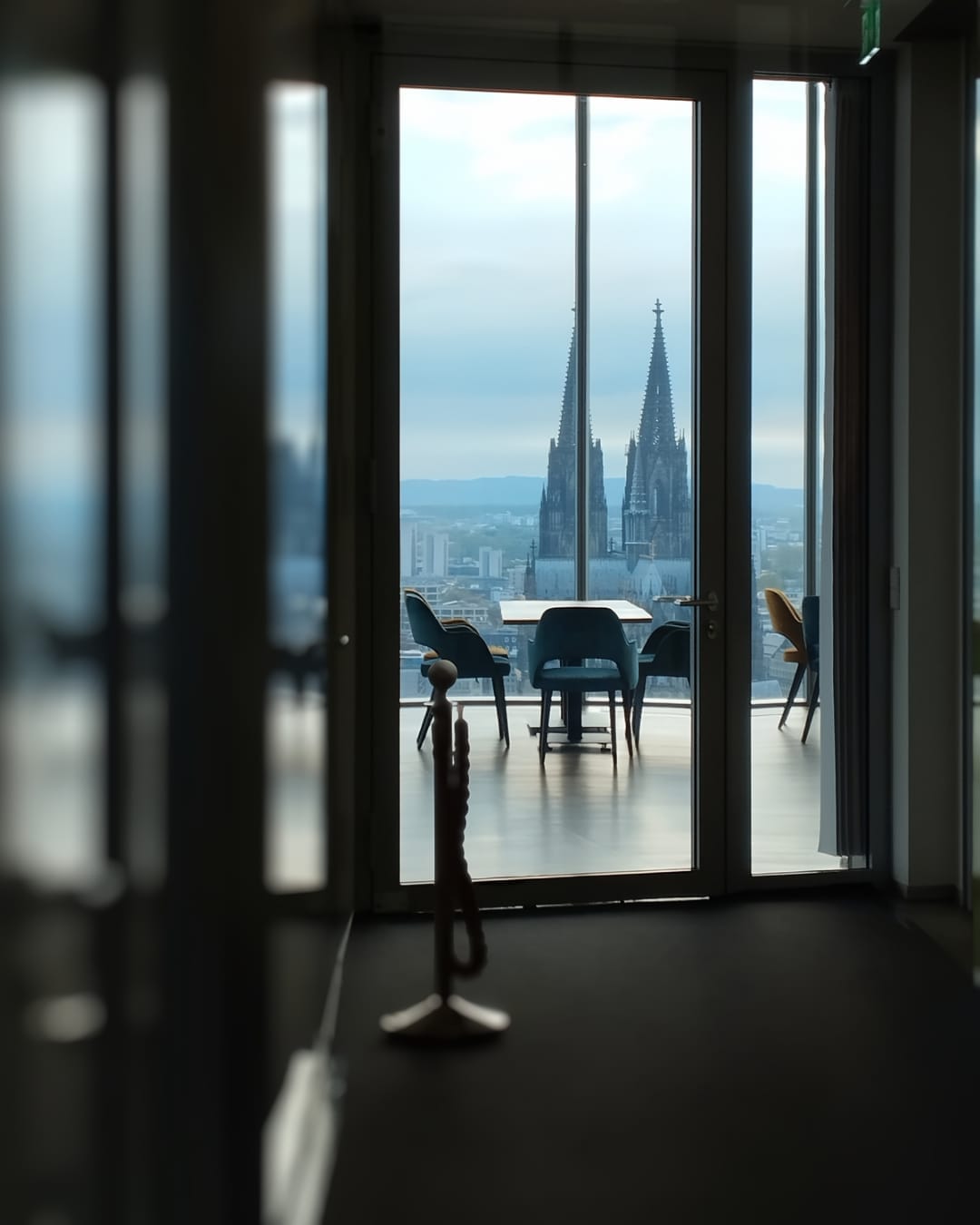
For a different perspective entirely, the Cologne Triangle Panorama sits at the top of the KölnTriangle office tower in Deutz. The observation deck at 103 meters offers a 360-degree view across Cologne, including direct sightlines to the cathedral, the Rhine, and the city's wider skyline. It is far less crowded than you might expect and offers a useful orientation point for anyone new to the city.
The Rheinpark is worth an hour or two, especially in good weather. The park was first laid out for the 1957 Federal Garden Show and has been a public green space ever since. The Japanese garden within it is small but carefully maintained. The Tanzbrunnen stage hosts a regular programme of outdoor concerts and cultural events from May to September; check the local listings before you visit.
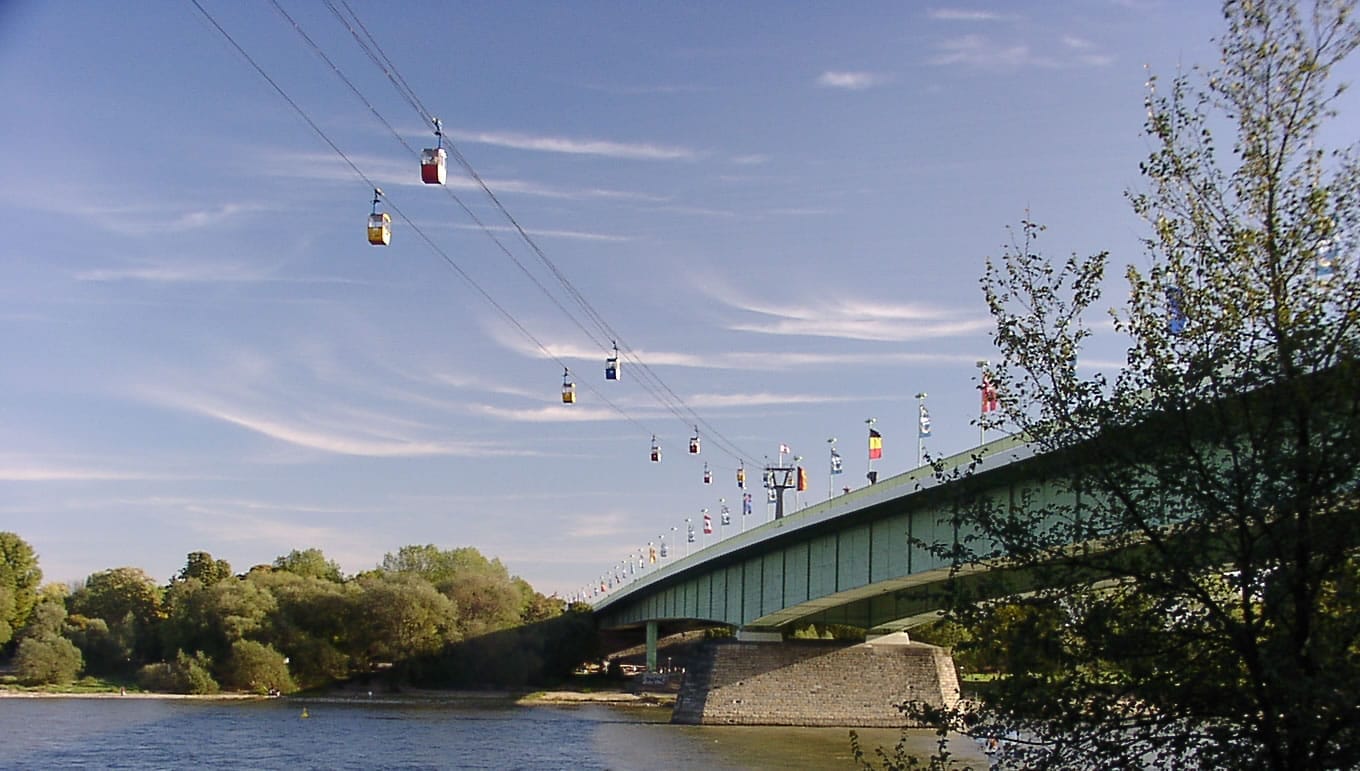
From Deutz, you can board the Cologne Cable Car which crosses the Rhine seasonally between Rheinpark and the Zoo on the left bank. It operates primarily in spring and summer and is as much about the crossing experience as it is about getting from one side to the other.
Koelnmesse: One of the world's largest trade-fair centers, hosting major international events including Gamescom, Art Cologne, and Anuga. Only worth visiting if you have a ticket to a specific event.
LANXESS Arena: A 20,000-capacity indoor arena hosting concerts, sporting events, and ice hockey (the Cologne Sharks play here). Check the events calendar before your trip.
KölnTriangle observation deck: 103-meter panoramic viewpoint in the office tower above Deutz station.
Rhine promenade walk: The path running along the western riverfront of Deutz is one of the city's best free experiences.
Rheinpark and Tanzbrunnen: Open park with lawns, a Japanese garden, and a seasonal outdoor concert venue.
💡 Local tip
If you are visiting Cologne for a trade fair, book your hotel in Deutz rather than the Altstadt. You will save 15-20 minutes of travel time each way, avoid the morning crowds on the bridges, and generally pay lower rates for equivalent accommodation.
Eating & Drinking
Deutz is not a food destination. The area around the trade fairgrounds and LANXESS Arena is dominated by catering operations and chain restaurants calibrated for high throughput, not quality. During major fairs, prices in this zone rise noticeably and queues form outside even mediocre places. If you are staying in Deutz during a fair week, your best strategy is to cross the river into the Altstadt for dinner.
The residential streets south of the main station have a more authentic local food scene, with Turkish and Middle Eastern restaurants, small bakeries, and the kind of straightforward neighbourhood Kneipe where you can order a Kölsch and a plate of Himmel un Ääd without anyone trying to upsell you. Kölsch is Cologne's local beer, a light, top-fermented ale served in tall 0.2-litre glasses called Stangen. For the full traditional experience, Früh am Dom is just across the river, though several Deutz pubs serve the same local breweries.
The Rheinpark area and the riverside promenade have kiosks and seasonal food stalls in warmer months, which are useful for a quick lunch without commitment. For a deeper understanding of what locals actually eat and drink throughout Cologne, the Cologne food guide covers local specialities, traditional dishes, and where to find them across the city.
⚠️ What to skip
During Koelnmesse trade fair weeks, the immediate surrounding area becomes expensive and overcrowded for eating and drinking. Cross the Hohenzollern Bridge on foot into the Altstadt for better value and atmosphere, or head further south into the residential streets of Deutz.
Getting There & Around
Köln Messe/Deutz station is the transport hub of the district and one of the most connected stations in Cologne outside of the Hauptbahnhof. It handles regional express trains, S-Bahn services, and several KVB light-rail and tram lines. From here you can reach the Hauptbahnhof in a few minutes by S-Bahn, which in turn connects to Cologne Bonn Airport in around 15 minutes. The station sits directly beside the main entrance to Koelnmesse, which is why it fills so dramatically during fair events.
The easiest way to reach Deutz from the Altstadt on foot is across the Hohenzollern Bridge, which takes around 10 minutes from the Hauptbahnhof. The bridge has a dedicated pedestrian and cycling lane alongside the rail tracks. Alternatively, the Deutzer Brücke further south connects the Altstadt-Süd to the southern end of Deutz. For those arriving by public transport from other parts of Cologne, the KVB network connects Deutz to the rest of the city well. For a full overview of how to get around Cologne, the Cologne transit guide covers all options including tickets, zones, and day passes.
Within Deutz itself, the northern section around the fairgrounds and Rheinpark is walkable from the station in 10-15 minutes. The residential streets in the southern half are better served by tram along Siegburger Strasse. Cycling is practical here: the Rhine promenade has a dedicated cycle path running its full length, and the flat terrain makes it easy to cover the district on two wheels.
Hohenzollern Bridge: 10-minute walk from Hauptbahnhof to Deutz riverfront.
Deutzer Brücke: Road and pedestrian bridge connecting Deutz to Altstadt-Süd.
Cologne Cable Car (seasonal): Connects Rheinpark to the Zoo district on the left bank.
KVB trams: Several lines serve stops along the main through routes in Deutz.
Where to Stay
Deutz has a solid supply of business-oriented hotels concentrated around the station and fairgrounds area. These include several large international chains that exist specifically to serve Koelnmesse visitors and LANXESS Arena attendees. Rooms here tend to be functional and well-maintained, with strong transit connections but little neighborhood character.
Staying in Deutz makes most sense if you are attending a trade fair, a concert at LANXESS Arena, or simply want a reliable base with excellent rail connections that is slightly removed from the Altstadt crowds. The Rhine views from rooms on the western side of some hotels can be exceptional. For visitors prioritising atmosphere, the Altstadt, the Belgian Quarter, or Ehrenfeld will feel more rewarding as bases. The Cologne accommodation guide compares all the main neighborhoods for different traveler types.
One thing to factor in: during major Koelnmesse fairs, hotel rates in Deutz spike dramatically, sometimes two or three times the standard rate. If your dates overlap with a major event and you are not attending it, staying in Deutz is not cost-effective. During those same periods, Altstadt hotels may actually be better value.
Who Deutz Is For
Deutz is not a neighborhood you visit for its own sake in the way you might spend a full day in the Belgian Quarter or along the Rheinauhafen. Its appeal is specific and practical. The Rhine views from the promenade are genuinely excellent and require no ticket or planning. The Rheinpark is a good green space. The KölnTriangle observation deck is underrated. But the area between these points is largely given over to conference infrastructure and transit corridors.
For first-time visitors to Cologne, Deutz is worth an hour or two on a clear day for the views alone. Walk across the Hohenzollern Bridge, stroll south along the Rhine promenade, glance up at the cathedral from a completely different angle, and either return across the Deutzer Brücke or ride the cable car if it is running. For a structured introduction to the wider city, a Cologne walking tour starting from the Hauptbahnhof will naturally bring you through the Deutz riverfront as part of a broader route.
TL;DR
Best for: Trade-fair visitors, concert-goers at LANXESS Arena, and travelers who want riverside views without Altstadt crowds.
Top experience: The Rhine promenade view of Cologne Cathedral, especially in late afternoon light.
Worth adding: The KölnTriangle observation deck is quiet, affordable, and gives a strong orientation to the city's layout.
Skip if: You want neighborhood character, independent restaurants, or late-night options. Cross the river for those.
Honest verdict: A district built around events and transit rather than daily life, but the Rhine views are among the best in Cologne and the area is easy to combine with any itinerary.
Two days is enough time to see the best of Cologne if you plan well. This itinerary covers the Gothic cathedral, world-class museums, the Rhine waterfront, historic brewhouses, and the city's most interesting neighborhoods — structured so you can walk between most stops without backtracking.
Cologne offers an unusually rich museum landscape, with over 100 collections spanning Roman archaeology, medieval religious art, modern masterpieces, ethnology, and even chocolate. This guide covers the best museums in Cologne, organized by theme, so you can plan your visits efficiently.
Cologne rewards visitors year-round, but the experience varies dramatically depending on when you arrive. This guide breaks down every season, from Carnival chaos in February to peaceful autumn walks along the Rhine, so you can match your trip to your priorities.
Cologne rewards those who look up, across, and down from the right spot. This guide covers the city's best viewpoints, from paid observation decks to free riverbank promenades, with practical tips on timing, access, and exactly what you'll see from each vantage point.
Cologne Bonn Airport is one of Germany's most convenient city break entry points, with direct trains to Cologne city centre in under 20 minutes. This guide covers every transport option, real fare ranges, and what to watch out for at different times of day.
Cologne is an unexpectedly strong art city. With more than 30 museums and hundreds of galleries, it rivals much larger European capitals for depth and range. This guide covers the essential art museums, from world-class modern art to medieval religious masterpieces and East Asian treasures.
Cologne (Köln) hosts one of Germany's most impressive concentrations of Christmas markets, with seven or eight major markets spread across a compact city centre, all free to enter and most within a 10- to 20-minute walk of each other. This guide covers every main market, practical logistics, pricing, crowd patterns, and clear guidance on what to skip.
Cologne is an underrated romantic destination. This guide covers the best experiences for couples: riverside walks, Gothic cathedral views, perfume heritage, candlelit Brauhaus dinners, and where to stay for a memorable trip to Köln.
Cologne Karneval is one of Europe's largest street festivals, drawing over a million people to the city in the days before Lent. This guide covers the full season timeline, Rose Monday parade logistics, costume traditions, crowd realities, and practical advice for first-timers and returning visitors alike.
Cologne's nightlife is one of the most underrated in Germany, spread across distinct neighborhoods rather than a single strip. This guide breaks down every major area, what to drink, what to spend, and how to get home at 5 AM.
Cologne (Köln) is one of western Germany's most rewarding cities, and it doesn't have to be expensive. This guide breaks down realistic daily costs, the best free and low-cost attractions, smart transport choices, and the seasonal timing that keeps your spending in check.
The Cologne to Amsterdam train is a direct ICE high-speed service covering roughly 214 km in as little as 2 hours 37 minutes. This guide breaks down fares, booking strategy, schedules, and everything you need to know before you board.
The Cologne to Frankfurt train is one of Germany's most efficient intercity connections. ICE services cover the roughly 152 km route in around one hour, with dozens of daily departures and fares starting around €10–15 if you book smart. This guide covers schedules, pricing, booking platforms, and practical tips for getting the most out of the journey.
Cologne's historic core is compact enough to cover on foot in a single morning or afternoon. This guide maps out a 6.6 km self-guided walking tour through the Cathedral, Old Town, Romanesque churches, and Rhine riverfront, with clear guidance on what to skip, what costs money, and how to time it right.
Cologne (Köln) delivers more for families than most travellers expect. With a world-class zoo, an interactive chocolate museum, a climbable cathedral tower, and free riverside parks, the city offers a full week of family activities without straining your budget. This guide covers what to do, what to skip, and how to plan smart.
Cologne's location in western Germany puts you within two hours of medieval castles, Roman ruins, Dutch canals, and some of the Rhine Valley's finest scenery. This guide covers the most rewarding day trips from Köln, with train times, realistic costs, and honest notes on what works and what doesn't.
Cologne rewards budget travellers generously. The botanical garden, riverside promenades, Romanesque churches, and entire neighbourhoods of street art all cost nothing to enjoy (cathedral tourist entry is ticketed from July 2026). This guide covers the best free experiences across the city.
Cologne's public transport network is efficient, affordable, and covers the entire city. This guide breaks down every option for getting around Köln, from the KVB Stadtbahn to airport trains, taxis, cycling, and walking, with current fares, route tips, and clear guidance on what to skip.
Cologne's Kölner Dom draws millions of visitors, but the city's real character lives elsewhere. From a medieval ossuary church to a free botanical garden, a rooftop panorama across the Rhine, and one of Europe's best ethnological museums, these are the places locals love and tourists too often miss.
Cologne (Köln) is Germany's fourth-largest city, a 2,000-year-old Rhine river city with a Gothic cathedral, 40-plus museums, and one of Europe's wildest festivals. This guide cuts through the hype to tell you exactly what makes it worth the trip, what to skip, and how to get the most out of your time there.
Kölsch is more than a beer style. It's a legally protected product, a serving ritual, and a point of local pride in Cologne. This guide covers the brewing rules, brauhaus etiquette, the best places to drink, and what to know before your first Stange.
From one-hour panorama loops past the Cologne Cathedral to full-day excursions toward the UNESCO-listed Rhine Gorge, this guide covers every cruise option available from Cologne, including prices, operators, seasonal schedules, and clear guidance on what's worth your time.
Cologne's 12 Romanesque churches form one of the most remarkable medieval ensembles in Europe, arranged in a rough semicircle around the city center and predating the famous Gothic cathedral by centuries. This guide covers all 12 churches, practical visiting tips, and how to see them in a single day.
Cologne (Köln) offers one of Germany's most diverse retail landscapes, from the country's busiest pedestrian shopping mile to weekend flea markets and design-forward boutiques. This guide breaks down exactly where to shop, when to go, and what to avoid.
Cologne (Köln) packs an extraordinary range of experiences into a compact, walkable city on the Rhine. This guide covers the essential sights, the best neighbourhoods to explore, seasonal events worth planning around, and clear guidance on what to skip.
Cologne's food culture is deeply rooted in Rhineland tradition: hearty, honest, and built around a handful of dishes that locals have been eating for centuries. This guide covers the essential foods to try, the best places to eat them, and a few traps worth avoiding.
Cologne (Köln) offers genuinely distinct neighborhoods to base yourself in, each with different trade-offs between location, price, and atmosphere. This guide breaks down the best areas to stay, who each one suits, and what to watch out for when booking.