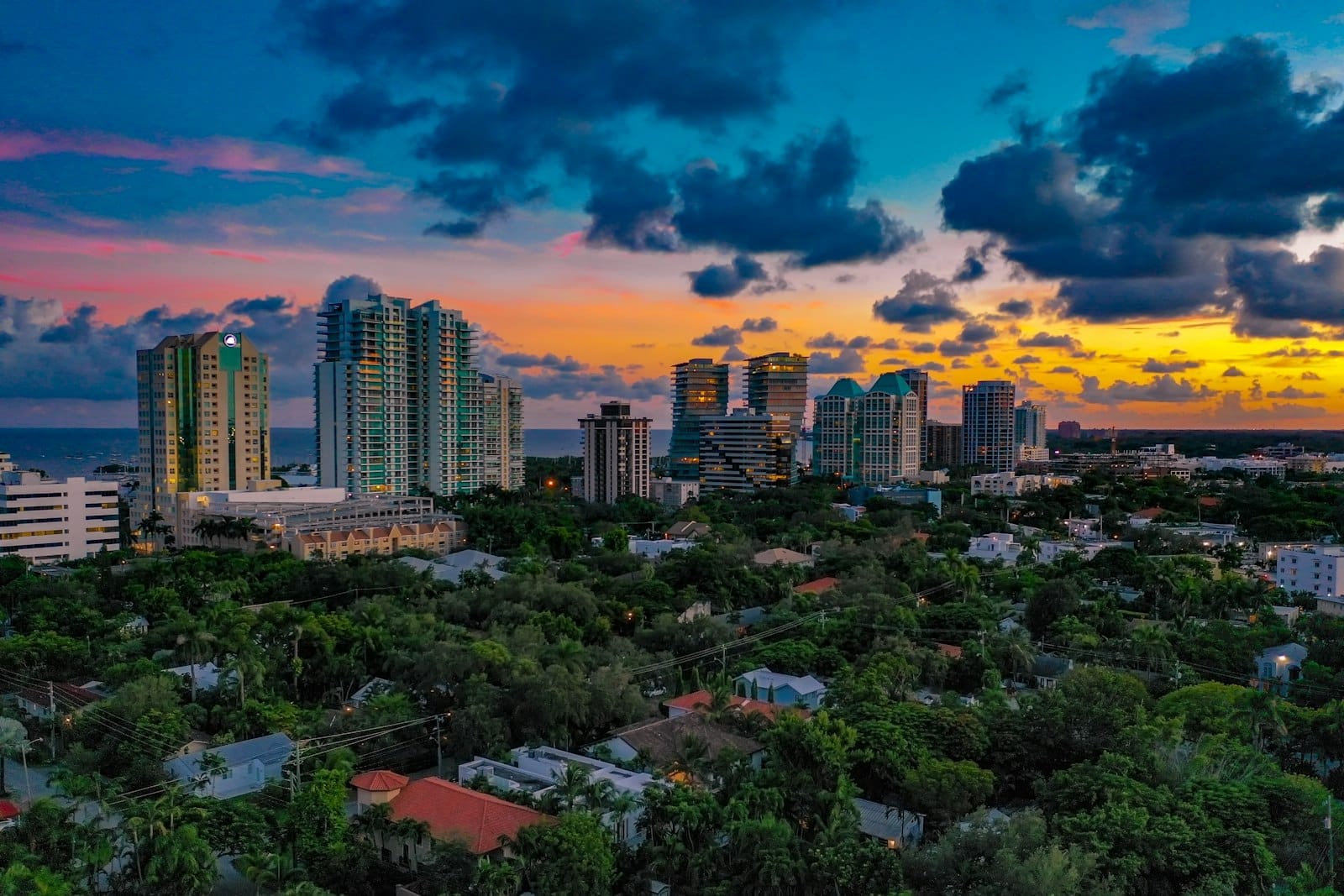
Coconut Grove, known locally as The Grove, is Miami's oldest continuously inhabited neighborhood. Sheltered by banyan trees and opening onto Biscayne Bay, it trades Miami's usual high-gloss for something slower, greener, and more rooted in actual history.
Coconut Grove is Miami's oldest neighborhood, and it looks and feels different from almost everywhere else in the city. The streets narrow under canopies of banyan and ficus, waterfront parks sit at the end of quiet residential lanes, and the village core around CocoWalk hums without the volume of South Beach or Brickell. It is the part of Miami that has been here the longest, and it shows.
Orientation
Coconut Grove sits in the south-central part of Miami, pressed against the western shore of Biscayne Bay. Its rough boundaries run from South Dixie Highway (US-1) and the Rickenbacker Causeway in the north, down to North Prospect Drive in the south, with LeJeune Road (SW/SE 42nd Avenue) forming the western edge and the bay itself closing it off to the east. The result is a compact but surprisingly layered area, perhaps two miles north to south.
To the north, across US-1, the Roads and Brickell area begins within a short distance, which is why Brickell residents often treat the Grove as a weekend destination for brunch and waterfront walks. To the west, the neighborhood transitions toward Coral Gables, and the boundary is genuinely blurry: the tree cover and Mediterranean-inflected architecture continue across LeJeune Road into what is technically a different municipality. To the south, residential streets give way to the University of Miami campus in Coral Gables.
The Grove divides informally into two zones that feel quite different from each other. The eastern side, centered on Main Highway, Grand Avenue, and the bayfront, is where most visitors spend their time: CocoWalk, the marina, Peacock Park, and the bulk of the restaurants and bars. The western side, historically called West Grove, is a predominantly Bahamian-descended community that is one of Miami's oldest African American neighborhoods, with a quieter, more residential character and some streets that see very little tourist foot traffic.
ℹ️ Good to know
Mental map check: Coconut Grove is about 4 miles southwest of Downtown Miami and roughly 7 miles from South Beach by road. It is not walking distance from either, but it is well connected by Metrorail.
Character and Atmosphere
The most immediate thing about Coconut Grove is the shade. Banyan trees root themselves into the sidewalks along Main Highway and McFarlane Road, their canopies wide enough to block the afternoon sun. After the relentless glare of South Beach or the glass canyon feel of Brickell, the effect is genuinely disorienting in the best way. The neighborhood was settled in the 1870s and 1880s by Bahamian workers and northern intellectuals who came for the bay, and something of that original quietness has survived.
On weekday mornings, the village core is the domain of locals: people walking dogs along the bayfront, cyclists cutting through on their way to the Rickenbacker Causeway, coffee drinkers reading outside the small cafes on Grand Avenue. The marina, one of the largest in Miami, is already active by 7am, with sailboats rocking gently and the faint smell of salt water reaching the street. Weekends shift the balance significantly. By mid-morning Saturday, CocoWalk fills with brunch crowds and parking along Main Highway becomes an exercise in patience.
After dark, the Grove operates on a different register than Miami Beach or Wynwood. The bars and restaurants along Grand Avenue and McFarlane Road stay busy until late, with a crowd that skews slightly older and more mixed than the tourist-heavy South Beach circuit. It is loud enough to feel alive, but the streets themselves, lined with trees that absorb some of the sound, stay relatively calm outside the immediate bar strip.
One honest caveat: parts of West Grove, particularly streets west of Douglas Road, have seen years of underinvestment and remain economically challenged. Miami-Dade County has designated parts of the area as a Targeted Urban Area for focused community development. This does not make it a place to avoid, but visitors should be aware that the neighborhood's well-polished bayfront image does not represent the whole picture.
What to See and Do
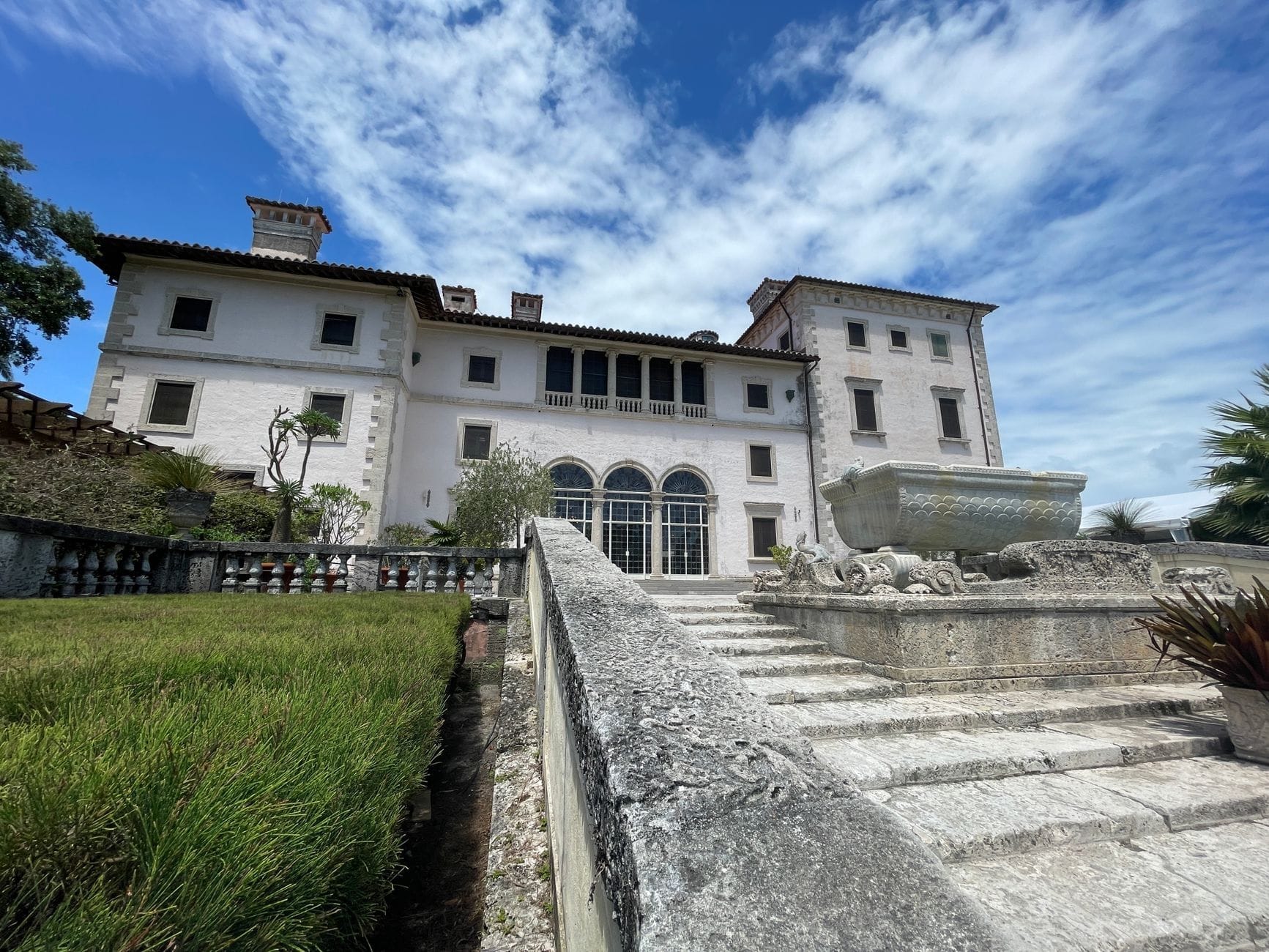
The anchor attraction is not in the commercial center but just north of it: the Vizcaya Museum and Gardens is an Italian Renaissance-style villa built in 1916 for industrialist James Deering, set on 10 acres of formal gardens facing Biscayne Bay. It is one of the most architecturally serious sites in all of South Florida, and the gardens alone are worth at least two hours. Arrive early on weekdays to avoid school groups and tour buses.
Peacock Park, at the foot of McFarlane Road on the waterfront, is the social heart of the Grove at ground level. On weekends it hosts food trucks, fitness classes, and informal gatherings. The grassy waterfront space looks directly onto the bay and the marina, and on clear evenings the light turns the water a specific shade of copper that is hard to photograph accurately but impossible to forget.
CocoWalk, reopened after a significant renovation in 2020, is an open-air center on Grand Avenue and Virginia Street. It is less a mall and more a gathering place: ground-floor restaurants and bars, a cinema, and a rooftop terrace that catches the bay breeze. For context on how the waterfront connects to the rest of Miami, the Rickenbacker Causeway is accessible just north of the Grove, serving as the main route to Key Biscayne and one of Miami's most scenic drives.
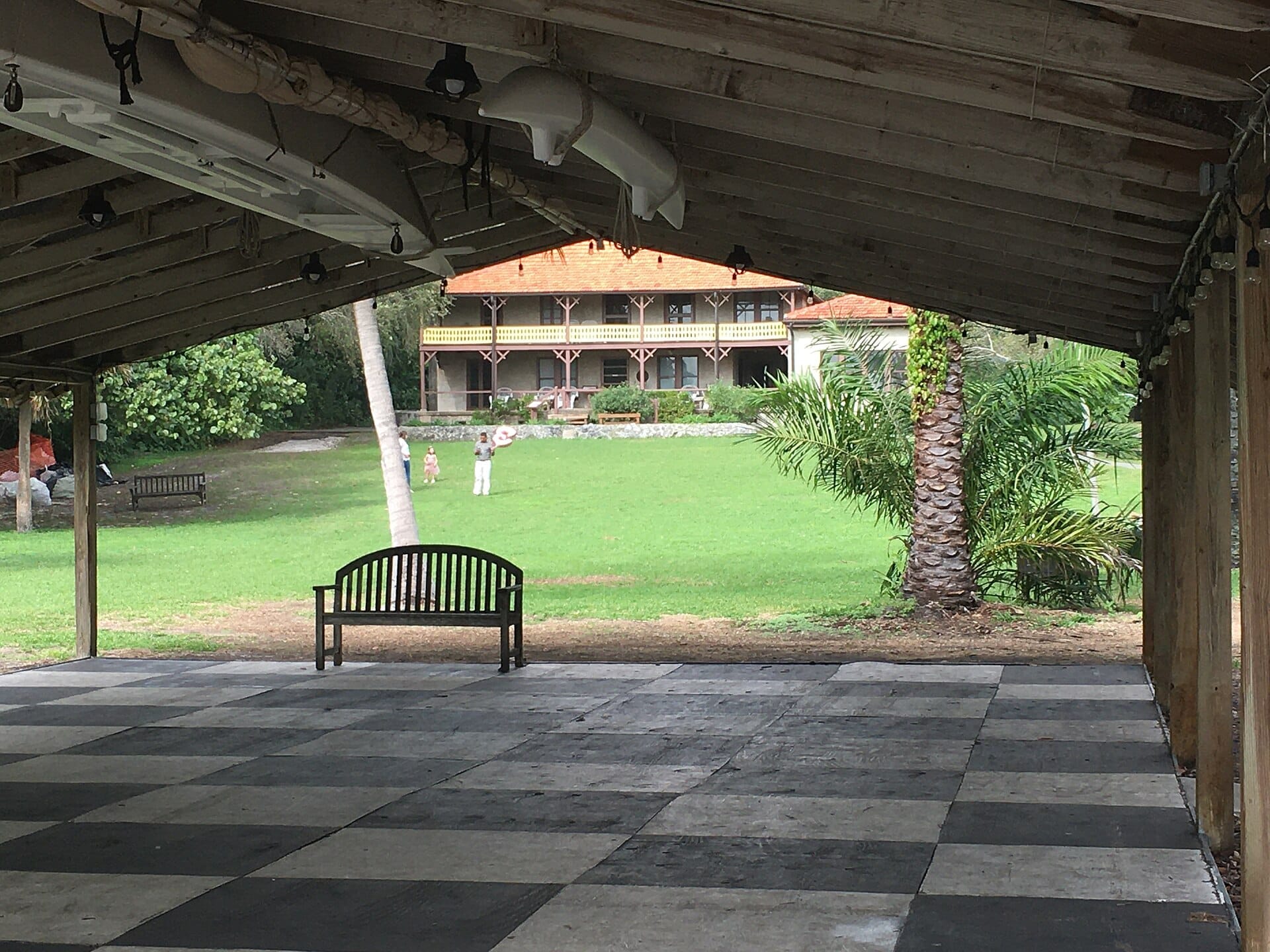
The historic character of the neighborhood is best experienced on foot along Main Highway, where The Barnacle Historic State Park preserves the 1891 home of Ralph Middleton Munroe, one of the Grove's original settlers. The Barnacle Historic State Park sits on five acres of original hardwood hammock, one of the last surviving pieces of that landscape in urban Miami. Guided tours run on weekends.
Vizcaya Museum and Gardens: Renaissance-style villa with formal bay-facing gardens, about 1.5 miles north of CocoWalk
Barnacle Historic State Park: Miami's oldest surviving home, set in original coastal hardwood hammock on Main Highway
Peacock Park: Bayfront green space with water views and regular weekend events
The Marina at Coconut Grove: A major marina complex on Biscayne Bay, with yacht clubs and watercraft rentals
CocoWalk: Open-air dining, retail, and rooftop terrace on Grand Avenue
💡 Local tip
For water activities, several operators at the Coconut Grove marina offer kayak rentals, paddleboard lessons, and bay tours. The sheltered waters of the bay here are calmer than the ocean side, making it a practical starting point for beginners.
Eating and Drinking
The food scene in the Grove is broad without being exceptional at the high end. Grand Avenue and McFarlane Road carry the bulk of the restaurants, ranging from casual pizza and burgers to mid-range Latin American and Caribbean spots. The cuisine mix reflects the neighborhood's actual demographics more than most Miami dining districts: you will find Jamaican, Haitian-influenced, Cuban, and Brazilian options within a few blocks, alongside the usual American bar-food menus.
For a broader sense of Miami's food geography, the Miami Cuban food guide covers the city's best Cuban dining options, some of which are within easy reach of the Grove in nearby Little Havana and along Calle Ocho.
Coffee culture in the Grove is genuinely good. Several independent cafes operate along Main Highway and in the side streets off Grand Avenue, with outdoor seating that is actually pleasant in the morning shade. By midday in summer, outdoor dining becomes a matter of tolerance: temperatures in June through August regularly reach the upper 80s to around 90 degrees Fahrenheit, and the humidity makes the shade feel relative.
The bar scene along the CocoWalk strip picks up Thursday through Sunday. The rooftop at CocoWalk is the most reliably pleasant option for drinks with a view. For a quieter drink, the small wine bars and gastropubs on the side streets west of CocoWalk draw a more local crowd and tend to be significantly less crowded than the main strip.
⚠️ What to skip
Parking around CocoWalk is genuinely difficult on weekend evenings. Ride-hailing or the Metrorail will save significant time and frustration. Budget for 15-20% tip on food and drink, which is standard across Miami.
Getting There and Around
Coconut Grove is one of the better-served Miami neighborhoods on Metrorail, which is worth noting because most of the city is not. Two stations sit on the neighborhood's western edge along the US-1 corridor: Coconut Grove Station and Douglas Road Station. From Coconut Grove Station, CocoWalk and the village core are about a 10-minute walk east along Grand Avenue or McFarlane Road. From Downtown Miami, the Metrorail ride takes roughly 10–20 minutes depending on connections and wait times.
From Miami International Airport, take the Orange Line Metrorail to Government Center, then transfer to the southbound Green Line to Coconut Grove Station. Total journey time is typically 30–40 minutes. For the full picture on getting around the city by rail and bus, the getting around Miami guide covers fares, passes, and route logic in detail.
Multiple Metrobus routes serve the neighborhood via US-1 and local streets, with connections at both rail stations. Within the Grove itself, the distances between main points of interest are small enough that walking is the most practical option, though the summer heat makes this less enjoyable between about 11am and 4pm. The bayfront route connecting Peacock Park northward toward Vizcaya covers about 1.5 miles on relatively flat terrain, though it is not a continuous dedicated waterfront path the entire way.
Uber and Lyft operate throughout the neighborhood. If you are arriving from South Beach, a common driving route is via the MacArthur or Venetian Causeway to Downtown and then US-1, which takes about 20–30 minutes outside of peak traffic. During morning and evening rush hours, US-1 through the Grove can slow significantly, as it is one of Miami's most congested arterials.
Where to Stay
Coconut Grove is not a hotel-dense neighborhood. The accommodation options that exist here tend toward boutique properties and smaller hotels rather than the large resort towers you find on Miami Beach or in Brickell. The advantage is proximity to the waterfront and the quieter pace; the trade-off is that South Beach nightlife and the main tourist corridors require a Metrorail ride or rideshare. For a full comparison of Miami's neighborhoods as bases, the where to stay in Miami guide maps out the options by traveler type.
Staying in the Grove makes most sense for travelers who want a calmer base with genuine neighborhood character: couples looking for a slower pace, visitors primarily interested in Vizcaya and the bayfront, or those spending time at the University of Miami. The eastern side of the neighborhood, within walking distance of Peacock Park and CocoWalk, offers the best access to dining and transport without being on top of the bar noise.
For travelers considering the Grove as a base for day trips, the location is practical: the Everglades are accessible within an hour, Key Biscayne is minutes across the Rickenbacker Causeway, and the Deering Estate is roughly 20 minutes south by car. The day trips from Miami guide covers all of these routes in detail.
Quick Verdict
TL;DR
Miami's oldest neighborhood, with tree-canopied streets, a working marina, and genuine historical depth that most of the city lacks
Best for: couples, history-focused travelers, visitors who want a quieter base within reach of downtown Miami
Anchor attractions are Vizcaya Museum and Gardens and Barnacle Historic State Park, both of which deserve several hours
Well connected by Metrorail from the airport and downtown, but the weekend parking situation around CocoWalk is best avoided by arriving on foot or by rideshare
West Grove has a different character from the bayfront tourist zone; travelers should be aware the neighborhood is not uniformly polished, and that contrast is part of what makes it real
Three days is enough to hit Miami's best neighborhoods, beaches, and cultural landmarks — if you plan smart. This day-by-day guide covers South Beach, Wynwood, Little Havana, and a half-day Everglades excursion, with practical advice on getting around, what things cost, and what to skip.
Miami Beach's Art Deco Historic District contains the world's largest concentration of Art Deco architecture, with over 800 historic buildings packed into a walkable stretch of South Beach. This guide covers where to start, what to look for, the best times to go, and how to make the most of the district on your own terms.
Miami's beaches range from the world-famous to the wonderfully overlooked. This guide covers the best stretches of sand across South Beach, Key Biscayne, and beyond, organized by what kind of beach day you're actually after.
Miami's museum scene is stronger than its beach-city reputation suggests. Whether you're after contemporary art, Cuban history, cutting-edge science, or design history, the city delivers world-class institutions across every neighborhood.
Miami is a year-round destination, but timing your trip makes a real difference. This guide breaks down every month by weather, crowd levels, hotel prices, and key events so you can pick the window that fits your priorities, whether that's perfect beach weather, low-cost flights, or catching a major festival.
Held each March in Little Havana, the Calle Ocho Music Festival draws roughly one million people to a single mile of SW 8th Street for free live music, 300+ food vendors, and a full day of Latin culture. Here's how to make the most of it.
Miami sits at one of the most extraordinary geographic crossroads in North America. Within an hour or two, you can be wading through alligator country, snorkeling coral reefs, or exploring colonial-era lighthouses. These are the best day trips from Miami, organized by destination.
The Everglades sit less than an hour from downtown Miami, yet most visitors leave without a clear plan and end up on the wrong tour for their expectations. This guide covers every option, from budget bus packages to private airboat expeditions, with honest advice on timing, pricing, and what to watch out for.
The Florida Keys are one of the most rewarding drives from Miami, but the logistics matter more than most visitors expect. This guide covers exact distances, key stops along the Overseas Highway, day-trip options, multi-day road trip planning, and honest seasonal advice to help you get the most out of the journey.
Miami rewards budget-conscious visitors more than most cities its size. Between free beaches, no-admission museums, iconic architecture walks, and world-class street art, you can fill several days without pulling out your wallet. This guide covers the best genuinely free experiences across the city.
Miami has more transit options than most visitors expect. This guide covers the Metrorail, free Metromover, Metrobus, trolleys, ride-hailing, and the fastest ways to get from Miami International Airport into the city, with fares, hours, and honest assessments of what actually works.
Little Havana is Miami's most culturally distinct neighborhood, centered on Calle Ocho and shaped by decades of Cuban exile history. This guide covers the top attractions, best food stops, seasonal festivals, walking tour options, and what to know before you go.
Miami International Airport (MIA) is the main gateway to South Florida, handling tens of millions of passengers each year. This guide covers the terminal layout, the arrivals process for domestic and international travelers, every ground transport option with current fare structures, transfer rules you need to know, and how to avoid the most common mistakes first-timers make.
Art Basel Miami Beach is the largest international contemporary art fair in the Americas, drawing 80,000 visitors to Miami Beach each December. This guide covers tickets, VIP access, satellite fairs, logistics, and how to make the most of Miami Art Week without losing your mind.
Miami is the undisputed Cuban food capital of the United States. This guide covers the best restaurants, essential dishes, where to find the perfect Cuban sandwich, and practical tips on prices, neighborhoods, and timing — so you eat well from the first day.
Miami's restaurant scene runs deeper than most visitors expect. Cuban classics, Peruvian ceviche, Haitian griot, and world-class seafood sit alongside a fine-dining circuit that ranked #1 nationally for restaurant quality in 2025. This guide cuts through the noise to tell you exactly what to order, where to go, and when to show up.
Miami delivers a genuinely impressive range of couple-friendly experiences, from Italianate waterfront estates to mangrove kayak trails and rooftop cinemas. This guide cuts through the tourist noise to give you the best romantic activities, honest pricing, and practical advice for planning a memorable trip together.
Miami rewards those who look beyond Ocean Drive. From mangrove paddling trails to a coral-rock swimming pool and tucked-away historic sites, these lesser-known spots reveal the layers of history, nature, and culture that make the city genuinely fascinating.
Summer in Miami means heat, humidity, and afternoon thunderstorms — but also lower hotel rates, thinner crowds, and a city that never actually closes. This guide breaks down exactly what to expect from June through September so you can decide if the off-season trade-offs work for you.
Miami's winter months are the city's peak season for good reason: warm, dry days, minimal humidity, and a packed events calendar. Here's everything you need to know about visiting from December through February, from realistic weather expectations to crowd levels and money-saving tips.
Miami's luxury scene spans oceanfront South Beach party hotels to quiet Bal Harbour enclaves and sky-high Brickell penthouses. This guide breaks down the best neighborhoods, hotels, restaurants, and high-end experiences with honest pricing, seasonal advice, and no filler.
Miami Music Week is the city's biggest annual electronic music takeover, culminating in Ultra Music Festival at Bayfront Park in Downtown Miami. This guide covers everything: how the week works, what Ultra actually involves, where to stay, what to bring, and what first-timers consistently get wrong.
Miami's after-dark scene runs the full spectrum, from A-list DJ clubs open until sunrise to low-key cocktail bars and late-night Cuban diners. This guide breaks down the best neighborhoods, top venues, seasonal tips, and what first-timers consistently get wrong.
Miami has a reputation for flashy excess, but the city is genuinely accessible on a tight budget. Free public beaches, a $2.25 transit fare, zero-cost museums on select days, and a thriving street food scene mean you can do Miami properly without burning through your savings. Here is exactly how.
Miami is safe for tourists in the right areas, but it helps to know exactly where those areas are and what to watch out for. This guide breaks down crime data, neighborhood risk levels, road safety, weather hazards, and practical tips drawn from official Miami-Dade and Miami Beach police guidance.
Miami's shopping scene spans open-air luxury districts, massive malls, artsy markets, and eclectic neighborhood streets. This guide covers the best spots across every style and budget, from designer flagships to Cuban cigar shops.
Miami rewards solo travelers who know where to go and what to expect. This guide covers the safest neighborhoods, realistic daily budgets, transport options, top solo-friendly activities, and seasonal advice to help you plan a trip that actually works.
Whether you're heading north to Fort Lauderdale for a day trip or crossing the state to Tampa, the logistics matter. This guide breaks down every travel option between Miami and both cities, with honest assessments of cost, time, and comfort across all transport modes.
From Ocean Drive's Art Deco hotels to the Cape Florida Lighthouse on Key Biscayne, many Miami Vice filming locations are still standing and visitable today. This guide maps the key sites, separates fact from fan myth, and gives you everything you need to plan your own location tour.
Miami is built around the water, and the activities on offer go far beyond lounging on the beach. This guide covers the best places to kayak, snorkel, paddleboard, sail, and explore by boat across Biscayne Bay, Key Biscayne, and the wider Miami coastline.
Miami's tropical monsoon climate means warm winters, scorching summers, and a rainy season that catches many visitors off guard. This guide breaks down temperatures, rainfall, sea conditions, and crowd patterns for every month so you can plan smarter.
Miami delivers far more for families than sun and sand. This guide covers the best kids activities in Miami, from the only subtropical zoo in the U.S. to shallow lagoons perfect for toddlers, with honest advice on timing, pricing, and what genuinely works with children in tow.
Miami's waters are the main attraction, and renting a boat is the best way to experience them. This guide covers every vessel type, honest price breakdowns, the best departure marinas, and the hidden costs that inflate your final bill.
Miami packs beaches, world-class art, Cuban culture, and two national parks into one metro area. This guide cuts through the noise to show you what's genuinely worth your time, what to skip, and how to plan it all without overpaying.
Choosing where to stay in Miami shapes your entire trip. This guide breaks down every major neighborhood by vibe, price, transit access, and who it suits best, so you can book with confidence and avoid costly mistakes.
Wynwood is Miami's most visually arresting neighborhood, home to the world-famous Wynwood Walls, 70+ galleries, acclaimed restaurants, and craft breweries. This guide covers everything from buying tickets and finding the best murals to navigating Art Walk nights and knowing when to avoid the crowds.