Barnacle Historic State Park: Miami's Oldest Surviving Home
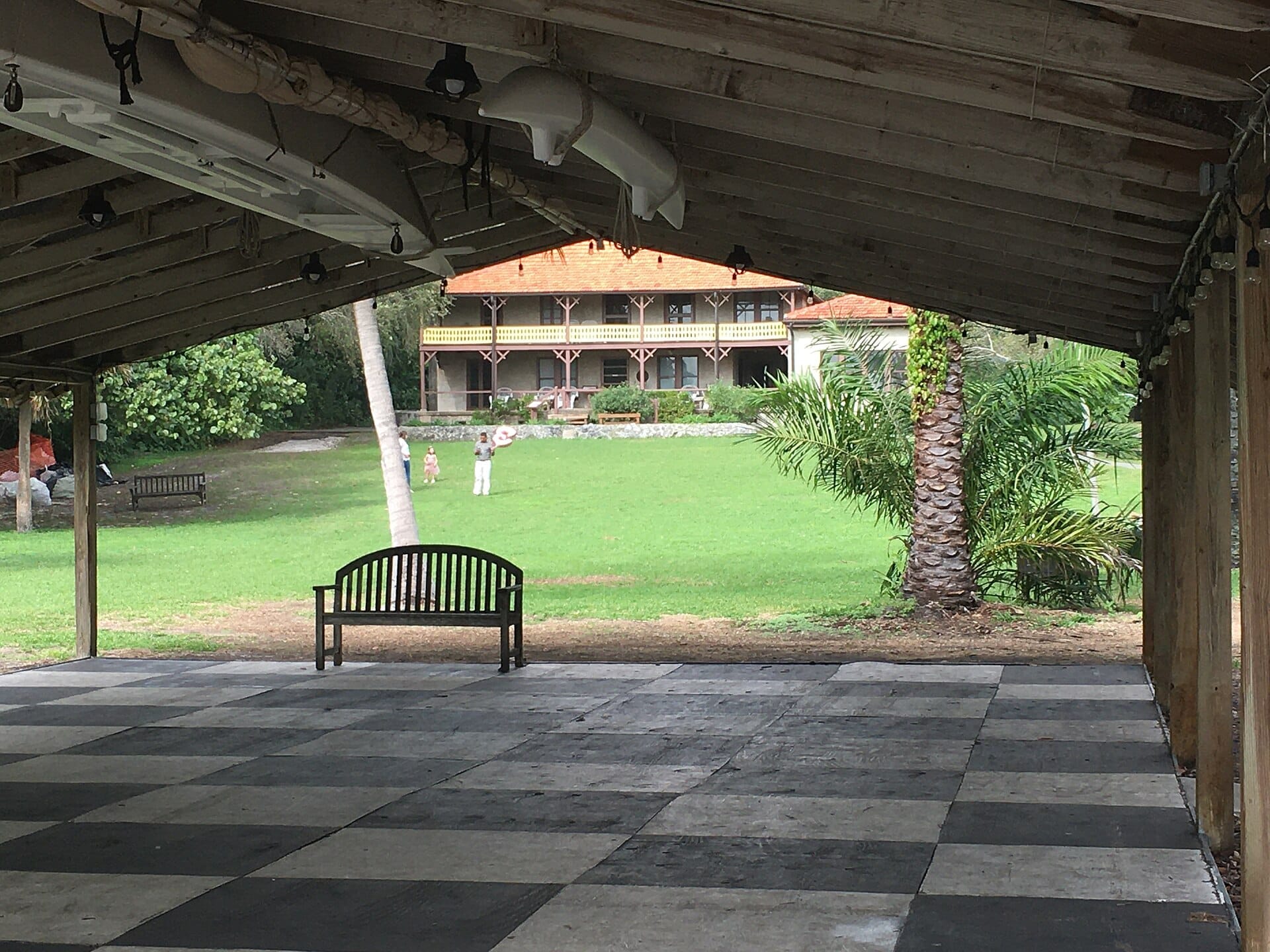
Tucked along the bayfront in Coconut Grove, Barnacle Historic State Park preserves the 1891 home of Ralph Middleton Munroe, the oldest house in Miami-Dade County still standing in its original location. At just 5 acres, it rewards visitors with tall hardwood trees, Biscayne Bay views, and guided tours that bring pioneer-era South Florida to life.
Quick Facts
- Location
- 3485 Main Highway, Coconut Grove, Miami, FL 33133
- Getting There
- No on-site parking. Street parking on Main Highway or nearby metered lots. Ride-hail recommended.
- Time Needed
- 1.5 to 2.5 hours including a guided tour
- Cost
- Park entry $2/person (ages 5 and under free). House tour $3 (13+), $1 (ages 6–12)
- Best for
- History lovers, architecture fans, slow-travel couples, quiet mornings away from South Beach
What Is the Barnacle Historic State Park?
Barnacle Historic State Park sits on approximately 5 acres of bayfront land along Main Highway in Coconut Grove, preserving the oldest surviving house in Miami-Dade County still standing on its original site. The house, known as The Barnacle, was built in 1891 by Ralph Middleton Munroe, a yacht designer and one of the founding figures of the Coconut Grove community. The park became part of the Florida State Parks system in 1973 and has been carefully maintained as a window into what life looked like in South Florida before the city of Miami even officially existed.
Most visitors arrive expecting a quick look at an old building and leave surprised by how much atmosphere the place carries. The hardwood hammock canopy, the breeze off Biscayne Bay, the low hum of powerboats in the distance — the park feels genuinely separate from the Coconut Grove just outside its fence. For a modest $2 entry fee, that sense of removal is remarkable.
ℹ️ Good to know
The park is open Thursday through Monday, 9:00 a.m. to 5:00 p.m. It is closed every Tuesday and Wednesday, as well as Christmas Day and New Year's Day. Confirm hours on the Florida State Parks website before visiting.
The House and Its History
Ralph Munroe designed The Barnacle himself, and his boatbuilding instincts are visible throughout. The house uses a raised-floor plan to catch prevailing breezes and features a central skylight that ventilates the interior long before air conditioning existed in Florida. The roof pitch, the wraparound verandah, and the broad overhanging eaves were all calculated responses to the subtropical heat. It is, in architectural terms, a genuinely intelligent building for its climate.
The name itself comes from the marine creatures that cling to boat hulls — Munroe was an avid sailor and chose the name as a nod to his roots. He originally built a smaller cottage here, then raised the entire structure in 1908 and inserted a new ground floor beneath it to expand the home. That ground floor is now part of what visitors see on the guided tour.
Munroe was not just a boat designer. He was a photographer, a naturalist, and one of the primary advocates for preserving the Coconut Grove area in its early years. His papers and photographs are among the most important records of late 19th-century South Florida. Understanding that context makes the house feel less like a curiosity and more like a document. If you're drawn to the deeper history of the region, the Vizcaya Museum and Gardens — another bayfront estate from the same general era — offers a striking contrast in scale and intent.
Tickets & tours
Hand-picked options from our booking partner. Prices are indicative; availability and final rates are confirmed when you complete your booking.
Everglades admission ticket with airboat ride and wildlife show
From 24 €Instant confirmationFree cancellationKey West day trip with glass bottom boat ride
From 110 €Instant confirmationFree cancellationEverglades airboat ride with Biscayne Bay boat tour and transportation
From 67 €Instant confirmationFree cancellationGrand Bahama tour with optional Pig Beach visit
From 309 €Instant confirmationFree cancellation
The Guided Tour Experience
The interior of the house is only accessible by guided tour, which runs at 10:00 a.m., 11:30 a.m., 1:00 p.m., and 2:30 p.m. on open days. Tours are purchased at the park gift shop. The 10:00 a.m. slot is consistently the least crowded, and the light through the upper windows at that hour gives the ground floor a warm, amber quality that photographs well. The 1:00 p.m. and 2:30 p.m. tours tend to draw larger groups, particularly on weekends.
The tours run roughly 45 minutes and take visitors through furnished rooms that retain much of the family's original furniture, tools, and personal objects. The ranger-led narration is well-researched and avoids the scripted quality of some state park tours. Questions are welcome and often produce the most interesting material — the stories about Munroe's social circle, which included some of the earliest advocates for what eventually became Everglades National Park, are worth drawing out if you get a knowledgeable guide.
💡 Local tip
If you arrive just before the 10:00 a.m. tour, you'll have the grounds nearly to yourself for a few minutes before the rest of the day's visitors trickle in. The bay view from the lower lawn at that hour, with the morning light on the water, is one of the quieter pleasures in all of Coconut Grove.
The Grounds: Hardwood Hammock and Bayfront Access
Even without the house tour, the grounds justify the $2 entry fee. The property sits within a native hardwood hammock, a plant community that was once far more widespread along the South Florida coast before development removed most of it. Gumbo-limbo trees with their peeling, copper-red bark are easy to spot. Live oaks spread wide overhead. The understory is dense enough that the temperature inside the hammock drops a few perceptible degrees compared to Main Highway on the other side of the fence.
At the water's edge, the park opens onto Biscayne Bay. There is no sandy beach here — the shoreline is rocky and vegetated — but the view across the bay is unobstructed and peaceful. Wading birds work the shallows in the early morning. On weekend afternoons, sailboats pass close enough that you can hear rigging in the wind. It is the kind of bayside scene that most visitors to Miami never find because they are not looking in Coconut Grove.
Coconut Grove's broader character as one of Miami's oldest continuously inhabited neighborhoods adds texture to the visit. If you're spending a half-day here, the park pairs well with a walk through Coconut Grove's streets and a meal at one of the neighborhood's independent restaurants. The park sits directly on Main Highway, so the surrounding blocks are easy to explore on foot.
When to Visit and What Affects the Experience
The park is at its best between November and April, when temperatures stay in the comfortable 70s Fahrenheit, humidity is manageable, and the afternoon thunderstorms of summer are absent. That said, the hardwood canopy provides genuine shade, and even on a hot summer morning the grounds feel significantly cooler than the open streets nearby. If you visit in summer, aim to arrive right at 9:00 a.m. before the heat builds.
Weekend mornings in season (December through March) bring steady visitor traffic. The park is small enough that even a modest crowd changes the atmosphere considerably — a dozen people on the grounds feels busy here. If you have flexibility, a Thursday or Friday morning visit offers the quietest experience. The park hosts occasional after-hours events including moonlight concerts on the grounds; check the Florida State Parks calendar for dates, as these sell out and have separate ticketing.
⚠️ What to skip
The park is closed Tuesday and Wednesday every week, and also on Christmas Day and New Year's Day. Several visitors arrive on a Wednesday expecting to get in — always verify the schedule at floridastateparks.org before making the trip.
For travelers trying to build a full itinerary around Miami's history and natural landscapes, the Miami hidden gems guide covers several sites in the same spirit as The Barnacle — places with genuine depth that see far fewer visitors than the beach or Wynwood.
Getting There and Practical Details
The park is walk-in only. There is no motor vehicle access inside and no on-site parking lot. Street parking exists on Main Highway and on adjacent side streets, though it fills quickly on weekend mornings. Metered parking is available nearby in Coconut Grove's commercial core. Ride-hail is the most straightforward option if you are coming from South Beach, Brickell, or downtown Miami.
Disabled parking spaces are designated nearby. For specific accessibility information — including details about ground surface and house access for visitors with mobility limitations — the park office can be reached at 305-442-6866. The Florida State Parks system recommends calling in advance for any accessibility-specific needs.
Dogs are permitted on the grounds on a handheld leash no longer than 6 feet, during regular operating hours. They are not allowed during after-hours events. The grounds are shaded enough that a dog visit in the morning is comfortable, but bring water for both yourself and the animal, as there are no water stations on the property.
If you are combining this visit with other historic or cultural stops in Miami, the Deering Estate to the south is another preserved bayside property with deep historical and ecological significance. The two sites together make for a rich full day of Miami history.
Who Should Skip This Attraction
If you are in Miami primarily for the beach, nightlife, or the Design District gallery circuit, the Barnacle will feel like a detour that does not pay off. The park is 5 acres. There is no café, no gift shop worth a special trip, and no spectacle. It rewards visitors who move slowly and care about context. Travelers on a one-day itinerary with a packed schedule may find the 2+ hours better spent elsewhere.
For those who do want history but prefer a larger canvas, the HistoryMiami Museum in downtown Miami covers the region's past more comprehensively and may suit visitors who want breadth rather than the intimate, single-site depth that The Barnacle offers.
Insider Tips
- Buy your house tour ticket at the gift shop the moment you arrive, before exploring the grounds. Tour slots, especially the 10:00 a.m. first tour, can fill on busy weekend mornings.
- The verandah on the upper floor of the house is sometimes accessible at the end of the guided tour and offers a direct view over the hardwood canopy to Biscayne Bay — ask your guide if it's open that day.
- The park hosts moonlight concerts on the grounds several times a year, typically in cooler months. These events give access to the property after dark when the hammock atmosphere is entirely different. Check the Florida State Parks event calendar well in advance.
- Wear closed shoes or sturdy sandals. The grounds are uneven in places, with exposed roots under the hardwood canopy, and the rocky shoreline area is slippery after rain.
- If you are interested in historical photography of early South Florida, ask park staff about Munroe's photographic archive — his images of the Coconut Grove community in the 1880s and 1890s are extraordinary and not widely known outside academic circles.
Who Is Barnacle Historic State Park For?
- History and architecture travelers who want depth over spectacle
- Slow-travel couples looking for a quiet, affordable half-morning in Miami
- Photographers interested in tropical vernacular architecture and dappled hardwood light
- Visitors building a Coconut Grove half-day that includes the neighborhood's streets and restaurants
- Dog owners looking for a leash-friendly, shaded outdoor site
Nearby Attractions
Other things to see while in Coconut Grove:
- Vizcaya Museum and Gardens
Built between 1914 and 1922 as the winter home of industrialist James Deering, Vizcaya Museum and Gardens is a National Historic Landmark sitting on Biscayne Bay in Miami’s Coconut Grove neighborhood. The 34-room Main House is packed with European antiques and decorative arts, while 10 acres of formal gardens unfold toward the water in a way that feels entirely out of place in subtropical Miami — which is exactly the point.