Little Havana Miami: What to Do, Eat & Experience
Little Havana is Miami's most culturally distinct neighborhood, centered on Calle Ocho and shaped by decades of Cuban exile history. This guide covers the top attractions, best food stops, seasonal festivals, walking tour options, and what to know before you go.
Plan and book this trip
Tools from our partner Travelpayouts help you compare flights and hotels. If you book through them, we may earn a commission at no extra cost to you.
Flights
Hotels map
TL;DR
- Little Havana sits west of Downtown Miami, centered on Calle Ocho (SW 8th Street) — the main strip for Cuban food, cigars, live music, and local culture.
- Máximo Gómez Park (Domino Park) is the neighborhood's most authentic public space — locals play dominoes there daily, not tourists.
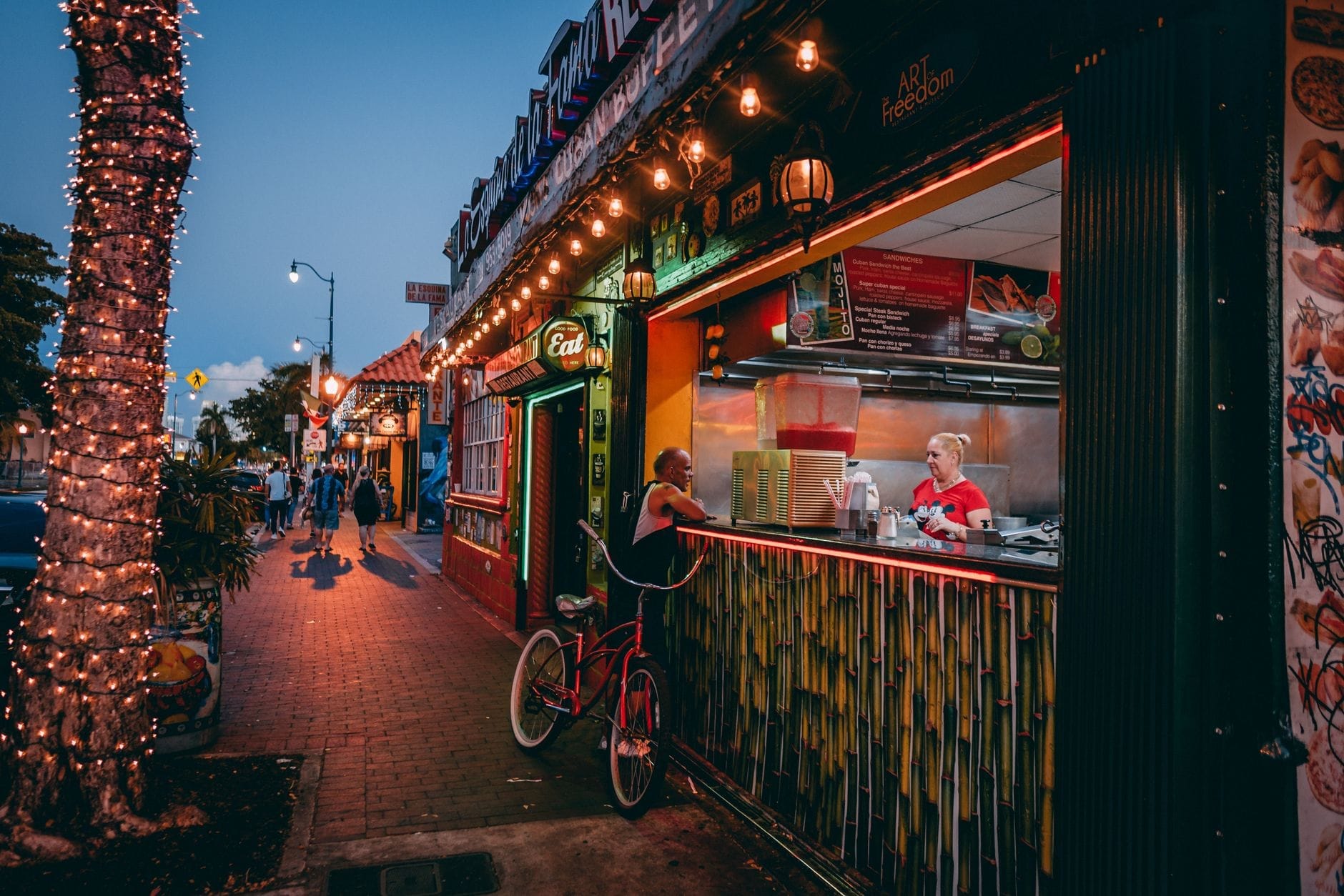
- The best food here is found at ventanitas (walk-up windows): Cuban coffee, pastelitos, and croquetas for under $5.
- The Calle Ocho Music Festival in March draws massive crowds — great for atmosphere, but plan around street closures.
- Little Havana is a real working-class residential neighborhood, not a theme park. Respect that, and you'll have a far richer visit than the average tourist. Check our Miami Cuban food guide for deeper dining context.
What Is Little Havana and Why Does It Matter?
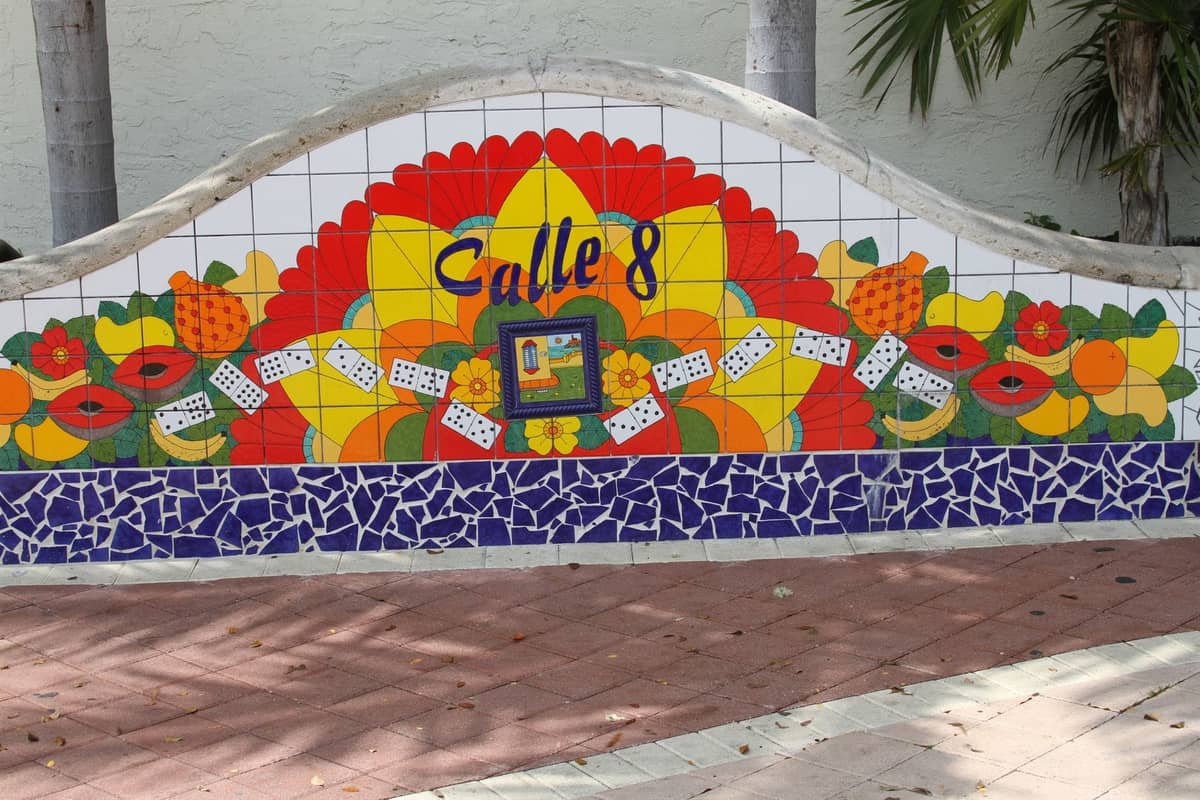
Little Havana is a neighborhood in the City of Miami, roughly bounded by SW 11th Street to the north, I-95 to the east, SW 11th Street to the south, and SW 27th Avenue to the west. It developed as the primary settlement area for Cuban exiles following the 1959 revolution, and the cultural imprint of that history is still unmistakable today: Spanish is the dominant language on the street, the smell of café cubano drifts out of open-air ventanitas, and political murals commemorate figures from Cuban history.
About 93–97% of Little Havana residents are Hispanic, but the neighborhood has long since expanded beyond a single national origin. Nicaraguans, Hondurans, Colombians, and Venezuelans have all established roots here over the decades. The National Trust for Historic Preservation has designated Little Havana as a national treasure, recognizing both its cultural significance and the pressures of gentrification that threaten its character. Visitors who arrive expecting a sanitized Latin theme park will find something far more layered and interesting.
ℹ️ Good to know
Little Havana is a working-class residential neighborhood with a large foreign-born population and relatively low per-capita income. Treat it with the same respect you would any lived-in community. Loud tour groups crowding sidewalks or treating locals as photo props are a common complaint — be aware of your presence.
Calle Ocho: The Main Strip, Street by Street
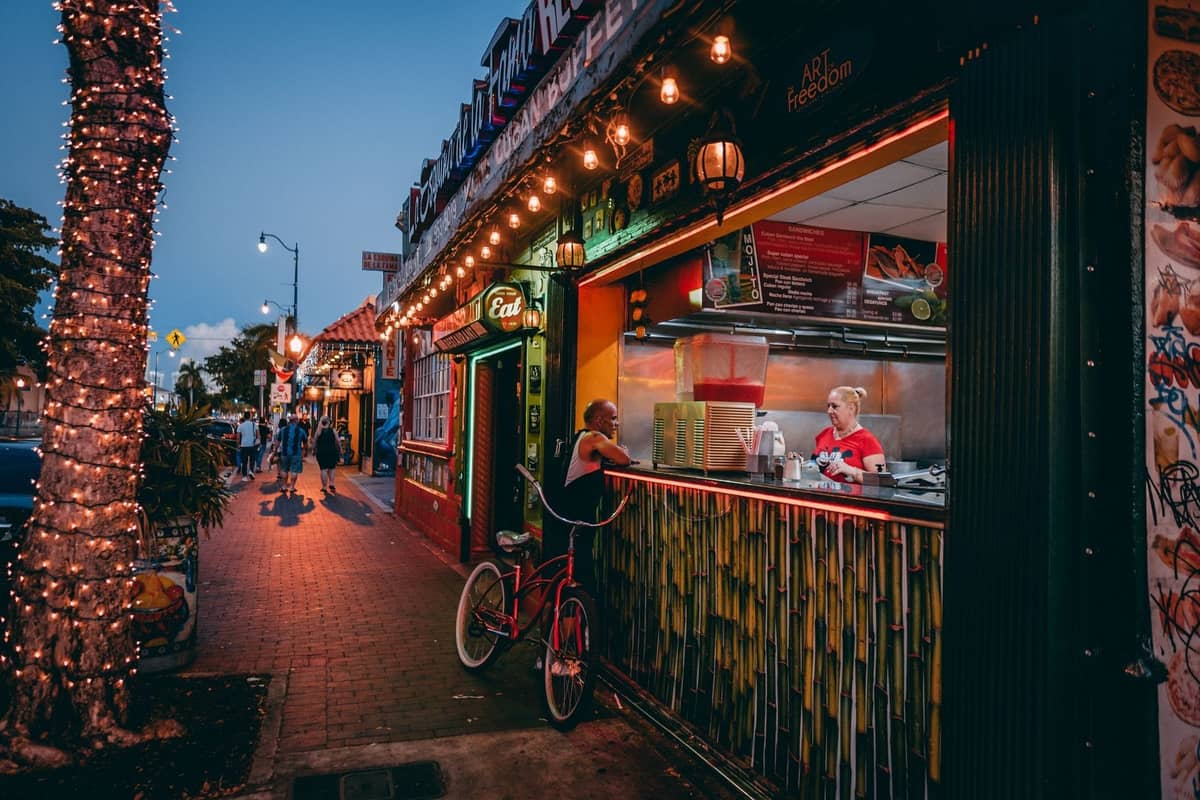
SW 8th Street, universally known as Calle Ocho, is the spine of Little Havana. The stretch between SW 12th and SW 22nd Avenue is where most visitor-facing businesses concentrate: cigar shops, art galleries, Cuban restaurants, and produce stands. The Calle Ocho Walk of Fame, running between SW 12th and 17th Avenue, features sidewalk stars honoring Latin music icons including Celia Cruz, Julio Iglesias, and Gloria Estefan — a deliberate echo of the Hollywood Walk of Fame, rooted in Latin cultural pride rather than Hollywood gloss.
The Tower Theater, dating to 1926 and now operated by Miami Dade College, anchors the eastern end of the strip. It screens independent and international films and has served as a cultural landmark through multiple waves of neighborhood change. Admission prices are modest by Miami standards — check their current schedule directly, as programming rotates frequently.
- SW 12th–17th Ave Walk of Fame stars, art galleries, and the densest concentration of tourist-facing shops and restaurants.
- SW 15th Ave Máximo Gómez Park (Domino Park) sits just off Calle Ocho here — one block north on SW 15th.
- SW 17th Ave area Cubaocho Museum and Performing Arts Center, probably the neighborhood's best cultural venue for evening events.
- SW 27th Ave (Miracle Mile end) Less touristy, more local — fruit stands, botanicas, and family-run cafeterias rather than curated shops.
Top Things to Do in Little Havana
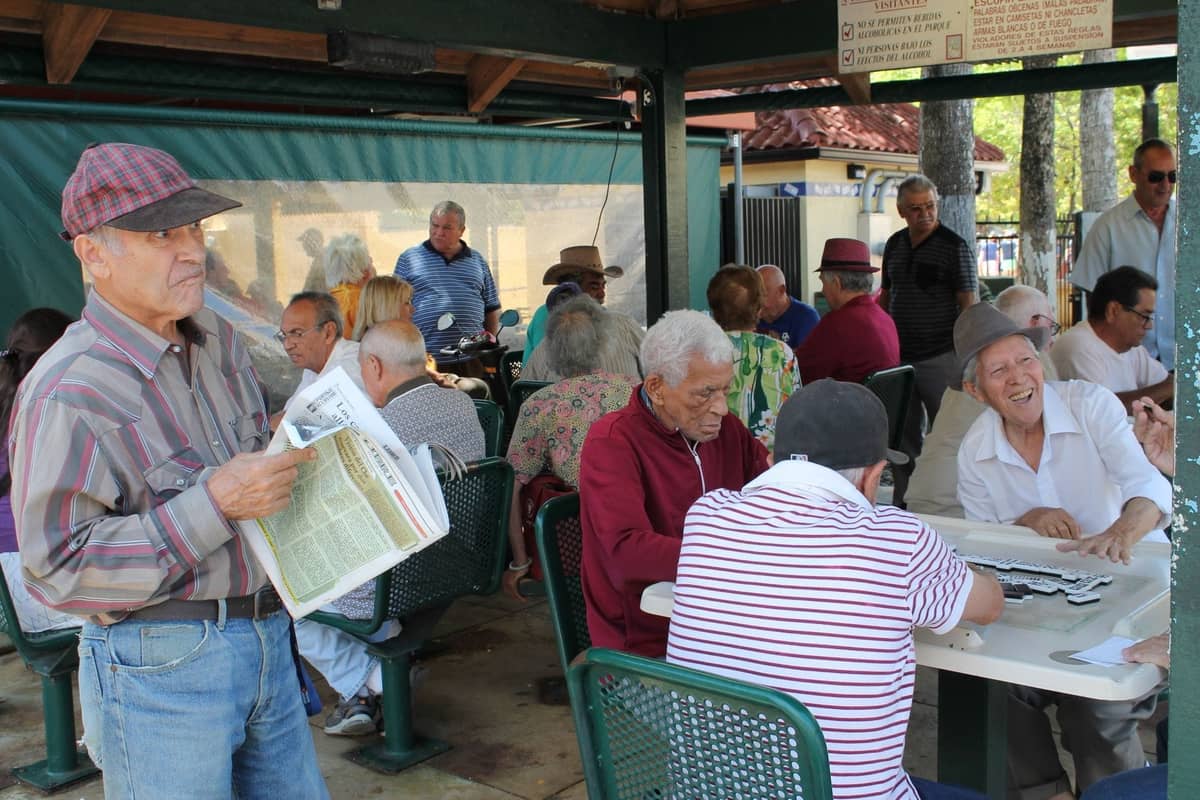
Máximo Gómez Park, nicknamed Domino Park, is a small green space where Cuban men — many of them elderly — gather daily to play dominoes, drink coffee, and debate politics. It is genuinely one of the most authentic public spaces in all of Miami: no admission fee, no performance for tourists, just a deeply ingrained neighborhood ritual. The park has murals of Cuban revolutionary figures and a bronze statue of two domino players. It is open daily from morning until evening, generally aligning with daylight hours. Visit on a weekday morning if you want to see the most active games with fewer cameras pointed at the players. You can learn more about it on the Domino Park attraction page.
Cubaocho Museum and Performing Arts Center is the neighborhood's most sophisticated cultural offering. Part art gallery, part live music venue, part bar, it showcases Cuban art spanning pre- and post-revolution periods alongside rotating exhibitions. Friday and Saturday nights typically feature live salsa and son cubano bands. Cover charges vary by event — check their calendar ahead of time, as it books up on weekends. The mojitos are strong and reasonably priced by Miami standards.
Walking and food tours run by multiple operators give structure to a first visit. Most tours last 2 to 3 hours and are priced around $40 to $70 per person, depending on what food and drink is included. The Little Havana Visitor Center at 1600 SW 8th Street offers free maps and self-guided tour materials if you prefer to move at your own pace. For those who want guided context, a group tour can surface the history that street signage alone won't convey.
- Máximo Gómez Park (Domino Park): free, open daily, best on weekday mornings
- Cubaocho Museum & Performing Arts Center: art gallery by day, live music venue by night
- Tower Theater Miami: historic 1926 landmark building that has hosted independent and international cinema
- Calle Ocho Walk of Fame: free, self-guided, between SW 12th and 17th Avenue
- Little Havana Visitor Center (1600 SW 8th St): free maps and self-guided tour resources
- Walking food tours: $40–$70/person, 2–3 hours, multiple operators available
Where to Eat and Drink in Little Havana
The best eating in Little Havana does not happen inside sit-down restaurants. It happens at ventanitas: small walk-up windows attached to cafeterias and bakeries, where you order a café cubano (a small, intensely sweet espresso shot), a cortadito (espresso cut with steamed milk), or a pastelito de guayaba (a flaky pastry filled with guava paste) for a dollar or two. This is the neighborhood ritual, and it costs almost nothing to participate.
Versailles Restaurant on Calle Ocho is the most famous Cuban restaurant in Miami, and perhaps in the United States. It serves traditional Cuban plates: ropa vieja, lechon asado, black beans and rice, and Cuban sandwiches. The food is reliable rather than revelatory, and the real reason to go is the cultural weight of the place — it has functioned as a gathering point for Miami's Cuban community through every major political event since the 1970s. Expect a wait on weekends and a lively, loud dining room. Prices are mid-range for Miami.
Azucar Ice Cream Company produces small-batch artisanal ice cream using tropical ingredients: guava, mamey, coconut, and seasonal specials. It is one of the more photographed stops on Calle Ocho and the quality genuinely holds up beyond the Instagram appeal. A scoop or two is an easy midday break during a walking tour.
✨ Pro tip
Order your Cuban coffee at a ventanita rather than inside a café — the price is lower, the ritual is more authentic, and you'll be standing alongside locals rather than at a tourist-facing counter. A café cubano should cost around $1–2. If a place charges $4 for a colada, you're at a tourist markup spot.
If you want a broader sense of Cuban food across Miami beyond Little Havana, the Miami Cuban food guide covers the city's best spots by dish and neighborhood, including places outside Calle Ocho that locals actually frequent.
When to Visit: Seasons, Festivals, and Timing
Miami's dry season, running roughly November through April, is the most comfortable time to walk Calle Ocho. Temperatures during this period average around 75–80°F (24–27°C) during the day with lower humidity than summer. Summer months (June through August) push into the high 80s and low 90s Fahrenheit with heavy humidity and frequent afternoon thunderstorms — midday walking becomes genuinely uncomfortable. For full seasonal planning, the best time to visit Miami guide breaks down each month in detail.
The single biggest event in Little Havana is the Calle Ocho Music Festival, held as part of Carnaval Miami each March. It typically draws over one million visitors over its run, making it one of the largest street festivals in the United States. The festival transforms Calle Ocho into a massive outdoor concert with multiple stages, food vendors, and carnival rides. It is genuinely spectacular if you like crowds and live Latin music. If you dislike large crowds, schedule your visit for any other weekend in March — the neighborhood will be far more navigable while still being active from winter tourism. Read more in the dedicated Calle Ocho Festival guide.
⚠️ What to skip
During the Calle Ocho Music Festival in March, street closures affect large sections of SW 8th Street. Parking becomes nearly impossible, ride-hail surge pricing can be significant, and some local businesses actually close for the weekend to avoid the chaos. If your goal is to experience the neighborhood's day-to-day culture rather than the festival, visit on a different weekend.
Getting to Little Havana and Getting Around
Little Havana sits about 1.5 to 2 miles west of Downtown Miami, making it an easy ride from most central hotel zones. Uber and Lyft are the most practical options for visitors — the neighborhood has limited parking and no direct Metrorail access. From South Beach, the drive is typically 20 to 30 minutes depending on traffic. From Brickell or Downtown, it is closer to 10 to 15 minutes.
Miami-Dade Transit's Metrobus serves the area, with several routes running along SW 8th Street. This is a genuine option if you are budget-conscious and not in a hurry. For a full breakdown of transit options across the city, see the getting around Miami guide. Once you're on Calle Ocho, the main strip between SW 12th and 22nd Avenue is entirely walkable — flat terrain, shaded by some buildings, and compact enough to cover in an easy hour even in warm weather.
Little Havana pairs naturally with nearby neighborhoods. Coconut Grove is about 15 minutes south by car and offers a very different atmosphere: bayside parks, upscale boutiques, and leafy streets. Coral Gables is roughly the same distance southwest and is worth combining into a half-day if you want to see the Venetian Pool or Miracle Mile. Combining Little Havana with Wynwood in a single day is popular but tiring — both neighborhoods reward slow exploration.
FAQ
Is Little Havana safe for tourists?
Little Havana is generally safe for visitors during daylight hours, particularly along the main Calle Ocho strip. Like any urban neighborhood, it is worth being aware of your surroundings, keeping valuables secured, and avoiding poorly lit side streets late at night. The tourist-facing blocks around SW 12th to 17th Avenue see consistent foot traffic throughout the day. For broader context on navigating Miami safely, check Miami's official travel safety resources and use common urban travel sense.
How long should I spend in Little Havana?
A focused half-day (3 to 4 hours) covers the main attractions: Domino Park, the Walk of Fame, Cubaocho, the Tower Theater exterior, and several food stops. A food tour typically runs 2 to 3 hours and handles the planning for you. If you want to return in the evening for live music at Cubaocho, budget an additional 2 to 3 hours for that.
What is the best time of day to visit Little Havana?
Mid-morning on a weekday is ideal. Domino Park is most active in the morning when regular players gather. The heat is more manageable before noon. Weekends bring more foot traffic and some touristy congestion on Calle Ocho. Evenings work well specifically if you are targeting live music at Cubaocho, which typically programs Friday and Saturday nights.
What food should I absolutely try in Little Havana?
Cuban coffee from a ventanita is non-negotiable. Beyond that: a Cuban sandwich (pressed bread, roast pork, ham, Swiss cheese, pickles, mustard), pastelitos de guayaba (guava-filled pastry), croquetas de jamón (ham croquettes), and a colada (a larger portion of Cuban espresso meant for sharing). Versailles Restaurant handles the full sit-down Cuban meal experience if you want a comprehensive spread.
Is Little Havana only Cuban?
No. While Cuban-American culture defines the neighborhood's identity and most of its iconic institutions, Little Havana is home to residents from across Central and South America. Nicaraguan, Honduran, Colombian, and Venezuelan communities are all present. About 95% of residents are Hispanic overall, but that encompasses significant national and cultural diversity within that broad category.