Miami's Art Deco Architecture: The Definitive Self-Guided Walking Tour
Miami Beach's Art Deco Historic District contains the world's largest concentration of Art Deco architecture, with over 800 historic buildings packed into a walkable stretch of South Beach. This guide covers where to start, what to look for, the best times to go, and how to make the most of the district on your own terms.
Plan and book this trip
Tools from our partner Travelpayouts help you compare flights and hotels. If you book through them, we may earn a commission at no extra cost to you.
Flights
Hotels map
TL;DR
- The Art Deco Historic District runs roughly between 5th and 23rd Streets along Ocean Drive, Collins Avenue, and Washington Avenue in South Beach.
- Start at the Art Deco Welcome Center at 1001 Ocean Drive, open daily 9 a.m.–5 p.m., run by the Miami Design Preservation League (MDPL).
- The district has over 800 historic buildings from the late 1920s and 1930s, listed on the National Register of Historic Places since 1979.
- Go early morning on weekdays for the fewest crowds, or at dusk for neon-lit façades. See the full Art Deco Historic District overview for context before you walk.
- The district is not purely Art Deco — Mediterranean Revival and Miami Modern (MiMo) buildings are also part of the historic area.
Why This District Matters: A Brief History
Miami Beach's Art Deco Historic District, officially designated the Miami Beach Architectural District, is widely described as the world's largest concentration of Art Deco architecture. That claim is not marketing hyperbole — it is backed by the district's listing on the National Register of Historic Places, which happened in 1979 following a determined preservation campaign led by activist Barbara Baer Capitman and the newly formed Miami Design Preservation League. At the time, many of these buildings were derelict and scheduled for demolition. The fact that they survive today is genuinely unusual.
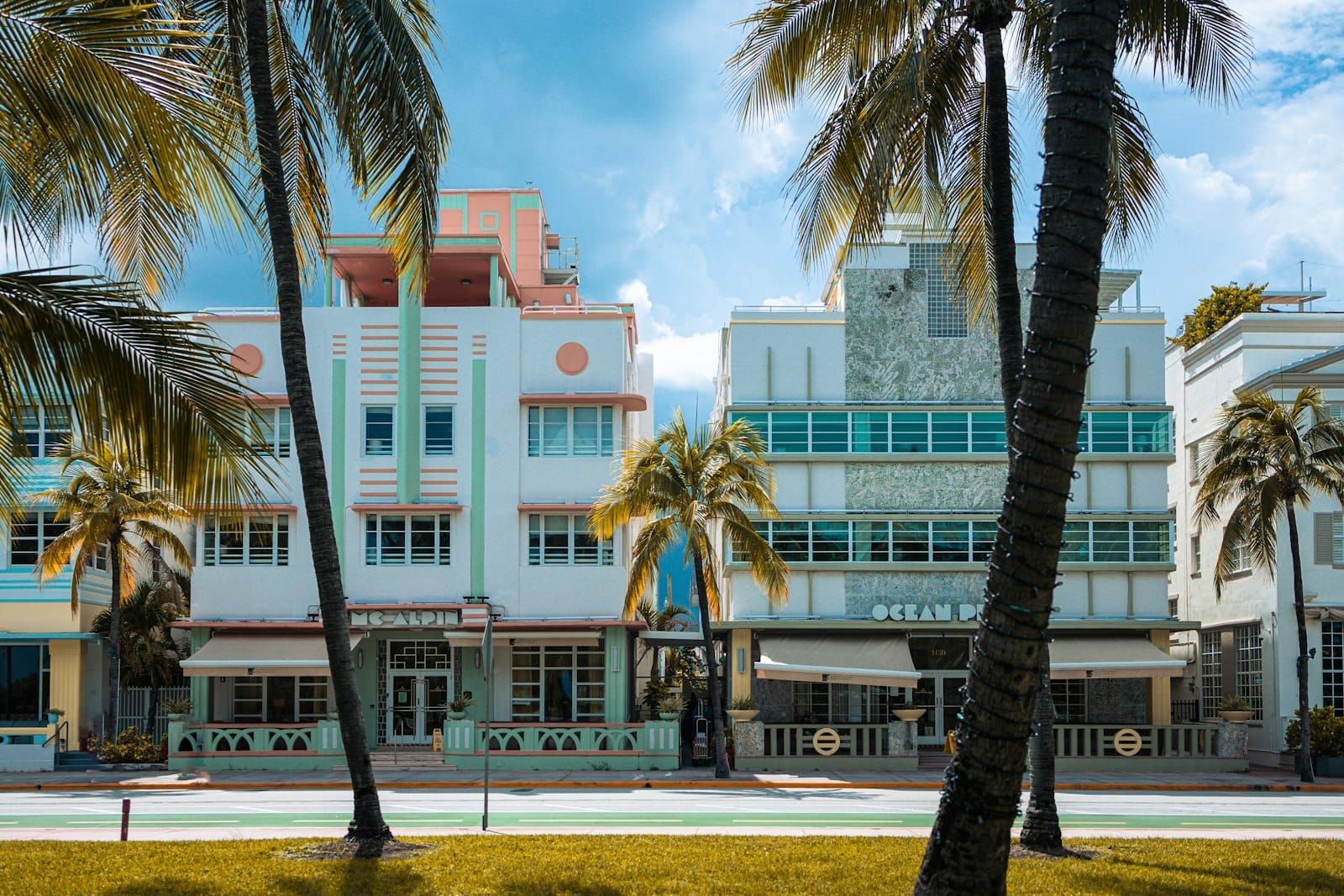
The bulk of the construction happened in the late 1920s and through the 1930s, when Miami Beach was developing rapidly as a resort destination. Architects embraced the Art Deco style then sweeping through American and European design, adapting it for a tropical climate and a tourist economy. The result was what preservation scholars call 'Tropical Deco' — Art Deco's geometric precision and ornamentation softened with flamingos, palm fronds, ocean waves, and pastel color palettes that suited the Florida sun.
ℹ️ Good to know
A common misconception: the district is not exclusively Art Deco. Within the same historic boundaries you'll find Mediterranean Revival buildings from the 1920s and Miami Modern (MiMo) structures from the 1950s and 1960s. If a building doesn't quite match the Art Deco description below, it may well be one of these related styles — both worth understanding before you walk.
How to Read the Buildings: What to Look For
Walking the district without knowing what you're looking at is like reading a book in a language you don't speak. Once you know the vocabulary, every facade becomes readable. Art Deco buildings in this district share a recognizable set of features, though no single building has all of them.
- Ziggurat (stepped) rooflines The stepped silhouette borrowed from Aztec and Mayan temples, creating a dramatic skyline profile even on three-story buildings.
- Eyebrow overhangs Horizontal concrete ledges above windows that shaded interiors from the harsh Florida sun — a practical adaptation that became a defining aesthetic element.
- Porthole windows Circular windows referencing ocean liner design, a nod to the nautical setting of a barrier island city.
- Glass block panels Semi-translucent walls that diffuse light without requiring clear glazing — common in lobbies and corner accents.
- Terrazzo floors Polished composite stone flooring in geometric patterns, often visible in lobby interiors that are open to visitors.
- Neon signage Original or period-accurate neon tubing along Ocean Drive, most dramatic at dusk and after dark.
- Tropical and floral reliefs Bas-relief carvings of flamingos, palm trees, ocean waves, and sunbursts decorating cornices, entry panels, and column capitals.
- Pastel color schemes Not original to the 1930s — the buildings were white and cream when built. The pastel palette dates to a 1980s renovation campaign by designer Leonard Horowitz, which has since become the district's signature look.
✨ Pro tip
The pastel colors are not historically authentic to the 1930s. Original buildings were primarily white with painted trim. The current palette was introduced in the 1980s restoration era. This doesn't make them less worth seeing — it just adds nuance to what you're looking at.
The Self-Guided Route: Where to Start and What to Prioritize
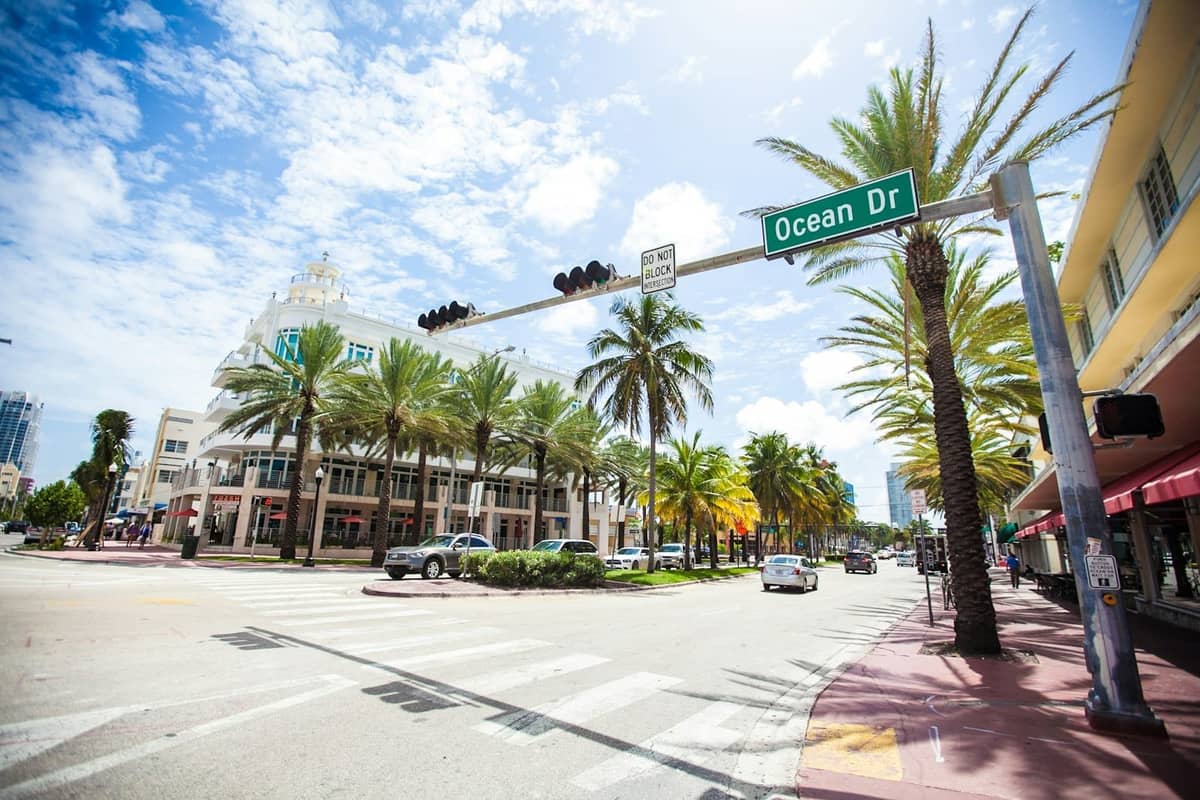
The logical starting point is the Art Deco Welcome Center at 1001 Ocean Drive, operated by the Miami Design Preservation League. It's open daily 9 a.m.–5 p.m.; the Art Deco Museum inside is open daily 9 a.m.–5 p.m. as well. Pick up a free map here, or rent a self-guided audio tour available in English, Spanish, German, and French. The audio tour runs about 1 hour and covers the district's architectural highlights with context you won't get from a map alone.
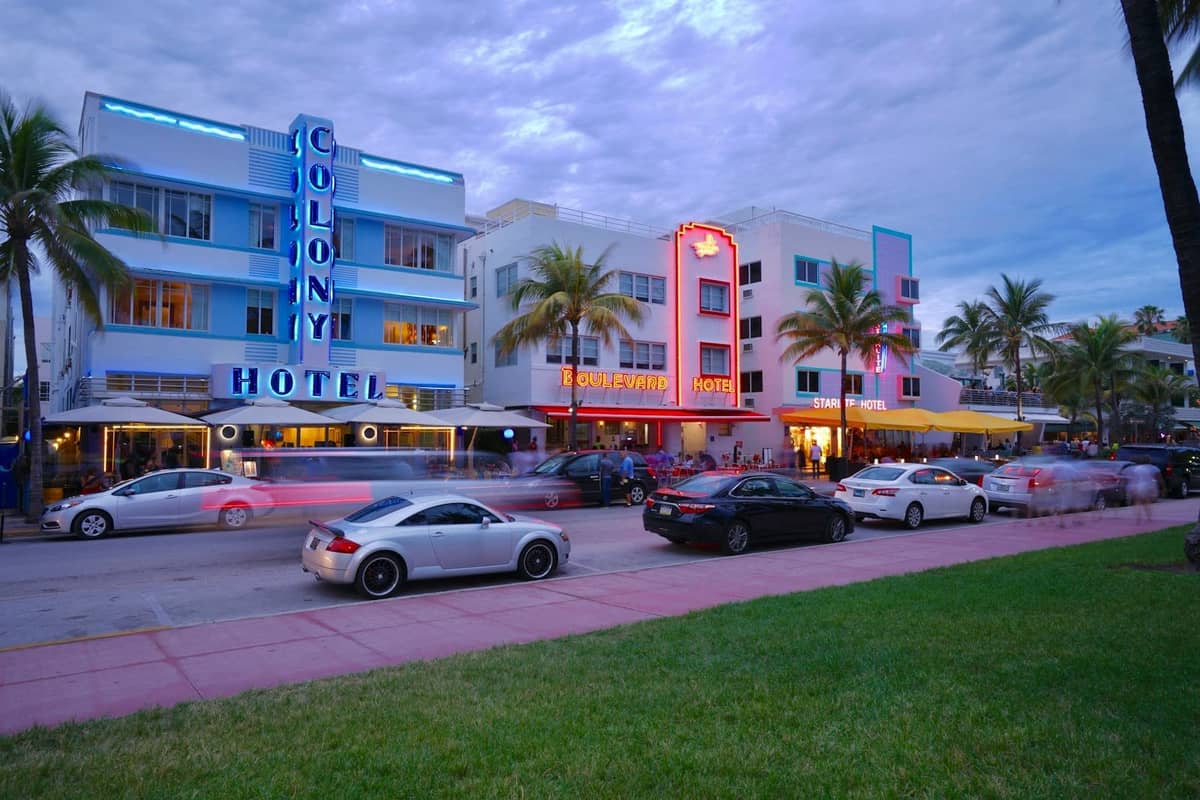
From the Welcome Center, walk north along Ocean Drive between 5th and 15th Streets for the densest concentration of preserved facades. The Colony Hotel and Hotel Breakwater South Beach are two of the most-photographed examples — the Breakwater's racing stripe verticality and the Colony's blue neon sign are among the most recognizable images of the district. This stretch of Ocean Drive is also the most crowded, particularly on weekend afternoons when the sidewalk restaurants pull tables onto the broad promenade.
Collins Avenue and Washington Avenue run parallel to Ocean Drive and are less tourist-saturated, which makes them better for uninterrupted observation of facades. Washington Avenue has the advantage of being a working street with pharmacies, grocery stores, and local restaurants, which gives the architecture more context than the curated hotel row of Ocean Drive. Walk all three avenues rather than just the famous one — the district rewards the extra mileage.
If you continue north toward the upper end of the district (between 15th and 23rd Streets), the buildings shift progressively toward MiMo style, particularly around the MiMo Biscayne Historic District further north. That transition is worth understanding so you don't mistake a 1950s building for a 1930s one.
Guided Tours vs. Going Solo: An Honest Comparison
The MDPL runs daily guided walking tours, typically departing at 10:30 a.m. (except major holidays). They run about 1.5 to 2 hours and cover Art Deco, Mediterranean Revival, and MiMo styles with a trained guide who knows the preservation history and architectural details in depth. For anyone seriously interested in architecture or urban history, this is the better option. The self-guided audio tour is a reasonable substitute if you prefer flexibility over depth.
Going completely solo without either the audio tour or a guided tour is fine if you use this guide and pick up the free map at the Welcome Center, but you'll miss a lot of the interior details and the stories behind specific buildings. Several hotels on Ocean Drive allow non-guests into their lobbies, where you can see terrazzo floors, original light fixtures, and restored interiors — ask politely at the front desk. The Carlyle, Cardozo, and Leslie hotels are among those with notable lobby interiors.
Best Times to Visit: Crowds, Light, and Season
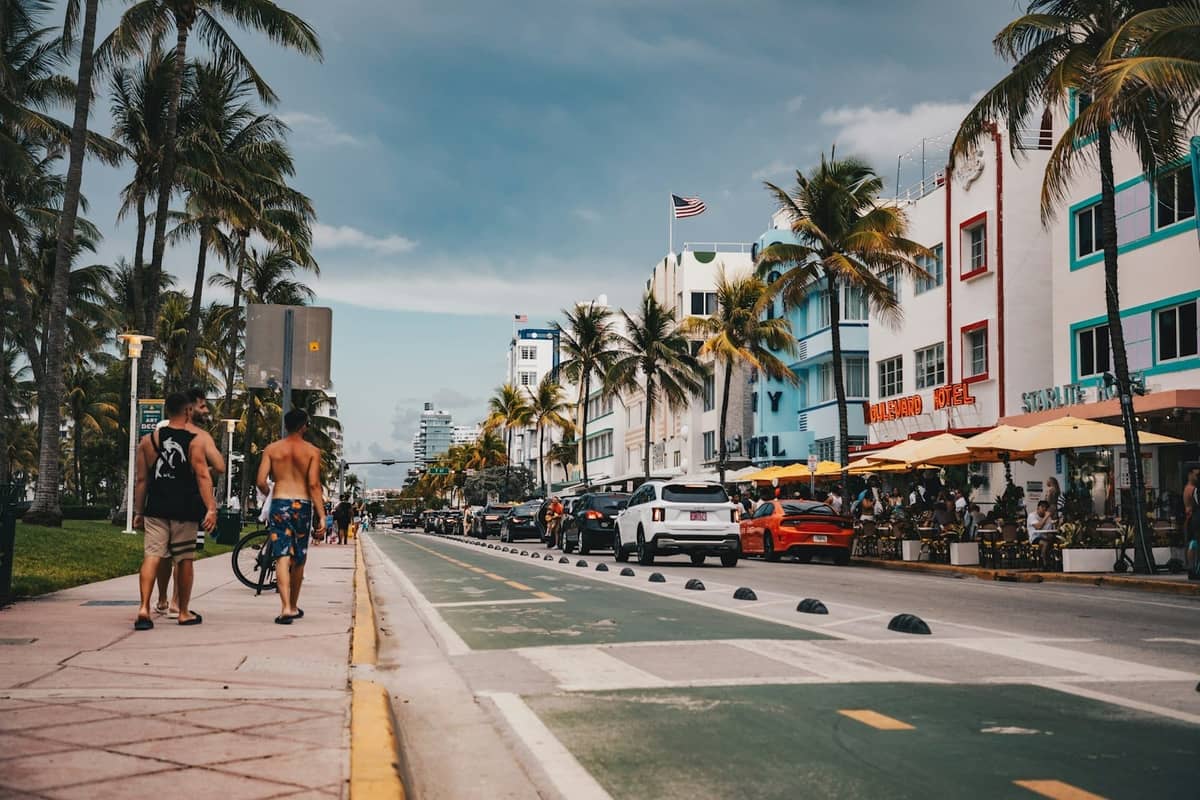
Timing your walk matters more here than at most attractions. Ocean Drive on a Saturday afternoon in January is genuinely difficult to navigate — the sidewalk fills with people, restaurant staff aggressively solicit passersby, and the architectural details you came to see are obscured by crowds and outdoor furniture. Weekday mornings between 8 and 10 a.m. are the opposite: quiet, photogenic, and cool enough to walk comfortably. Miami's dry season (November through April) brings the most pleasant walking temperatures, with highs in the mid-70s to low 80s Fahrenheit and low humidity. See the best time to visit Miami for a fuller seasonal breakdown.
The other strong option is evening, specifically dusk and the hour after. Ocean Drive between 5th and 15th Streets is lined with neon-lit facades that look nothing like they do at noon. The Colony Hotel sign, the Breakwater neon, and several other restored signs create the closest thing Miami Beach has to a period atmosphere. Be aware that Ocean Drive at night is also the district's most saturated tourist corridor — the balance of aesthetics and crowd tolerance is a personal calculation.
Art Deco Weekend, held annually in January, brings free guided tours, classic car displays, live music, and family programming to the district. It adds energy and context to the area, but it also adds significant crowds. If you're visiting specifically for architecture, avoid walking during the main event hours and go early morning instead — the buildings will still be there when the bands stop.
⚠️ What to skip
Restaurant touts along Ocean Drive are aggressive. Menus are displayed at inflated tourist prices and service charges are sometimes added automatically. If you want to eat on Ocean Drive for the atmosphere, accept that you're paying a premium. For a better meal at better value, one block west on Collins or Washington Avenue makes a significant difference.
Getting There and Getting Around
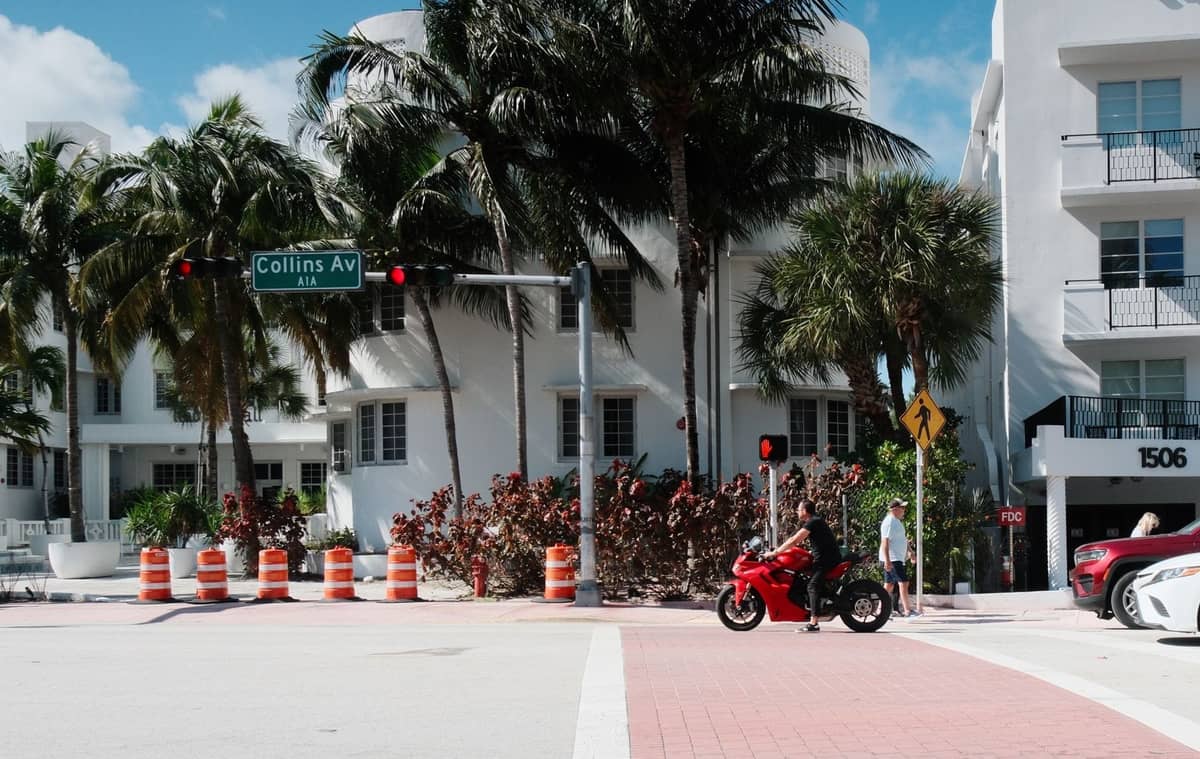
The Art Deco district sits in South Beach, on Miami Beach's southern end. Miami Beach is a separate city from Miami, connected to the mainland by causeways. A key local public transit option is the South Beach Local circulator bus (currently operating as route SBL/123), which runs primarily along Washington Avenue and Alton Road and nearby streets. From Downtown Miami, Miami-Dade Transit bus routes cross the MacArthur Causeway to Miami Beach. The trip from Downtown to Ocean Drive takes roughly 20–30 minutes by bus depending on traffic.
Parking on Miami Beach is expensive and time-consuming on weekends. If you're staying in South Beach itself, walk or use a rideshare. If you're coming from elsewhere in Miami, a rideshare to the district and back avoids the parking situation entirely. The district is entirely walkable once you're there — it is, at its core, a pedestrian experience.
- Wear comfortable shoes — the walk covers multiple avenues and ideally all 18 blocks of the district's length
- Bring water, especially between May and October when afternoon high temperatures commonly reach the upper 80s to around 90°F (31–32°C)
- A phone camera is sufficient for façade photography; mornings give the best light on the east-facing Ocean Drive buildings
- The Art Deco Welcome Center at 1001 Ocean Drive has clean restrooms, free maps, and staff who can answer questions
- Carry cash for the audio tour rental if you prefer not to use a card
- Sunscreen is non-negotiable in any month — UV index in Miami is high year-round
The district also connects naturally with other South Beach experiences. Lummus Park Beach runs directly east of Ocean Drive, offering a natural break mid-walk. Española Way, one block west of Washington Avenue between 14th and 15th Streets, is a narrow Spanish-style pedestrian street that represents the Mediterranean Revival style present in the same district — a useful contrast to the Art Deco you'll have been reading for hours.
FAQ
Is the Art Deco Historic District free to visit?
Walking the district is completely free. The Art Deco Welcome Center at 1001 Ocean Drive is free to enter, though the Art Deco Museum inside has an admission charge. The self-guided audio tour from MDPL costs extra (check current pricing at mdpl.org). The MDPL daily guided walking tour also has a fee. The buildings themselves, as exterior architecture on public streets, cost nothing to observe.
How long does the self-guided Art Deco walk take?
The MDPL's official audio tour is approximately 1.5 hours. A thorough self-guided walk covering Ocean Drive, Collins Avenue, and Washington Avenue between 5th and 23rd Streets takes 2–3 hours if you stop frequently to observe building details, read plaques, and explore a few open lobbies. A faster pass covering just the Ocean Drive highlights runs about 45–60 minutes.
What is the difference between the Art Deco district and MiMo architecture in Miami?
Art Deco was the dominant style for buildings constructed in the late 1920s and 1930s — characterized by stepped rooflines, geometric ornamentation, eyebrow overhangs, and tropical relief carvings. Miami Modern (MiMo) emerged in the 1950s and 1960s, featuring swooping rooflines, large horizontal windows, and a more streamlined mid-century aesthetic. Both styles appear within the Miami Beach Architectural District, with MiMo more prominent in the northern sections and along Biscayne Boulevard on the mainland.
When is the best time of day to photograph the Art Deco buildings?
Early morning (7–10 a.m.) on weekdays gives the best combination of soft directional light on the east-facing Ocean Drive facades and minimal crowd interference. Dusk and early evening work well for neon photography — the neon signage along Ocean Drive is most visible in the 30 minutes after sunset. Midday in full sun tends to create harsh shadows that flatten architectural details and makes the pastels look washed out.
Is the Art Deco district worth visiting if I'm not particularly interested in architecture?
Honestly, the district rewards curiosity about architecture specifically. The street life, beach access, and restaurant scene along Ocean Drive are appealing in their own right, but they exist in many beach destinations. What is genuinely unique here — and what no other place in the world offers at this scale — is the intact streetscape of 1930s buildings. If that's not something you find interesting, the district is a pleasant walk that connects to the beach, but it won't be a highlight. If you're open to the architecture, it's one of the most distinctive urban experiences in the United States.