MiMo Biscayne Boulevard Historic District: Miami's Forgotten Modernist Mile
Stretching roughly 27 blocks along Biscayne Boulevard in Miami's Upper East Side, the MiMo Biscayne Boulevard Historic District preserves one of the country's most intact concentrations of 1950s Miami Modern architecture. Think kidney-shaped pools, starburst motifs, cantilevered canopies, and pastel facades that predate South Beach's Art Deco revival by decades. It's entirely free to explore, and far less crowded.
Quick Facts
- Location
- Biscayne Boulevard from NE 50th St to NE 77th St, Upper East Side, Miami, FL
- Getting There
- Miami-Dade Transit buses serve Biscayne Blvd (US-1); check current MDT route maps for stops along the corridor
- Time Needed
- 1.5 to 3 hours for a walking or driving tour; longer if dining or shopping
- Cost
- Free to walk and explore; individual hotels, restaurants, and shops charge their own rates
- Best for
- Architecture lovers, photographers, design history enthusiasts, and travelers seeking a quieter alternative to South Beach
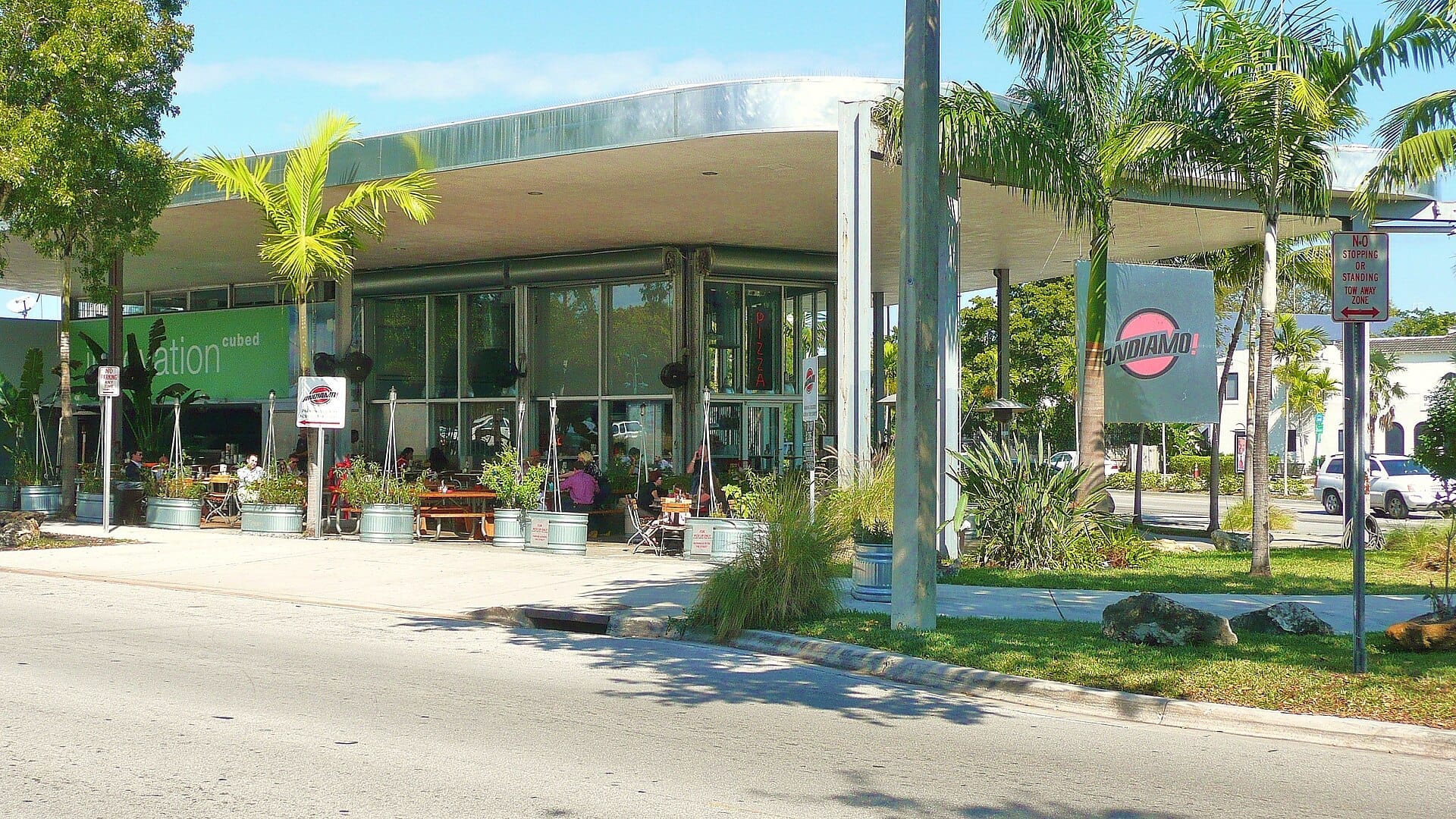
What Is the MiMo Biscayne Boulevard Historic District?
The MiMo/Biscayne Boulevard Historic District is a 27-block corridor along one of Miami's oldest and most storied arteries, officially designated by the City of Miami Historic and Environmental Preservation Board in 2006. The full name used in preservation documents is the MiMo Biscayne Boulevard Historic District, and it runs along both sides of Biscayne Boulevard (US-1) from NE 50th Street north to NE 77th Street in Miami's Upper East Side neighborhood.
MiMo stands for Miami Modern, an architectural style that emerged in South Florida during the 1950s and 1960s. It draws from Mid-Century Modernism but adds a distinctly subtropical energy: exaggerated roof lines, decorative concrete screens called brise-soleil, bold geometric signage, mosaic tile accents, and an overall sense of optimism that matched the postwar boom years. Think of it as what happens when California Case Study cool meets Havana resort flair under perpetual sunshine.
If you have already explored the Art Deco Historic District in South Beach, the MiMo corridor offers a logical next chapter in Miami's architectural timeline. Where Art Deco was the aesthetic of the 1930s working class, MiMo was designed to attract a new postwar automobile tourist, the kind who drove up from the northeast and wanted a motel with a pool, a neon sign visible from the highway, and a cocktail lounge that felt like the future.
ℹ️ Good to know
The district is entirely outdoors and publicly accessible 24 hours a day, seven days a week. There are no tickets, no gates, and no guided tour required, though self-guided walking resources are available through the MiMo Boulevard Association.
The Architecture: What to Actually Look For
Walking the district without knowing what to look for risks missing its best details. MiMo buildings tend to announce themselves through their rooflines first. Look for dramatically cantilevered flat or butterfly roofs, the kind that seem to defy gravity over entrance canopies. Below that, watch for facades covered in textured concrete block, terrazzo flooring that spills from lobbies onto sidewalks, and decorative screens that filter the South Florida sun while creating geometric shadow patterns on the ground.
Signage is another defining feature. Many original motel signs along this corridor feature atomic-age starburst shapes, boomerang curves, and hand-lettered neon typefaces that predate the desktop font era by decades. Some have been restored; others survive in a wonderfully weathered state that no designer would replicate intentionally. The signs alone justify bringing a camera.
The concentration of 1950s-era motels is what gives the district its particular character. These were not grand hotels but rather roadside lodgings aimed at the newly mobile American middle class. Their layouts typically wrapped around a central courtyard or pool, creating a semi-private outdoor social space that was entirely suited to Miami's climate. Several have been converted to boutique hotels while retaining their original bones.
💡 Local tip
Bring a wide-angle lens or use your phone in landscape mode. The horizontal sweep of MiMo facades and signage does not compress well into portrait-oriented shots.
Tickets & tours
Hand-picked options from our booking partner. Prices are indicative; availability and final rates are confirmed when you complete your booking.
Everglades airboat ride with Biscayne Bay boat tour and transportation
From 67 €Instant confirmationFree cancellationMiami skyline luxury sunset cruise of Biscayne Bay
From 30 €Instant confirmationFree cancellationMiami City Tour with Biscayne Bay Boat Tour
From 63 €Instant confirmationFree cancellationBiscayne Bay millionaire's row sightseeing boat tour
From 26 €Instant confirmation
How the Corridor Feels at Different Times of Day
Early morning, roughly 7 to 9 AM, is the most rewarding time for architecture photography. The eastern light catches the textured concrete facades and terrazzo surfaces at a low angle, pulling out shadows and surface detail that disappear once the sun climbs overhead. The sidewalks are quiet, and the few people on the street tend to be locals walking dogs or heading to nearby coffee spots, not tour groups.
By mid-morning, the light flattens but the commercial stretch becomes more active. Cafes open their doors, and the smell of Cuban coffee drifts out from smaller storefronts. The mix of restored boutique hotels alongside still-unrestored properties gives the corridor an unfinished quality that actually works in its favor: this is a neighborhood in transition, not a theme-parked historic district.
In the late afternoon, as the sun moves west, the boulevard's neon signs begin to matter more. The surviving originals glow faintly even before full dark, and by early evening the stretch takes on a different character: quieter than Wynwood, less posed than South Beach, with a handful of bars and restaurants drawing a neighborhood crowd rather than tourists. Summer afternoons bring predictable thunderstorms that roll in fast, usually between 3 and 6 PM. If you are planning a walk, aim for morning visits between June and October.
How to Walk (or Drive) the District
The district runs north-south along Biscayne Boulevard for approximately 27 blocks, which translates to roughly 1.7 miles. Most visitors cover the densest section of preserved MiMo buildings in the central and southern portions of the corridor. Walking the full stretch end to end takes about 45 minutes at a casual pace without stops. Allow 90 minutes to two hours if you plan to duck into any hotels, cafes, or shops.
Biscayne Boulevard is a busy six-lane arterial road, so this is not a tranquil pedestrian environment in the way that, say, the side streets of Coconut Grove are. The architectural interest is concentrated in the buildings themselves rather than the overall streetscape, which still has gaps and underdeveloped parcels. Cross at marked intersections and watch for turning vehicles at the side-street junctions.
If you are driving, a slow cruise down the boulevard from NE 77th Street south to NE 50th Street gives you a readable overview of the architectural inventory. Parking on the side streets off Biscayne is generally available. The corridor connects naturally to nearby Wynwood Walls to the south and west, making it easy to combine both in a single afternoon itinerary focused on Miami's design heritage.
⚠️ What to skip
Biscayne Boulevard is a high-speed urban road. Pedestrians should use marked crosswalks only, especially when crossing between the east and west sides of the boulevard. Some stretches have limited shade; wear sunscreen and carry water.
Historical and Cultural Context
Miami Modern architecture developed in a specific postwar moment when Miami was shifting from a seasonal resort into a year-round destination. The late 1940s and 1950s brought an influx of northern tourists arriving by car via the new federal highway system, and Biscayne Boulevard, as one of the primary entry routes into the city from the north, became lined with motels, restaurants, and commercial buildings designed to attract this new automobile-dependent traveler.
The architects working in this style were largely local practitioners rather than nationally recognized names, which partly explains why MiMo has received less scholarly attention than Art Deco or the Sarasota School of Architecture from the same era. The buildings were designed to be cheerful, commercial, and climatically responsive rather than monumental. That unpretentiousness is now part of their appeal.
By the 1970s and 1980s, this stretch of Biscayne had declined significantly, with many of the motels falling into disrepair or being repurposed for low-income housing. The preservation movement that ultimately led to the 2006 historic district designation grew out of a recognition that Miami was losing an irreplaceable layer of its architectural identity, a story echoed in the earlier fight to preserve the Art Deco buildings of South Beach. The designation created local regulatory protection for contributing properties, slowing demolition and incentivizing restoration.
The Upper East Side neighborhood surrounding the district has been steadily gentrifying over the past decade, with independent restaurants, design studios, and boutique hotels opening in restored MiMo-era buildings. It remains considerably less polished than South Beach or the Miami Design District nearby, which is precisely why it attracts architects, designers, and photographers who find the in-progress quality more interesting than finished preservation.
Practical Notes: Getting There, Weather, and Accessibility
Biscayne Boulevard (US-1) is served by Miami-Dade Transit bus routes; check current MDT route maps and schedules at miamidade.gov/transit for the most up-to-date service. There is no Metrorail station directly on Biscayne Boulevard in this corridor, so transit visitors will typically transfer from the rail system to a bus, or use a ride-hailing service.
By car from Downtown Miami, head north on Biscayne Boulevard (US-1) past the Design District; the MiMo corridor begins roughly at NE 50th Street and extends to NE 77th Street. Street parking is available on the side streets off the boulevard. For broader Miami transit options, see our guide to getting around Miami.
The sidewalks along the boulevard are generally continuous, but surface conditions and curb cuts vary by block. Individual buildings, particularly older restored properties, may have stepped entrances. Visitors with mobility considerations should confirm accessibility with any specific hotels or venues they plan to enter.
Miami's climate means the experience shifts noticeably by season. The dry season from November through April offers the most comfortable walking conditions, with average highs in the mid-70s to low 80s Fahrenheit. Summer visits are possible but require an early start before the heat builds and afternoon thunderstorms arrive. For a full picture of when to plan your Miami trip, the best time to visit Miami guide covers seasonal tradeoffs in detail.
Who Should Skip This and Who Should Not
The MiMo district is not for every traveler. If your priority is a curated, polished visitor experience with clear wayfinding, interpretive signage, and gift shops, this stretch of Biscayne will likely disappoint. The district has no formal visitor center, no ticketed entry experience, and the presentation is uneven: some blocks are genuinely impressive, others are still waiting for restoration investment.
It is also not a natural choice for families with young children looking for interactive experiences, or for travelers whose primary interest is Miami's beach culture. The boulevard is a working urban road, not a promenade. But for architecture enthusiasts, design history students, photographers, and anyone who has already seen South Beach and wants to go deeper into Miami's built environment, this corridor offers something rare: a largely intact piece of 1950s American commercial architecture that has not yet been smoothed into Instagram-readiness.
Insider Tips
- Start your walk at the northern end near NE 77th Street and walk south toward the city; this puts the morning sun behind you for the best light on eastward-facing facades.
- The MiMo Boulevard Association publishes walking tour information on its website and has organized periodic community events; checking their calendar before your visit may align you with a guided tour.
- Some of the most photogenic surviving neon signage is on the secondary streets immediately off Biscayne rather than directly on the boulevard itself. Budget time to walk one or two blocks east or west of the main corridor.
- Several of the restored boutique hotels in the district welcome non-guests into their lobbies and pool areas during the day. The interior terrazzo floors, period tile work, and original furniture are often better preserved inside than the exteriors suggest from the street.
- Combine the MiMo corridor with a meal at one of the independent restaurants that have opened in restored storefronts along the boulevard. The dining scene here skews toward neighborhood regulars rather than tourists, which generally translates to better value and less wait than comparable spots in Wynwood or South Beach.
Who Is MiMo Biscayne Historic District For?
- Architecture enthusiasts and design history travelers who want to trace Miami's built environment beyond the Art Deco period
- Photographers seeking graphic mid-century commercial signage, textured facades, and retro motel aesthetics without crowds
- Repeat Miami visitors who have covered South Beach and want to explore less-trafficked neighborhoods
- Travelers combining a design-focused day with nearby Wynwood, the Miami Design District, and the Freedom Tower area
- Budget-conscious visitors looking for a free half-day itinerary with genuine cultural substance
Nearby Attractions
Combine your visit with:
- Aventura Mall
Aventura Mall is Florida's largest enclosed shopping center, spanning roughly 2.7 million square feet with more than 300 stores, dozens of restaurants, and a growing collection of public art. Positioned between Miami and Fort Lauderdale, it draws shoppers from across South Florida and beyond. Whether you are hunting flagship luxury brands or simply escaping the afternoon heat, the mall delivers a surprisingly complete half-day experience.
- Biscayne National Park
Biscayne National Park protects one of the largest coral reef ecosystems in North America, about 35 miles south of downtown Miami. With 95% of its 172,971 acres underwater, this is not a typical roadside park — it rewards those who come prepared to snorkel, dive, kayak, or sail.
- Deering Estate
The Deering Estate is a 444-acre historic preserve in South Miami-Dade that combines 1920s-era architecture, fossil-rich limestone terrain, coastal mangroves, and a surprisingly ambitious arts program. It rewards slow exploration and offers a side of Miami most visitors never see.
- Everglades National Park
Everglades National Park protects the largest subtropical wilderness in the United States, just an hour from Miami. From alligator-lined boardwalks to silent sawgrass prairies stretching to the horizon, it rewards visitors who prepare — and humbles those who don't.