The Miami Design District is a compact, commercially focused neighborhood north of Wynwood where luxury fashion, contemporary art, and architectural ambition share the same 18-block footprint. Developed intentionally as a design destination from the 1990s onward, it draws shoppers, collectors, architects, and curious visitors drawn to its curated public art and high-end dining.
The Miami Design District operates on a different frequency from the rest of the city. Where Wynwood trades on raw creative energy and South Beach on spectacle, the Design District deals in precision: architectural installations commissioned for specific corners, flagship stores treated as cultural statements, and galleries that take their programming as seriously as any museum.
Orientation
The Miami Design District occupies roughly 18 blocks in the City of Miami, directly north of Wynwood and southeast of Little Haiti. Its generally recognized boundaries run from NE 36th Street (also signed as NE Design District Boulevard) in the south to NE 43rd Street in the north, and from North Miami Avenue in the west to Biscayne Boulevard in the east. Biscayne Boulevard, also designated US-1, forms the district's eastern edge and carries heavy traffic; the interior streets, by contrast, are narrower and pedestrian-scaled in sections.
Geographically, it sits in a corridor that connects the city's densest creative clusters. Wynwood begins immediately to the south, and their energy bleeds across NE 36th Street in interesting ways: Wynwood's mural-covered warehouse walls give way, within a few blocks, to architecturally polished facades clad in perforated metal screens and commissioned tile work. To the east, across Biscayne Boulevard, the Edgewater neighborhood leads down toward Biscayne Bay and Midtown Miami. Downtown Miami is about two miles south.
Understanding the Design District's relationship to Wynwood is useful for planning a day. Many visitors pair the two neighborhoods on foot, walking north from Wynwood's core on NW 2nd Avenue and arriving in the Design District within 15 to 20 minutes. The transition is stark enough to feel intentional.
Character & Atmosphere
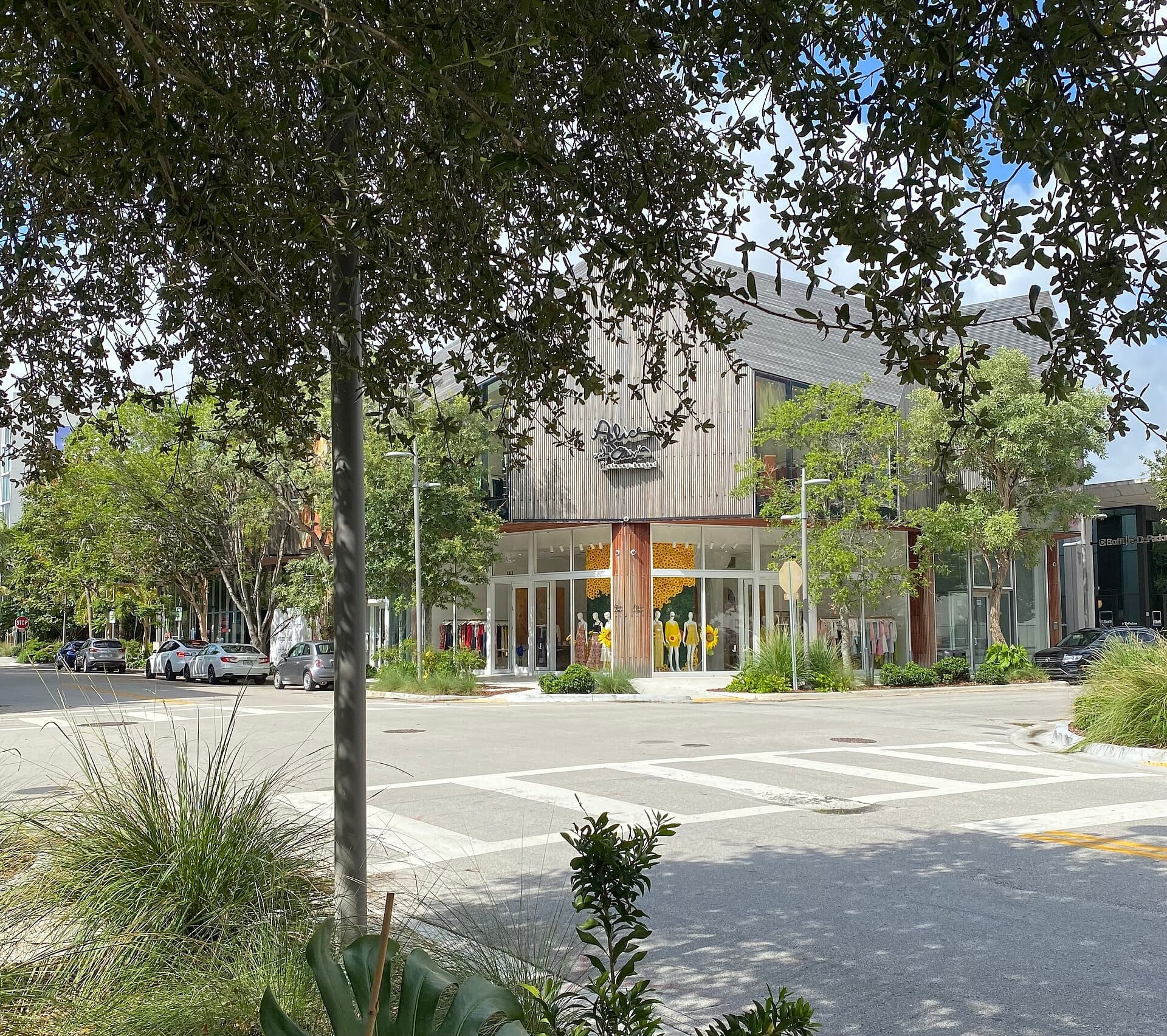
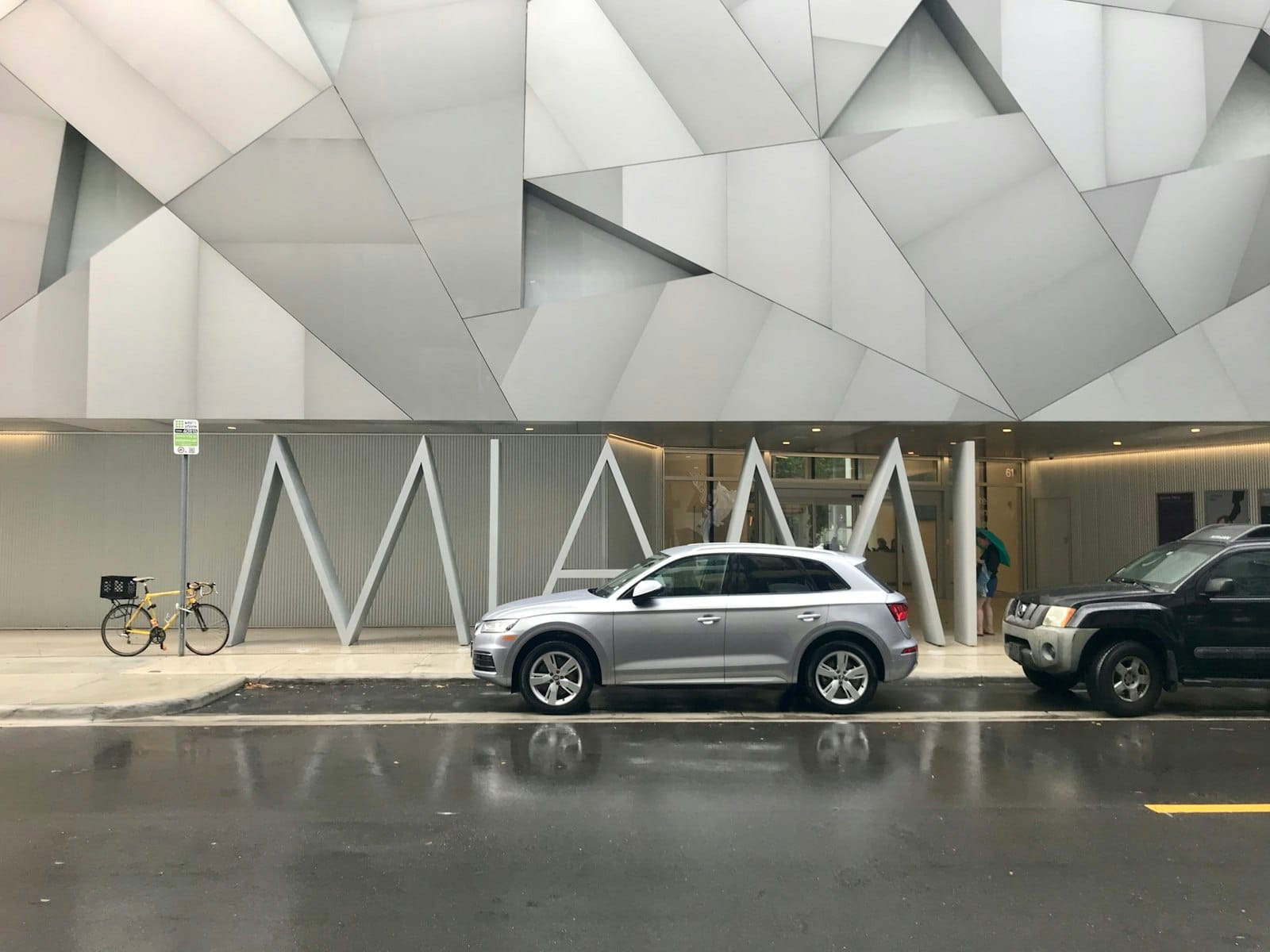
The Design District is a planned neighborhood in the most deliberate sense. Developer Craig Robins of Dacra Properties spent years assembling parcels and curating tenants, and the result is a district that feels more like an open-air institution than a traditional commercial strip. The architecture is the first thing visitors notice: parking garages here are covered in commissioned tile murals and perforated facades, dubbed 'parkitecture' by the district's own marketing, and they genuinely make you look twice.
Mornings in the Design District are quiet in a way that feels almost residential, despite the fact that almost nobody lives in its commercial core. The light falls flat and warm across the low-rise facades along NE 2nd Avenue before 9 a.m., and the streets belong mainly to deliveries, gallery staff setting up, and the occasional early-rising shopper from a nearby hotel. By mid-morning, the pace picks up around the restaurants and cafes that line the interior passages near Palm Court.
Afternoon is peak time, especially on weekdays when design professionals, architects, and interior specifiers visit the showrooms concentrated along NE 40th Street. The showrooms here trade not in ready-to-carry merchandise but in samples, materials libraries, and contract orders: this is Miami's equivalent of London's Chelsea Design Quarter or New York's D&D Building, though far more open to casual browsing than either. Weekend afternoons skew more tourist-heavy, particularly in the flagship retail corridor.
After dark, the neighborhood's character shifts noticeably. Because the core census area carries essentially no residential population, the streets quiet down once restaurants close and gallery events wrap up. This is not a nightlife neighborhood in the conventional sense. The energy concentrates around specific dinner destinations and event nights rather than spreading across a late-night bar scene. During Art Basel Miami Beach week in December, however, the district transforms entirely: every gallery holds events, pop-ups appear in parking lots, and the streets stay animated well past midnight.
ℹ️ Good to know
The Design District is primarily zoned for commercial use. Its core census block group is designated largely for commercial use with very few residents according to recent planning data, which means the neighborhood functions on business hours. Visiting on a Monday morning out of season can feel unusually empty. Aim for Thursday through Saturday for the most activity.
What to See & Do
The Institute of Contemporary Art, Miami (ICA) anchors the district's cultural programming. Housed in a purpose-built building at NE 41st Street and NE 2nd Avenue, it offers free admission and mounts rotating exhibitions that consistently pull from serious international artists. The sculpture garden wrapping the building's exterior is worth a slow walk even when you are not going inside.
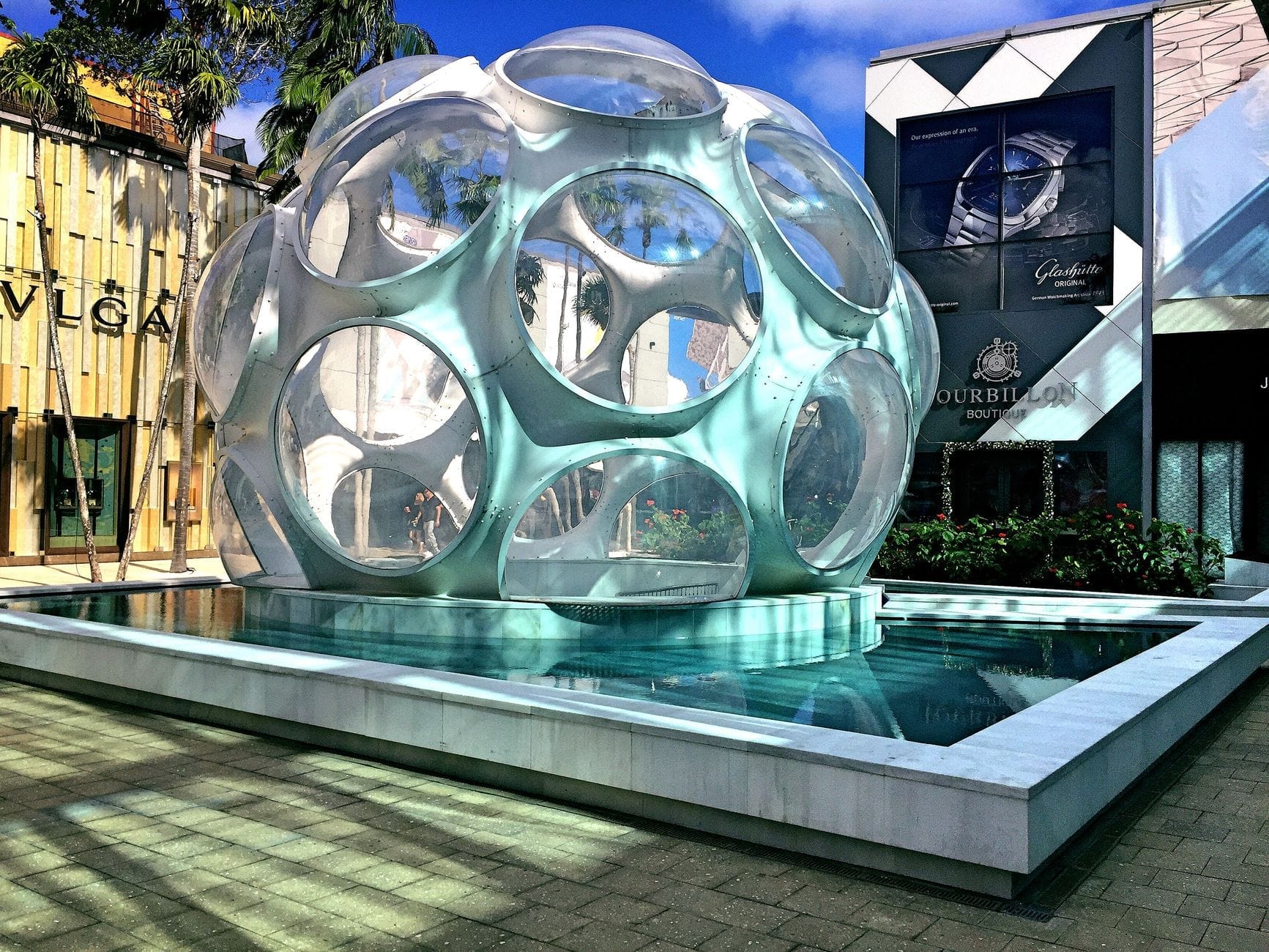
Public art is distributed throughout the district in a way that rewards slow walking. Palm Court, the central gathering space anchored by shops and restaurants, contains Buckminster Fuller's "Fly's Eye Dome," a geodesic aluminum structure from 1965 that sits in deliberate contrast with the contemporary architecture around it. The "Netscape" installation by Konstantin Grcic, a suspended field of interlocking hanging chairs, has become one of Miami's most photographed public art pieces. For context on Miami's broader art scene, the Miami Art Basel guide explains how the Design District fits into the city's wider December art calendar.
Beyond the ICA, the district houses over 130 galleries, showrooms, and creative services across its 18 blocks. Galleries including David Castillo and Locust Projects represent a mix of established and emerging voices, and the programming tends to be more experimental than the neighborhood's luxury retail reputation might suggest. The Haitian Heritage Museum also operates in the district, offering a counterpoint to the commercial environment and connecting the area to its geographic neighbors in Little Haiti to the north.
For those interested in design rather than fine art, the showroom corridor along NE 40th Street is the real draw. International furniture, lighting, and materials brands maintain their South Florida flagships here, and most are open to the public during business hours. You will not find price tags on much, but you will find serious design from brands that rarely appear in retail environments.
Palm Court: central plaza with Buckminster Fuller's Fly's Eye Dome and major brand flagships
Netscape by Konstantin Grcic: hanging chair installation, a distinctive architectural experience
Showroom corridor on NE 40th Street: international furniture and design brands
Haitian Heritage Museum: cultural institution connecting the district to the broader north Miami story
Gallery circuit: David Castillo, Locust Projects, and rotating pop-up spaces throughout
Eating & Drinking
The restaurant scene in the Design District is one of the strongest in Miami, which is a statement worth taking seriously given the city's competitive dining landscape. The concentration of money and design sensibility has attracted chefs and restaurateurs who treat the space as part of the concept, and a meal here often comes with an architectural experience as much as a culinary one. Price points lean toward the upper end, but the variety across the district means you are not locked into white-tablecloth spending for every meal.
The district anchors the upscale dining circuit that connects northward to Wynwood and southward toward Brickell. Expect to find everything from Italian fine dining and Japanese omakase concepts to wood-fired rotisserie and contemporary Latin menus. Many restaurants occupy architecturally significant spaces, with double-height ceilings, courtyard seating, and materials that reflect the design sensibility of the surrounding showrooms.
Cafes and lighter options cluster around the internal passages near Palm Court, where a midday coffee or a quick lunch is straightforward without committing to a full restaurant experience. These spots serve the gallery staff, showroom visitors, and shopping crowd, and they tend to open earlier and close earlier than the dinner-focused restaurants. If you are visiting primarily for the galleries and want to eat without interrupting the day, the Palm Court perimeter is the most convenient option.
The bar scene is limited compared to Wynwood or South Beach. A handful of restaurant bars and rooftop spots carry a cocktail program worth pausing for, but this is not a neighborhood where you drift from bar to bar after dinner. The after-dark drinking happens in dedicated restaurant bars or during gallery openings, where wine and sparkling water are typically the format.
💡 Local tip
Many Design District restaurants are genuinely difficult to get into on Friday and Saturday nights. If your schedule is flexible, aim for Thursday evening or a weekday lunch, when the energy is still good but reservations are easier to secure.
Getting There & Around
The Design District is not directly served by Metrorail, which is the most important transit fact to know before planning your visit. The nearest Metrorail stations are several miles away, making bus the primary public transit option into the area. Miami-Dade Transit routes serve the district's perimeter roads: routes 3, 16, and 93 run along Biscayne Boulevard on the eastern boundary, route 9 serves North Miami Avenue on the western boundary, routes 9 and 36 operate along NE 36th Street on the southern edge, and routes 9 and 10 serve NE 2nd Avenue, which cuts through the interior of the district.
For most visitors, the practical choice is ride-hailing. Uber and Lyft both operate throughout Miami, and the Design District is well-covered. From South Beach, a ride typically takes 20 to 30 minutes depending on traffic across the MacArthur or Julia Tuttle Causeway. From Downtown Miami or Brickell, it is usually under 15 minutes. From Miami International Airport, allow 25 to 40 minutes.
Walking between the Design District and Wynwood is genuinely practical and worth doing at least once. The walk south on NE 2nd Avenue from NE 36th Street into Wynwood's core takes about 15 to 20 minutes at an easy pace and gives you a ground-level read on how the two neighborhoods relate. For a broader overview of navigating between Miami's neighborhoods, the guide to getting around Miami covers the logistics clearly.
Driving and parking within the district is more straightforward than in most Miami commercial areas. The neighborhood was specifically designed to include four covered parking garages, and the parkitecture concept means these structures are integrated into the visitor experience rather than hidden. Valet stations are available at several restaurant and retail entrances. Street parking exists on perimeter roads but fills quickly on weekends and during events.
⚠️ What to skip
During Art Basel Miami Beach week in December and other major design events, the district becomes significantly congested by car. Public transit or ride-hailing with a flexible pickup point on the perimeter is a much better strategy than attempting to drive in and park during peak event hours.
Where to Stay
The Design District itself has a limited hotel footprint given its primarily commercial zoning. Most visitors staying near the district choose properties in adjacent Midtown Miami, Edgewater, or the northern edge of Wynwood, all of which put the district within a short walk or a brief ride. Travelers who want to be close to both the Design District and Wynwood should look at Midtown Miami, where several mid-range to upper-tier hotels sit roughly equidistant between the two.
For those who want proximity to both the Design District and the beach, the Julia Tuttle Causeway connects Edgewater (immediately east of the Design District) to Miami Beach's Mid-Beach area, making it possible to stay on the mainland and reach the beach in under 15 minutes by car. The full guide to where to stay in Miami breaks down each area's accommodation options by budget and traveler type, which is helpful if you are weighing the Design District neighborhood against South Beach or Brickell as a base.
The Design District is best suited as a destination rather than a base. Its commercial-only character means you gain proximity to great restaurants and galleries, but you lose the ambient urban life that makes neighborhoods comfortable for longer stays: there are no corner stores, no morning newspaper shops, no residential noise that tells you a city is waking up around you. Visitors who prioritize a lively hotel neighborhood over a short walk to luxury retail will be more comfortable elsewhere.
Practical Considerations
Miami's tropical monsoon climate means the Design District follows the same seasonal rhythms as the rest of the city. The drier, cooler season from about November through April brings the most comfortable conditions for walking the district's outdoor passages and public spaces. Summer afternoons from June through September bring intense heat and frequent thunderstorms that can make extended outdoor gallery hopping uncomfortable. For a full picture of how seasons affect a Miami visit, the best time to visit Miami guide covers the tradeoffs in detail.
Dress code awareness matters more in the Design District than in many Miami neighborhoods. The luxury flagship stores and upscale restaurants operate with an implicit code that leans toward smart-casual at minimum: beachwear and flip-flops that work perfectly on Lincoln Road or in Wynwood can feel conspicuously out of place inside Prada or at a fine-dining dinner reservation here. The public spaces and ICA are entirely open, but if you plan to shop seriously or dine at higher-end establishments, dress accordingly.
Safety in the Design District is generally not a concern during business hours and in the evenings when restaurants are open. As with any area of Miami, the streets quiet considerably after venues close, and visitors walking back to parked cars or waiting for rides late at night should stay in well-lit areas and remain aware of their surroundings. For general safety guidance across Miami's neighborhoods, the Miami safety tips guide provides current and practical advice.
TL;DR
The Design District is Miami's most architecturally polished neighborhood: 18 carefully curated blocks of luxury retail, international design showrooms, contemporary galleries, and serious restaurants, all assembled by deliberate planning rather than organic growth.
Best for: design enthusiasts, gallery visitors during Art Basel and beyond, shoppers targeting international luxury flagships, and diners seeking some of Miami's best restaurant experiences.
Not ideal for: travelers on tight budgets (most shopping and dining skews expensive), visitors wanting nightlife (the area quiets down early), or those hoping to experience Miami's street-level residential culture.
The ICA Miami offers free admission and is worth visiting regardless of budget, offering one of the city's best contemporary art programs in a purpose-built setting.
Pair it with a Wynwood visit: the two neighborhoods are an easy 15-minute walk apart and complement each other well, covering the full arc from street-level creative culture to high-design institution.
Three days is enough to hit Miami's best neighborhoods, beaches, and cultural landmarks — if you plan smart. This day-by-day guide covers South Beach, Wynwood, Little Havana, and a half-day Everglades excursion, with practical advice on getting around, what things cost, and what to skip.
Miami Beach's Art Deco Historic District contains the world's largest concentration of Art Deco architecture, with over 800 historic buildings packed into a walkable stretch of South Beach. This guide covers where to start, what to look for, the best times to go, and how to make the most of the district on your own terms.
Miami's beaches range from the world-famous to the wonderfully overlooked. This guide covers the best stretches of sand across South Beach, Key Biscayne, and beyond, organized by what kind of beach day you're actually after.
Miami's museum scene is stronger than its beach-city reputation suggests. Whether you're after contemporary art, Cuban history, cutting-edge science, or design history, the city delivers world-class institutions across every neighborhood.
Miami is a year-round destination, but timing your trip makes a real difference. This guide breaks down every month by weather, crowd levels, hotel prices, and key events so you can pick the window that fits your priorities, whether that's perfect beach weather, low-cost flights, or catching a major festival.
Held each March in Little Havana, the Calle Ocho Music Festival draws roughly one million people to a single mile of SW 8th Street for free live music, 300+ food vendors, and a full day of Latin culture. Here's how to make the most of it.
Miami sits at one of the most extraordinary geographic crossroads in North America. Within an hour or two, you can be wading through alligator country, snorkeling coral reefs, or exploring colonial-era lighthouses. These are the best day trips from Miami, organized by destination.
The Everglades sit less than an hour from downtown Miami, yet most visitors leave without a clear plan and end up on the wrong tour for their expectations. This guide covers every option, from budget bus packages to private airboat expeditions, with honest advice on timing, pricing, and what to watch out for.
The Florida Keys are one of the most rewarding drives from Miami, but the logistics matter more than most visitors expect. This guide covers exact distances, key stops along the Overseas Highway, day-trip options, multi-day road trip planning, and honest seasonal advice to help you get the most out of the journey.
Miami rewards budget-conscious visitors more than most cities its size. Between free beaches, no-admission museums, iconic architecture walks, and world-class street art, you can fill several days without pulling out your wallet. This guide covers the best genuinely free experiences across the city.
Miami has more transit options than most visitors expect. This guide covers the Metrorail, free Metromover, Metrobus, trolleys, ride-hailing, and the fastest ways to get from Miami International Airport into the city, with fares, hours, and honest assessments of what actually works.
Little Havana is Miami's most culturally distinct neighborhood, centered on Calle Ocho and shaped by decades of Cuban exile history. This guide covers the top attractions, best food stops, seasonal festivals, walking tour options, and what to know before you go.
Miami International Airport (MIA) is the main gateway to South Florida, handling tens of millions of passengers each year. This guide covers the terminal layout, the arrivals process for domestic and international travelers, every ground transport option with current fare structures, transfer rules you need to know, and how to avoid the most common mistakes first-timers make.
Art Basel Miami Beach is the largest international contemporary art fair in the Americas, drawing 80,000 visitors to Miami Beach each December. This guide covers tickets, VIP access, satellite fairs, logistics, and how to make the most of Miami Art Week without losing your mind.
Miami is the undisputed Cuban food capital of the United States. This guide covers the best restaurants, essential dishes, where to find the perfect Cuban sandwich, and practical tips on prices, neighborhoods, and timing — so you eat well from the first day.
Miami's restaurant scene runs deeper than most visitors expect. Cuban classics, Peruvian ceviche, Haitian griot, and world-class seafood sit alongside a fine-dining circuit that ranked #1 nationally for restaurant quality in 2025. This guide cuts through the noise to tell you exactly what to order, where to go, and when to show up.
Miami delivers a genuinely impressive range of couple-friendly experiences, from Italianate waterfront estates to mangrove kayak trails and rooftop cinemas. This guide cuts through the tourist noise to give you the best romantic activities, honest pricing, and practical advice for planning a memorable trip together.
Miami rewards those who look beyond Ocean Drive. From mangrove paddling trails to a coral-rock swimming pool and tucked-away historic sites, these lesser-known spots reveal the layers of history, nature, and culture that make the city genuinely fascinating.
Summer in Miami means heat, humidity, and afternoon thunderstorms — but also lower hotel rates, thinner crowds, and a city that never actually closes. This guide breaks down exactly what to expect from June through September so you can decide if the off-season trade-offs work for you.
Miami's winter months are the city's peak season for good reason: warm, dry days, minimal humidity, and a packed events calendar. Here's everything you need to know about visiting from December through February, from realistic weather expectations to crowd levels and money-saving tips.
Miami's luxury scene spans oceanfront South Beach party hotels to quiet Bal Harbour enclaves and sky-high Brickell penthouses. This guide breaks down the best neighborhoods, hotels, restaurants, and high-end experiences with honest pricing, seasonal advice, and no filler.
Miami Music Week is the city's biggest annual electronic music takeover, culminating in Ultra Music Festival at Bayfront Park in Downtown Miami. This guide covers everything: how the week works, what Ultra actually involves, where to stay, what to bring, and what first-timers consistently get wrong.
Miami's after-dark scene runs the full spectrum, from A-list DJ clubs open until sunrise to low-key cocktail bars and late-night Cuban diners. This guide breaks down the best neighborhoods, top venues, seasonal tips, and what first-timers consistently get wrong.
Miami has a reputation for flashy excess, but the city is genuinely accessible on a tight budget. Free public beaches, a $2.25 transit fare, zero-cost museums on select days, and a thriving street food scene mean you can do Miami properly without burning through your savings. Here is exactly how.
Miami is safe for tourists in the right areas, but it helps to know exactly where those areas are and what to watch out for. This guide breaks down crime data, neighborhood risk levels, road safety, weather hazards, and practical tips drawn from official Miami-Dade and Miami Beach police guidance.
Miami's shopping scene spans open-air luxury districts, massive malls, artsy markets, and eclectic neighborhood streets. This guide covers the best spots across every style and budget, from designer flagships to Cuban cigar shops.
Miami rewards solo travelers who know where to go and what to expect. This guide covers the safest neighborhoods, realistic daily budgets, transport options, top solo-friendly activities, and seasonal advice to help you plan a trip that actually works.
Whether you're heading north to Fort Lauderdale for a day trip or crossing the state to Tampa, the logistics matter. This guide breaks down every travel option between Miami and both cities, with honest assessments of cost, time, and comfort across all transport modes.
From Ocean Drive's Art Deco hotels to the Cape Florida Lighthouse on Key Biscayne, many Miami Vice filming locations are still standing and visitable today. This guide maps the key sites, separates fact from fan myth, and gives you everything you need to plan your own location tour.
Miami is built around the water, and the activities on offer go far beyond lounging on the beach. This guide covers the best places to kayak, snorkel, paddleboard, sail, and explore by boat across Biscayne Bay, Key Biscayne, and the wider Miami coastline.
Miami's tropical monsoon climate means warm winters, scorching summers, and a rainy season that catches many visitors off guard. This guide breaks down temperatures, rainfall, sea conditions, and crowd patterns for every month so you can plan smarter.
Miami delivers far more for families than sun and sand. This guide covers the best kids activities in Miami, from the only subtropical zoo in the U.S. to shallow lagoons perfect for toddlers, with honest advice on timing, pricing, and what genuinely works with children in tow.
Miami's waters are the main attraction, and renting a boat is the best way to experience them. This guide covers every vessel type, honest price breakdowns, the best departure marinas, and the hidden costs that inflate your final bill.
Miami packs beaches, world-class art, Cuban culture, and two national parks into one metro area. This guide cuts through the noise to show you what's genuinely worth your time, what to skip, and how to plan it all without overpaying.
Choosing where to stay in Miami shapes your entire trip. This guide breaks down every major neighborhood by vibe, price, transit access, and who it suits best, so you can book with confidence and avoid costly mistakes.
Wynwood is Miami's most visually arresting neighborhood, home to the world-famous Wynwood Walls, 70+ galleries, acclaimed restaurants, and craft breweries. This guide covers everything from buying tickets and finding the best murals to navigating Art Walk nights and knowing when to avoid the crowds.