Miami Weather Guide: What to Expect Every Month of the Year
Miami's tropical monsoon climate means warm winters, scorching summers, and a rainy season that catches many visitors off guard. This guide breaks down temperatures, rainfall, sea conditions, and crowd patterns for every month so you can plan smarter.
Plan and book this trip
Tools from our partner Travelpayouts help you compare flights and hotels. If you book through them, we may earn a commission at no extra cost to you.
Flights
Hotels map
TL;DR
- Miami has a tropical monsoon climate with two distinct seasons: a dry season from roughly November to April and a wet season from May through mid-October.
- The most comfortable months for most travelers are December through March, with average highs around 76–79°F (24–26°C) and low humidity.
- Summers (June–August) are hot and muggy with daily afternoon thunderstorms — perfectly fine if you plan around them, but not the beach paradise some expect.
- Hurricane season runs June 1 through November 30. The peak risk window is August through October. Check the best time to visit Miami if your trip dates are flexible.
- Sea temperatures range from around 74°F (23°C) in January to 86°F (30°C) in August — the water is genuinely swimmable year-round, though winter mornings can feel brisk.
Understanding Miami's Climate: The Big Picture
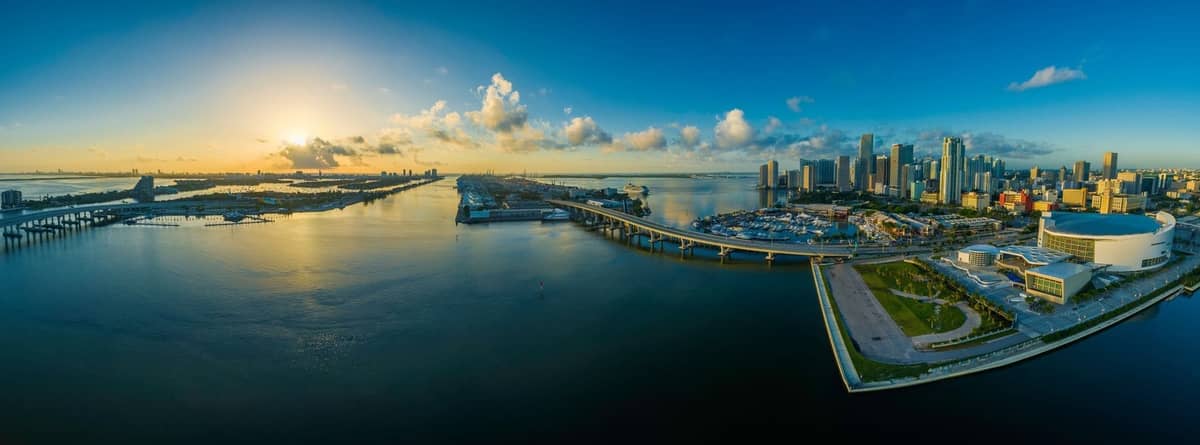
Miami sits at roughly 25.8°N latitude on the southeastern tip of Florida, sandwiched between Biscayne Bay and the Atlantic Ocean. That geography gives it a tropical monsoon climate (Köppen Am), which is relatively rare in the continental United States. The result: no true winter in the European or northern sense, no temperatures that stay cold for weeks, but also no dry, mild summer either. What you get instead is a pronounced two-season rhythm that every visitor needs to understand before packing.
Annual averages tell part of the story: an average high around 83°F (28°C), an average low around 70°F (21°C), and roughly 61.9 inches (1,570 mm) of rain per year, most of it falling between May and October. Miami also logs over 2,900 hours of sunshine annually, which partly explains why the rainy season still feels livable — storms tend to hit hard in the afternoon and clear by evening, leaving plenty of morning sunshine. That said, the humidity during summer months is intense and should not be underestimated.
ℹ️ Good to know
Miami Beach and the barrier island communities experience slightly different conditions than the mainland due to ocean breezes. Sea breezes keep coastal areas a degree or two cooler in summer and slightly warmer on cool winter nights. If Miami Beach weather is your primary concern, it tracks closely with city figures but with noticeably better airflow.
Month-by-Month Weather Breakdown
Here is how each month actually plays out, using 1991–2020 NOAA climate normals for Miami International Airport as the baseline. These are averages, not forecasts — any given day can vary considerably.
- January Coolest month of the year. Average high around 76°F (24°C), average low around 60°F (16°C). Occasional cold fronts can push overnight lows into the mid-40s°F (7–8°C) for a night or two. Pack a light jacket for evenings. Sea temperature near 74°F (23°C).
- February Similar to January with gradual warming. Average high near 78°F (26°C). The all-time record low of 27°F (-2.8°C) was set on February 3, 1917 — a genuine outlier, but it proves the cold-snap potential. Still very dry and pleasant overall.
- March Spring begins in earnest. Highs climb toward 79–80°F (26–27°C). Humidity remains manageable. Sea temperature rises to around 76°F (24°C) and swimming becomes comfortable for most people. This is when spring break crowds arrive in force.
- April Warm and increasingly humid. Average highs near 83°F (28°C). Rainfall starts to tick up but the dry season technically holds through late April. A genuinely pleasant month with fewer tourists than March.
- May The transition month. Afternoon thunderstorms begin appearing with regularity from around May 15 onward, which is when the National Weather Service officially marks the start of the rainy season. Highs around 86°F (30°C). Sea near 81°F (27°C).
- June Full rainy season, full heat. Average highs reach 89–90°F (32°C). Expect daily storms, usually arriving between 2–5 PM. Hurricane season begins June 1. Despite the heat, early mornings on the beach can still be excellent.
- July The hottest month by average temperature, around 82–83°F (28°C) mean. Humidity is at its peak. Sea temperatures hit around 86°F (30°C). Daily thunderstorm probability is at its highest — roughly 60–70% on any given afternoon.
- August Essentially the same as July. Peak hurricane risk begins. Thunderstorm frequency remains very high. Crowds thin out from their spring-break peaks, so hotel rates can drop despite the heat. Not ideal for beach-only trips.
- September Still hot and humid with continued hurricane risk. October is statistically the wettest month, but September is close. Average highs around 89°F (32°C). Sea temperature remains near 86°F (30°C).
- October The wettest month, averaging around 9.2 inches (234 mm) of rain. Hurricane risk remains real through late October. By the last week of October, some years see the first hints of dry-season air arriving. Highs around 85°F (29°C).
- November A transition month in the other direction. Rainfall drops sharply, humidity falls, and temperatures ease to average highs around 80°F (27°C). By mid-November, Miami weather starts resembling something genuinely comfortable. Hurricane season technically continues until November 30.
- December The dry season is firmly established. Average highs around 76–77°F (24–25°C), lows in the low 60s°F (16–17°C). The holiday season brings significant tourist crowds, especially between Christmas and New Year's. Sea temperature around 75°F (24°C).
Dry Season vs. Wet Season: What Actually Changes for Visitors
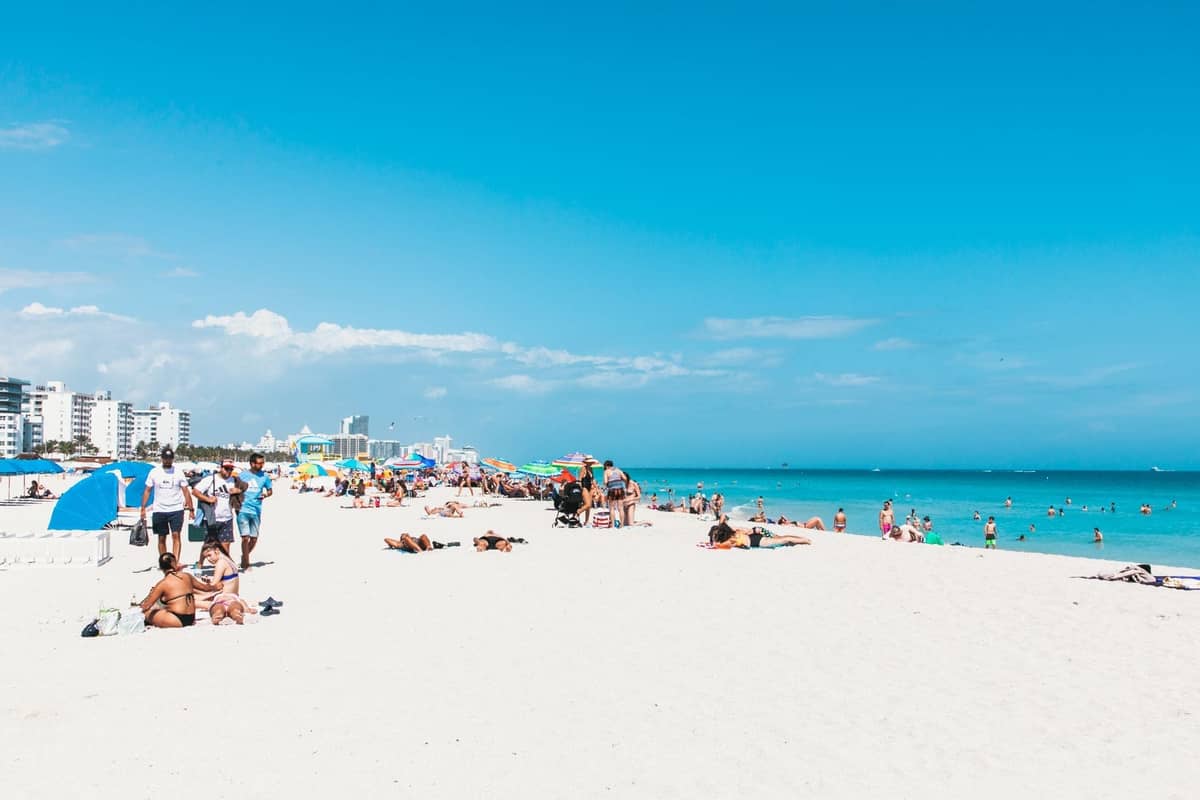
The dry season, roughly November through April, is when most international and domestic tourists visit. Temperatures are warm but not punishing, humidity is low enough to walk around comfortably, and rain is genuinely rare. This is the season when outdoor dining, beach walks at sunset, and multi-hour sightseeing days feel effortless. It is also when prices peak and accommodation books up months in advance, especially around Art Basel in early December and the winter holiday period.
The wet season, May through October, is not the washout that some travel sites suggest, but it does require a different approach. Storms typically build from the southwest during the afternoon and can drop several inches of rain in under an hour before clearing by early evening. The smart strategy: schedule outdoor activities for mornings, plan indoor stops for early afternoon, and save dinner reservations for after 7 PM when skies are usually clearer. If that rhythm suits you, you will find summer in Miami surprisingly enjoyable, with fewer crowds and better hotel rates in many neighborhoods.
⚠️ What to skip
Miami averages around 70–80 thunderstorm days per year — more than most U.S. cities. Lightning is a serious hazard. If you are on the beach and hear thunder, get off the sand and away from the water immediately. The National Weather Service Miami office (weather.gov/mfl) issues beach hazard statements that are worth checking on summer mornings.
Hurricane Season: What Travelers Need to Know

The Atlantic hurricane season officially runs from June 1 through November 30, but the statistical peak for South Florida sits between mid-August and mid-October. Miami has been struck by major hurricanes historically, but direct hits are statistically uncommon in any given year. The bigger practical concern for most travelers is not a direct strike but tropical storm conditions: heavy rain, strong winds, and potential flight disruptions. If you are visiting between August and October, travel insurance that covers weather-related cancellations is genuinely worth purchasing.
Monitoring tools matter here. The National Hurricane Center (nhc.noaa.gov) publishes storm tracks and advisories, and the National Weather Service Miami office issues local watches and warnings. If a hurricane watch is issued for Miami-Dade County while you are there, follow local emergency management instructions. Miami-Dade County has a well-developed evacuation zone system — Zone A is the highest-risk coastal zone, and South Beach falls within it.
✨ Pro tip
Book refundable hotel rates if traveling June through October. Many hotels in Miami Beach offer free cancellation up to 48–72 hours in advance. The slightly higher rate for a flexible booking is worthwhile insurance against a storm that develops quickly.
Sea Temperature and Beach Conditions by Season
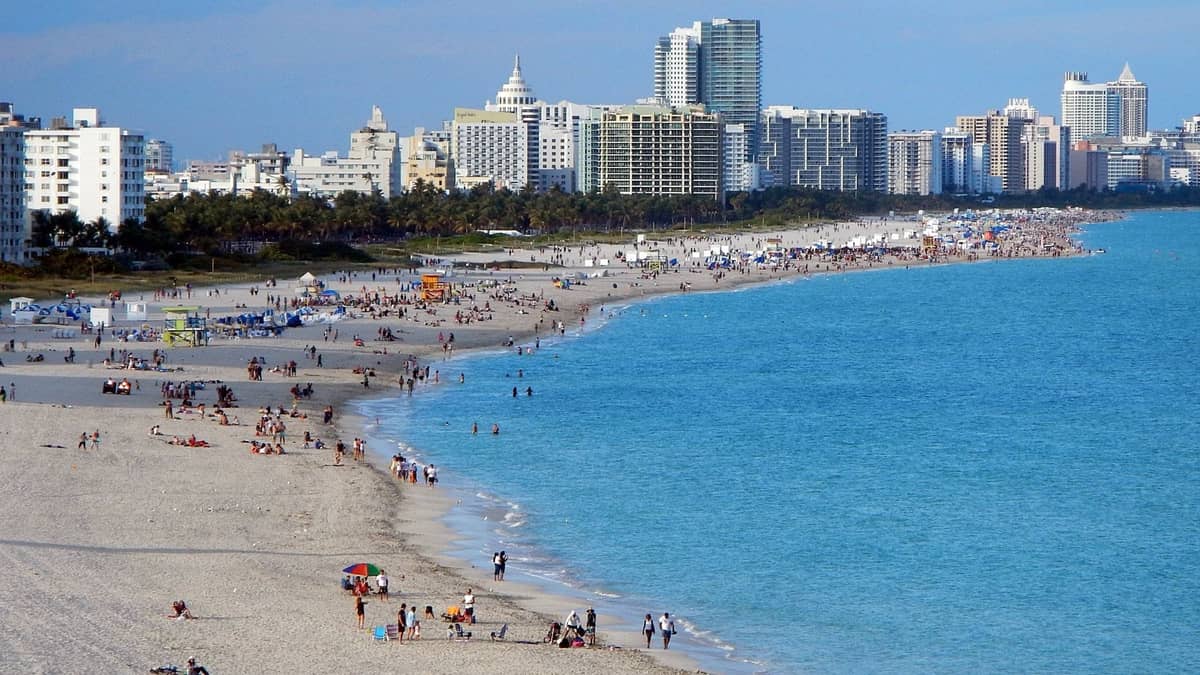
Miami's ocean water stays swimmable year-round, which is a genuine advantage over almost every other major U.S. beach destination. The sea temperature sits around 74–75°F (23–24°C) in January and February, which some swimmers find brisk but most consider acceptable, especially in afternoon sun. By March and April, the water climbs toward 76–78°F (24–25°C) and swimming becomes comfortable for virtually everyone. From June through September, sea temperatures near or exceed 86°F (30°C) — so warm that it barely cools you down. For a full breakdown of the best beaches and their conditions, see the best beaches in Miami guide.
Beach conditions beyond temperature also vary seasonally. Seagrass washing ashore is common in summer months and is a natural phenomenon, not a water quality issue. Jellyfish are occasionally a problem in late spring and early summer, particularly Portuguese man-of-war, which are pushed onto shore by onshore winds. Rip currents can occur year-round and are more likely after storms. Check the Miami-Dade lifeguard flag system — purple flag means dangerous marine life, red means high hazard such as high surf and/or strong currents — before entering the water.
Best and Worst Times to Visit Based on Your Priorities
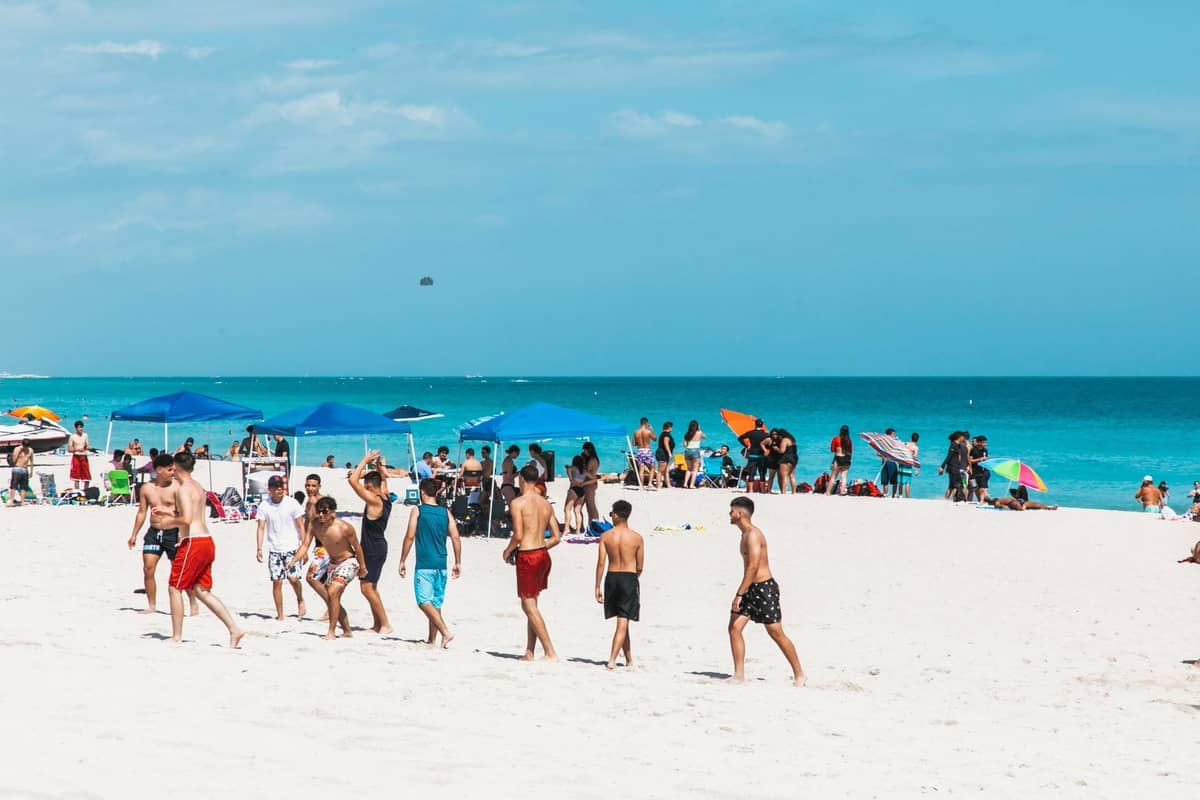
There is no universally best time — it depends entirely on what you are optimizing for. Here is an honest breakdown. For travelers weighing this against the broader trip-planning picture, the best time to visit Miami guide covers event calendars, pricing cycles, and crowd levels in more detail.
- Best for comfort and weather: December through March Low humidity, average highs in the mid-to-upper 70s°F (24–26°C), minimal rain. The tradeoff is peak pricing and crowds, especially in January and February when northern visitors flee cold weather.
- Best for value without sacrificing too much: April and November Both months sit at the edges of peak season. April is warm with manageable humidity and fewer spring-break crowds after mid-month. November is increasingly dry and comfortable with hotel rates still transitioning down from summer.
- Best for budget travelers: June through August Prices drop noticeably in many hotels outside the most premium properties. The heat and storms are real, but if you structure your day around morning activities and afternoon air conditioning, it is workable. See the guide on Miami in summer for specific strategies.
- Worst for unprepared travelers: September and October The most rain, peak hurricane risk, and still very hot. The combination of weather uncertainty and high humidity makes this the hardest stretch for visitors without flexibility. If your trip coincides with a named storm, disruption is likely.
- Best for events: January, February, and December Art Basel happens in early December, Miami Music Week and Ultra Music Festival fall in March, and the Miami International Boat Show typically runs in February. Weather during all of these is generally excellent.
If you are traveling as a couple and prioritizing a romantic, low-stress experience, the dry season is the obvious choice. The Miami for couples guide covers the best neighborhoods and experiences for that kind of trip, many of which are best enjoyed in the cooler months when outdoor dining and waterfront walks are at their most pleasant.
Packing Advice for Each Season
Miami's weather rewards light packing but punishes the underprepared. Here is what actually matters by season.
- November through February (Dry Season) Light clothing for days, a medium-weight jacket or sweater for evenings. Cold fronts can drop temperatures into the 50s°F (10–15°C) overnight. A compact umbrella does not hurt — even the dry season gets occasional rain. Layers are more useful than heavy coats.
- March through May (Spring Transition) Light summer clothing works well. A packable rain jacket becomes useful by late April. Sunscreen is essential — UV index in Miami is high year-round, but spring sun can be deceptively intense. Sea temperatures are warm enough that swimmers can leave without a wetsuit.
- June through October (Wet Season) Breathable, moisture-wicking fabrics are a practical choice rather than a luxury. A compact rain jacket or a packable poncho is genuinely useful. Sandals or quick-dry shoes for afternoons. Sunscreen with high SPF — the sun between storms is fierce. Check the weather forecast each morning and have a flexible afternoon plan.
💡 Local tip
Miami's UV index regularly reaches 11 or above in summer, which is classified as extreme. SPF 50 sunscreen, reapplied every 90 minutes, is not overkill — it is practical. Hats and UV-protective rash guards are common among locals who spend significant time outdoors.
One common mistake: travelers visiting during a cold front in January assume Miami's outdoor scene shuts down. It does not. Locals and long-term visitors simply add a layer. The outdoor terraces at Brickell restaurants and the open-air walkways of Wynwood are still lively on cool evenings. If anything, the slight chill makes the outdoor art district even more walkable.
FAQ
What is the weather like in Miami in February?
February is one of Miami's most pleasant months. Average highs sit around 78°F (26°C) with lows near 61°F (16°C). Rainfall is minimal and humidity is low. Cold fronts can occasionally push overnight lows into the upper 40s°F (8–9°C), so a light jacket for evenings is worth packing. Sea temperature is around 74–75°F (23–24°C) — swimmable, though some people find it cool. It is peak tourist season, so hotel rates are elevated and popular spots are crowded.
What is the weather like in Miami in March?
March marks the transition into spring. Average highs reach around 79–80°F (26–27°C) and humidity remains manageable. It is still technically the dry season, though a few afternoon showers become possible toward late March. Spring break brings large crowds, particularly to South Beach. Sea temperature climbs toward 76°F (24°C) and beach swimming is comfortable. Weather-wise it is excellent; crowd-wise, expect the busiest weeks of the year.
Does it rain a lot in Miami?
Yes and no — it depends entirely on the season. Miami receives about 61.9 inches (1,570 mm) of rain annually, but roughly 70% of that falls between May and October. During the dry season (November through April), rain is relatively rare. During the wet season, expect heavy afternoon thunderstorms most days, typically between 2 PM and 6 PM. Mornings are usually sunny and clear even during the wettest months.
Is Miami safe to visit during hurricane season?
Traveling to Miami during hurricane season (June 1 through November 30) is common, and most trips go off without disruption. The risk is real but statistically low in any given week. The key precautions are: purchase travel insurance that covers weather cancellations, book refundable hotel rates, monitor the National Hurricane Center (nhc.noaa.gov) as your trip approaches, and have a plan if conditions change. The highest-risk period is August through October.
What is Miami's weather like in summer compared to winter?
The contrast is significant. Summer (June–August) brings average highs around 89–91°F (32–33°C), oppressive humidity, daily afternoon thunderstorms, and sea temperatures near 86°F (30°C). Winter (December–February) brings average highs of 76–78°F (24–26°C), low humidity, minimal rain, and sea temperatures around 74–75°F (23–24°C). For pure comfort and ease of sightseeing, winter wins decisively. Summer has compensations — lower hotel prices in some areas, fewer crowds at attractions, and genuinely excellent morning beach conditions — but it requires more planning.