Miami in Winter (December–February): What to Expect
Miami's winter months are the city's peak season for good reason: warm, dry days, minimal humidity, and a packed events calendar. Here's everything you need to know about visiting from December through February, from realistic weather expectations to crowd levels and money-saving tips.
Plan and book this trip
Tools from our partner Travelpayouts help you compare flights and hotels. If you book through them, we may earn a commission at no extra cost to you.
Flights
Hotels map
TL;DR
- December through February is Miami's dry season: daytime highs average 24–26°C (75–78°F) with relatively low humidity and about 7–8 hours of sunshine daily.
- Water temperatures stay around 24–26°C (75–79°F), making beach days genuinely enjoyable — not just tolerable.
- This is peak tourist season, so hotel rates and crowds are at their highest, especially around Art Basel (early December), Christmas, and New Year.
- Book accommodation early and check the best time to visit Miami guide if you have flexibility on dates.
- Pack light layers: evenings after a cold front can dip to the low 60s°F (around 16–17°C), which surprises visitors expecting constant heat.
Winter Weather in Miami: Month-by-Month Breakdown
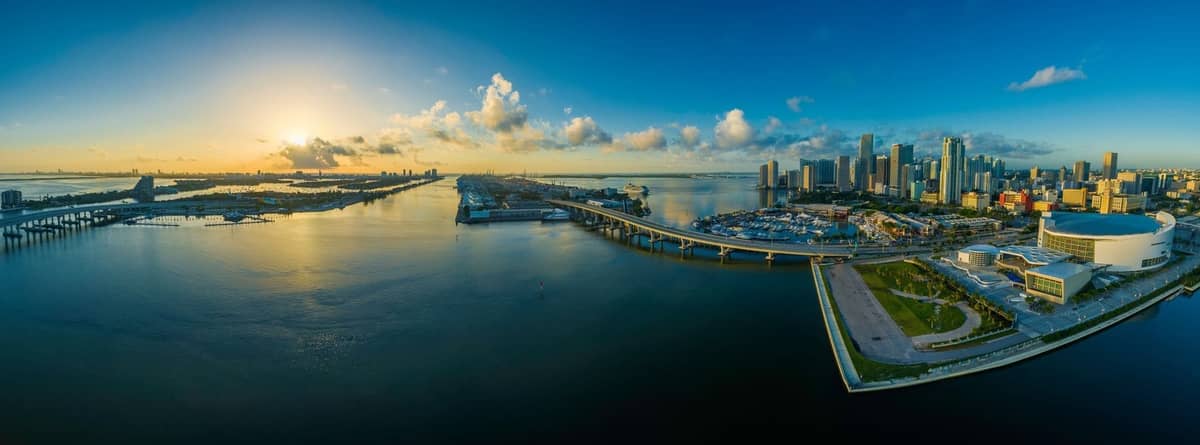
Miami sits at roughly 25.76°N latitude with a tropical monsoon climate, and winter is firmly in its dry season. From December through February, the city sees noticeably lower rainfall, significantly less humidity, and reliably sunny skies compared to the swampy summer months. That said, winter in Miami is not uniform — there are real differences between December, January, and February worth knowing before you pack.
- December Average high around 24°C (75°F), low around 17–19°C (63–66°F). Rainfall is approximately 43–55 mm over 6–9 rain days, making it one of the driest months of the year. Art Basel fills South Beach hotels in early December; the second half of the month brings holiday crowds.
- January The coldest month on average, with highs around 24–25°C (76°F) and lows around 17°C (63°F). January also has the fewest muggy days of the year — humidity is at its lowest. Cold fronts can push lows briefly into the 50s°F (10–13°C) for a day or two, but this passes quickly.
- February Highs climb back toward 25–26°C (77–78°F) and lows hover around 19°C (66°F). February is statistically the clearest month, with clear or partly cloudy skies about 70% of the time. Rainfall is around 57 mm. Ocean water reaches its annual coolest point at roughly 24°C (75°F) — still swimmable for most visitors.
💡 Local tip
Pack at least one light jacket or long-sleeved layer. After a cold front passes through — which happens several times each winter — temperatures can drop sharply in the evenings, and the cooler, drier air can linger for two to three days. Floridians consider 60°F (16°C) quite cold; restaurants may even crank the AC regardless, so a layer is useful indoors too.
Is Winter Actually Good for the Beach?
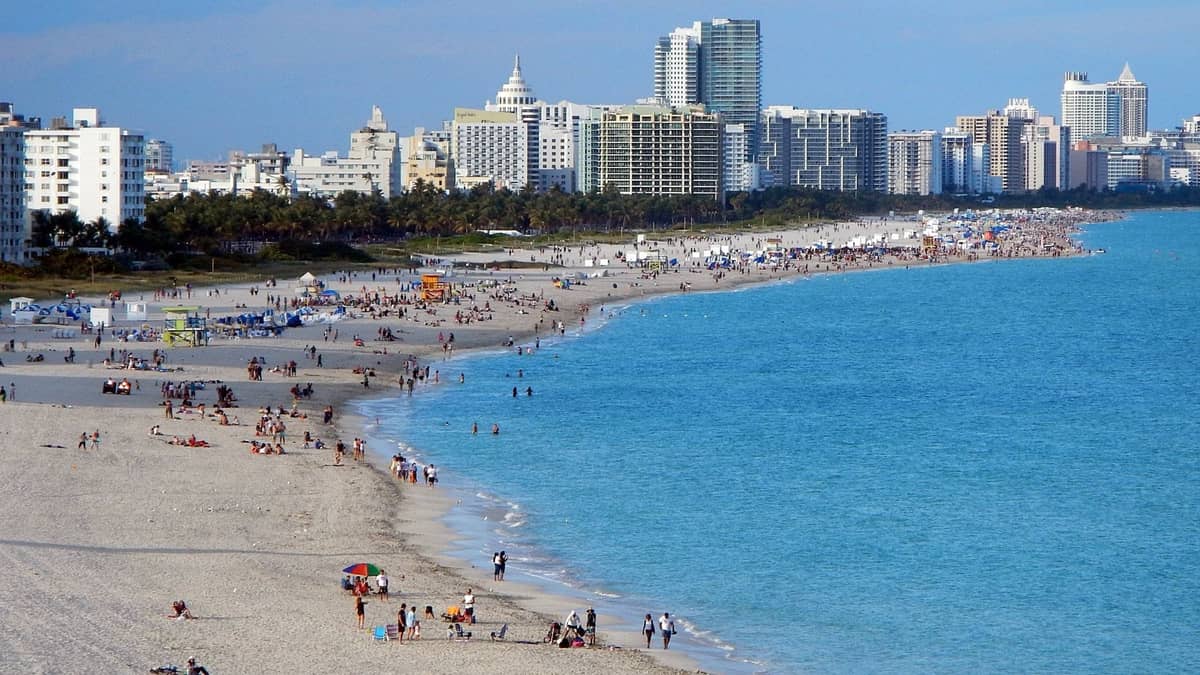
One of the most persistent myths about Miami in winter is that the beach isn't worth it. This is largely wrong. With air temperatures in the mid-20s Celsius and ocean temperatures around 24–26°C (75–79°F), conditions are comfortable for swimming, sunbathing, and water sports for the majority of visitors. You won't find the blazing heat of August, but that's often a feature rather than a flaw: you can actually spend the whole day outside without needing to retreat by noon.
The beaches that work best in winter are the ones with easy access to indoor options for those brief cloudy spells. Lummus Park Beach in South Beach is a solid choice — wide sand, close to Ocean Drive, and sheltered from the north wind by the hotel corridor. For something less crowded, Crandon Park Beach on Key Biscayne draws far fewer tourists even in peak season and offers calmer, clearer water.
⚠️ What to skip
Ocean water temperature drops to its annual low in February — around 24–25°C (75–77°F). For most visitors from northern Europe or Canada, that's perfectly fine. For locals and visitors accustomed to warmer waters, it can feel distinctly cool. If cold water sensitivity is a concern, plan water activities for December or early January when the ocean is slightly warmer.
Crowds, Costs, and Peak Periods to Know About
Winter is Miami's high season, full stop. The city draws enormous numbers of visitors escaping colder climates, and the tourist infrastructure prices accordingly. Hotel rates in South Beach during Art Basel (early December) and the Christmas-to-New-Year period regularly reach two to three times what you'd pay in September or October. The good news is that January, outside of Martin Luther King Jr. weekend, offers a brief respite: prices dip slightly and the most intense crowds thin out before Presidents' Day weekend in February brings another surge.
- Art Basel Miami Beach (early December) One of the world's premier art fairs transforms Miami Beach for about a week. Hotels book out months in advance and prices spike across the city, not just near the convention center. If you're coming for Art Basel, book at least 3–4 months ahead.
- Christmas and New Year (Dec 23–Jan 2) Peak of the peak. Families, domestic travelers, and international visitors converge. Ocean Drive and South Beach bars can be extremely crowded on New Year's Eve. Expect premium pricing for everything from parking to restaurant reservations.
- Martin Luther King Jr. Weekend (mid-January) A major domestic holiday weekend that brings significant crowds to South Beach specifically. Book accommodation early if your dates overlap.
- Presidents' Day Weekend (mid-February) Another domestic holiday surge. Winter Music Conference events sometimes begin building in this period, overlapping with the general uptick in late-February visitors.
If keeping costs down matters, visiting Miami on a budget in winter requires strategic timing. The window between January 3 and Martin Luther King Jr. weekend is genuinely the most affordable stretch of the winter season. Staying in neighborhoods away from South Beach — Brickell, Wynwood, or Midtown — also cuts accommodation costs noticeably while keeping you close to the action.
Major Events and Things to Do in Winter

Beyond beach time, Miami's winter calendar is dense. The dry weather and comfortable temperatures mean outdoor events are reliable, and the cultural scene shifts into high gear with the influx of visitors and the art world's annual convergence on the city.
Art Basel dominates early December, but the concurrent satellite fairs spread across the Design District, Wynwood, and Miami Beach are often more accessible and equally interesting. The Miami Art Basel guide covers what to prioritize and how to navigate the week without overspending. Outside of Art Basel, the Wynwood Walls are at their best in winter — the cooler temperatures make walking the outdoor murals genuinely pleasant, and the neighborhood's bars and galleries stay open late.
The Miami International Boat Show typically falls in mid-February over Presidents’ Day weekend and draws serious crowds to the Miami Beach Convention Center and surrounding marinas. If nautical tourism interests you, this aligns well with boat and yacht rental options in Miami that operate year-round. Beyond events, winter is the right season to explore the Everglades — cooler, drier weather suppresses mosquito populations dramatically, and wildlife is more concentrated around water sources.
Getting Around Miami in Winter
Miami International Airport (MIA) sits about 7–8 miles (11–13 km) northwest of Downtown. The Metrorail Orange Line connects to the city center via the Miami Intermodal Center, and fares are in the low-dollar range — check current pricing with Miami-Dade Transit before travel, as fares are updated periodically. Uber and Lyft both operate at MIA from designated pick-up zones. See the Miami airport guide for a detailed breakdown of ground transport options and what to expect at arrival.
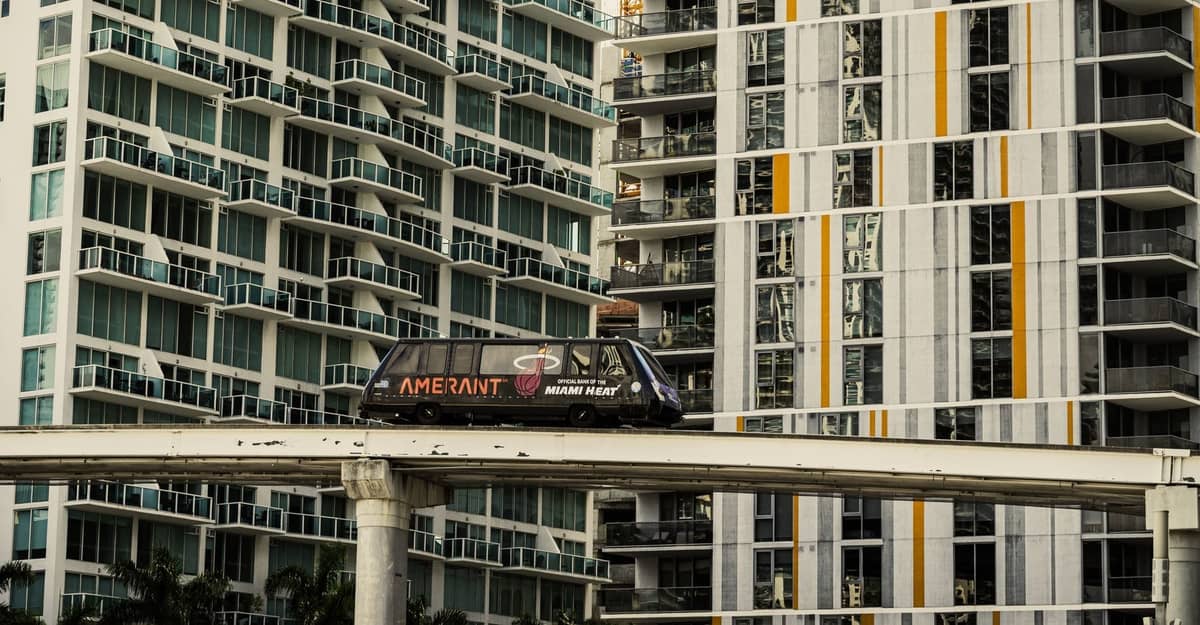
Within the city, the free Metromover loops are useful for downtown and Brickell, but reaching South Beach requires a bus or rideshare. Traffic on the causeways connecting Miami Beach to the mainland — particularly the MacArthur and Julia Tuttle causeways — gets backed up heavily on winter weekends. If you're staying on the beach, factor in 20–40 minutes of potential causeway delay when scheduling dinners or evening activities on the mainland. For a full picture of transport options, the guide to getting around Miami covers everything from the Metrorail to bike share.
Where to Stay: Neighborhoods in Winter Context
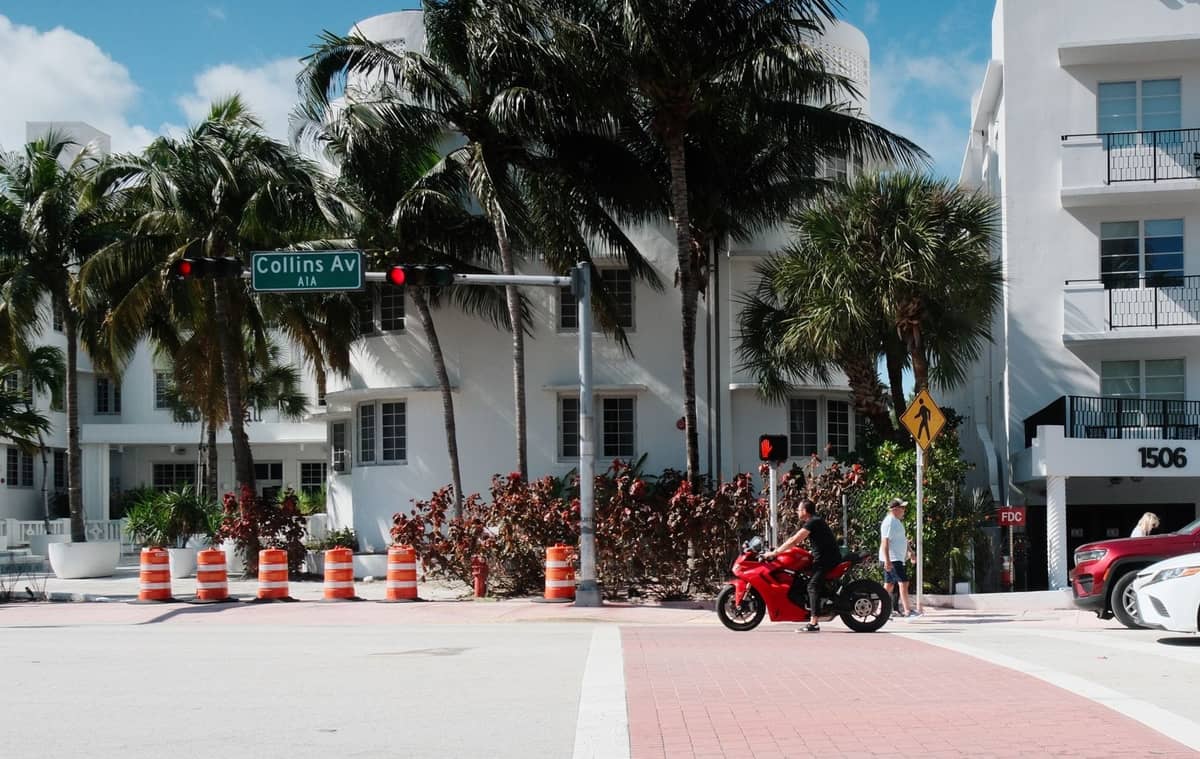
South Beach is the default choice for most first-time visitors, and it makes sense: you're close to the ocean, the Art Deco Historic District, and the main restaurant and bar strip. The downside in winter is that it's also the most expensive and loudest. Collins Avenue hotels roughly between 10th and 20th streets are well-positioned but book out fast for peak dates.
For a quieter winter stay, Coconut Grove or Coral Gables offer a noticeably more relaxed pace, lower hotel rates, and easy access to some of the city's best restaurants. Brickell works well for business travelers or anyone who wants walkable dining and nightlife without the beach-town chaos. The comprehensive where to stay in Miami guide breaks down each neighborhood's trade-offs in detail.
✨ Pro tip
If you're visiting for Art Basel or around New Year, staying on the mainland (Brickell, Downtown, or Wynwood) rather than on Miami Beach can often save you 20–50% on accommodation while putting you closer to many of the satellite fairs and restaurant hotspots. You'll Uber or take the causeway bus to the beach when you want it.
What to Pack for a Miami Winter Trip
Miami's winter dress code is light but layered. The instinct to pack only summer clothes is understandable but slightly off. Most days, shorts and a t-shirt work fine until the evening. After sunset, especially after a cold front, temperatures can drop into the low 60s°F (around 16–17°C), which is genuinely chilly when you're used to the daytime warmth.
- Lightweight linen or cotton clothing for daytime: you'll be warm enough without heavy fabrics
- A light jacket, zip-up hoodie, or medium-weight cardigan for evenings and cold-front days
- Reef-safe sunscreen: the winter sun is still strong, particularly between 10am and 3pm
- Comfortable walking shoes in addition to sandals: Wynwood, Little Havana, and Coral Gables involve significant walking on uneven surfaces
- A compact umbrella or packable rain layer: rain events are brief but can be heavy even in the dry season
- US plug adapters if coming from outside North America (Type A/B, 120V, 60Hz)
FAQ
Is Miami warm enough to swim in December and January?
Yes, for most visitors. Ocean temperatures in December sit around 25–26°C (77–79°F) and drop slightly to around 24–25°C (75–77°F) in February. Air temperatures in the mid-20s Celsius make beach days comfortable. Whether the water feels warm enough depends on your baseline — visitors from northern Europe and Canada typically find it very pleasant; those accustomed to Caribbean waters above 28°C may find it noticeably cool.
How crowded is Miami in winter?
Very crowded during Art Basel (early December), Christmas to New Year, and US federal holiday weekends. The quietest stretch of winter is roughly January 3 through Martin Luther King Jr. weekend (third Monday of January). If you want manageable crowds and lower prices, that two-week window is the best bet within the winter season.
Does it rain much in Miami in December, January, and February?
Much less than in summer. December is statistically Miami's driest month, averaging around 40–55 mm of rainfall over 6–9 rain days. January and February are also relatively dry, with similarly low rainfall compared to the wet summer months. When rain does occur, it tends to be short and intense rather than the all-day drizzle pattern common in northern climates. It rarely disrupts a full day's plans.
What should I know about hotel prices in winter Miami?
Expect to pay peak-season rates from mid-December through mid-February, with the highest prices around Art Basel, Christmas, and New Year. South Beach hotels can cost two to three times their off-season rates during these periods. Booking 2–3 months ahead for December and January is strongly advised. Staying in Brickell, Wynwood, or Downtown typically offers better value for the same standard of property.
Are there things to do in Miami in winter beyond the beach?
Absolutely. Art Basel and its satellite fairs run in early December. The Everglades are at their best in winter for wildlife spotting and hiking — dry conditions and fewer mosquitoes make day trips far more enjoyable than in summer. Little Havana, Wynwood, Coral Gables, and the Design District all offer full-day itineraries that work regardless of beach weather. The Miami International Boat Show takes place in mid-February for anyone interested in the nautical side of the city.