Wynwood Walls: Inside Miami's Outdoor Street Art Museum
Wynwood Walls is Miami's original outdoor street art museum, featuring 100+ artists from 21 countries inside a former warehouse district. Founded in 2009, it anchors one of the most visited arts neighborhoods in the United States.
Quick Facts
- Location
- 2516 NW 2nd Ave, Miami, FL 33127 (Wynwood Arts District)
- Getting There
- ride-share or Metrobus to nearby stops; paid parking at Wynwood Garage (321 NW 26th St)
- Time Needed
- 1.5 to 2.5 hours
- Cost
- From USD $12 per person; check thewynwoodwalls.com for current prices
- Best for
- Art lovers, photographers, first-time Miami visitors
- Official website
- thewynwoodwalls.com
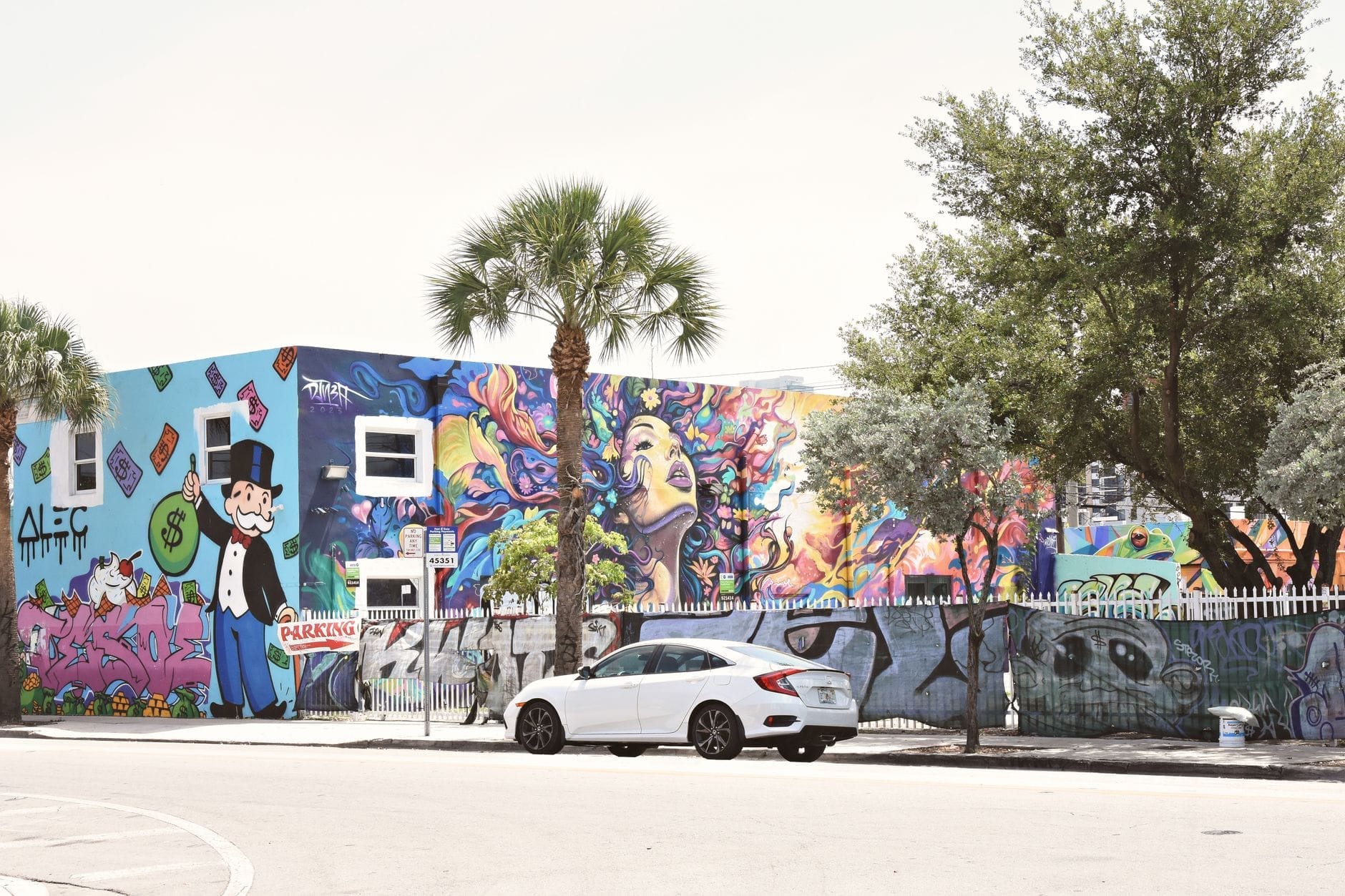
What Wynwood Walls Actually Is
Wynwood Walls is a ticketed outdoor museum at 2516 NW 2nd Ave, Miami, FL 33127, set within a compound of former industrial warehouses in the Wynwood Arts District. Unlike a conventional gallery, the art here lives on the exterior walls of buildings, covering more than 80,000 square feet of painted surface. When it was founded in 2009, the concept was simple but unusual: invite world-class street artists to treat warehouse walls as enormous canvases. The results now rotate regularly, meaning the installation you see today will not be exactly what the next visitor photographs.
The program has hosted hundreds of artists representing more than 20 countries, spanning styles that range from photorealistic portraiture to abstract geometric work to politically charged muralism. Calling it a collection of graffiti undersells it. The scale and curatorial intent here place it closer to a curated museum show than a tagged underpass, and the shift from free-entry destination to paid museum in recent years reflects exactly that positioning.
ℹ️ Good to know
Wynwood Walls is open daily from 10 AM, with doors closing at 7 PM on most days (entry stops 10 minutes before closing). Hours can change seasonally or for private events, so confirm at thewynwoodwalls.com/info before you go.
The Experience at Different Times of Day
Arriving shortly after opening at 10:30 AM on a weekday gives you the closest thing to a quiet visit. The compound fills with warm morning light from the east, and the painted surfaces reflect colors that pop differently than they will by midday. Sounds are minimal: distant traffic on NW 2nd Ave, the occasional click of a camera. The smell of the surrounding neighborhood at this hour is coffee from nearby cafés, which start pulling in regulars around the same time.
By 1 PM on weekends, particularly between November and April when Miami's tourist season peaks, the compound gets crowded. Groups queue for photographs in front of specific walls, and conversation mixes English, Spanish, Portuguese, and French in roughly equal measure. Navigating the space requires patience if you want unobstructed shots. The artwork does not suffer from the crowd, but your ability to stand back and absorb a full wall without someone walking into frame absolutely does.
Late afternoon light, roughly 4 to 5 PM, is the most dramatic for photography. The sun drops low enough to rake across the textured surfaces, picking up the dimensionality of layers of paint. This is also when the adjacent streets of Wynwood begin activating: the galleries and shops along NW 2nd Ave open up, and the neighborhood shifts from a daytime art destination toward its evening bar and restaurant identity.
💡 Local tip
For the best photography conditions and manageable crowds, arrive Tuesday through Thursday between 10:30 AM and noon. Weekend afternoons between December and March are the busiest and least comfortable for extended viewing.
Tickets & tours
Hand-picked options from our booking partner. Prices are indicative; availability and final rates are confirmed when you complete your booking.
Wynwood walls and street art tour
From 25 €Instant confirmationFree cancellationWynwood graffiti golf cart tour
From 38 €Instant confirmationFree cancellationBest of Wynwood street art walking tour
From 33 €Instant confirmationFree cancellationWynwood Art District's history tour with sweets tasting
From 56 €Instant confirmationFree cancellation
History and Cultural Context
Wynwood's transformation from a struggling warehouse district into an internationally recognized arts neighborhood is one of the more documented case studies in American urban regeneration. The Wynwood Walls project, launched in 2009 by developer Tony Goldman, is widely credited as the catalyst. Goldman's idea was to commission large-scale works from established street artists on properties he owned in the area, creating an outdoor gallery that would draw foot traffic and establish a cultural identity for the district.
The broader Wynwood Arts District now surrounds the Walls with galleries, studios, independent retailers, and a restaurant scene that has grown substantially since the early 2010s. The neighborhood's success is real, though it has also brought gentrification pressures that have displaced some of the working-class Puerto Rican and Latin American communities who lived there for decades. That tension is part of the honest context of visiting Wynwood: the art you see exists within a neighborhood story that is still unresolved.
If you want to understand the full scope of how Wynwood became what it is today, the Wynwood neighborhood guide covers the district's development, key venues, and practical navigation in more depth.
Walking Through the Complex
Entry is through a ticketed gate on NW 2nd Ave. After collecting your ticket, you step into an open-air compound where the walls rise on all sides. The layout is irregular, following the footprint of the original warehouse buildings, so there is no prescribed route. Most visitors move counterclockwise through the space, but the configuration allows you to double back and approach walls from different angles.
Individual murals range from intimate panels covering perhaps 20 feet of wall to sprawling compositions that span entire building facades several stories high. The surface textures vary as well: some sections show crisp spray-work with clean gradients, others reveal thick impasto-style application where pigment has built up over successive layers and previous works. Looking closely at lower sections, you can often see traces of earlier murals beneath the current one, ghost images in older paint.
Beyond the walls themselves, the compound includes a shop and café space where the interiors continue the artistic programming. The floors and ceilings of these spaces are treated as extensions of the outdoor canvases, so even a stop for water becomes part of the experience. Accessibility within the compound is well considered, with wide pathways and lowered service counters; the official site also details provisions for blind and visually impaired visitors, which is worth checking in advance if applicable.
💡 Local tip
Wear comfortable shoes with flat soles. The ground surface is uneven in places, and you will be stopping frequently to look up at tall walls. A wide-angle lens or the ultra-wide mode on a phone camera is genuinely useful here.
The Surrounding Wynwood District
Spending only the time inside Wynwood Walls and then leaving misses the broader point of the neighborhood. The streets immediately surrounding the complex are dense with other murals, many created by artists who have also worked inside the Walls. NW 2nd Ave between 20th and 29th Streets functions as an informal open-air gallery of its own, and exploring it on foot before or after your ticketed visit adds substantial value to the trip at no additional cost.
The Museum of Graffiti is located a few blocks away and takes a more historical and academic approach to street art's roots, which complements what Wynwood Walls shows you about the contemporary end of the spectrum.
For a broader look at what Wynwood offers beyond street art, including its gallery scene, food options, and nightlife strip, the Wynwood neighborhood overview covers the full picture.
Getting There and Practical Details
Wynwood is north of Downtown Miami and is not served directly by the Metrorail or Metromover. The most practical public transit option is a Metrobus route from Downtown or Brickell, but route and stop details should be confirmed on the Miami-Dade Transit trip planner before you travel, as service patterns change. Most visitors arriving from South Beach or Brickell use ride-share, which drops off cleanly on NW 2nd Ave directly outside the entrance.
Driving is possible, and the Wynwood Garage at 321 NW 26th St is the most frequently referenced parking option near the Walls. Street parking exists in the surrounding blocks but fills early on weekends. During Art Basel Miami Beach in December or Miami Music Week in March, expect the entire neighborhood to be at or near capacity throughout the day.
Miami's dry season runs November through April, which coincides with peak tourism. If you visit during summer months, afternoon thunderstorms are common. The outdoor nature of Wynwood Walls means heavy rain can significantly affect the experience. Check the Miami weather guide for seasonal conditions before planning your visit.
⚠️ What to skip
During peak periods such as Art Basel (December) or major events, Wynwood Walls can sell out or have reduced entry windows. Book tickets in advance through thewynwoodwalls.com rather than arriving and hoping to walk in.
Who Might Want to Skip This
Wynwood Walls is widely covered in travel media, and the combination of name recognition plus the fact that it now charges for entry means expectations sometimes run ahead of the reality. If you have already spent time in cities with large-scale public street art programs, such as Berlin, Melbourne, or Los Angeles, the novelty factor here is lower. The compound is also relatively compact: on a quiet day you can see everything in under an hour, which makes the entry price feel steep to visitors expecting a full afternoon.
Visitors primarily interested in Miami's beaches, nightlife, or food scene may find Wynwood Walls only peripherally relevant to their trip. The neighborhood surrounding the Walls, however, continues to be worth a walk regardless of whether you pay admission, since the free murals on public-facing walls throughout Wynwood cover comparable artistic ground without the ticketed gate.
Insider Tips
- The murals inside the compound are repainted on a rolling cycle, and the Wynwood Walls social media accounts typically announce new installations before they appear on the official site. Checking their Instagram a week before your visit tells you whether a major new work has just gone up.
- Paid admission covers re-entry on the same day. If you visit in the morning, step out to explore the surrounding street murals and nearby galleries on NW 2nd Ave, then return in the late afternoon for the better photographic light.
- The Wynwood Walls compound occasionally hosts ticketed evening events and private events, which may affect general admission access. Confirming your visit date on the official calendar at thewynwoodwalls.com prevents an unnecessary trip.
- The gift shop inside stocks prints, collaborations, and limited merchandise tied to specific installations. If you see something connected to an artist whose work you liked on the walls, it is worth browsing because items sell out and are not always restocked.
- Combine your Wynwood visit with a stop at the Institute of Contemporary Art Miami, located nearby in the Design District, which is free to enter and offers a strong indoor counterpart to the outdoor work you see at the Walls.
Who Is Wynwood Walls For?
- First-time Miami visitors who want to understand the city beyond its beaches
- Photography enthusiasts and visual artists looking for large-scale, high-quality subjects
- Travelers interested in contemporary art who prefer accessible, non-institutional settings
- Groups with mixed interests, since the surrounding neighborhood offers food, bars, and retail alongside the art
- Visitors during Art Basel Miami Beach who want to engage with Miami's broader art ecosystem
Nearby Attractions
Other things to see while in Wynwood:
- Museum of Graffiti
The Museum of Graffiti in Wynwood is the world's first museum dedicated exclusively to graffiti as an art form. Housed in the heart of Miami's street art district, it combines indoor exhibitions tracing five decades of the movement with multiple commissioned exterior murals, a fine art gallery, and a curated gift shop.
- Wynwood Marketplace
The Wynwood Marketplace is a 75,000-square-foot open-air venue in Miami's Wynwood arts district, hosting weekly events Thursday through Sunday. Part street market, part bar scene, part live entertainment space, it draws a wide mix of locals and visitors looking for something less polished than a nightclub and more social than a gallery.