Museum of Graffiti: Where Street Art Gets Its Own Institution
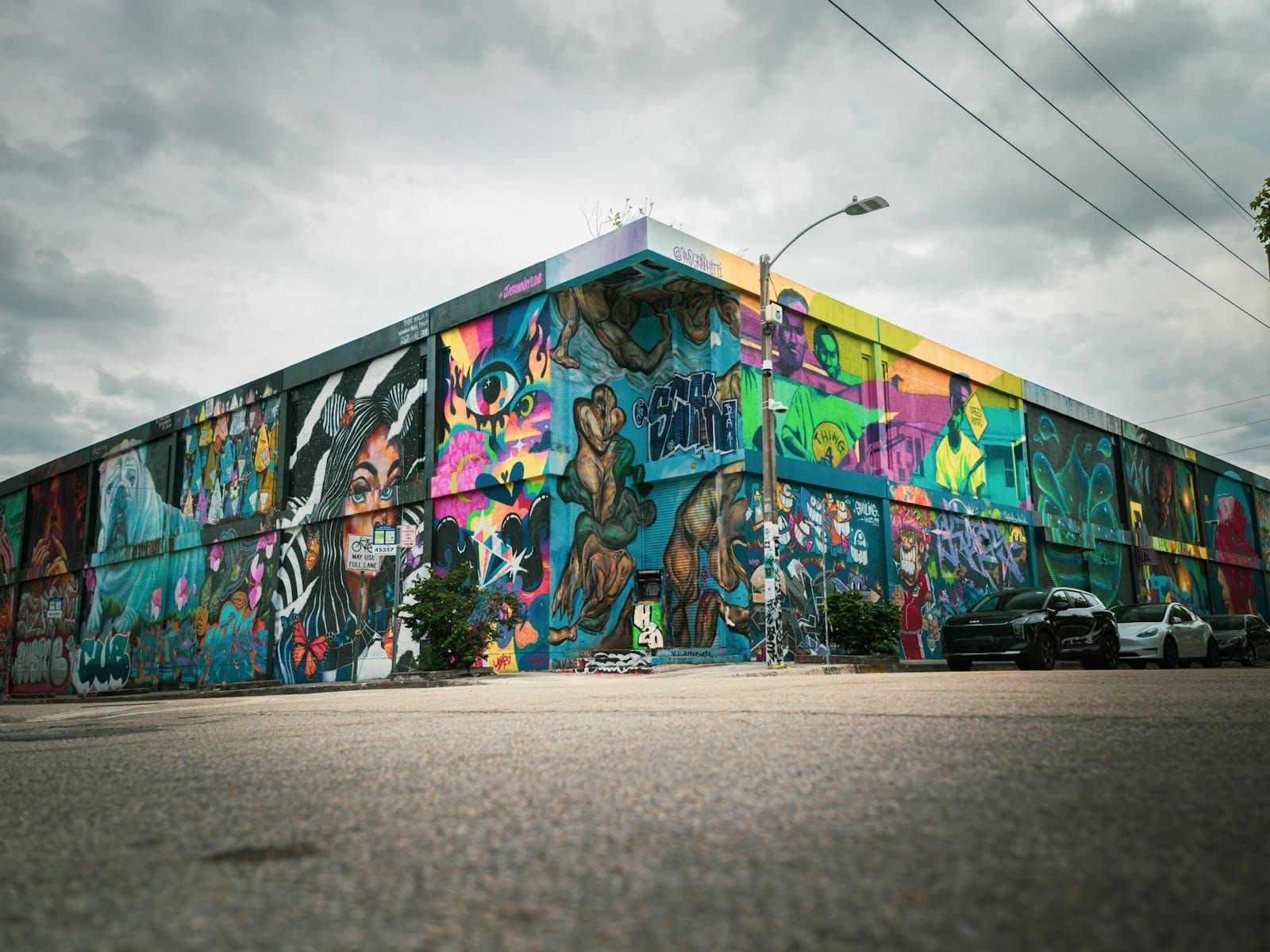
The Museum of Graffiti in Wynwood is the world's first museum dedicated exclusively to graffiti as an art form. Housed in the heart of Miami's street art district, it combines indoor exhibitions tracing five decades of the movement with multiple commissioned exterior murals, a fine art gallery, and a curated gift shop.
Quick Facts
- Location
- 276 NW 26th Street, Wynwood, Miami, FL 33127
- Getting There
- No Metrorail stop in Wynwood; best reached by rideshare, Metrobus, or on foot from nearby neighborhoods
- Time Needed
- about 1 to 2 hours including exterior murals
- Cost
- $16 general admission; children 13 and under free. Verify current prices at museumofgraffiti.com
- Best for
- Art lovers, design enthusiasts, curious travelers, street culture fans
- Official website
- museumofgraffiti.com
What the Museum of Graffiti Actually Is
The Museum of Graffiti opened in Wynwood as the first museum in the world dedicated exclusively to graffiti as an art movement. That claim is worth unpacking, because graffiti has appeared in the context of broader street art or urban culture exhibits at other institutions before. What makes this place distinct is its singular focus: the history, aesthetics, and cultural legacy of graffiti specifically, traced from its origins in the late 1960s and early 1970s through its evolution into commercial design, fashion, advertising, and the gallery world.
It was conceived roughly fifty years after the birth of modern graffiti, which gives the institution a clearer archival purpose than many newer art spaces. The founders approached it less as a gallery space for contemporary art and more as a preservationist institution, one that takes seriously the documentation and contextualization of a movement that many traditional museums once dismissed.
💡 Local tip
Buy tickets online in advance at museumofgraffiti.com to avoid lines, especially on weekends when Wynwood foot traffic is heaviest.
The Physical Experience: Indoor and Outdoor
The museum experience divides into two distinct zones. Inside, the exhibition space presents graffiti's history through original works, archival materials, and contextual displays that trace how the movement developed from the subway walls of New York and Philadelphia into a global visual language. The galleries are compact enough to absorb without fatigue, but dense enough to reward slow looking. You will encounter pieces by foundational figures alongside explanatory context that situates each work within the broader movement.
Outside, large-scale exterior murals wrap the building. These are not decorative fillers between the main event. They are commissioned works executed directly on the museum's exterior walls, functioning as a free outdoor gallery that any passerby on NW 26th Street can access. At street level, the scale of the work becomes physical. Colors hit differently in direct Miami sun than in a photograph. The textures of aerosol over concrete, the hard edges against soft blends, the way letterforms dissolve into abstract fields. These are things you notice standing two feet from a wall that you cannot notice anywhere else.
The museum also includes a fine art gallery with rotating exhibitions and a gift shop stocked with limited-edition merchandise. The gift shop is genuinely curated rather than generic. Prints, books, and objects connected to specific artists and the broader graffiti world make it worth a look before you leave.
Tickets & tours
Hand-picked options from our booking partner. Prices are indicative; availability and final rates are confirmed when you complete your booking.
Wynwood graffiti golf cart tour
From 38 €Instant confirmationFree cancellationEverglades admission ticket with airboat ride and wildlife show
From 24 €Instant confirmationFree cancellationKey West day trip with glass bottom boat ride
From 110 €Instant confirmationFree cancellationEverglades airboat ride with Biscayne Bay boat tour and transportation
From 67 €Instant confirmationFree cancellation
Time of Day and Crowd Patterns
Weekday mornings, particularly Tuesday through Thursday, are the quietest windows. The museum currently opens at 11:00 daily, and the first hour tends to draw small crowds. This matters more for the outdoor murals than the indoor galleries. On weekend afternoons, the surrounding Wynwood blocks become dense with foot traffic from the broader street art corridor, and the museum's exterior becomes a photography backdrop for dozens of visitors simultaneously. If you want space to actually stand and look at the exterior murals without people walking in front of your line of sight, arrive close to opening time on a weekday.
Friday through Sunday hours currently extend to 19:00, which opens up the possibility of visiting in the golden hour. In Miami, the light between 17:30 and sunset is notably warmer and more directional than midday sun, and it changes how exterior murals read visually. Aerosol work with texture and layering looks especially different in low-angle light. If you are visiting primarily for photography, late afternoon on a weekday is the practical ideal.
ℹ️ Good to know
Hours: Monday to Thursday 11:00–18:00, Friday to Sunday 11:00–19:00 (subject to change; check current schedule before visiting). Confirm hours on the official site before visiting, as these can shift for special events.
Historical and Cultural Context
Modern graffiti as a codified movement is generally traced to the late 1960s in New York and Philadelphia, where writers began tagging their names in public spaces and eventually developed elaborate styles and techniques. By the early 1980s, graffiti had attracted the attention of the contemporary art world, with figures like Jean-Michel Basquiat and Keith Haring crossing between street practice and gallery representation. That crossover generated significant tension within graffiti culture itself, a tension between authenticity and commodification that has never fully resolved.
The Museum of Graffiti sits inside that tension rather than pretending it does not exist. Placing graffiti in an institutional museum setting is itself a statement, and the museum's physical location in Wynwood makes the dialogue between street and institution more explicit than it would be elsewhere. Wynwood was transformed over the past two decades from a warehouse district into one of the most photographed street art environments in the world, partly through deliberate commissioning and curation of outdoor murals. The museum is a logical extension of that transformation, though it pursues a different and more historically serious goal.
The broader Wynwood arts ecosystem surrounds the museum. The Wynwood Walls complex is a short walk away, as are dozens of independent galleries and studios. The museum pairs well with a longer afternoon in the neighborhood, but it is also self-contained enough to visit as a single destination.
Practical Walkthrough: Getting There and Around
Wynwood does not have a Metrorail station. The most practical way to reach the Museum of Graffiti from most Miami neighborhoods is by rideshare. From South Beach, expect roughly 20 to 30 minutes depending on traffic. From Brickell or Downtown, the trip is typically around 15 to 25 minutes. Miami-Dade Transit Metrobus routes do serve the Wynwood area, and current route and schedule information is available at miamidade.gov/global/transportation/metrobus.page, though services should be checked before you plan your route.
Street parking exists in Wynwood but competes for space on weekends. If you are driving, arriving before noon improves your chances considerably. The museum is located on NW 26th Street, which is walkable from other Wynwood destinations once you are in the neighborhood.
Wynwood is a compact district and the museum works well as part of a broader arts day. After visiting, you can walk to nearby galleries, the Wynwood Marketplace, or browse the neighborhood's outdoor murals that extend well beyond what the museum's exterior alone can offer. The Wynwood neighborhood guide covers the full walking circuit if you want to plan the surrounding area.
⚠️ What to skip
Wynwood has a parking shortage on Friday and Saturday evenings when the broader nightlife crowd arrives. If you are visiting in that window, rideshare is significantly less stressful than driving.
Photography, Accessibility, and What to Wear
The museum permits photography for personal use throughout the space, and the exterior murals are obviously in full public view. For interior gallery shots, check current policy at the front desk as this can vary by exhibition. For exterior mural photography, a wide-angle lens or a phone camera with an ultrawide setting helps capture full wall compositions. Midday direct sunlight creates harsh shadows on textured work; morning or late afternoon light is more flattering.
On accessibility, neither the official museum website nor major third-party listings provide detailed specifications for step-free access, elevator availability, or accessible restroom configurations. If you have specific mobility or accessibility requirements, contact the museum directly through museumofgraffiti.com before your visit to confirm what the space can accommodate.
Dress practically. Wynwood is an outdoor-heavy neighborhood and you will be on your feet. Miami's heat is significant from roughly May through October, with humidity making temperatures above 85°F feel considerably heavier. Bring water. The museum is air-conditioned indoors, but the exterior mural walk is exposed. In the wet season, brief afternoon thunderstorms are common and arrive quickly; a compact rain layer is worth packing if you are visiting between June and October.
Who Will Get the Most Out of This Museum
This is not an immersive experience or entertainment venue. It is a genuine museum with historical and archival ambitions. Visitors who approach it expecting spectacle comparable to a theme park-style art experience may find it more sober than anticipated. The curatorial voice is serious, and the content rewards attention rather than casual scanning.
Travelers with an existing interest in street art, graphic design, typography, or urban culture history will find the most to engage with. It also works well for anyone who wants to understand Wynwood and Miami's art scene beyond the purely visual surface. For families, the free admission for children 13 and under removes the cost barrier, though younger children may find the content abstract. Teenagers with any interest in visual culture, music, or design will likely find it more engaging than most traditional museums.
If your priority is outdoor street art rather than an indoor historical narrative, the Wynwood Walls and the broader neighborhood's public murals may satisfy that interest at no cost. The Museum of Graffiti complements rather than duplicates that experience, but it does require a ticket and a willingness to engage with text and context alongside the visual work.
Insider Tips
- The eleven exterior murals are free to view and accessible any time the street is public. Even if you decide not to buy a ticket for the indoor exhibition, walking the building's perimeter is worth doing while you are in Wynwood.
- Check the museum's Instagram and website before visiting. Rotating exhibitions and special events can significantly change what is on display, and some events have separate ticketing or adjusted hours.
- The gift shop carries limited-edition prints tied to specific artists rather than generic merchandise. If you want something particular, do not leave it as an afterthought; stock is genuinely limited.
- Combine your visit with a walk north to NW 2nd Avenue for some of Wynwood's most photographed independent murals, most of which are on building exteriors along the blocks between 25th and 29th Street.
- If you are visiting during Miami Art Week in early December, the museum typically hosts programming connected to the broader fair ecosystem. Book indoor tickets early during that period as Wynwood becomes exceptionally crowded.
Who Is Museum of Graffiti For?
- Street art and graffiti history enthusiasts who want context behind the work they see outdoors
- Design professionals and graphic designers interested in typography and visual culture origins
- Families with teenagers looking for a culturally substantive but accessible museum experience
- Travelers building a full Wynwood arts day around multiple galleries and outdoor murals
- Anyone visiting during Miami Art Week who wants an alternative to the major fair venues
Nearby Attractions
Other things to see while in Wynwood:
- Wynwood Marketplace
The Wynwood Marketplace is a 75,000-square-foot open-air venue in Miami's Wynwood arts district, hosting weekly events Thursday through Sunday. Part street market, part bar scene, part live entertainment space, it draws a wide mix of locals and visitors looking for something less polished than a nightclub and more social than a gallery.
- Wynwood Walls
Wynwood Walls is Miami's original outdoor street art museum, featuring 100+ artists from 21 countries inside a former warehouse district. Founded in 2009, it anchors one of the most visited arts neighborhoods in the United States.