Miami International Airport: Arrivals, Transfers & Getting Into the City
Miami International Airport (MIA) is the main gateway to South Florida, handling tens of millions of passengers each year. This guide covers the terminal layout, the arrivals process for domestic and international travelers, every ground transport option with current fare structures, transfer rules you need to know, and how to avoid the most common mistakes first-timers make.
Plan and book this trip
Tools from our partner Travelpayouts help you compare flights and hotels. If you book through them, we may earn a commission at no extra cost to you.
Flights
Hotels map
TL;DR
- Miami International Airport (MIA) has three terminal areas: North, Central, and South, spread across three levels. Baggage claim and taxis are on Level 1, not Level 2.
- The MIA Mover connects the terminal to the Miami Intermodal Center (MIC), where you board the Metrorail Orange Line toward Downtown Miami. See getting around Miami for the full transit picture.
- International passengers connecting to a U.S. domestic flight must reclaim checked bags before clearing Customs, then re-check them at the Interline Lobby.
- During spring break (early March to early April), MIA processes more than 5.7 million passengers over the entire spring break travel period, not in a single week. Arrive three hours before your flight.
- Never accept unsolicited ride offers inside the terminal. Unlicensed solicitation at MIA is illegal. Use official taxi stands or the marked Uber/Lyft pickup zones.
Terminal Layout: How MIA Is Organized
Miami International Airport is a large, horseshoe-shaped facility divided into three terminal areas: North (Gates D and E), Central (Gates F, G, and H), and South (Gates I, J, and K). The entire complex operates across three levels. Level 1 is arrivals, baggage claim, and ground transportation. Level 2 is check-in, ticketing, and departures. Level 3 is the connection corridor, linking all terminal areas via moving walkways and the Skyride system.
This three-level structure trips up a lot of first-time visitors who instinctively head to Level 2 after landing. Baggage carousels and taxi stands are on Level 1. If you walk off a domestic flight and find yourself looking at check-in counters, you are on the wrong floor.
⚠️ What to skip
Common mistake: many travelers assume arrivals and baggage claim are on the same floor as departures. At MIA, baggage claim and all ground transportation are on Level 1. Departures and check-in are Level 2. Head down after landing.
Level 3 is the most useful floor for connecting passengers. Moving walkways run the full length of the terminal, and MIA estimates approximately 15 minutes to walk between the North and South terminal extremes using this corridor. The MIA Mover, a free automated people-mover, departs from Level 3 and connects the terminal to the Miami Intermodal Center (MIC) in about two minutes. From the MIC you access rental cars and the Metrorail.
Arrivals: Domestic vs. International
If you are arriving on a domestic U.S. flight, or from Canada or the Bahamas, your path is straightforward. You exit the aircraft onto the 2nd-level concourse, walk or take the moving walkways to your baggage carousel, and then descend to Level 1 for ground transportation. There is no customs processing for domestic arrivals.
International arrivals from all other destinations follow a longer process. After deplaning, you proceed to U.S. Customs and Border Protection (CBP) for passport control, claim your checked baggage, and then pass through the final CBP exit point before emerging into the public arrivals hall on Level 1 of the North Terminal, specifically the D concourse area. Depending on the queue length and whether you use the APC (Automated Passport Control) kiosks or Mobile Passport Control app, this process can take anywhere from 20 minutes to well over an hour on a busy afternoon.
✨ Pro tip
U.S. citizens and eligible foreign nationals can use Automated Passport Control kiosks or the CBP One/Mobile Passport app to speed up the international arrivals process at MIA. Lines for these lanes are typically shorter than staffed booths, especially during the mid-afternoon international arrival wave.
- Domestic / Canada / Bahamas arrivals Exit aircraft on Level 2 concourse, proceed to baggage claim carousel on Level 1, then straight to ground transport. No customs processing required.
- International arrivals (all other countries) Passport control at CBP, baggage claim, CBP final inspection, then exit to Level 1 North Terminal D for ground transport.
- International to U.S. domestic connection You must claim your checked bags before clearing Customs, even if your airline issued a through-ticket. After clearing CBP, re-check bags at the Interline Lobby just outside the customs exit before proceeding to your domestic gate.
- International to international connection Whether bags are through-checked depends entirely on the airline and the interline agreement between carriers. Confirm directly with your airline before travel, not at the airport.
Ground Transportation: Every Option Explained

MIA sits about 8 miles (13 km) northwest of Downtown Miami, which makes it one of the more conveniently located major U.S. airports. Getting to South Beach typically adds another 5-6 miles east across the causeways. Here is an honest breakdown of every realistic option.
- Metrorail Orange Line (cheapest option) Take the free MIA Mover from Level 3 to the Miami Intermodal Center, then board the Orange Line. The ride to Government Center in Downtown Miami takes around 20-25 minutes. Standard fare is a few dollars each way; check Miami-Dade Transit's current fare schedule before travel as prices are subject to change. This is the best value option for solo travelers heading to Brickell, Downtown, or Coconut Grove.
- Official airport taxi (most predictable for short trips) Taxis depart from Level 1 outside baggage claim at official stands. The metered fare starts at $2.95 for the first 1/6 mile, then $0.85 per 1/6 mile up to 1 mile, followed by $0.55 per 1/6 mile thereafter. A $2.00 airport origination fee and a $15 minimum fare apply to all trips from MIA. SUVs and vans carry a 30% surcharge, except wheelchair-accessible vehicles. Tip the driver 15-20% on top.
- Uber / Lyft (flexible, price varies) Designated pickup zones are on both Level 1 (arrivals) and Level 2 (departures). Your app will direct you to the correct door. Pricing is dynamic and can spike significantly during peak hours, afternoon thunderstorms, or major events. Use the fare estimate tool in the app before committing.
- Shared shuttle services (budget group option) Several operators run shared van transfers between MIA and major hotel zones including Miami Beach and Coral Gables. These cost less per person than a private cab but involve waiting for the van to fill and making multiple stops. Book in advance, particularly during winter peak season.
- Rental car (best for day trips or multi-city itineraries) All rental car facilities are at the consolidated Rental Car Center, reached via the free MIA Mover from Level 3. If you plan to visit the Everglades, the Florida Keys, or Fort Lauderdale, a rental car makes logistical sense.
⚠️ What to skip
Do not accept ride offers from drivers who approach you inside the terminal. This solicitation is explicitly illegal at MIA. Use only the official taxi stands on Level 1 or app-designated pickup zones for Uber and Lyft. Unlicensed operators at major airports are a common scam targeting newly arrived international travelers.
Transfers and Connections: What You Need to Know
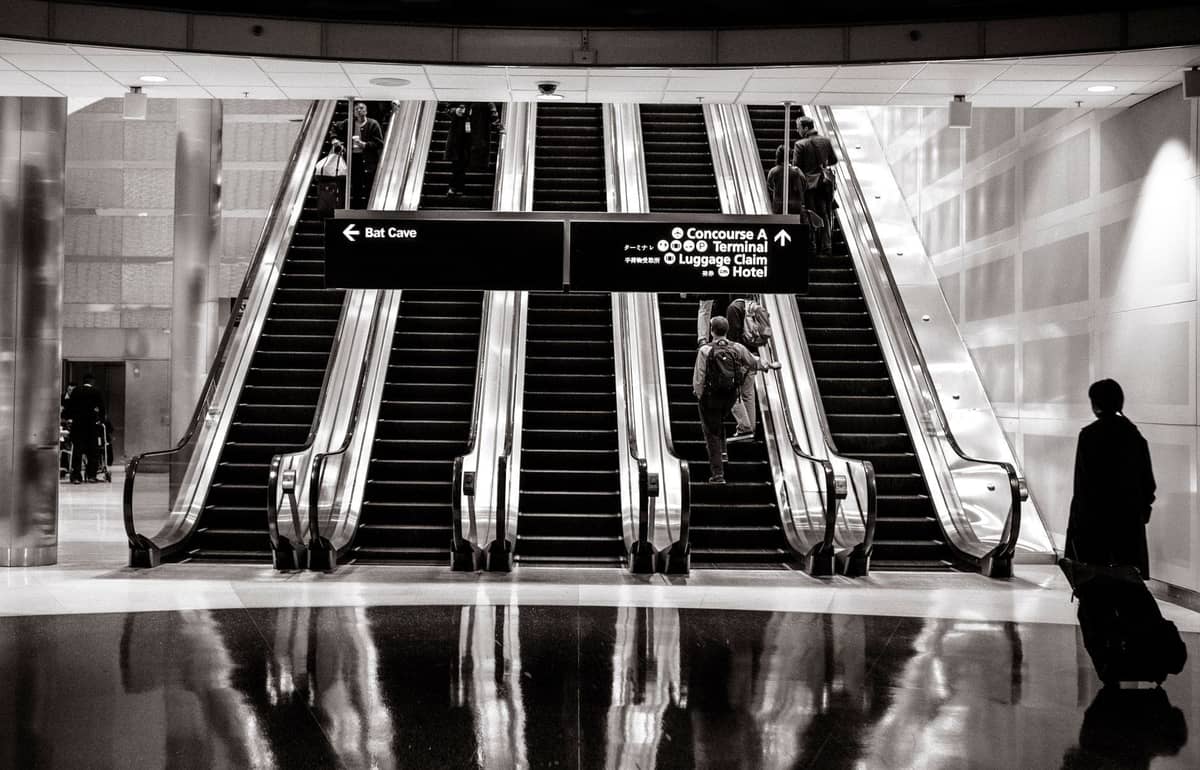
MIA is a major American Airlines hub and handles a high volume of international-to-domestic connections. The rule that catches the most travelers off guard: if you are connecting from an international flight to a U.S. domestic flight, you must collect your checked luggage before clearing U.S. Customs, even if your bags were checked through to your final destination. After clearing CBP, head to the Interline Lobby located just outside the customs exit and re-check your bags there. You will then clear security again to reach your domestic departure gate.
For international-to-international connections, the rules depend on your airline and their interline agreements. Many major carriers will through-tag bags on a single ticket, meaning you do not need to reclaim them. However, this is not universal. Confirm with your airline before your first departure, particularly if you have booked separate tickets or are traveling on a codeshare operated by different carriers.
For passengers connecting between any two terminals, Level 3 moving walkways are the fastest landside option. MIA officially estimates about 15 minutes between the North and South terminal extremes. Build in more time than that if you have mobility constraints, are traveling with children, or are arriving during peak hours when the walkways can get congested.
💡 Local tip
If you have a tight international-to-domestic connection at MIA (under 90 minutes), notify a flight attendant before landing. American Airlines and some other carriers have connection assistance teams who can expedite the CBP and bag re-check process for passengers with short layovers.
Peak Periods and When MIA Gets Difficult
Miami International Airport has two reliably congested periods each year. The first is the winter-to-spring peak season, roughly December through April, when Miami draws visitors seeking warm weather during colder months in North America and Europe. The second is spring break, typically concentrated in the first three weeks of March and the first week of April. During the spring break travel period, MIA expects to process over 5.7 million passengers and recommends arriving at least three hours before departure. This aligns with the broader best time to visit Miami calculus: peak travel season brings crowds at both the airport and the city's main attractions.
Afternoon hours between roughly 2 p.m. and 6 p.m. are consistently the most congested for international arrivals, as long-haul transatlantic and Latin American flights tend to cluster in the mid-afternoon window. If you are arriving internationally, expect this to affect your CBP wait times. TSA security queues on departures tend to peak between 6 a.m. and 9 a.m. and again from 4 p.m. to 7 p.m. MIA publishes real-time TSA wait times on its official website and mobile app, which is worth checking before you leave your hotel.
Summer in Miami (June through September) brings fewer leisure tourists but significant weather disruption. The city's wet season produces near-daily afternoon thunderstorms that can cause flight delays, particularly for short-hop regional routes. If you are flying into MIA in July or August and have an onward connection, pad your layover accordingly. For more on Miami's seasonal patterns, the Miami weather guide has full monthly breakdowns.
Practical Details: What to Know Before You Land
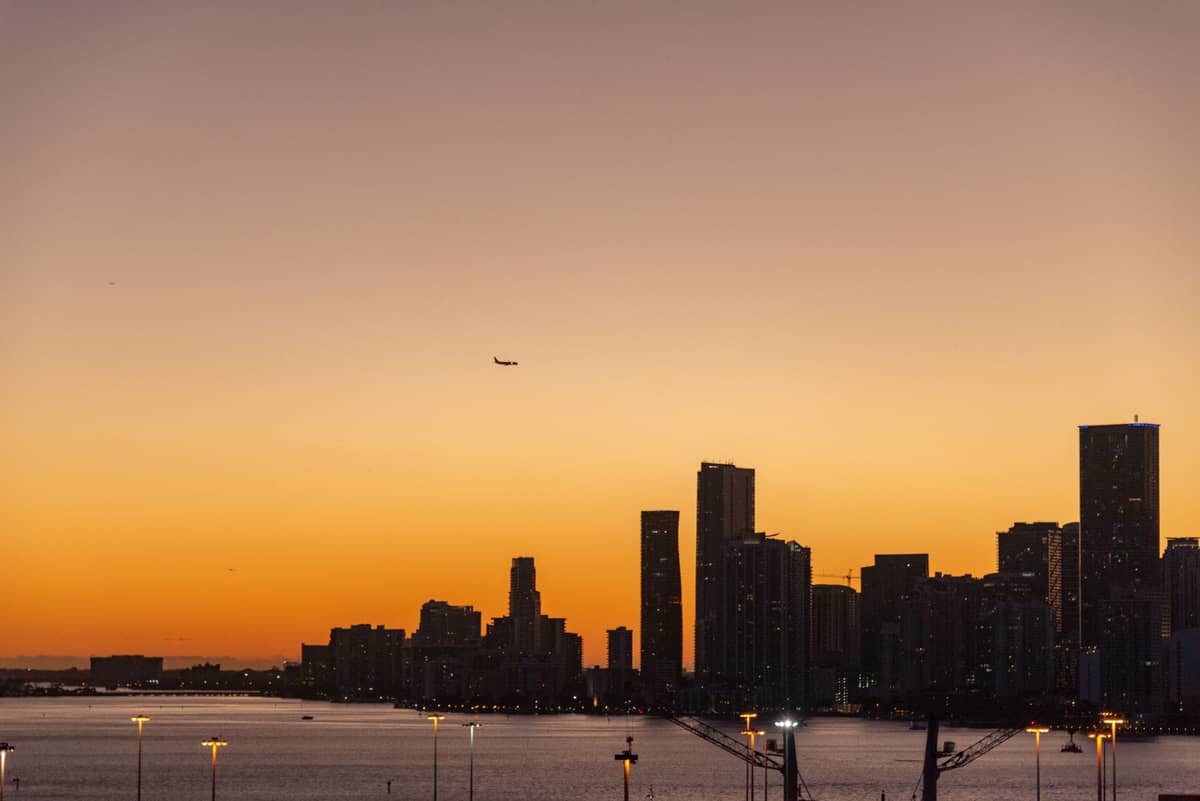
Miami International Airport is located in Miami-Dade County, not within the City of Miami limits, though it is operated by the Miami-Dade Aviation Department. The broader Miami metro area covers multiple municipalities: Brickell, Coconut Grove, Coral Gables, and Miami Beach are all separate areas, some in entirely separate municipalities. This matters for ground transport pricing and travel time estimates.
The currency is the U.S. dollar (USD). Major credit and debit cards are accepted everywhere at MIA, including at taxi payment terminals. ATMs are available throughout the terminal. Tipping is customary in the U.S.: 15-20% for taxi drivers, restaurant servers, and hotel staff. For international travelers, the U.S. uses Type A and Type B electrical outlets at 120V/60Hz, so most dual-voltage devices from Europe and Asia will need an adapter, though not necessarily a voltage converter.
English is the working language at MIA, but Spanish is widely spoken among airport staff, reflecting Miami's large Spanish-speaking population. For visitors arriving from Latin America, you will likely find Spanish-fluent staff at most service counters. Once you are in the city, check our Miami food guide and Little Havana guide to start planning beyond the airport.
- Emergency services: dial 911 (U.S. nationwide number for police, fire, and ambulance).
- Non-emergency government services: dial 3-1-1 for Miami-Dade County information.
- Country dialing code: +1 for the United States.
- Tap water is safe to drink; Miami-Dade Water and Sewer meets all EPA standards.
- Visa requirements depend on your nationality. Most EU, UK, Australian, and Japanese citizens qualify for the Visa Waiver Program (ESTA required in advance). Verify current requirements at the U.S. Department of State website before travel.
- Fort Lauderdale-Hollywood International Airport (FLL), about 21-25 miles north, is a lower-cost alternative for some budget carriers. Factor in transfer time if you book there.
FAQ
Where do I go after landing at Miami International Airport for arrivals?
After landing, proceed to baggage claim on Level 1. Domestic, Canadian, and Bahamian arrivals go directly there. International arrivals first clear U.S. Customs and Border Protection (CBP) before collecting bags and exiting to Level 1 of the North Terminal. Ground transportation, including taxis and Uber/Lyft pickup zones, is also on Level 1.
What is the cheapest way to get from Miami airport to Downtown Miami or South Beach?
The Metrorail Orange Line is the most affordable option. Take the free MIA Mover from Level 3 to the Miami Intermodal Center, then board the Orange Line toward Government Center. The ride to Downtown takes around 20-25 minutes. For South Beach, you would need to transfer to a bus or take a short taxi/rideshare from a Metrorail station. Check Miami-Dade Transit for current fares.
Do I need to reclaim my bags at Miami airport for a connecting flight?
It depends on your connection type. For international-to-U.S. domestic connections, yes: you must collect your bags before clearing U.S. Customs, even on a single ticket, then re-check them at the Interline Lobby. For international-to-international connections, it depends on your airline and interline agreement. Confirm with your carrier before travel.
How early should I arrive at Miami International Airport?
For standard domestic flights, 2 hours is typical. For international departures, 3 hours is recommended. During spring break (early March to early April), MIA itself advises arriving 3 hours before any flight due to exceptionally high passenger volumes. Check the airport's official website for published travel advisories during major peak periods.
Is Uber or Lyft available at Miami International Airport?
Yes, both Uber and Lyft operate legally at MIA. Designated pickup zones are on Level 1 (arrivals) and Level 2 (departures). Your app will show the exact door numbers. Do not accept rides from drivers who approach you unsolicited inside the terminal — this is illegal at MIA. Pricing is dynamic, so check the fare estimate before requesting.