What to Eat in Miami: A Food Lover's Guide
Miami's restaurant scene runs deeper than most visitors expect. Cuban classics, Peruvian ceviche, Haitian griot, and world-class seafood sit alongside a fine-dining circuit that ranked #1 nationally for restaurant quality in 2025. This guide cuts through the noise to tell you exactly what to order, where to go, and when to show up.
Plan and book this trip
Tools from our partner Travelpayouts help you compare flights and hotels. If you book through them, we may earn a commission at no extra cost to you.
Flights
Hotels map
TL;DR
- Miami restaurants span every budget, from $5 croquetas at a Little Havana cafeteria to multi-course tasting menus in Brickell.
- The food is far more diverse than Cuban alone: Peruvian, Haitian, Colombian, and coastal seafood all play major roles. See our Miami Cuban food guide if you want to go deep on that specific tradition.
- Stone crab season runs October 15 to May 1. Outside those dates, claws are frozen. Plan accordingly.
- Miami Spice (August 1 to September 30) is the single best time to eat at high-end restaurants for less, with prix-fixe menus at participating spots.
- Neighborhood matters: Little Havana for Cuban, Wynwood for chef-driven concepts, and the Design District for upscale dining.
Why Miami's Food Scene Deserves Serious Attention
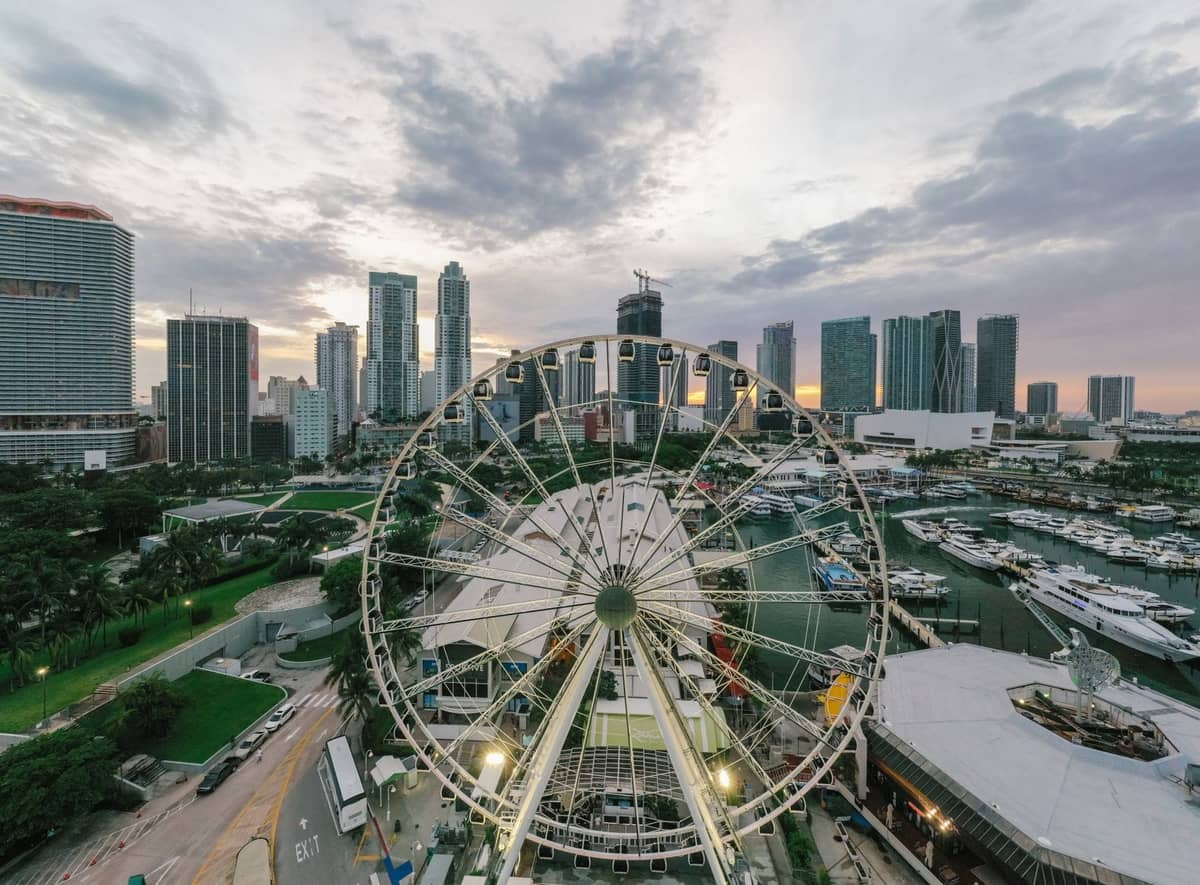
Miami restaurants often get undersold. The city's reputation as a party destination overshadows a culinary culture that is genuinely world-class. Greater Miami and Miami Beach were named the No. 1 food destination in the U.S. for 2025, ahead of cities like New York, Los Angeles, and Chicago. That result reflects decades of layered immigration: Cuban exiles who arrived in the 1960s built the backbone of the dining culture, followed by waves of Colombians, Peruvians, Haitians, Brazilians, and Venezuelans who each added their own traditions.
The result is not fusion for its own sake. You can eat an entirely authentic Haitian meal in Little Haiti, Peruvian ceviche made with local grouper, or a proper Cuban sandwich pressed on Cuban bread baked in Miami. The city also has access to exceptional local seafood: stone crab, Florida spiny lobster, snapper, grouper, and mahi-mahi are all harvested from nearby South Florida waters. That combination of immigrant culinary depth and coastal abundance is what makes Miami worth eating your way through.
ℹ️ Good to know
Spanish is widely spoken across Miami's restaurant industry. Menus in Little Havana and Little Haiti are often bilingual or Spanish/Creole only. A few key words go a long way: 'una croqueta, por favor' will get you far in any Cuban spot.
The Dishes You Should Actually Eat in Miami
Before getting into neighborhoods, it helps to know what to order. Miami has a loose canon of dishes that appear across the city and define what eating here tastes like. Some are Cuban in origin, others are pan-Caribbean or purely coastal Floridian.
- Cuban sandwich Roast pork, ham, Swiss cheese, pickles, and mustard on Cuban bread, pressed flat. The bread matters enormously. Look for spots that bake their own or source from a local Cuban bakery.
- Croquetas Ham or chicken croquettes, fried to order. In Little Havana, a single croqueta costs around $1–2. They are a legitimate meal if you order enough of them.
- Ropa vieja and vaca frita Both are shredded beef dishes central to Cuban home cooking. Ropa vieja is braised with tomatoes and peppers; vaca frita is crisped on a griddle with onion and citrus. Both are served with black beans and rice.
- Stone crab claws Served chilled with mustard sauce. Only available fresh October 15 to May 1. After that date, any restaurant serving them is using frozen product, regardless of what the menu implies.
- Ceviche The Peruvian community has made Miami one of the best cities in the U.S. for ceviche. Local fish like snapper and grouper work particularly well with citrus and aji amarillo.
- Conch fritters A Caribbean staple, especially common in spots near the water. Heavily seasoned, fried dough with conch meat inside. Best eaten immediately, before they cool.
- Key lime pie The official pie of Florida. A proper version uses actual Key lime juice, not regular lime, which produces a distinct floral tartness. The filling should be dense and cold, not mousse-like.
- Arepas Venezuelan and Colombian communities have seeded arepa spots across the city. Stuffed with cheese, black beans, shredded chicken, or pabellón (the full Venezuelan combination).
Where to Eat by Neighborhood
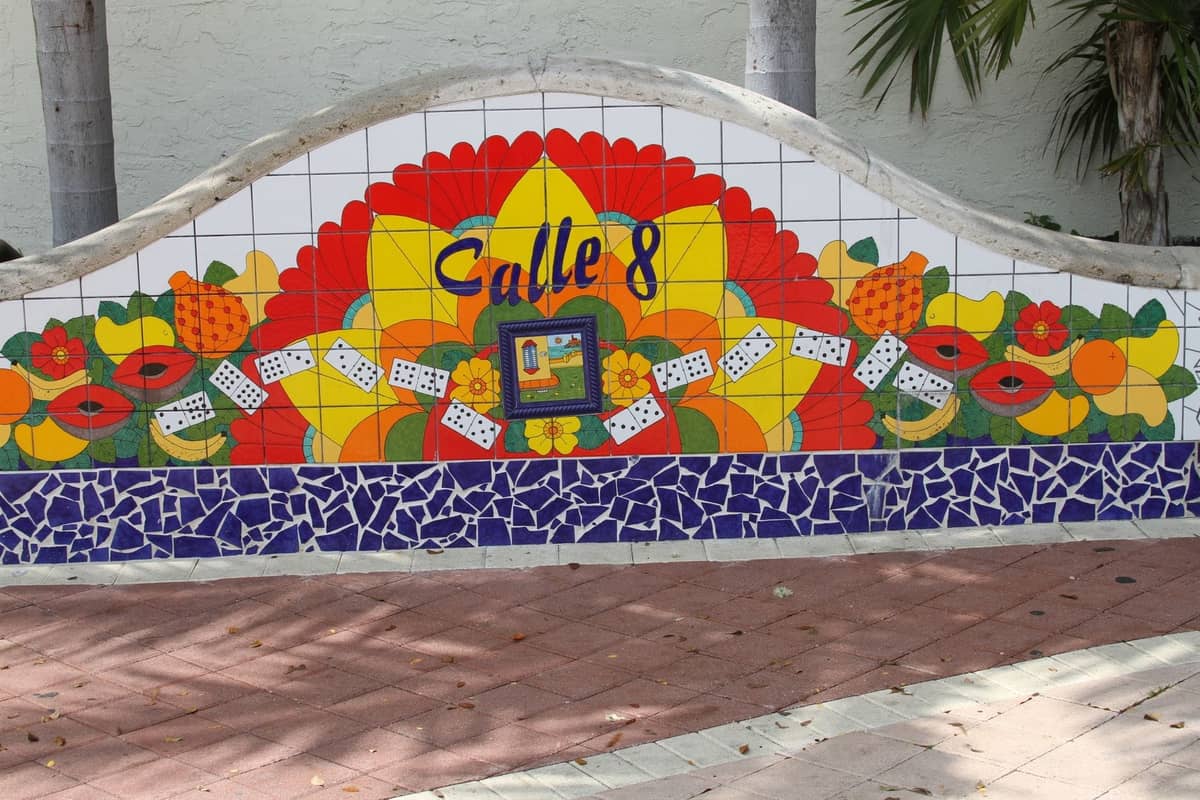
Miami's eating is organized by neighborhood more than by any centralized dining district. Little Havana is the obvious starting point for Cuban food, centered on Calle Ocho (Southwest 8th Street). This is where you find no-frills lunch counters serving ropa vieja for under $12, Cuban bakeries open from early morning, and cafeterias where a shot of café cubano comes with your order by default. Prices here are among the lowest in the city for sit-down food.
Wynwood attracts a different kind of eating. The neighborhood's transformation from warehouse district to arts hub brought a cluster of chef-led restaurants, food halls, and concept spots aimed at a younger, trend-conscious crowd. Expect higher prices than Little Havana and menus that change with the seasons. The Wynwood Marketplace has food stalls and trucks if you want to graze without committing to a full sit-down meal.
The Miami Design District and Brickell handle the upscale end. Brickell in particular has become a serious dining destination, with multiple restaurants from nationally recognized chefs. The area around Brickell City Centre has a concentration of options from casual to formal. Budget roughly $60–120 per person for dinner with wine at a serious Brickell restaurant.
Coconut Grove offers a more relaxed pace with waterfront dining options and a mix of casual and mid-range spots. Coral Gables nearby has long-established restaurants with strong Spanish and Latin American menus, plus several classic Miami institutions that have operated for decades. The stretch along Miracle Mile is walkable and covers a range of price points.
⚠️ What to skip
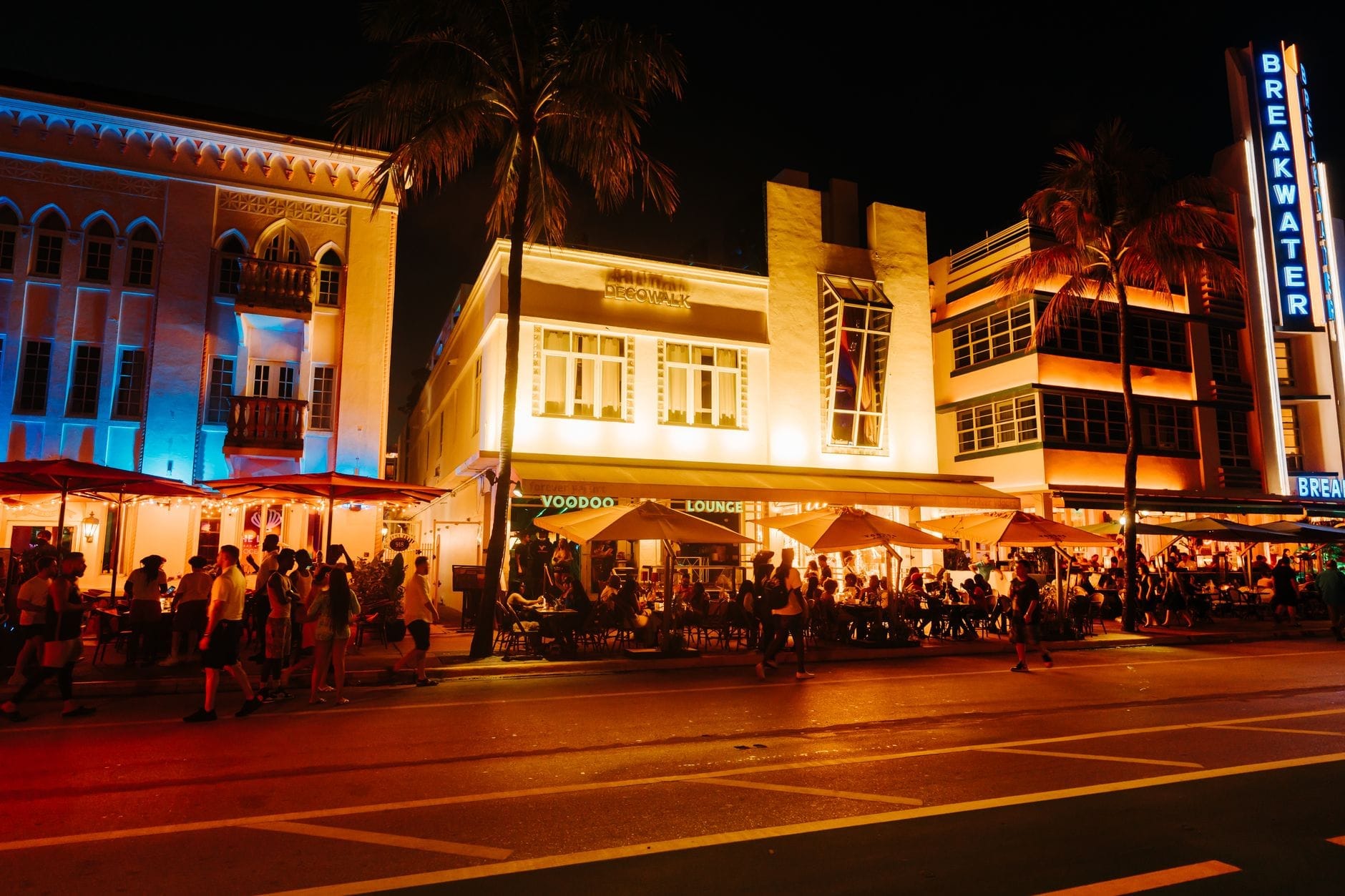
Ocean Drive in South Beach is one of the most visually dramatic streets in Miami and one of the worst places to eat. The restaurants facing the beach are almost uniformly overpriced, mediocre, and targeted at tourists who do not know better. Walk one or two blocks west for dramatically better food at lower prices.
When to Go: Seasonal Eating in Miami
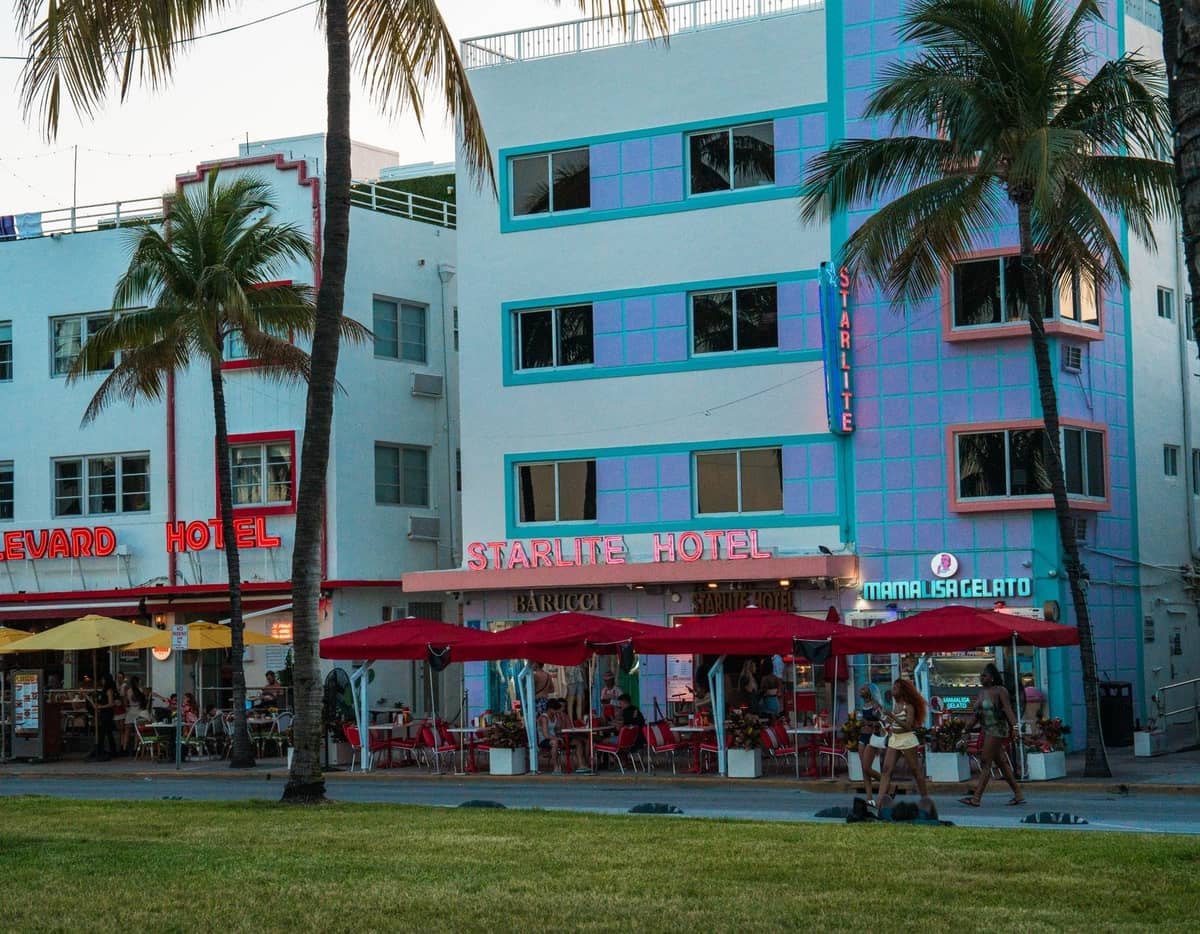
Miami's subtropical climate means outdoor dining is possible year-round, but the experience varies significantly by season. The dry season, roughly November through April, is the most comfortable time to eat outside. Temperatures sit in the mid-70s to low 80s Fahrenheit (around 24–28°C), humidity drops compared with summer, and the city is at its most active. Restaurant reservations at popular spots become harder to secure during peak months of December through March, when snowbird visitors and event crowds push demand up.
Summer (June through August) brings heat, humidity, and frequent afternoon thunderstorms that make outdoor patios impractical between roughly noon and 4pm. On the other hand, summer is when Miami Spice runs, from August 1 through September 30 most years. Participating restaurants offer prix-fixe menus at set price points, typically covering lunch, brunch, and dinner seatings. This is genuinely the best window to eat at Miami's higher-end restaurants without paying full price. Check the official Greater Miami and Miami Beach tourism site each year for the current list of participants and prices, as they update annually.
The South Beach Wine and Food Festival, held annually in late February, affects the restaurant landscape for that week. Participating chefs and restaurants run special events, pop-ups, and limited menus. Prices at participating venues spike during festival dates, and reservations must be made well in advance. If you are visiting specifically for the food festival, budget accordingly. If you are visiting that week for other reasons, be aware that your usual table at a popular spot may not be available.
✨ Pro tip
Stone crab is non-negotiable if you visit between October 15 and May 1. The claws are harvested sustainably (one claw per crab, then the crab is returned to the water), and the season timing is strictly regulated by the Florida Fish and Wildlife Conservation Commission. Do not let any restaurant convince you that 'fresh' stone crab is available in July.
Budget Breakdown: What Eating in Miami Actually Costs
Miami has a reputation for being expensive, and at the high end that reputation is earned. But the city also has a functioning network of affordable options that most guides overlook. The key is knowing which neighborhoods and formats deliver value.
- Under $15 per person Cuban cafeterias and lunch counters in Little Havana, food trucks across Wynwood and Brickell, arepa spots in the Venezuelan corridor of Doral (about 20 minutes west of downtown), and Haitian restaurants in Little Haiti. A full Cuban lunch with rice, beans, meat, and plantains typically runs $10–14.
- $20–45 per person The mid-range covers most of Wynwood's casual sit-down spots, neighborhood restaurants in Coconut Grove and Coral Gables, and lunch menus at restaurants that would cost more at dinner. This range also covers most seafood shacks and casual ceviche bars.
- $60–120+ per person Brickell and the Design District fine-dining tier, serious sushi, steakhouses, and multi-course tasting menus. Add 18–20% for service (tipping 15–20% of the pre-tax bill is standard in Miami), plus drinks, and a dinner for two at a top Brickell restaurant can reach $300 or more.
- Happy hour (most days, 4–7pm) Many Miami restaurants offer significant discounts on food and drinks during weekday happy hours. Some Brickell spots reduce appetizers and bar snacks by 30–50% during these windows. Worth building your schedule around if budget is a concern.
For a full strategy on stretching your food budget without sacrificing quality, the Miami on a budget guide covers the practical details, including which neighborhoods to base yourself in and how to stack Miami Spice with happy hour windows.
Practical Tips Before You Eat
Reservations matter more in Miami than in most U.S. cities. At popular Brickell and Design District restaurants, booking two to three weeks ahead is standard for weekend dinners, and even further out during Art Basel Miami Beach (early December) or the Wine and Food Festival. OpenTable and direct restaurant websites are the standard booking channels. Walk-in bar seating is often the best option for last-minute diners at full-service restaurants.
Dress codes apply at some venues, particularly nightclub-adjacent restaurants in South Beach and fine-dining rooms in Brickell. The general rule: no swimwear, no flip-flops, and some spots require closed-toe shoes for men at dinner. Miami is generally casual, but specific venues enforce specific rules, so check the restaurant's website before showing up in board shorts. For everyone else, smart casual covers 90% of situations.
If you are eating near Miami International Airport before a flight, the food options inside MIA have improved significantly in recent years, but the area immediately outside the airport has limited walkable dining. Plan to eat before you get to the airport, or research the terminal food options at the Miami airport guide which covers terminal-by-terminal options for miami airport food.
💡 Local tip
Tap water in Miami meets all U.S. EPA drinking water standards according to Miami-Dade Water and Sewer Department annual quality reports. You do not need to buy bottled water at restaurants or anywhere else in the city.
FAQ
What food is Miami most known for?
Cuban cuisine is the most iconic, anchored by dishes like the Cuban sandwich, ropa vieja, vaca frita, and croquetas. Beyond Cuban, Miami is known for stone crab (in season October 15 to May 1), fresh local seafood including snapper and grouper, Peruvian ceviche, and Key lime pie. The city's diversity also means strong Haitian, Colombian, Venezuelan, and broader Caribbean traditions are represented across its neighborhoods.
When is the best time to eat cheaply at Miami's top restaurants?
Miami Spice runs August 1 through September 30 each year. Participating restaurants offer discounted prix-fixe menus for lunch, brunch, and dinner. This is the most reliable window for eating at high-end spots for significantly less than normal prices. The official Greater Miami and Miami Beach tourism website publishes the updated list of participants each year.
Is Little Havana worth visiting just for food?
Yes, if Cuban food interests you at all. Calle Ocho (Southwest 8th Street) has Cuban cafeterias, bakeries, and restaurants that serve food at prices far below what you'd pay elsewhere in the city. A full lunch with rice, beans, plantains, and a main protein typically runs $10–14. The food is also genuinely good, not a tourist-facing approximation of Cuban cooking.
What should I avoid eating in Miami?
Skip the restaurants directly on Ocean Drive in South Beach. They are almost universally overpriced and mediocre, catering to tourists who are paying for the view rather than the food. Also avoid any restaurant claiming to serve 'fresh' stone crab between May and mid-October. Stone crab season ends May 1, and any crab served outside that window is frozen product.
Are there good vegetarian or plant-based options in Miami?
Yes, more than the meat-heavy Cuban tradition might suggest. Wynwood and the Design District have a number of plant-forward restaurants and dedicated vegan concepts. Caribbean and Latin cuisines also include many naturally plant-based dishes: black bean soup, rice and beans, fried plantains, and vegetable-based arepas are on most menus. The range is strongest in Wynwood and Brickell.