Little Havana sits directly west of Downtown Miami and has served as the cultural center of Miami's Cuban diaspora since the 1960s. Calle Ocho (SW 8th Street) is the main artery, lined with cigar shops, cafeterias, music venues, and bakeries. The neighborhood is one of the most distinctively Latin urban environments in the United States.
Little Havana is where Miami stops speaking English and fully commits to Spanish. It is the historic heart of the Cuban diaspora in the United States, a working neighborhood where the smell of café cubano drifts from walk-up ventanillas, domino tiles clatter in Máximo Gómez Park, and hand-rolled cigars are still made the same way they were in pre-revolution Havana.
Orientation
Little Havana occupies a wedge of the City of Miami directly west of Downtown, with its eastern edge running roughly along Interstate 95. The Miami River defines its northern boundary, Coral Way (SW 22nd Street) marks the south, and SW 27th Avenue forms the western edge according to common neighborhood definitions, though local usage often extends the neighborhood further west. The neighborhood is entirely flat, laid out on a simple grid, and easy to navigate on foot or by bus.
The main spine is Calle Ocho (SW 8th Street), which runs east-west through the length of the neighborhood and continues west as SW 8th Street and, beyond the city, as the Tamiami Trail (US-41) toward the Everglades. The Florida Keys are reached via US-1 to the south. Most visitors orient themselves around the stretch of Calle Ocho between SW 12th Avenue and SW 27th Avenue, where the bulk of restaurants, cultural institutions, and street life concentrate. West Flagler Street, one block north, is a busier commercial corridor that connects Little Havana to Downtown.
Geographically, Little Havana sits between Downtown Miami to the east and Coral Gables to the southwest. Brickell, Miami's financial district, is accessible by heading south along SW 1st Avenue, about a 10-minute drive. That proximity to two of Miami's wealthiest districts makes Little Havana's working-class character all the more striking — the contrast is immediate and geographic.
Character & Atmosphere
Little Havana moves to a rhythm that has little to do with Miami's beach culture or nightlife industry. Mornings begin early. By 7am, the ventanillas at the small cafeterias along Calle Ocho are already serving café cubano and tostadas to residents heading to work. The air smells of strong espresso and, depending on the block, cigar smoke from the handful of shops that open early for their regulars. The light is low and golden, the streets quiet enough that you can hear the radio through open doors.
By mid-morning the pace picks up. Fruit and vegetable stands fill the sidewalks on side streets. The Metrobuses filling with passengers on Calle Ocho carry domestic workers, cooks, and small business owners rather than tourists. Lunchtime brings out the neighborhood's restaurant culture in full: Cuban sandwiches pressed on flat irons, steaming ropa vieja, and platters of rice and black beans that cost far less than the same plate would anywhere in South Beach.
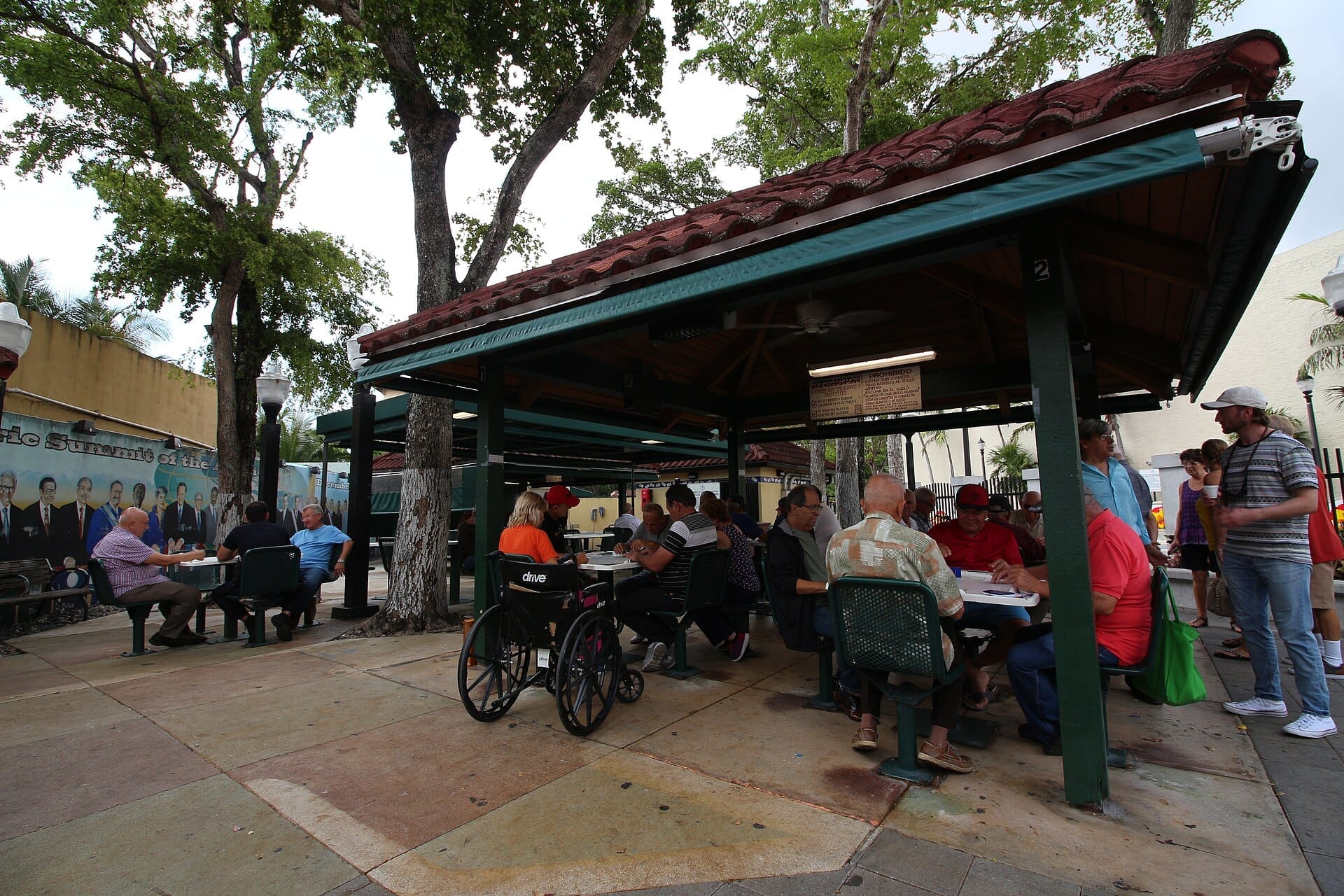
Afternoons are the best time to find the domino players at Máximo Gómez Park at their most animated. The men who gather there are mostly Cuban-born elders, and the conversations about politics — Miami Cuban politics in particular — can be as intense as the game itself. The park is a genuine community space, not a performance for visitors, and that authenticity is noticeable.
After dark, the character of the neighborhood shifts depending on where you are. The Calle Ocho strip around SW 15th Avenue has a handful of bars and live music spots that draw a mixed crowd of locals and tourists on weekends. East Little Havana, particularly the blocks east of SW 17th Avenue toward I-95, is quieter and more residential after dark, and less recommended for aimless walking at night. The tourist-facing part of the neighborhood — roughly the core block of Calle Ocho between 12th and 17th avenues — is well-lit and active on Friday and Saturday nights.
ℹ️ Good to know
Little Havana is a genuinely inhabited neighborhood, not a theme park. The best way to experience it is to slow down: sit at a ventanilla counter, order a colada, and watch the street. Residents are generally welcoming but do not particularly want to be photographed without permission at Domino Park or on their stoops.
What to See & Do
The single most important stop is Máximo Gómez Park (Domino Park) at the corner of Calle Ocho and SW 15th Avenue. The park is small — a few covered tables shaded by trees, surrounded by mosaic murals depicting Cuban history and notable figures from the exile community. Admission is free and it is open daily during daylight hours. Watching a serious domino match here is one of the most distinctive cultural experiences in Miami.
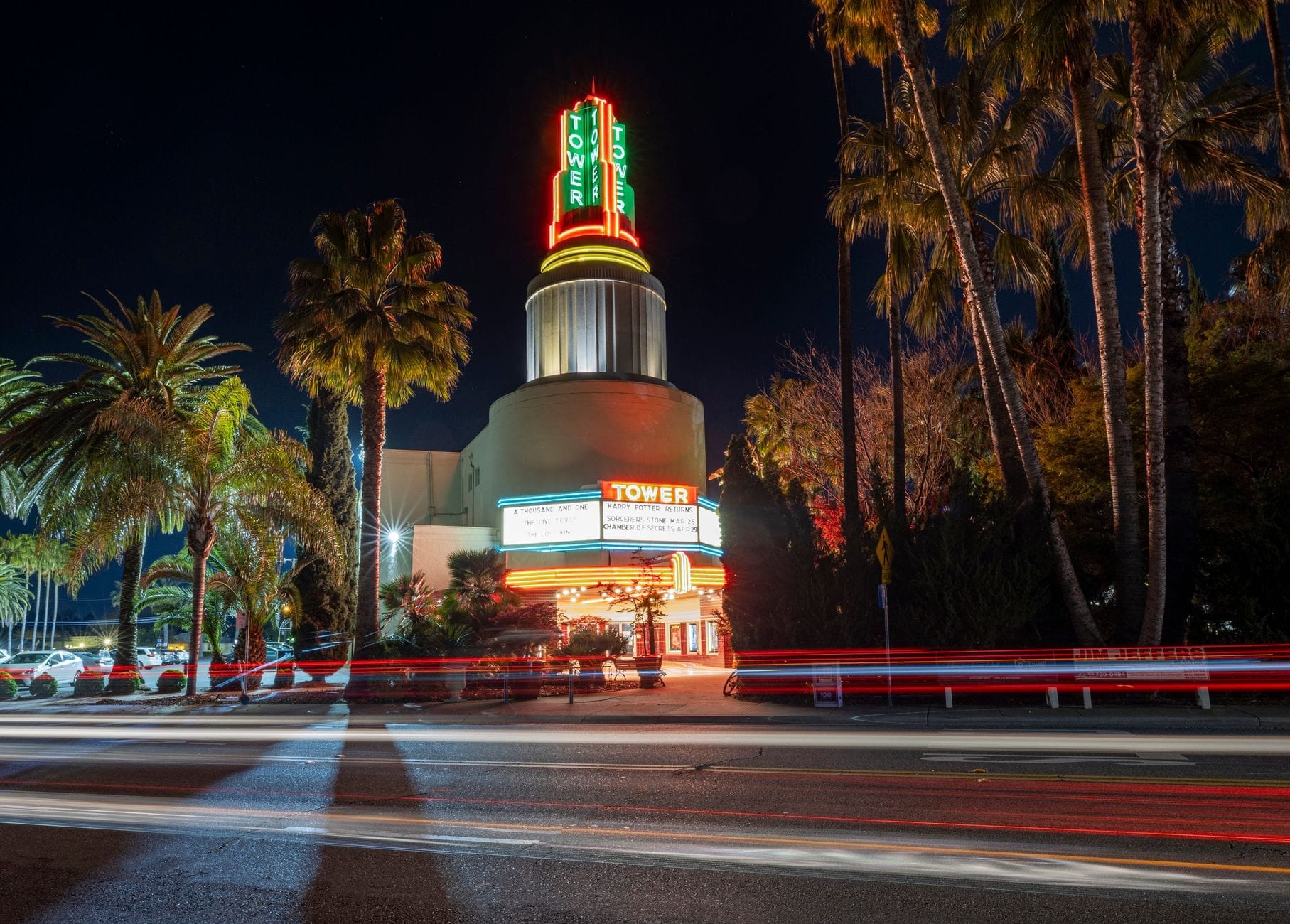
A short walk east along Calle Ocho brings you to the Tower Theater Miami, a 1926 cinema that survived decades of neighborhood change and now operates as a cultural venue screening independent and international films alongside Spanish-language programming. The art deco facade is one of the better-preserved examples of that era's commercial architecture in mainland Miami.
The Cubaocho Museum and Performing Arts Center on Calle Ocho is both a gallery and live music venue. Its collection focuses on Cuban art and cultural artifacts, and the programming includes son cubano, salsa, and bolero performances, typically on weekend evenings. It functions as a bar as well, making it one of the few places where you can look at serious art, have a mojito, and listen to a live conjunto all in the same room.
Máximo Gómez Park (Domino Park) — free, open daily during daylight hours, best visited weekday mornings or weekend afternoons
Tower Theater Miami — check current status and, if open, current schedule for film and event listings
Cubaocho Museum and Performing Arts Center — live music weekends, gallery free to browse during bar hours
Calle Ocho Walk of Fame — embedded stars honoring Latin music legends along the sidewalk between SW 12th and 17th Avenues
Local cigar factories — several shops on Calle Ocho roll cigars by hand on premises; watching the process is free, buying is optional
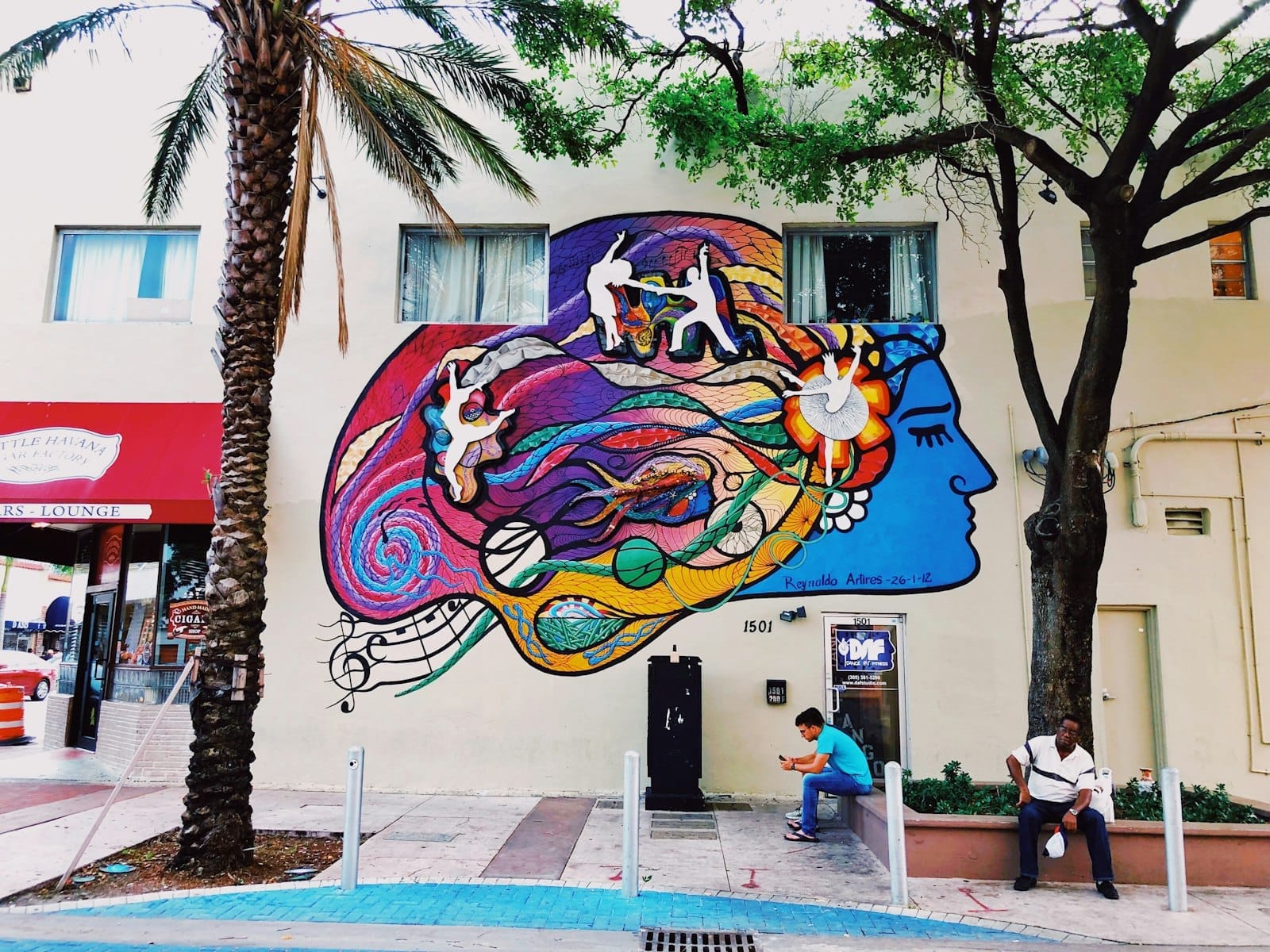
Calle Ocho murals — outdoor art installations and political murals spread across several blocks, concentrated between 12th and 22nd Avenues
If you visit in March, the annual Calle Ocho Music Festival as part of Carnaval Miami transforms the street into one of the largest Latin-themed outdoor street festivals in the United States. See the Calle Ocho Festival guide for timing, crowd size expectations, and logistics.
Eating & Drinking
The food in Little Havana is among the most authentic and affordable in Miami. This is where to eat Cuban food as it is actually eaten by Cubans, not as it has been reinterpreted for hotel brunch menus. For a deeper orientation on the cuisine and where to find it across Miami, the Miami Cuban food guide covers the full picture, but Little Havana is the best starting point.
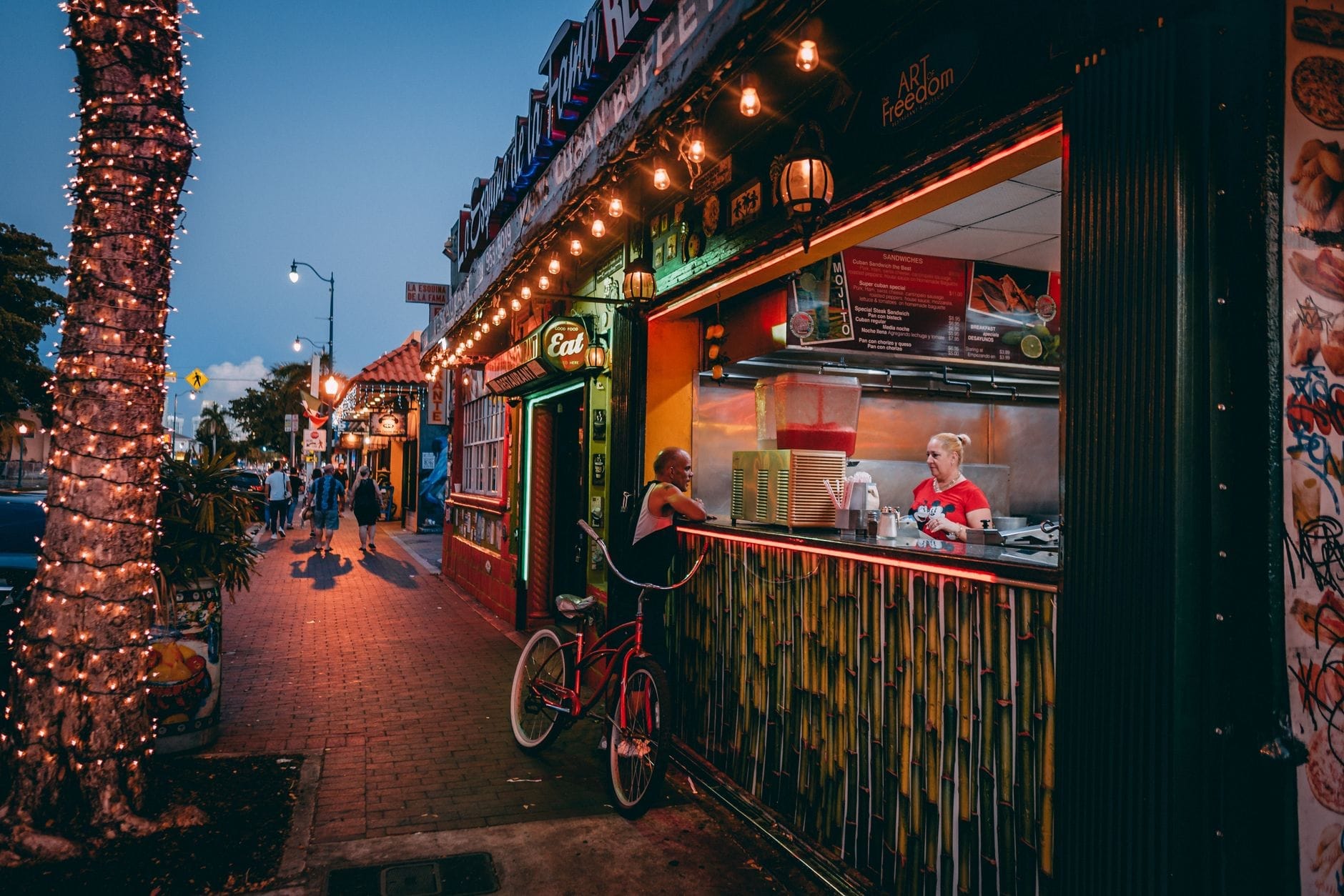
The ventanilla is the defining eating format here: a walk-up window on the street where you order café cubano (a thimble of intensely sweet espresso), cortadito (espresso cut with steamed milk), or a colada (a larger portion meant for sharing) for roughly a dollar or two. You stand on the sidewalk, drink it in one or two sips, and move on. Every few blocks has one. They are not tourist attractions; they are how the neighborhood functions.
Full-service restaurants cluster along Calle Ocho and the surrounding streets. Expect large portions of Cuban staples: ropa vieja (shredded beef stewed in tomato), lechón asado (slow-roasted pork), arroz con pollo, black bean soup, and the Cuban sandwich, pressed on a flat griddle until crisp. Prices at most sit-down spots run well below what you would pay for equivalent food quality in Brickell or South Beach. A full lunch with a drink often runs around fifteen dollars at many spots.
The bakeries on and around Calle Ocho are worth knowing about separately. Pastelitos — flaky pastries filled with guava and cream cheese, or seasoned beef — are typically sold warm for around two dollars and make a better breakfast than most hotel buffets. Several bakeries also sell Cuban bread by the loaf, long and soft, baked with a palmetto leaf pressed into the top crust.
For drinks after dark, the Cubaocho bar is the most atmospheric option on the main strip. Several other bars on Calle Ocho serve cervezas, mojitos, and cancháncharas in an informal setting. The neighborhood is not known for cocktail bars or wine lists, but it does not need to be. A cold Presidente or a rum and soda at a sidewalk table is precisely right for the setting.
💡 Local tip
Ask for a colada at any ventanilla rather than a solo espresso. The colada comes in a larger cup with small plastic thimble cups on the side and is intended to be shared with whoever you are with. It costs around $2-4 and is one of the most purely local rituals in Miami.
Getting There & Around
Little Havana does not have a Metrorail station. The nearest Metrorail stops are Government Center (on the Orange and Green lines), which is about a 20-minute walk from the eastern edge of the neighborhood at the I-95 corridor, and Brickell station to the south. From either station, Miami-Dade Transit bus routes connect directly into the neighborhood along its main corridors.
Several Metrobus routes serve Little Havana from Downtown and other parts of the city. Route 8 runs along Calle Ocho, making it the most direct connection. Routes 6, 7, and 11 also operate through the neighborhood on parallel streets. If arriving from Miami International Airport, bus routes such as 7, 37, and 42 connect between the airport area and the streets bordering Little Havana, though a ride-hail is faster and not expensive given the distance. Check current schedules with Miami-Dade Transit before travel, as routes and frequencies can change. For broader transit context, the guide to getting around Miami covers the full Metrorail and Metrobus network.
The core of Little Havana, from approximately SW 12th Avenue to SW 22nd Avenue along Calle Ocho, is very walkable. That stretch is about a mile long and entirely flat. On a cool winter morning or late afternoon, walking it end to end is one of the better things to do in Miami. In summer heat, the walk is more demanding; plan for shade and hydration, or cover ground in shorter segments between stops.
Driving is straightforward on the grid streets, but parking can be limited along Calle Ocho itself during weekends and festival periods. Side streets generally have available street parking. Uber and Lyft work reliably throughout the neighborhood and are a practical option if arriving from South Beach, Brickell, or Wynwood. The ride from South Beach runs roughly 20-35 minutes depending on traffic on the causeways and Downtown/Brickell streets.
⚠️ What to skip
East Little Havana, the blocks east of SW 17th Avenue toward the I-95 boundary, has historically higher crime rates and is less recommended for walking after dark. Stick to the well-traveled stretch of Calle Ocho between SW 12th and SW 22nd Avenues for evening visits. As with any Miami neighborhood, standard urban awareness applies: do not display valuables openly, and know your route before you go.
Where to Stay
Little Havana is not a hotel district. There are no major resort hotels in the neighborhood, and the accommodation options that exist are mostly small guesthouses, budget motels, and short-term rentals. Most travelers who want to spend significant time in Little Havana stay in Brickell or Downtown Miami and take a bus or ride-hail across. For a full overview of Miami's accommodation landscape across all neighborhoods, the where to stay in Miami guide is the most useful resource.
That said, staying in Little Havana itself offers a genuinely different Miami experience from any beach hotel. Short-term rentals through major platforms are available in residential buildings, and some travelers find that waking up to café cubano and pastelitos from the corner bakery, rather than a hotel restaurant, is worth the tradeoff in amenities. The neighborhood is generally busiest and feels safest along the main corridors and within the core blocks around Calle Ocho.
For travelers who want the full Miami experience across neighborhoods, Brickell is the most practical base for visiting Little Havana. It is about 10-15 minutes by bus or ride-hail, has a wide range of hotels at various price points, and sits on the Metrorail, making the rest of the city easy to access.
History & Context
The neighborhood now known as Little Havana was a middle-class Jewish and Anglo neighborhood in the 1940s and 1950s. Its transformation began rapidly after the Cuban Revolution of 1959, when waves of Cuban exiles arrived in Miami and settled in the affordable housing stock west of Downtown. By the mid-1960s, the neighborhood had become the center of Cuban exile life in the United States, with a density of Cuban-owned businesses, political organizations, churches, and social clubs that gave it a character closer to a Cuban city than an American suburb.
Subsequent waves of immigration from Nicaragua, Honduras, El Salvador, and other parts of Central and South America have made the neighborhood more broadly Latin American than exclusively Cuban. Today the resident population is overwhelmingly Hispanic, and while Cuban culture still dominates the public face of the neighborhood through its restaurants, cigars, and music, the demographic reality is more diverse. The name Little Havana has persisted as a cultural and commercial brand even as the actual Cuban-born population has dispersed more widely across Miami-Dade County.
The neighborhood's political culture is shaped by this history. Anti-Castro sentiment defined Miami Cuban politics for decades and still runs through conversations at Domino Park. That political identity is part of what makes Little Havana distinct even within Miami, a city already defined by its Latin American character. For visitors wanting to understand how this culture expresses itself in food and daily life, the Little Havana neighborhood guide provides additional context on the community and its institutions.
TL;DR
Little Havana is Miami's most culturally specific neighborhood: Cuban in character, working-class in feel, and genuinely inhabited rather than built for tourism.
Calle Ocho between SW 12th and SW 22nd Avenues is the core — walkable in an hour, worth spending half a day.
Best for: travelers who want Cuban food, café cubano, live Latin music, and a break from the beach hotel circuit.
Not ideal for: travelers primarily seeking luxury hotels, nightclubs, or beach access — the neighborhood has none of those things.
Safety note: stick to the main Calle Ocho corridor, especially after dark, and avoid wandering east of SW 17th Avenue at night.
Easiest to visit as a day trip from Brickell, Downtown, or South Beach; no Metrorail access, but buses on Calle Ocho connect directly from Government Center station.
Three days is enough to hit Miami's best neighborhoods, beaches, and cultural landmarks — if you plan smart. This day-by-day guide covers South Beach, Wynwood, Little Havana, and a half-day Everglades excursion, with practical advice on getting around, what things cost, and what to skip.
Miami Beach's Art Deco Historic District contains the world's largest concentration of Art Deco architecture, with over 800 historic buildings packed into a walkable stretch of South Beach. This guide covers where to start, what to look for, the best times to go, and how to make the most of the district on your own terms.
Miami's beaches range from the world-famous to the wonderfully overlooked. This guide covers the best stretches of sand across South Beach, Key Biscayne, and beyond, organized by what kind of beach day you're actually after.
Miami's museum scene is stronger than its beach-city reputation suggests. Whether you're after contemporary art, Cuban history, cutting-edge science, or design history, the city delivers world-class institutions across every neighborhood.
Miami is a year-round destination, but timing your trip makes a real difference. This guide breaks down every month by weather, crowd levels, hotel prices, and key events so you can pick the window that fits your priorities, whether that's perfect beach weather, low-cost flights, or catching a major festival.
Held each March in Little Havana, the Calle Ocho Music Festival draws roughly one million people to a single mile of SW 8th Street for free live music, 300+ food vendors, and a full day of Latin culture. Here's how to make the most of it.
Miami sits at one of the most extraordinary geographic crossroads in North America. Within an hour or two, you can be wading through alligator country, snorkeling coral reefs, or exploring colonial-era lighthouses. These are the best day trips from Miami, organized by destination.
The Everglades sit less than an hour from downtown Miami, yet most visitors leave without a clear plan and end up on the wrong tour for their expectations. This guide covers every option, from budget bus packages to private airboat expeditions, with honest advice on timing, pricing, and what to watch out for.
The Florida Keys are one of the most rewarding drives from Miami, but the logistics matter more than most visitors expect. This guide covers exact distances, key stops along the Overseas Highway, day-trip options, multi-day road trip planning, and honest seasonal advice to help you get the most out of the journey.
Miami rewards budget-conscious visitors more than most cities its size. Between free beaches, no-admission museums, iconic architecture walks, and world-class street art, you can fill several days without pulling out your wallet. This guide covers the best genuinely free experiences across the city.
Miami has more transit options than most visitors expect. This guide covers the Metrorail, free Metromover, Metrobus, trolleys, ride-hailing, and the fastest ways to get from Miami International Airport into the city, with fares, hours, and honest assessments of what actually works.
Little Havana is Miami's most culturally distinct neighborhood, centered on Calle Ocho and shaped by decades of Cuban exile history. This guide covers the top attractions, best food stops, seasonal festivals, walking tour options, and what to know before you go.
Miami International Airport (MIA) is the main gateway to South Florida, handling tens of millions of passengers each year. This guide covers the terminal layout, the arrivals process for domestic and international travelers, every ground transport option with current fare structures, transfer rules you need to know, and how to avoid the most common mistakes first-timers make.
Art Basel Miami Beach is the largest international contemporary art fair in the Americas, drawing 80,000 visitors to Miami Beach each December. This guide covers tickets, VIP access, satellite fairs, logistics, and how to make the most of Miami Art Week without losing your mind.
Miami is the undisputed Cuban food capital of the United States. This guide covers the best restaurants, essential dishes, where to find the perfect Cuban sandwich, and practical tips on prices, neighborhoods, and timing — so you eat well from the first day.
Miami's restaurant scene runs deeper than most visitors expect. Cuban classics, Peruvian ceviche, Haitian griot, and world-class seafood sit alongside a fine-dining circuit that ranked #1 nationally for restaurant quality in 2025. This guide cuts through the noise to tell you exactly what to order, where to go, and when to show up.
Miami delivers a genuinely impressive range of couple-friendly experiences, from Italianate waterfront estates to mangrove kayak trails and rooftop cinemas. This guide cuts through the tourist noise to give you the best romantic activities, honest pricing, and practical advice for planning a memorable trip together.
Miami rewards those who look beyond Ocean Drive. From mangrove paddling trails to a coral-rock swimming pool and tucked-away historic sites, these lesser-known spots reveal the layers of history, nature, and culture that make the city genuinely fascinating.
Summer in Miami means heat, humidity, and afternoon thunderstorms — but also lower hotel rates, thinner crowds, and a city that never actually closes. This guide breaks down exactly what to expect from June through September so you can decide if the off-season trade-offs work for you.
Miami's winter months are the city's peak season for good reason: warm, dry days, minimal humidity, and a packed events calendar. Here's everything you need to know about visiting from December through February, from realistic weather expectations to crowd levels and money-saving tips.
Miami's luxury scene spans oceanfront South Beach party hotels to quiet Bal Harbour enclaves and sky-high Brickell penthouses. This guide breaks down the best neighborhoods, hotels, restaurants, and high-end experiences with honest pricing, seasonal advice, and no filler.
Miami Music Week is the city's biggest annual electronic music takeover, culminating in Ultra Music Festival at Bayfront Park in Downtown Miami. This guide covers everything: how the week works, what Ultra actually involves, where to stay, what to bring, and what first-timers consistently get wrong.
Miami's after-dark scene runs the full spectrum, from A-list DJ clubs open until sunrise to low-key cocktail bars and late-night Cuban diners. This guide breaks down the best neighborhoods, top venues, seasonal tips, and what first-timers consistently get wrong.
Miami has a reputation for flashy excess, but the city is genuinely accessible on a tight budget. Free public beaches, a $2.25 transit fare, zero-cost museums on select days, and a thriving street food scene mean you can do Miami properly without burning through your savings. Here is exactly how.
Miami is safe for tourists in the right areas, but it helps to know exactly where those areas are and what to watch out for. This guide breaks down crime data, neighborhood risk levels, road safety, weather hazards, and practical tips drawn from official Miami-Dade and Miami Beach police guidance.
Miami's shopping scene spans open-air luxury districts, massive malls, artsy markets, and eclectic neighborhood streets. This guide covers the best spots across every style and budget, from designer flagships to Cuban cigar shops.
Miami rewards solo travelers who know where to go and what to expect. This guide covers the safest neighborhoods, realistic daily budgets, transport options, top solo-friendly activities, and seasonal advice to help you plan a trip that actually works.
Whether you're heading north to Fort Lauderdale for a day trip or crossing the state to Tampa, the logistics matter. This guide breaks down every travel option between Miami and both cities, with honest assessments of cost, time, and comfort across all transport modes.
From Ocean Drive's Art Deco hotels to the Cape Florida Lighthouse on Key Biscayne, many Miami Vice filming locations are still standing and visitable today. This guide maps the key sites, separates fact from fan myth, and gives you everything you need to plan your own location tour.
Miami is built around the water, and the activities on offer go far beyond lounging on the beach. This guide covers the best places to kayak, snorkel, paddleboard, sail, and explore by boat across Biscayne Bay, Key Biscayne, and the wider Miami coastline.
Miami's tropical monsoon climate means warm winters, scorching summers, and a rainy season that catches many visitors off guard. This guide breaks down temperatures, rainfall, sea conditions, and crowd patterns for every month so you can plan smarter.
Miami delivers far more for families than sun and sand. This guide covers the best kids activities in Miami, from the only subtropical zoo in the U.S. to shallow lagoons perfect for toddlers, with honest advice on timing, pricing, and what genuinely works with children in tow.
Miami's waters are the main attraction, and renting a boat is the best way to experience them. This guide covers every vessel type, honest price breakdowns, the best departure marinas, and the hidden costs that inflate your final bill.
Miami packs beaches, world-class art, Cuban culture, and two national parks into one metro area. This guide cuts through the noise to show you what's genuinely worth your time, what to skip, and how to plan it all without overpaying.
Choosing where to stay in Miami shapes your entire trip. This guide breaks down every major neighborhood by vibe, price, transit access, and who it suits best, so you can book with confidence and avoid costly mistakes.
Wynwood is Miami's most visually arresting neighborhood, home to the world-famous Wynwood Walls, 70+ galleries, acclaimed restaurants, and craft breweries. This guide covers everything from buying tickets and finding the best murals to navigating Art Walk nights and knowing when to avoid the crowds.