Is Miami Safe? A Practical Safety Guide for Travelers
Miami is safe for tourists in the right areas, but it helps to know exactly where those areas are and what to watch out for. This guide breaks down crime data, neighborhood risk levels, road safety, weather hazards, and practical tips drawn from official Miami-Dade and Miami Beach police guidance.
Plan and book this trip
Tools from our partner Travelpayouts help you compare flights and hotels. If you book through them, we may earn a commission at no extra cost to you.
Flights
Hotels map
TL;DR
- Miami is generally safe in major tourist zones: South Beach, Brickell, Coral Gables, Coconut Grove, and Key Biscayne are generally considered safer areas for visitors.
- Violent crime sits above the U.S. average, and property crime is notably higher, so petty theft is the real risk for most visitors.
- Specific neighborhoods including Liberty City, Overtown, Allapattah, and Model City have significantly elevated crime rates and are not typical tourist destinations.
- Hurricane season runs June 1 to November 30; if you're visiting in summer, check our Miami in summer guide for weather prep advice.
- For emergencies in Miami, dial 911. For non-emergency police in the City of Miami, call (305) 579-6111.
The Honest Answer: Is Miami Safe for Tourists?
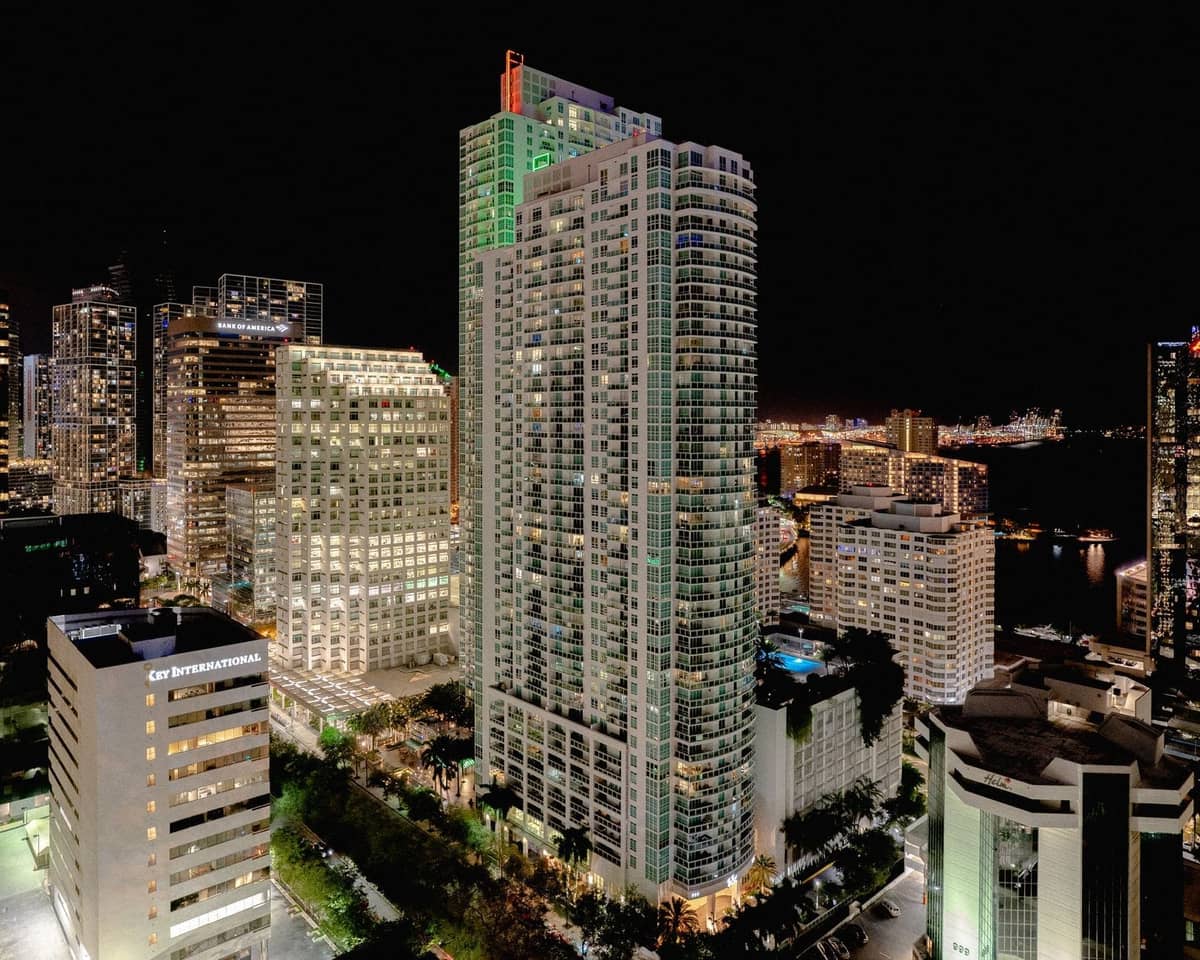
Miami is safe for tourists in the areas where most visitors spend their time. That is not spin — it reflects how crime in the city is actually distributed. The neighborhoods that draw millions of international visitors each year, including Miami Beach, Brickell, Downtown, and Coral Gables, have consistent police presence, high foot traffic during daylight hours, and a tourism infrastructure that is heavily invested in visitor security. Millions of people visit without incident every year.
The more complete picture: Miami's overall crime statistics are higher than the U.S. average. Violent crime is above the national average, and property crime is the bigger gap. Those numbers sound alarming out of context, but they are heavily skewed by a handful of high-crime neighborhoods that most visitors never set foot in.
ℹ️ Good to know
Crime statistics for Miami are based on city-wide data from official sources including the FBI Uniform Crime Reporting program and Miami-Dade Police Department figures. Because these aggregate the entire city, they include high-crime residential areas that are separate from the tourist corridor. Always cross-reference neighborhood-level data before drawing conclusions.
Neighborhood Safety Breakdown: Where to Stay Alert and Where to Relax
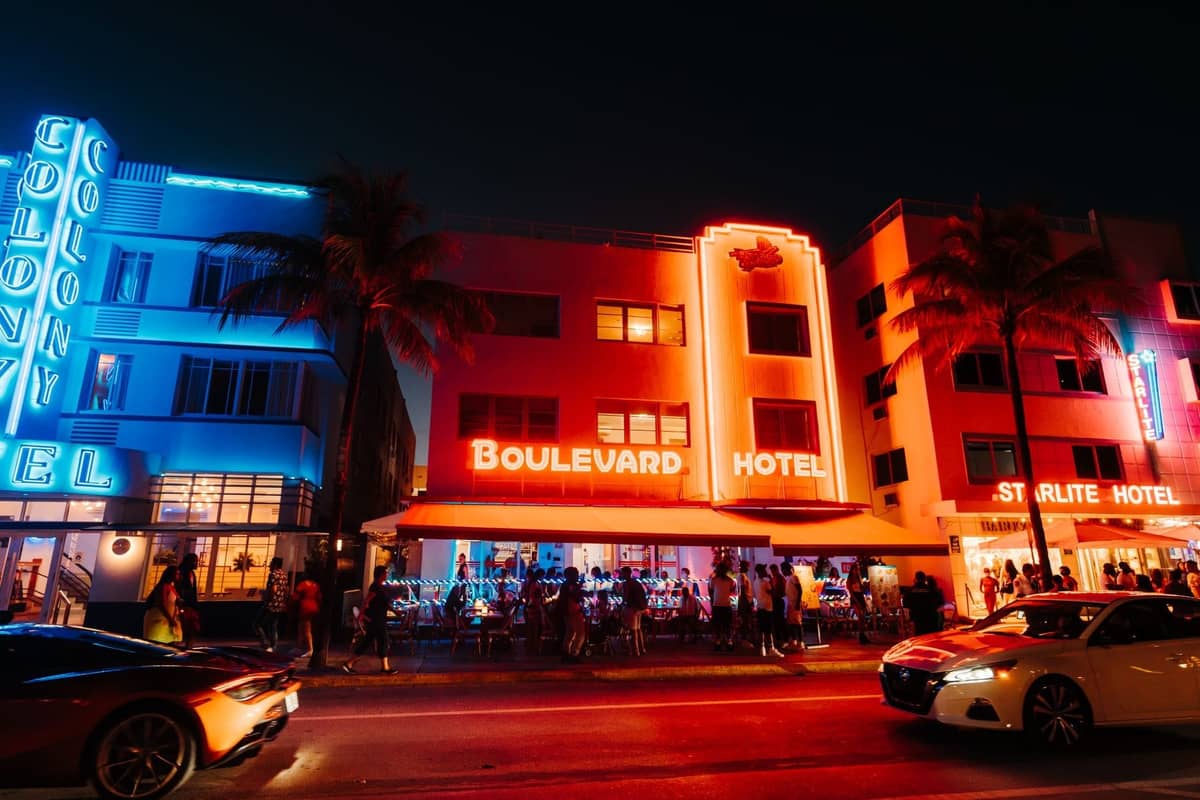
The safest areas for visitors are those with the highest density of hotels, restaurants, and tourist infrastructure. South BeachSouth Beach and the Art Deco Historic District along Ocean Drive are heavily patrolled and generally safe during daylight and early evening. Late nights on Ocean Drive can attract a rowdy crowd, so staying aware of your surroundings after midnight is sensible, particularly around the Lummus Park beach strip.
Brickell and Downtown Miami are business-oriented neighborhoods with high security in commercial buildings and active street life during working hours. Coral Gables is consistently rated among Miami's safest areas, with well-maintained streets and a quieter residential character. Coconut Grove and Key Biscayne are also frequently cited as safer, more relaxed alternatives to the Beach for families and longer-stay visitors.
- Safer for visitors South Beach, Brickell, Coral Gables, Coconut Grove, Key Biscayne, Wynwood (daytime), Miami Design District, Bayside/Downtown waterfront.
- Use standard urban caution Little Havana (daytime is fine; avoid late nights on quieter side streets), Midtown/Edgewater, North Beach. These are not dangerous but don't require the same relaxed awareness as Coral Gables.
- High crime, not tourist areas Liberty City, Overtown, Allapattah, Model City. These neighborhoods have significantly elevated crime rates. There is no tourist reason to visit them, and if you do pass through, exercise full urban awareness.
Overtown deserves a specific note: it has genuine historical significance as a center of African American culture and civil rights history in Miami, and the Freedom Tower sits at its edge near Downtown. The area is undergoing slow gentrification, but crime rates remain elevated. If you visit for cultural reasons, go during the day and stay on the main corridors.
⚠️ What to skip
Petty theft on Miami Beach is real and frequently underreported. Unattended bags on the beach are a target. Never leave phones, wallets, or valuables in your beach bag while swimming. Use hotel safes for passports and extra cash.
Road Safety and Getting Around Without Risk
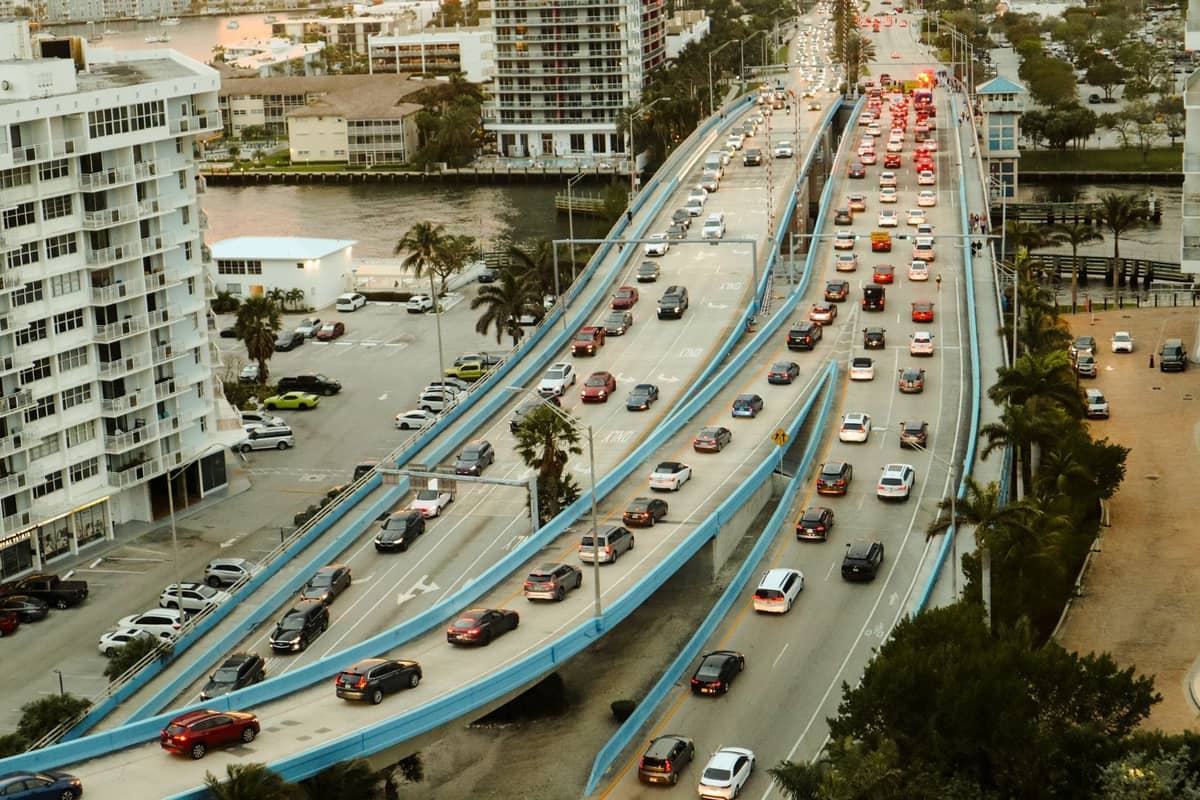
Miami's traffic environment is genuinely challenging. Miami-Dade County recorded over 62,500 traffic crashes in 2021, with roughly 22,200 occurring within the City of Miami proper. Aggressive driving, frequent lane changes without signaling, and high speeds on causeways and highways are the norm rather than the exception.
If you're renting a car, keep doors locked and windows up when stopped at lights, especially after dark or in unfamiliar neighborhoods. Miami-Dade Police specifically advise never leaving bags, luggage, or valuables visible in a parked vehicle. Smash-and-grab theft from rental cars does happen. For moving around without the stress of driving, Miami's transit options include the Metrorail (which connects directly to Miami International Airport via the Orange Line), the free Metromover loop through Downtown and Brickell, and Uber and Lyft, both of which operate legally city-wide and at MIA.
✨ Pro tip
Rental car break-ins cluster around beach parking lots and tourist attraction parking garages. If you must leave the car, take everything with you or put it in the trunk before you park, not after arriving at your destination. Thieves watch for people transferring items to trunks.
Weather Hazards: Hurricanes, Heat, and Flash Flooding
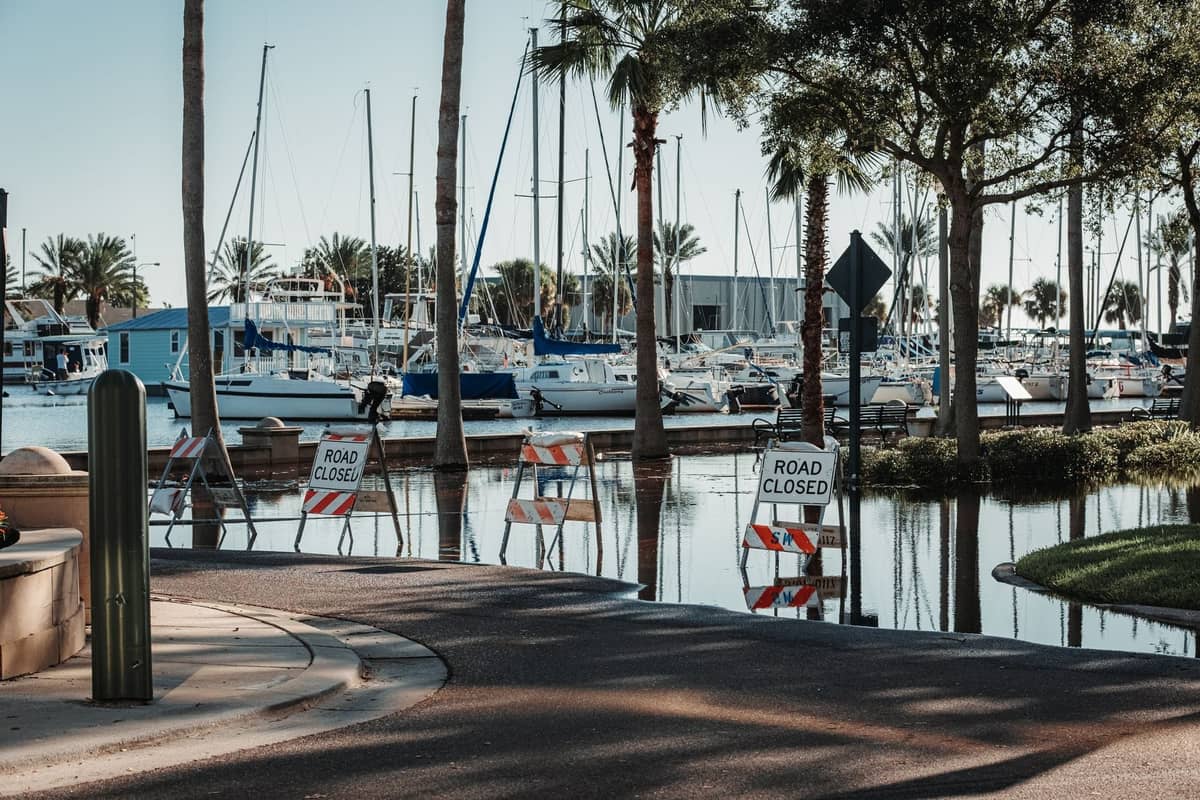
Weather is a genuine safety consideration in Miami that most safety guides underplay. The Atlantic hurricane season runs June 1 to November 30, with peak risk between August and October. Miami sits at sea level, averaging only about 6 feet (1.8 m) above it, which makes storm surge and flooding significant concerns during major weather events. During hurricane season, travelers should monitor the National Weather Service (weather.gov/mfl) and have a clear plan for shelter or evacuation.
Outside of hurricanes, Miami's wet season (May through October) brings intense afternoon thunderstorms regularly. These can escalate quickly, with lightning strikes, localized flash flooding, and dangerous surf conditions. If you're on the beach and see storm clouds building to the west, leave the water and seek shelter immediately. The heat is also not trivial: summer highs regularly reach 89-91°F (32-33°C) with high humidity. Heat exhaustion is a real risk for visitors unaccustomed to tropical conditions, particularly during outdoor activities in the afternoon hours.
- Check the National Weather Service Miami forecast (weather.gov/mfl) daily during hurricane season.
- Download the Ready.gov app or FEMA app for hurricane preparedness alerts.
- Avoid the beach and open water during afternoon thunderstorms, which are daily in summer.
- Stay hydrated and limit strenuous outdoor activity between noon and 3pm in summer.
- Travel insurance that covers weather-related trip interruptions is worth considering if visiting June through October.
Practical Safety Tips Backed by Local Authority Guidance
The following tips come directly from Miami-Dade Police Department and City of Miami Beach Police safety guidelines, not general travel advice. They reflect what local law enforcement actually sees and advises against.
- Walk in well-lit, populated areas and stay on main streets at night. Avoid cutting through parking garages or alleys alone after dark.
- Use a cross-body bag worn across the front of your body in crowded areas like Lincoln Road, Bayside Marketplace, or Calle Ocho.
- Never count cash or display large amounts of money in public. Use ATMs inside banks or well-lit convenience stores rather than standalone outdoor machines.
- Shield your PIN at ATMs and leave immediately if anyone is loitering nearby.
- If someone attempts to rob you, do not resist. Miami Beach Police explicitly advise prioritizing personal safety over property.
- Keep hotel room numbers private: never let staff announce your room number aloud in the lobby.
- Store passports and extra cash in the hotel safe. Carry only what you need for the day.
- Tap water in Miami-Dade is safe to drink. Miami-Dade Water and Sewer reports it meets or exceeds all EPA standards.
Nightlife safety deserves its own mention. Miami's nightlife scene, concentrated in South Beach and Wynwood, is generally well-policed but drink spiking and opportunistic theft do occur in clubs. Keep your drink in hand, go out with people you trust, and use a ride-hailing app rather than hailing a cab on the street after 2am. For a full breakdown of the nightlife landscape, the Miami nightlife guide covers the main areas and what to expect.
Legal Basics Visitors Sometimes Get Wrong
A few legal points that catch visitors off-guard. Cannabis: possession of fewer than 20 grams in Miami is a misdemeanor under Florida law, carrying potential jail time or probation. Possession above that threshold is a felony. Florida has not legalized recreational cannabis for adult use in the same way some other states have, so do not assume rules from other U.S. states apply here.
Indoor smoking is broadly prohibited across Miami in places like airports, hotel lobbies, offices, restaurants, and most bars, with limited exceptions for standalone bars that meet specific criteria. Drinking alcohol on Miami Beach's public areas and on public streets is generally prohibited and enforced. Tipping is a firm social expectation in Miami, not optional: 18-20% is standard for table service, and failing to tip adequately is considered poor form. The country dialing code for the U.S. is +1, and Miami's local area code is 305 (with 786 as an overlay).
💡 Local tip
If your home country participates in the U.S. Visa Waiver Program (VWP), you can visit Miami for up to 90 days without a visa, but you must obtain an approved ESTA authorization before traveling. Check the current U.S. Department of State website for eligible countries, as the list changes. Nationals not covered by the VWP need a B-2 visitor visa arranged in advance.
FAQ
Is Miami safe to walk around at night?
In the main tourist areas, yes, with sensible precautions. South Beach's Ocean Drive, Lincoln Road, and the Brickell city core are active and well-lit at night with police visibility. Side streets in quieter areas and anywhere north of around 23rd Street on the less-trafficked parts of Miami Beach require more caution after midnight. Stick to populated, well-lit streets and use Uber or Lyft rather than walking long distances alone late at night.
What are the most dangerous areas in Miami to avoid?
Liberty City, Overtown, Allapattah, and Model City consistently appear in Miami-Dade crime data as higher-risk neighborhoods. They are not part of the tourist circuit, and there is no practical reason for most visitors to travel through them. If you do, apply full urban awareness: stay in your car with doors locked, avoid stopping unnecessarily, and do not display valuables.
Is Miami Beach safe for solo female travelers?
Generally yes, particularly during the day and in populated areas. The main risks for solo female travelers are the same as for any solo visitor: petty theft, drink spiking in nightlife venues, and unwanted attention late at night in club areas. Practical steps: use ride-hailing apps rather than walking alone after midnight, keep drinks in hand in bars, and stay in well-reviewed accommodations in South Beach or Brickell. Our Miami solo travel guide covers this topic in more depth.
What should I do if there is a hurricane warning while I'm in Miami?
Follow official evacuation orders immediately if issued for your zone. Miami-Dade County uses a lettered evacuation zone system (A through F), with Zone A being the highest risk. Know your hotel's zone before you check in. Monitor the National Weather Service at weather.gov/mfl and the Miami-Dade Emergency Management site. Do not attempt to ride out a major hurricane in a non-reinforced building or in a flood-prone zone.
Is public transport safe in Miami?
Miami-Dade Transit's Metrorail, Metromover, and Metrobus are generally safe during daylight hours. The free Metromover through Downtown and Brickell is particularly convenient and well-used. Late at night, particularly on less-frequented bus routes, standard urban caution applies: stay aware, keep bags close, and avoid displaying phones or valuables. Uber and Lyft are widely available and often more practical for evening travel.