Freedom Tower Miami: The Landmark That Shaped a City
Standing at 600 Biscayne Boulevard, Freedom Tower at Miami Dade College is one of downtown Miami's most architecturally striking and historically significant buildings. Built in 1925 as the Miami News headquarters, it later served as the federal Cuban Refugee Center, processing hundreds of thousands of Cuban exiles after 1962. Today it functions as a museum, gallery, and cultural institution — a rare place where architecture, immigration history, and civic identity converge in a single tower.
Quick Facts
- Location
- 600 Biscayne Boulevard, Downtown Miami, FL 33132
- Getting There
- Metromover (free) to Freedom Tower station; about a 10–12 minute walk from Government Center Metrorail
- Time Needed
- 1.5 to 2.5 hours
- Cost
- General $18 | Youth (7–18) / Students $12 | Seniors (62+) $14 | Free: MDC students, children 6 and under, active U.S. military, veterans, visitors identifying as disabled and their accompanying caregiver
- Best for
- History enthusiasts, Cuban-American culture, architecture admirers, first-time Miami visitors
- Official website
- www.mdc.edu/freedomtower
What Is Freedom Tower?
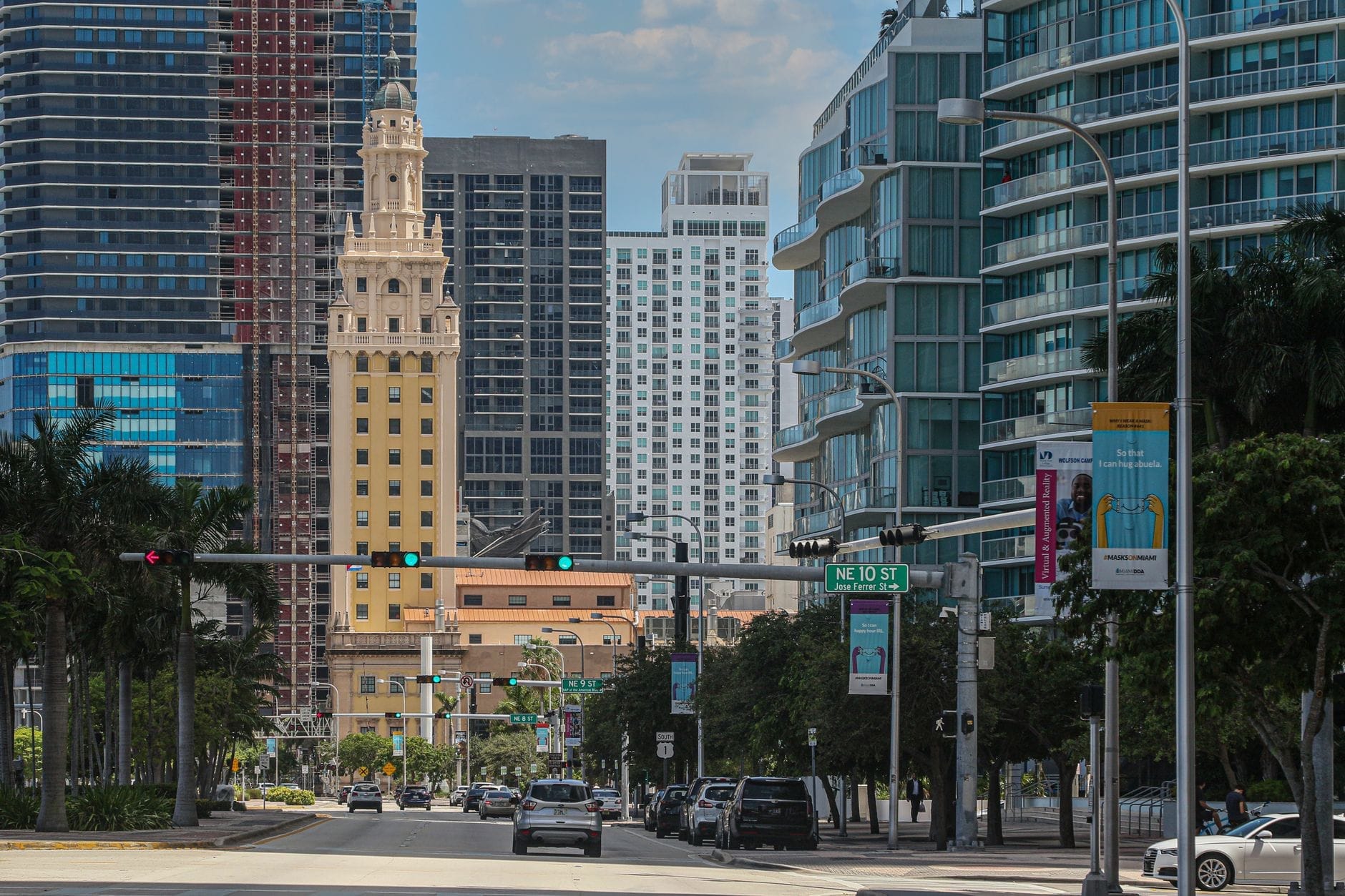
Freedom Tower at Miami Dade College is a 17-story Baroque Revival landmark on Biscayne Boulevard, completed in 1925 as the headquarters and printing plant of The Miami News. When it was built, it was the tallest structure in the American South, a fact that tells you something about how quickly Miami was growing and how seriously the city took its own ambitions. The tower's Mediterranean Revival silhouette — a terracotta-colored facade, arched windows, and a distinctive octagonal lantern at the crown — was modeled partly on the Giralda tower in Seville, Spain, giving it a visual gravity that most of downtown Miami's newer skyline still struggles to match.
What makes the building more than an architectural curiosity is what happened inside it from 1962 onward. After The Miami News vacated the building, it was taken over by the federal government as the primary processing center for Cuban exiles fleeing Fidel Castro's revolution. From 1962 to 1974, hundreds of thousands of Cuban refugees passed through its doors, receiving medical screenings, legal documentation, and social services. Cuban Americans came to call it "El Refugio" — the refuge — and the emotional weight of that history is still palpable when you walk through the doors today. In 2008, the building was designated a U.S. National Historic Landmark, having already been listed on the National Register of Historic Places in 1979.
ℹ️ Good to know
The tower completed a major two-year renovation and reopened to the public for its centennial in 2025. Exhibits and gallery layouts may still be evolving — check the official site before visiting for the latest programming.
Inside the Building: What You'll Actually See
The ground floor sets the tone immediately. The lobby is formal and cool, with high ceilings that amplify footsteps and voices into something approaching a murmur. Light enters through tall arched windows, and the tile and plaster work from the original 1925 construction has been carefully restored during the 2025 renovation. It does not feel like a converted office building. It feels like a place that was always meant to matter.
The permanent exhibitions focus on the Cuban exile experience, Miami's role as a city shaped by immigration, and the broader history of the tower itself. Photographs, personal testimonies, documents, and artifacts from the refugee processing era form the core of the historical displays. There is a tactile specificity to this material that is hard to replicate — you are looking at paperwork that actual families held in their hands at one of the most frightening moments of their lives.
Rotating gallery exhibitions on upper floors tend toward contemporary art with cultural or political themes, frequently featuring work by Cuban-American and Latin American artists. The quality is consistently high — Miami Dade College has operated some of the most respected gallery programming in South Florida for decades. If you are visiting during a major opening or programming event, expect a livelier atmosphere; on a quiet Tuesday morning, you may have whole floors to yourself.
The tower sits at the northern edge of Downtown Miami, close to the Pérez Art Museum Miami and Bayfront Park. Combining a visit to Freedom Tower with a walk along the bayfront is a natural pairing that takes roughly half a day and costs nothing extra beyond admission.
Tickets & tours
Hand-picked options from our booking partner. Prices are indicative; availability and final rates are confirmed when you complete your booking.
Everglades admission ticket with airboat ride and wildlife show
From 24 €Instant confirmationFree cancellationKey West day trip with glass bottom boat ride
From 110 €Instant confirmationFree cancellationEverglades airboat ride with Biscayne Bay boat tour and transportation
From 67 €Instant confirmationFree cancellationGrand Bahama tour with optional Pig Beach visit
From 309 €Instant confirmationFree cancellation
The Architecture: Why the Building Itself Is Worth Examining
The design was created by the New York firm Schultze and Weaver, the same architects responsible for the Waldorf Astoria and the Biltmore Hotel in Coral Gables. That context is important: the Freedom Tower was conceived as a prestige building during the Florida land boom of the 1920s, when developers and newspaper proprietors wanted structures that communicated permanence and sophistication in a city that was barely a generation old.
The Spanish Renaissance influences in the facade are deliberate. Miami's architectural identity in that period drew heavily on Mediterranean Revival styles, partly as a marketing strategy — developers wanted to evoke the romance of Southern Europe in a subtropical setting. You can trace the same aesthetic thread through the Biltmore Hotel in Coral Gables and the Venetian Pool nearby. What sets Freedom Tower apart is how well the exterior has survived: the terracotta tiling, the Baroque ornamentation around the upper stories, and the lantern tower all remain intact, making it one of the most complete examples of this style left in Miami.
Stand on the Biscayne Boulevard side in the morning, when the eastern light hits the facade directly. The texture of the stonework becomes readable in a way it isn't at midday, when the sun is overhead and shadows flatten everything. The building photographs well from across the boulevard, with the bay visible in the background on clear days.
Best Time to Visit and What to Expect by Hour
The tower typically opens at 10:00 a.m. and closes at 6:00 p.m., though hours may vary by day and program. Weekday mornings, particularly Tuesday through Thursday, are the least crowded. The building draws school groups and organized tours on weekday afternoons, so if quiet, unhurried exploration is your priority, aim to arrive when the doors open. Weekend afternoons bring more casual visitors and families, but the building is large enough that crowds rarely feel oppressive.
Miami's summer heat — average highs around 89 to 91°F (32 to 33°C) from June through August — makes any air-conditioned cultural institution more appealing, and Freedom Tower is fully climate-controlled throughout. The dry season from November through April is the most comfortable for combining an interior visit with exterior exploration and walking the nearby bayfront. Afternoon thunderstorms are common in the wet season (May through October), so plan outdoor segments of your day for the morning.
💡 Local tip
If you plan to visit both Freedom Tower and the Pérez Art Museum Miami on the same day, start at Freedom Tower when it opens at 10 a.m. and walk to PAMM afterward. Both are within a few minutes of each other on the bayfront, and the historical context from Freedom Tower enriches the contemporary art you'll encounter at PAMM.
Getting There: Transit Is Genuinely Convenient
The Metromover — Miami-Dade's free automated people-mover — has a dedicated Freedom Tower station on the Omni Loop that deposits you directly at the tower plaza. This is the easiest approach if you are coming from Brickell, downtown, or connecting from Government Center Metrorail. The Metrorail Orange Line connects Miami International Airport to Government Center station, from which you can transfer to the Metromover to reach Freedom Tower, making it one of the more transit-accessible attractions in the city.
If you are arriving by Brightline from Fort Lauderdale or farther north, MiamiCentral Station is about a five-minute walk or one Metromover stop from the tower. For a broader overview of moving around the city, the getting around Miami guide covers all transit options in detail.
Drivers can often park at the Miami Dade College garage at 500 NE 2nd Avenue (Building 7) and in nearby MDC lots, though availability, hours, and any free-parking periods vary and should be confirmed in advance. Street parking and paid commercial garages are also available nearby, though downtown Miami parking can be tight on weekday business hours.
Accessibility and Practical Details
The building is wheelchair accessible, with elevator access to exhibition areas and accessible restrooms available for visitors. Wheelchairs are available on request at the entrance. If you have mobility considerations, the Freedom Tower station on the Metromover is also accessible, making the journey from transit to the building straightforward.
Free admission applies to MDC students and employees with valid MDC ID, children 6 and under, active U.S. military and veterans, visitors identifying as disabled and their accompanying caregiver, and Friends of the Freedom Tower. For everyone else, general admission is $18, with discounted rates for youth aged 7 to 18 and students with ID ($12) and seniors 62 and over ($14). Verify current prices at the official Miami Dade College website before your visit, as rates can change.
Honest Assessment: Who This Is For, and Who Might Not Connect
Freedom Tower rewards visitors who arrive with some interest in history, immigration, or architecture. The exhibitions are substantive and the building itself is genuinely impressive — this is not a case where the story around an attraction exceeds the reality of visiting it. But travelers looking purely for beaches, nightlife, or outdoor activity will find little here. The experience is interior, reflective, and relatively quiet. That is a feature for the right visitor and a mismatch for the wrong one.
Visitors focused on Cuban-American culture will want to combine this stop with a visit to Little Havana, where the cultural story continues at street level through food, music, and daily life. The Little Havana neighborhood guide covers the area in depth.
Families with young children can visit — the building is accessible and the staff are welcoming — but children under ten may struggle to engage with the exhibition content. Children 6 and under enter free, which softens the cost consideration. Adults with a genuine curiosity about Miami's identity, its immigrant history, or its architectural heritage will get the most out of their time here.
Insider Tips
- The best exterior photographs of the tower are taken from the median on Biscayne Boulevard, looking northwest in the morning light. The bay often appears in the background, framing the tower against water rather than concrete.
- Ask at the front desk about any free public programming — lectures, film screenings, and community events are regularly held in the ground-floor spaces and are sometimes open without admission.
- The Metromover Freedom Tower station is literally at the building's doorstep. If you have never used the Metromover, this is a low-pressure way to try it: the route is simple, the system is free, and you can ride it onward along the bayfront after your visit.
- The upper-floor gallery exhibitions rotate several times per year. If you have visited before, check the MDC website for current shows before returning — the building's programming calendar is more active than most visitors expect.
- Freedom Tower is about a 10-minute walk from the Pérez Art Museum Miami along the bayfront. The waterfront path between them passes through Maurice A. Ferré Park, where you can take a break with views of Biscayne Bay before heading to your next stop.
Who Is Freedom Tower For?
- First-time Miami visitors wanting historical context for the city's Cuban-American identity
- Architecture enthusiasts interested in 1920s Mediterranean Revival design
- Travelers researching Cuban exile history or Latin American immigration to the U.S.
- Museum-goers looking for contemporary exhibitions with cultural depth
- Downtown Miami walkers combining multiple cultural sites in a single day
Nearby Attractions
Other things to see while in Downtown Miami:
- Bayfront Park
Bayfront Park is a free, 32-acre public park on the edge of Biscayne Bay in Downtown Miami, with roots going back to 1896. It offers open lawns, shaded waterfront paths, and sweeping bay views within steps of the Metromover — making it one of the most accessible green spaces in the city.
- Bayside Marketplace
Bayside Marketplace is an open-air shopping and entertainment complex on the edge of Biscayne Bay in Downtown Miami. Free to enter and easy to reach by public transit, it draws a mix of tourists, locals catching live music, and visitors boarding bay cruises. The setting does most of the work.
- HistoryMiami Museum
Founded in 1940 and recently rebranded from HistoryMiami Museum to Museum of Miami, this Smithsonian Affiliate in downtown Miami is dedicated to telling roughly 10,000 years of South Florida's layered past. From Tequesta settlements to Caribbean immigration waves, it's one of the major history institutions in the region.
- Miami Riverwalk
The Miami Riverwalk traces the north bank of the Miami River through the heart of Downtown, offering skyline views, working tugboats, and a rare ground-level connection to the water. It costs nothing, fits into any itinerary, and looks entirely different depending on when you go.