The Biltmore Hotel Coral Gables: A 1926 Landmark Worth Exploring
Opened in 1926 and designated a National Historic Landmark, The Biltmore Hotel Miami – Coral Gables is one of Florida's most architecturally significant buildings. Whether you're visiting for Sunday brunch, a swim in one of the largest hotel pools in the country, or simply to stand beneath the 315-foot tower, this is a place that rewards the curious traveler.
Quick Facts
- Location
- 1200 Anastasia Avenue, Coral Gables, FL 33134
- Getting There
- 4.8 miles from Miami International Airport; taxi or rideshare recommended. Self-parking and valet available on-site (fee applies).
- Time Needed
- 1–3 hours for a visit; longer if dining, swimming, or attending Sunday brunch
- Cost
- No admission fee to visit the lobby and grounds. Dining, golf, spa, and pool access carry separate costs.
- Best for
- Architecture lovers, history enthusiasts, special occasion dining, and anyone curious about Old Florida grandeur
- Official website
- biltmorehotel.com
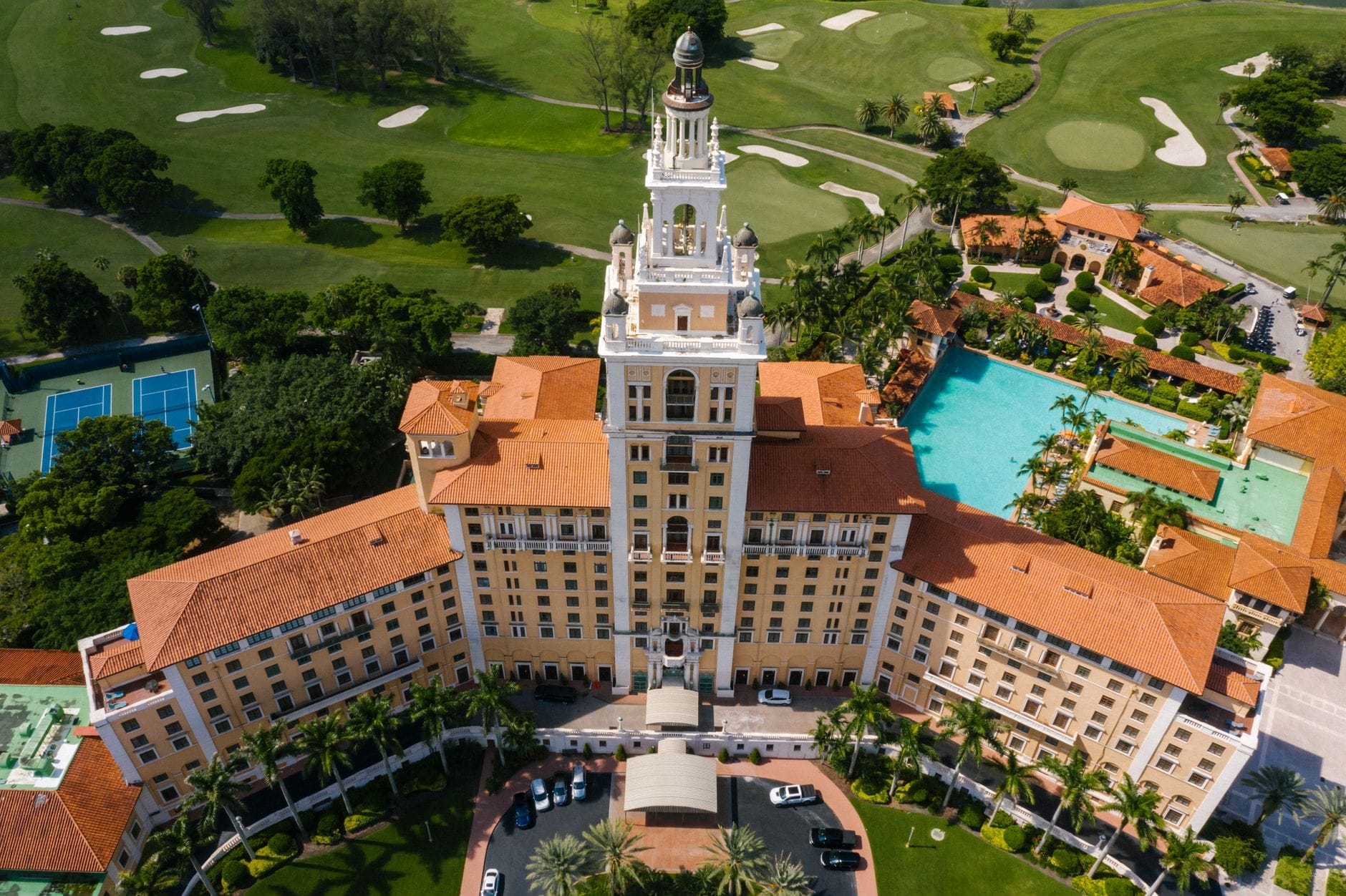
What the Biltmore Actually Is
The Biltmore Hotel Miami – Coral Gables is not a museum or a park. It is an operating luxury hotel, and that distinction shapes how you experience it. There are no tickets, no timed entries, no rope lines. You walk in through the main entrance on Anastasia Avenue, and the building receives you on its own terms: a vaulted lobby with hand-painted ceilings, floors of marble and terracotta, and a scale that makes most modern hotels feel like lobbies themselves.
Opened in January 1926 (with a grand opening on January 15, 1926), the hotel was designed by Schultze and Weaver, the same architectural firm behind the Waldorf Astoria in New York, in the Mediterranean Revival style that defines Coral Gables as a whole. The tower, modeled after the Giralda bell tower in Seville, rises to 315 feet and is visible from a surprising distance across this low-lying city. It has been a National Historic Landmark since 1996.
💡 Local tip
You do not need to be a hotel guest to visit the lobby, walk the grounds, or dine in the restaurants. The public is generally welcome during operating hours. That said, pool access is reserved for hotel guests and members.
The Architecture Up Close
Arrive on foot or by car along Anastasia Avenue for the most intentional approach to the building. The facade presents a long, symmetrical elevation in creamy stucco, with arched loggias, ornamental ironwork, and the tower anchoring the composition at the northeast corner. The detail work rewards slow looking: terracotta urns along the roofline, keystone carvings above windows, and the subtle ochre tones of the exterior that shift from warm gold in morning light to pale amber at dusk.
Inside, the lobby is the architectural centerpiece. The ceiling height in the central hall is substantial enough that conversations echo softly, and the painted arches overhead draw the eye upward before you register anything else. The floor patterns, the iron chandeliers, and the arrangement of seating all follow a logic that rewards time spent standing still rather than moving quickly toward the pool bar.
For context on why this style dominates the area, the Coral Gables neighborhood was conceived in the 1920s by developer George Merrick as a planned Mediterranean-themed city, and the Biltmore was its crown jewel. Understanding that origin makes the building feel less like a hotel and more like the thesis statement of an entire urban project.
Tickets & tours
Hand-picked options from our booking partner. Prices are indicative; availability and final rates are confirmed when you complete your booking.
Everglades admission ticket with airboat ride and wildlife show
From 24 €Instant confirmationFree cancellationKey West day trip with glass bottom boat ride
From 110 €Instant confirmationFree cancellationEverglades airboat ride with Biscayne Bay boat tour and transportation
From 67 €Instant confirmationFree cancellationGrand Bahama tour with optional Pig Beach visit
From 309 €Instant confirmationFree cancellation
How the Experience Changes by Time of Day
Morning visits, particularly on weekdays, offer the quietest experience of the public spaces. The lobby and adjacent corridors are lightly staffed and largely empty before 9am, and the quality of light through the arched windows at that hour is exceptional for photography. The grounds around the hotel, including the gardens and the terrace areas overlooking the pool, are cool and uncrowded.
Sunday brunch at the Cascade restaurant draws a significant local crowd and transforms the hotel's atmosphere entirely. By mid-morning on Sundays, the driveway fills, valet staff move quickly, and the dining room carries the ambient noise of a well-attended social event. If you want the architectural experience, this is not the ideal time. If you want to see Miami's Coral Gables community dressed up and celebrating, it is exactly the right one.
Late afternoon on a weekday is arguably the most atmospheric time to visit. The tower catches the western sun, the pool terrace empties of most daytime guests, and the bar inside the lobby begins to fill slowly. The light at this hour, filtered through thick landscaping and colonnaded corridors, creates the closest thing to the visual mood the building was probably designed to produce.
ℹ️ Good to know
The hotel sits on approximately 18 acres of tropical landscape. Budget time to walk the full perimeter, which includes garden paths, the golf course edge, and views back toward the tower from the south side of the property.
The Pool: Context and Reality
The Biltmore's pool is frequently cited as one of the largest hotel pools in the continental United States. In its 1930s heyday, it hosted synchronized swimming shows, alligator wrestling exhibitions, and Johnny Weissmuller, who trained here before his Tarzan films and at one point held an unofficial record in competition. The pool still looks the part: long, colonnaded along one side, and surrounded by the kind of landscaping that suggests a Moorish courtyard more than a hotel amenity.
Be clear on one point before you arrive: pool access is restricted to hotel guests and club members. You can see the pool from certain vantage points on the grounds and through the colonnaded arcade, but you will not be able to swim unless you are staying at the hotel. This disappoints visitors who read about the pool without noting that caveat.
History, Wartime, and What Came After
The Biltmore's story is not a smooth arc of luxury. The hotel opened during the Florida land boom of the 1920s, closed during the Great Depression, and was converted to a military hospital during World War II. It served as the Army Air Forces Regional Hospital for the duration of the war, and then sat largely unused from the late 1940s until the early 1970s, followed by use as a Veterans Administration Hospital and University of Miami medical facility before its later restoration. There are accounts that the upper floors were abandoned long enough to become genuinely derelict.
The City of Coral Gables took ownership of the building and eventually oversaw its restoration, reopening it as a hotel in 1987. The restoration preserved the original architectural character while updating the infrastructure, and the result is a building that reads as genuinely historic rather than reconstructed. The National Historic Landmark designation followed in 1996.
The Biltmore's context within the broader story of historic Miami architecture is worth understanding before you visit. The Vizcaya Museum and Gardens in nearby Coconut Grove was built a decade earlier, also in a Mediterranean Revival idiom, and the two properties together represent the aspirations of 1920s South Florida at its most extravagant.
Practical Details for Non-Hotel Guests
The hotel does not operate as a paid-entry attraction, so there are no tickets to book in advance. You can walk into the lobby during normal business hours, take in the architecture, and leave without spending anything. That said, the spaces are designed for guests and diners, not sightseers, so move respectfully and avoid lingering in areas where staff are clearly preparing for private events.
Dining options open to the public include the main restaurant and bar. The Sunday brunch is well-reviewed and moderately expensive, in keeping with the hotel's positioning. The golf course is available to non-guests at published green fees, though those change seasonally and should be checked directly with the hotel. The spa also accepts outside bookings.
Parking is available on-site, with both self-parking and valet options at a fee. The hotel is 4.8 miles from Miami International Airport, making it genuinely easy to reach by rideshare or taxi. There is no direct public transit stop at the door, so a car or rideshare is the practical choice for most visitors.
⚠️ What to skip
If you visit during a private event or wedding, significant portions of the lobby, terraces, and outdoor areas may be closed to the public. Weekends in the November-to-April high season see the highest frequency of private events. Calling ahead is worth the effort if you have a specific visit in mind.
Photography and Seasonal Considerations
The building photographs well in virtually any light, but the tower is best captured from the lawn to the south of the main entrance in the late afternoon when the sun is behind you and the stucco glows. Interior shots of the lobby benefit from the morning light through east-facing windows, when flash is unnecessary and the painted ceiling reads clearly.
Miami's dry season, roughly November through April, brings lower humidity and more reliable skies, making it the most comfortable time to walk the grounds and linger outside. Summer visits are entirely possible but expect afternoon thunderstorms and heat that makes outdoor exploration genuinely uncomfortable after midday. For a broader sense of when to plan your South Florida trip, the best time to visit Miami guide covers the tradeoffs in detail.
Who Should Probably Skip This
If your primary interest is beaches, nightlife, or street food, the Biltmore is a detour that will feel out of place in your itinerary. It is in Coral Gables, which is a quieter, residential part of the Miami area, and it requires a deliberate journey rather than a passing stop. Travelers who are not drawn to historic architecture or the social rituals of a grand hotel will find the visit underwhelming.
Visitors hoping to swim in the famous pool without a hotel booking will also be disappointed. If that is your main motivation, consider Venetian Pool nearby, which is a historic public pool also built in the 1920s and open to paying day visitors.
Insider Tips
- The free historical walking tours of the hotel, when offered, depart from the lobby and cover wartime history and architectural details that are not immediately visible on a self-guided visit. Check directly with the hotel concierge for current schedules.
- The bar off the lobby is one of the more underused spaces in the hotel. On a weekday afternoon it is quiet enough to hold a conversation and detailed enough architecturally to justify a drink or coffee you would otherwise skip.
- Approach the tower from the south lawn rather than from the main entrance driveway. The unobstructed view from the garden side gives you the full height of the Giralda-inspired tower without parked cars or arriving guests in the frame.
- If you are visiting Coral Gables more broadly, the Biltmore pairs well with the Venetian Pool, which is a few minutes away on foot or by car. Both date from the same 1920s development era and make more sense together than either does alone.
- Valet at the hotel can be expensive, particularly during weekend events. Self-parking in the structure is cheaper and just as convenient for a lobby visit.
Who Is Biltmore Hotel Coral Gables For?
- Architecture and design travelers who want to understand the Mediterranean Revival movement in South Florida
- History enthusiasts interested in 1920s Florida land boom history and wartime repurposing of landmark buildings
- Special occasion diners looking for a grand setting for Sunday brunch or an anniversary dinner
- Photographers seeking dramatic interior and exterior compositions outside the South Beach circuit
- Travelers combining a Coral Gables half-day with the Venetian Pool or Miracle Mile
Nearby Attractions
Other things to see while in Coral Gables:
- Fairchild Tropical Botanic Garden
Fairchild Tropical Botanic Garden is an 83-acre living museum in Coral Gables that has been quietly stunning visitors since 1938. Home to one of the world's most significant collections of palms, cycads, and rare tropical plants, it rewards anyone willing to slow down and look closely.
- Matheson Hammock Park Beach
Matheson Hammock Park is a 630-acre Miami-Dade county park on the shores of Biscayne Bay, just south of Coral Gables. Its signature feature is a man-made atoll pool naturally flushed by tidal action, creating some of the most sheltered, shallow, and calm swimming water in all of South Florida. Open daily from sunrise to sunset, with the park office and marina operating 8 a.m. to 5 p.m., it draws families, kayakers, and anyone needing a break from the crowds of South Beach.
- Miracle Mile
Miracle Mile is the commercial heart of downtown Coral Gables, an approximately half-mile stretch of Coral Way lined with independent shops, restaurants, bridal boutiques, and the historic Miracle Theatre. Free to explore, rich in Mediterranean Revival architecture, and walkable in an afternoon.
- Venetian Pool
Venetian Pool is a 1920s-era public swimming pool carved from a coral rock quarry in Coral Gables, Florida. Fed by a natural underground aquifer, it holds 820,000 gallons of spring water and is listed on the National Register of Historic Places. It is one of the most architecturally distinctive public pools in the United States.