Miracle Mile, Coral Gables: The Complete Visitor's Guide
Miracle Mile is the commercial heart of downtown Coral Gables, an approximately half-mile stretch of Coral Way lined with independent shops, restaurants, bridal boutiques, and the historic Miracle Theatre. Free to explore, rich in Mediterranean Revival architecture, and walkable in an afternoon.
Quick Facts
- Location
- Coral Way between LeJeune Road & Douglas Road, Coral Gables, FL 33134
- Getting There
- Free Coral Gables Trolley connects Miracle Mile to the Biltmore and Merrick Park; street parking garages available behind businesses
- Time Needed
- 1.5 to 3 hours for a relaxed walk, shopping, and a meal
- Cost
- Free to walk; costs depend on individual shops, restaurants, and parking
- Best for
- Leisurely afternoon strolls, dining, local shopping, architecture enthusiasts
- Official website
- www.coralgables.com/attractions/miracle-mile
What Is Miracle Mile?
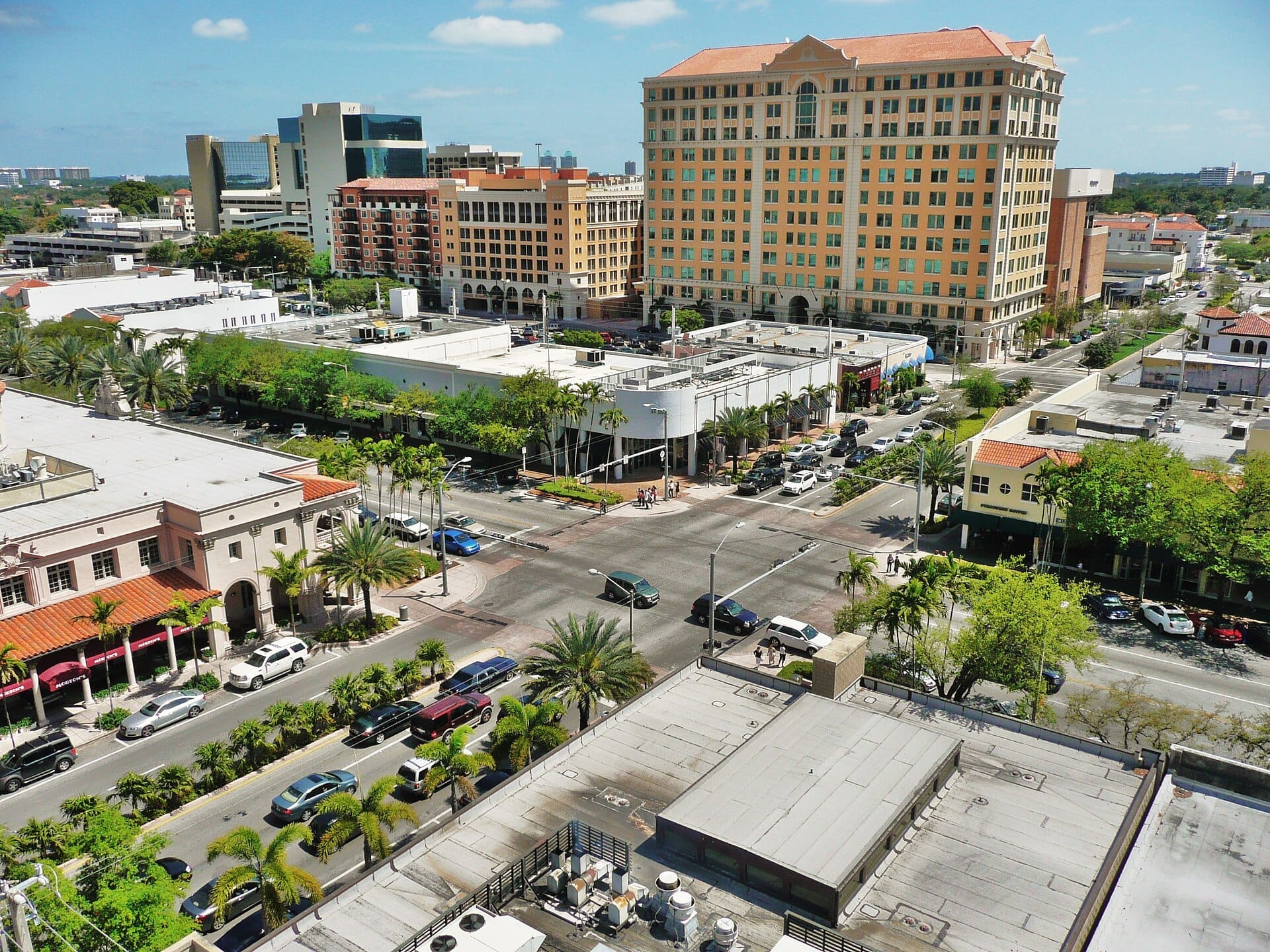
Miracle Mile is the main street of downtown Coral Gables, an approximately half-mile (about 0.8 km) commercial corridor running along Coral Way between LeJeune Road (SW 42nd Avenue) and Douglas Road (SW 37th Avenue). It functions as both a working shopping street and a civic gathering point for the city — a place where residents pick up dry cleaning, meet for coffee, catch a show at the theater, and browse independent boutiques within the same few blocks.
Despite the name suggesting something vast, this is a compact, four-block stretch. That intimacy is part of the appeal. The street is wide, the sidewalks are broad, and the low-rise Mediterranean Revival buildings that line both sides create a human-scaled environment that feels deliberate in a metro area otherwise dominated by highways and high-rises.
Coral Gables itself was one of the first planned communities in the United States, laid out in the 1920s by developer George Merrick with a distinct aesthetic code rooted in Spanish Mediterranean architecture. Miracle Mile sits at the center of that vision. If you want broader context for the neighborhood, the Coral Gables neighborhood guide covers the city's character and other key attractions.
A Brief History: From Coral Way to Miracle Mile
The four-block commercial strip along Coral Way began to take shape in the 1940s, when developers and business owners started investing seriously in the area. By the 1950s, it had been rebranded as a high-end shopping destination under the name 'Miracle Mile,' a marketing move that positioned it alongside similar named retail corridors popular in American cities at the time.
A key figure in that transformation was George K. Zain, remembered today as the 'Father of Miracle Mile.' A plaque honoring him was dedicated in the 1960s at the western entrance to the Mile, near the LeJeune Road end. It is easy to walk past without noticing, but it anchors the street in a specific civic history that goes beyond retail.
The Miracle Theatre, built in 1948 and now home to Actors' Playhouse at the Miracle Theatre, is the most architecturally distinctive building on the block. Its marquee-style facade anchors the south side of the street and remains a working regional theater, not a preserved relic. Catching a performance here adds genuine local texture to a visit.
ℹ️ Good to know
The Miracle Theatre at 280 Miracle Mile was built in 1948 and now houses Actors' Playhouse, a professional regional theater. Check their schedule before your visit — evening performances transform the strip's energy entirely.
Tickets & tours
Hand-picked options from our booking partner. Prices are indicative; availability and final rates are confirmed when you complete your booking.
Everglades admission ticket with airboat ride and wildlife show
From 24 €Instant confirmationFree cancellationKey West day trip with glass bottom boat ride
From 110 €Instant confirmationFree cancellationEverglades airboat ride with Biscayne Bay boat tour and transportation
From 67 €Instant confirmationFree cancellationGrand Bahama tour with optional Pig Beach visit
From 309 €Instant confirmationFree cancellation
What the Street Actually Looks Like
Walking from the LeJeune Road end toward Douglas Road, the street is shaded by mature trees at intervals, with wide sidewalks on both sides. Ground-floor retail occupies most of the block frontage: bridal and formalwear boutiques are unusually concentrated here (Miracle Mile has a long-standing reputation as Miami's bridal row), alongside local restaurants, wine bars, jewelry stores, and a handful of chain businesses. The upper floors of most buildings are occupied by professional offices, law firms, and beauty salons.
The architectural palette is consistent without being monotonous. Cream and terracotta tones, arched entryways, wrought-iron details, and red barrel tile rooflines appear across most of the low-rise commercial buildings, reinforcing Coral Gables' Mediterranean identity. There are no glass-tower storefronts here. Even newer additions have been built to respect the existing scale, which keeps the street feeling cohesive.
Cross streets, particularly Salzedo Street and Giralda Avenue, extend the walkable dining and shopping area one or two blocks in either direction. Giralda Plaza, just north of Miracle Mile along Giralda Avenue between Salzedo and Galiano, functions as an outdoor pedestrian plaza with al fresco dining that effectively extends the Miracle Mile experience without technically being part of it.
How the Experience Changes by Time of Day
Weekday mornings are the quietest window. Shop owners are opening up, restaurant staff are setting sidewalk tables, and the foot traffic is mostly residents on errands. The light is soft and the air is cooler, making this genuinely the most pleasant time to walk the street without crowds. Outdoor cafe seating fills gradually through the late morning.
Lunchtime brings a noticeable increase in office workers from nearby Brickell and the surrounding Coral Gables business district. The restaurant terraces fill quickly between noon and 1:30 PM. If you are planning a seated lunch without a wait, arriving before noon or after 1:30 PM makes a practical difference.
Weekend afternoons are the peak for shopping, with the bridal boutiques and specialty retailers drawing couples, families, and browsers. The street is at its most animated from roughly 11 AM to 4 PM on Saturdays. Evenings shift the character toward dining and entertainment: the Miracle Theatre's performance nights fill the nearby parking garages, and the restaurant bars along the Mile and on Giralda Plaza stay busy until late.
💡 Local tip
The free Coral Gables Trolley is a practical way to arrive without dealing with parking. It connects Miracle Mile to the Biltmore Hotel, Merrick Park, and other city stops. Routes and schedules can be confirmed at the City of Coral Gables website before your visit.
Weather, Seasons, and When to Visit
Because Miracle Mile is an outdoor street, Miami's climate shapes how pleasant the experience is at any given time. The dry season, roughly November through April, offers the most comfortable walking conditions: temperatures typically range from the mid-70s to low 80s Fahrenheit during the day, with lower humidity and minimal rain. This period also coincides with Miami's peak tourist season.
Summer months (June through August) bring heat and humidity that can make prolonged outdoor walking uncomfortable, particularly between noon and 3 PM when temperatures regularly reach the upper 80s to low 90s Fahrenheit. Afternoon thunderstorms arrive most days from late spring through October. The covered awnings along the Mile offer partial shelter, but a summer visit is best planned for morning or evening hours.
For a fuller picture of how seasons affect sightseeing across Miami, the best time to visit Miami guide breaks down conditions month by month.
Practical Walkthrough: Getting There and Getting Around
Miracle Mile is located in Coral Gables, approximately 6 miles southwest of downtown Miami. By car, the most direct route from Miami is via Coral Way (SW 24th Street) heading west; Miracle Mile begins at the intersection with LeJeune Road. Municipal parking garages are located behind the businesses on both the north and south sides of the street, purpose-built to reduce the need for surface parking along the storefronts.
The free Coral Gables Trolley provides public transit access without requiring a car. It links Miracle Mile to other city destinations including the Biltmore Hotel, Village of Merrick Park, and the Douglas Road Metrorail station. The Douglas Road station (on Miami-Dade Transit's Orange and Green Lines) connects Coral Gables to downtown Miami by train, making a car-free visit from central Miami practical.
Ride-hailing via Uber or Lyft works well for direct trips. Drop-off along Miracle Mile is straightforward given the wide curb lanes. For visitors without a car who are also exploring other parts of Miami, pairing a Miracle Mile visit with nearby attractions in Coral Gables makes geographic sense.
If you are piecing together a broader day in the area, the getting around Miami guide covers transit options across the city in detail.
Photography, Accessibility, and Practical Notes
The street photographs well in the early morning when the light is angled and the sidewalks are clear. The Mediterranean Revival facades, particularly the arched entries and terracotta rooflines, are most visible from across the street. The Miracle Theatre marquee makes for a strong architectural focal point, especially in the evening when it is illuminated.
Miracle Mile is a flat, paved public street with wide sidewalks, making it physically accessible for strollers, wheelchairs, and those with limited mobility at the street level. Specific accessibility within individual shops, restaurants, and parking garages varies by venue. The city describes the street as pedestrian-friendly, with dedicated off-street parking garages reducing vehicle-pedestrian conflict. For specific ADA accommodations, contact individual businesses directly.
⚠️ What to skip
Miracle Mile is not a mall. It is a functioning city street with real traffic. Parking garages fill quickly on weekend afternoons and on Miracle Theatre performance nights. If you are arriving by car for an evening show, budget extra time or use the trolley.
Is Miracle Mile Worth Your Time?
Miracle Mile is an honest neighborhood main street, not a curated tourist spectacle. It does not offer dramatic scenery, world-class museums, or the kind of concentrated 'things to do' that fill a travel itinerary. What it offers is a well-preserved, walkable slice of residential Miami at its most livable: good architecture, genuine local businesses, decent food options, and a working theater.
Visitors who come expecting the scale or variety of Lincoln Road Mall or the spectacle of South Beach will be underwhelmed. But visitors who want to understand why people actually choose to live in Miami — the tree-lined streets, the walkable errands, the sidewalk cafe culture — will find Miracle Mile delivers that clearly.
It pairs naturally with other Coral Gables attractions. The Venetian Pool is a short drive away, and the Biltmore Hotel is reachable by trolley. Combining all three makes for a cohesive day inside Coral Gables without needing to return to central Miami between stops.
Insider Tips
- George K. Zain's plaque at the western entrance (LeJeune Road end) is easy to miss. It is set at ground level near the corner and worth a look if you are interested in the street's post-war commercial history.
- Giralda Plaza, one block north of Miracle Mile on Giralda Avenue between Salzedo and Galiano, functions as the neighborhood's outdoor dining room. It is often less busy than the Mile itself and has better al fresco seating options at lunch.
- The free Coral Gables Trolley is genuinely useful — not just for tourists — and avoids the parking garage crunch on busy weekend afternoons. Confirm the current route and schedule on the City of Coral Gables website before your visit, as service details can change.
- Bridal and formalwear boutiques are unusually concentrated here. If you are in town for a wedding or special event, Miracle Mile has a specific local reputation for this category that is worth knowing about.
- Evening visits on Actors' Playhouse performance nights change the atmosphere noticeably. The pre-show crowd spills onto the sidewalk, the bars fill earlier, and the street has a neighborhood event energy that daytime visits do not capture.
Who Is Miracle Mile For?
- Travelers who want to experience Miami beyond the beach-and-nightlife circuit
- Architecture enthusiasts interested in Mediterranean Revival planning and 1940s-1950s American commercial streetscapes
- Couples browsing bridal and formalwear boutiques in a relaxed setting
- Visitors building a full day in Coral Gables alongside the Venetian Pool, Biltmore Hotel, or Fairchild Tropical Botanic Garden
- Theatergoers attending Actors' Playhouse performances at the historic Miracle Theatre
Nearby Attractions
Other things to see while in Coral Gables:
- Biltmore Hotel Coral Gables
Opened in 1926 and designated a National Historic Landmark, The Biltmore Hotel Miami – Coral Gables is one of Florida's most architecturally significant buildings. Whether you're visiting for Sunday brunch, a swim in one of the largest hotel pools in the country, or simply to stand beneath the 315-foot tower, this is a place that rewards the curious traveler.
- Fairchild Tropical Botanic Garden
Fairchild Tropical Botanic Garden is an 83-acre living museum in Coral Gables that has been quietly stunning visitors since 1938. Home to one of the world's most significant collections of palms, cycads, and rare tropical plants, it rewards anyone willing to slow down and look closely.
- Matheson Hammock Park Beach
Matheson Hammock Park is a 630-acre Miami-Dade county park on the shores of Biscayne Bay, just south of Coral Gables. Its signature feature is a man-made atoll pool naturally flushed by tidal action, creating some of the most sheltered, shallow, and calm swimming water in all of South Florida. Open daily from sunrise to sunset, with the park office and marina operating 8 a.m. to 5 p.m., it draws families, kayakers, and anyone needing a break from the crowds of South Beach.
- Venetian Pool
Venetian Pool is a 1920s-era public swimming pool carved from a coral rock quarry in Coral Gables, Florida. Fed by a natural underground aquifer, it holds 820,000 gallons of spring water and is listed on the National Register of Historic Places. It is one of the most architecturally distinctive public pools in the United States.