Lincoln Road Mall: South Beach's Open-Air Promenade, Fully Explored
Lincoln Road Mall is an eight-block pedestrian promenade running through the heart of Miami Beach, flanked by over 200 shops, restaurants, galleries, and cafés. Redesigned in the late 1950s by architect Morris Lapidus, it is often cited as one of the earliest open-air pedestrian malls in the United States. Free to enter and open around the clock, it offers a very different experience at 9 a.m. than it does at 10 p.m.
Quick Facts
- Location
- Lincoln Road, Miami Beach, FL 33139 — between Washington Ave and Alton Road, South Beach
- Getting There
- Miami Beach Trolley (Washington Ave or Alton Road routes); Metrobus routes to Miami Beach
- Time Needed
- 1–3 hours for a casual walk; longer if dining or shopping
- Cost
- Free to enter the promenade; individual shops, restaurants, and venues charge their own prices
- Best for
- People-watching, casual dining, architecture lovers, evening strolls
- Official website
- lincolnroad.com
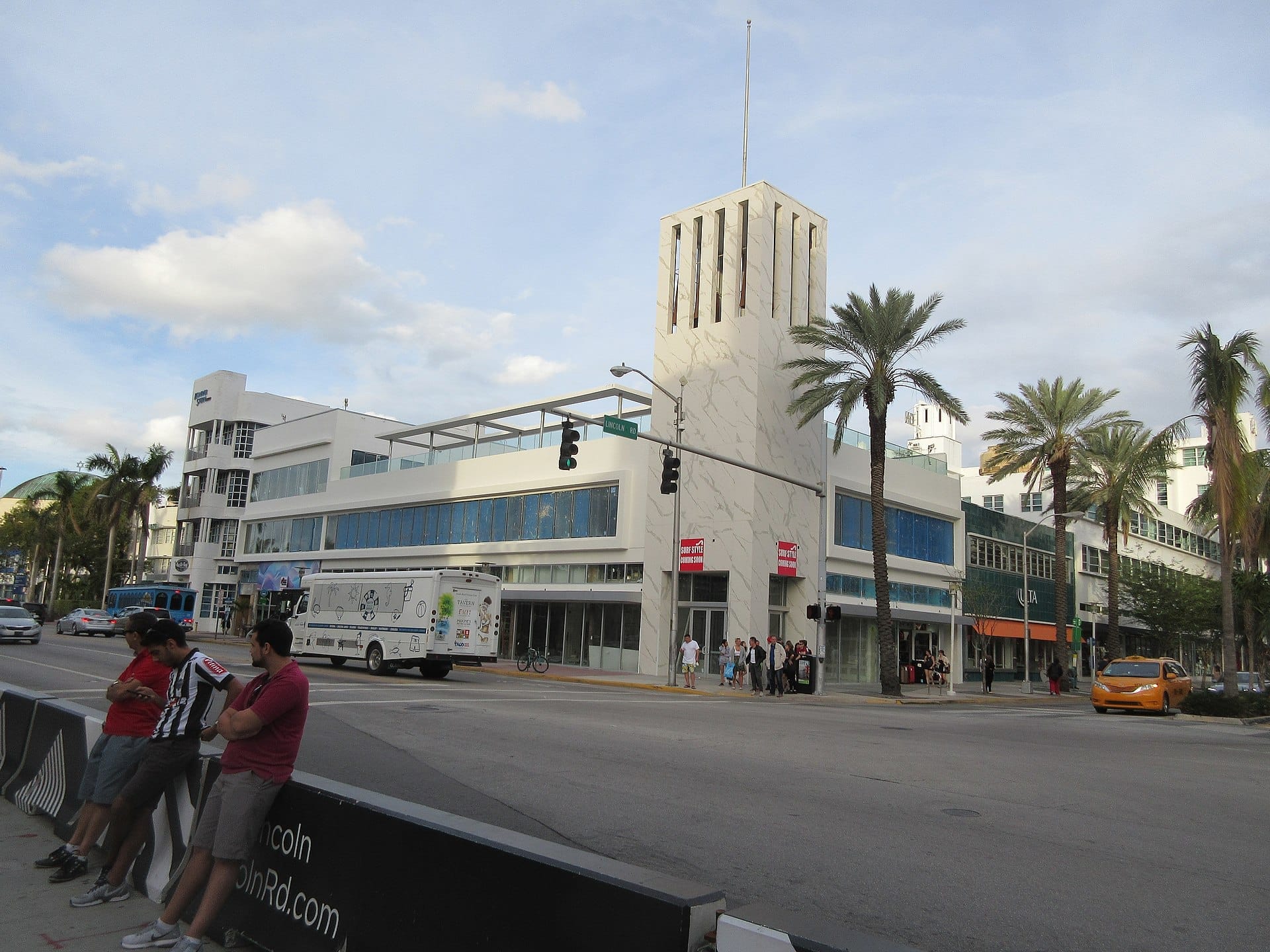
What Lincoln Road Mall Actually Is
Lincoln Road Mall is a flat, traffic-free pedestrian promenade stretching roughly eight blocks east to west parallel between 16th Street and 17th Street through the center of Miami Beach. The street’s main pedestrian section runs between Washington Avenue and Alton Road, with traffic-accessible stretches continuing east toward the Atlantic Ocean and west toward Biscayne Bay. It was created in 1912 by developer Carl Fisher, who named it after President Abraham Lincoln, though the Lincoln Road that visitors walk today is largely the product of a late-1950s redesign commissioned from architect Morris Lapidus. That redesign helped establish it as one of the pioneering open-air pedestrian malls in the United States — a fact that tends to surprise people who assume it is a more recent concept.
Lapidus, known for his deliberately theatrical aesthetic and the phrase 'too much is never enough,' filled the promenade with curving pergolas, sculptural water features, and bold geometric paving. Decades of renovations and tenant turnover have softened some of those original flourishes, but the bones of the design are still legible if you look past the chain restaurant signage. The wide central walkway is generous enough to hold outdoor seating, performance stages, and a passing crowd without feeling cramped, even when it is genuinely busy.
💡 Local tip
The promenade is accessible at all hours as a public street, but individual shops and restaurants set their own hours. Most retail opens around 10 a.m. and closes between 9 and 11 p.m. Restaurants stay open later. Check lincolnroad.com for the store directory before planning a specific visit.
How the Experience Changes by Time of Day
Morning on Lincoln Road is genuinely pleasant in a way the afternoon rarely is. Before 10 a.m., the promenade belongs to joggers, dog walkers, and café regulars claiming their outdoor tables. The light is cooler, the noise is low, and you can actually read the architectural details on the buildings without squinting into full sun. Several coffee shops open early, and the outdoor seating that will be impossible to find by noon is wide open.
By midday, especially from November through April when Miami Beach is at peak tourist capacity, the mall fills quickly. The outdoor tables at the larger restaurants become contested, and the central promenade gets dense with foot traffic. In summer months, the combination of full sun and humidity can make a long midday walk uncomfortable — the pavement radiates heat and there is limited shade in the central stretches. This is not a reason to skip it, but it is a reason to plan accordingly: wear comfortable shoes, carry water, and consider saving the longer exploration for late afternoon.
Evening is when Lincoln Road performs best. From around 6 p.m. onward, the lighting shifts, the temperature drops several degrees, and the crowd composition changes from tourists shopping to a mix of locals, visitors, and people simply moving between dinner and whatever comes after. Street performers appear at the western end near Alton Road. The outdoor restaurant terraces fill up, and there is a low-level ambient noise — conversation, the clink of glasses, occasional live music from bar patios — that the daytime version never quite achieves.
Tickets & tours
Hand-picked options from our booking partner. Prices are indicative; availability and final rates are confirmed when you complete your booking.
Everglades admission ticket with airboat ride and wildlife show
From 24 €Instant confirmationFree cancellationKey West day trip with glass bottom boat ride
From 110 €Instant confirmationFree cancellationEverglades airboat ride with Biscayne Bay boat tour and transportation
From 67 €Instant confirmationFree cancellationGrand Bahama tour with optional Pig Beach visit
From 309 €Instant confirmationFree cancellation
Architecture and Historical Context
The buildings lining Lincoln Road are a mix of Art Deco structures from the 1930s and 1940s, postwar commercial architecture, and more recent infill. The street sits just north of the Art Deco Historic District that covers much of South Beach, and while Lincoln Road itself is not uniformly Art Deco, several facades carry the characteristic streamlined detailing, eyebrow windows, and corner curves of that period.
The Lapidus redesign introduced a series of arbor structures and kiosks in a Modernist idiom that was intentionally different from the Art Deco buildings flanking the street. That contrast is still visible and worth paying attention to: the pergolas and sculptural elements belong to one design language, the storefronts to another. If architecture is a priority, the Art Deco Historic District a few blocks south covers far more ground on the subject, but Lincoln Road functions as a useful complement — it shows what came after Art Deco as Miami Beach modernized.
A handful of cultural institutions anchor the western portion of the promenade. The Colony Theatre, a restored 1935 Art Deco venue, hosts performing arts events year-round. Oolite Arts (formerly the ArtCenter/South Florida), with its studios and galleries, has been a consistent presence since the 1980s and represents an earlier, grittier version of the street before high-end retail moved in. These institutions give Lincoln Road something that a pure shopping street would lack: a reason to come back on different days for different reasons.
Practical Walkthrough: Getting There and Moving Around
The Miami Beach Trolley runs free routes along Washington Avenue and Alton Road, both of which border the eastern and western ends of Lincoln Road Mall. Miami-Dade Transit Metrobus also serves Miami Beach with routes across the causeway from mainland Miami. If arriving from South Beach itself, Lincoln Road is walkable from most hotels in the neighborhood — it is rarely more than a 10-minute walk from Ocean Drive or Collins Avenue.
Parking garages are located on 17th Street and at several points along Alton Road. Rates and availability vary by time of day and season. For visitors combining Lincoln Road with other South Beach stops, the street connects naturally to Ocean Drive to the east and to the waterfront at Biscayne Bay to the west. Planning a route that uses Lincoln Road as a spine rather than a destination in itself tends to work well.
The promenade is flat and entirely step-free along its main walkway, making it straightforward for wheelchairs and strollers. Individual shops and restaurants have their own accessibility provisions, which vary. The outdoor pedestrian space itself presents no significant barriers.
⚠️ What to skip
During peak season weekends (December through March), parking along Lincoln Road fills early and prices rise. Public transit or arriving on foot from nearby accommodation is considerably easier than driving.
Shopping, Dining, and What Is Actually There
The tenant mix on Lincoln Road skews toward mid-range to upper-mid retail: international brands, a few local boutiques, a handful of art galleries, and a heavy concentration of restaurants and cafés. The street has more than 200 businesses in total. Chains are well represented, which disappoints visitors expecting an independent-only environment. The art galleries and independent retailers tend to cluster toward the western portion of the mall, near the intersection with Alton Road and in the area around the South Florida Art Center.
For serious shopping in Miami Beach, Lincoln Road is a reasonable starting point, but visitors with specific retail goals may find Bal Harbour Shops more focused for luxury goods, or the Miami Design District more interesting for design-oriented purchases. Lincoln Road's strongest suit is its dining and café culture, not its shopping.
Outdoor terraces dominate the dining scene. Most of the larger restaurants deploy tables into the wide central promenade, and on warm evenings — which is most evenings in Miami Beach — eating outside is the default rather than the exception. The food ranges from casual American and Latin-influenced menus to sushi and Italian, with quality varying considerably by spot. The street is not a food destination in the way that Little Havana or Wynwood have become, but eating on a well-lit terrace while the promenade traffic moves past is a distinctly Lincoln Road experience.
Weather, Seasonality, and When to Visit
Lincoln Road is usable year-round, but the experience differs sharply by season. The dry season from roughly November through April brings lower humidity, temperatures typically in the mid-70s to low 80s Fahrenheit during the day, and the largest tourist crowds. This is peak Miami Beach season, and Lincoln Road reflects it: finding a table at a popular restaurant without a wait becomes difficult on weekend evenings. For a more relaxed visit, weekday mornings in the dry season are ideal. The best time to visit Miami guide covers seasonal trade-offs in more detail.
Summer brings heat and humidity that can make extended outdoor time tiring between about 11 a.m. and 4 p.m. Afternoon thunderstorms are frequent from May through October. These storms are usually brief but can arrive quickly — the covered pergola sections of the promenade offer some shelter, but if a storm builds while you are mid-walk, ducking into a shop or café for 20 to 30 minutes is the standard local response. Evening visits in summer are fine and often more comfortable than summer midday.
Lincoln Road hosts farmers markets, art events, and seasonal programming throughout the year, particularly in the cooler months. Specific event dates change annually and should be checked on the official Lincoln Road website before planning a trip around them.
Insider Tips
- The western end of the promenade near Alton Road is quieter, has more independently owned galleries and cafés, and is where street performers tend to set up in the evening — worth walking the full length rather than turning back at the midpoint.
- The Colony Theatre on Lincoln Road posts its performance calendar online. Catching a show there in the evening adds a completely different dimension to a Lincoln Road visit and is far less crowded than any restaurant on the street.
- If you are visiting during Art Basel Miami Beach in December, Lincoln Road becomes a hub for satellite fair venues and pop-up exhibitions. Plan for significantly larger crowds but a much richer cultural program than usual.
- Parking on 17th Street in the city-owned garages is typically cheaper than street parking and puts you one block north of the promenade with easy pedestrian access.
- For the most photogenic light, the hour after sunrise bathes the promenade in warm low-angle light with almost no foot traffic in the frame — a significant advantage over midday shooting when crowds and harsh shadows both compete against you.
Who Is Lincoln Road Mall For?
- Travelers who want a leisurely evening walk with dinner options in a car-free setting
- Architecture enthusiasts interested in Morris Lapidus's Modernist work and its Art Deco context
- Visitors wanting to combine light shopping with people-watching and outdoor dining
- Families with strollers or visitors with limited mobility who need a flat, accessible route
- Art Basel attendees looking for a central gathering point during December fair week
Nearby Attractions
Other things to see while in South Beach:
- Art Deco Historic District
The Miami Beach Art Deco Historic District preserves more than 800 historic buildings along Ocean Drive, Collins Avenue, and Washington Avenue, making it one of the world's largest concentrations of Art Deco architecture. Listed on the National Register of Historic Places in 1979, the district is free to explore on foot and rewards visitors at every hour of the day.
- Española Way
Conceived in the early 1920s as an artists' colony and largely completed by 1925, Española Way is a roughly two-block pedestrian stretch in South Beach where Spanish Revival architecture, open-air restaurants, and a quieter pace of life offer a genuine contrast to the Ocean Drive scene. Admission is free and the street is open around the clock.
- Jewish Museum of Florida–FIU
Occupying two landmark synagogue buildings from 1929 and 1936 at 301 and 311 Washington Avenue, the Jewish Museum of Florida–FIU tells the story of Jewish life in Florida across more than 250 years. The 1936 building alone, designed by Art Deco master Henry Hohauser, is worth the visit for its copper dome and 80 stained-glass windows.
- Lummus Park Beach
Lummus Park Beach runs along Ocean Drive between 5th Street and 14th Place in South Beach, Miami Beach. Free to enter and open daily from sunrise to midnight, it offers Atlantic swimming, a paved beachside path, and one of the most recognizable urban beach landscapes in the world.