Jewish Museum of Florida–FIU: History, Architecture, and Memory in South Beach
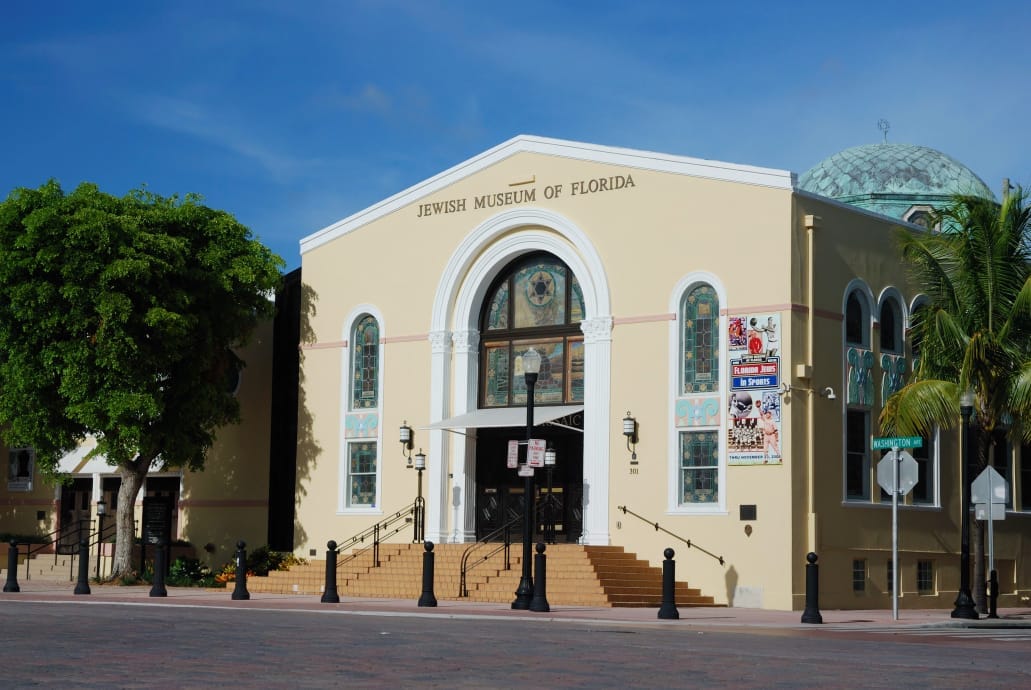
Occupying two landmark synagogue buildings from 1929 and 1936 at 301 and 311 Washington Avenue, the Jewish Museum of Florida–FIU tells the story of Jewish life in Florida across more than 250 years. The 1936 building alone, designed by Art Deco master Henry Hohauser, is worth the visit for its copper dome and 80 stained-glass windows.
Quick Facts
- Location
- 301 Washington Avenue, South of Fifth (SoFi), Miami Beach, FL 33139
- Getting There
- Miami-Dade Transit bus routes such as the Local 120 Beach MAX and Route 123 South Beach Local serve the South Beach area; rideshare drops off at the door. Walkable from many South Beach hotels.
- Time Needed
- 1.5 to 2.5 hours
- Cost
- Contact the museum directly for current admission prices; reservations may be required for certain programs or tours
- Best for
- History enthusiasts, architecture lovers, travelers tracing Jewish heritage, curious visitors exploring South Beach beyond the beach
- Official website
- jmof.fiu.edu
What the Jewish Museum of Florida–FIU Actually Is
The Jewish Museum of Florida–FIU occupies two former synagogue buildings on Washington Avenue in the South of Fifth neighborhood, the quieter, residential end of South Beach that most visitors never reach. The buildings were originally home to Congregation Beth Jacob, South Beach's first Orthodox synagogue, and they wear their history openly: thick Mediterranean Revival and Art Deco stonework, a copper dome that oxidized to green decades ago, and windows that catch the Florida morning light in a way no modern structure could replicate.
The museum was formally founded in 1984 as the Jewish Museum of Florida and opened to the public in 1995, later affiliating with Florida International University, which explains the FIU suffix in its official name. That partnership matters: it gives the institution academic credibility and access to scholarly resources, and you can feel it in the quality of the permanent collection, which spans more than 100,000 artifacts documenting over 250 years of Jewish life across Florida.
⚠️ What to skip
The museum is open Tuesday through Sunday, 10:00 a.m. to 5:00 p.m., and closed Mondays. General admission is $12 for adults, $10 for seniors and students, and free for children 6 and under; Saturdays are free. Confirm hours and rates at jmof.fiu.edu before visiting.
The Buildings: Architecture You Would Not Expect to Find Here
The older of the two buildings dates to 1929. The second, more celebrated structure was completed in 1936 and designed by Henry Hohauser, the architect responsible for many of South Beach's most recognizable Art Deco hotels along Collins Avenue and Ocean Drive. Within the context of that neighborhood, Hohauser was prolific and commercially driven; here, working on a synagogue, he produced something more personal.
The 1936 building has 80 stained-glass windows, a copper dome visible from the street, and a marble bimah, the raised platform from which Torah readings traditionally take place. The main 1936 building is listed on the National Register of Historic Places. When morning light filters through those windows, the interior holds a quality of stillness that feels genuinely rare in Miami Beach, a city that rarely slows down.
The two structures are connected by a glass-domed hallway added during restoration. That connector is more than functional: it marks the transition between two eras of the same community, and walking through it gives you a clear sense of how the museum has threaded architectural history with living memory. Visitors interested in the broader story of Art Deco Miami will find this building adds a dimension that hotel facades alone cannot.
The museum sits within easy walking distance of the Art Deco Historic District, and pairing both in a single afternoon creates a coherent architectural narrative that stretches from resort hotels to houses of worship.
Tickets & tours
Hand-picked options from our booking partner. Prices are indicative; availability and final rates are confirmed when you complete your booking.
Self-guided driving tour from Miami to the Florida Keys
From 15 €Instant confirmationUltimate Florida Self-Guided Driving Audio Tour
From 26 €Instant confirmationFree cancellationEverglades admission ticket with airboat ride and wildlife show
From 24 €Instant confirmationFree cancellationKey West day trip with glass bottom boat ride
From 110 €Instant confirmationFree cancellation
The Collection: 250 Years of Florida Jewish History
The permanent collection is the museum's core strength. More than 100,000 items cover a history that begins well before Miami existed as a city, tracing Jewish presence in Florida back through the 1700s. The range is wide: personal photographs, religious objects, business records, oral history recordings, and materials documenting the waves of immigration that brought Jewish communities from Eastern Europe, Cuba, and elsewhere to South Florida.
South Beach itself features prominently. The neighborhood's transformation from winter resort to year-round Jewish community in the early and mid-twentieth century is a documented story here, told through objects that belonged to real people rather than through abstract timelines. You will find artifacts from the hotels, the synagogues, the delis, and the social clubs that defined what South Beach was for several decades before it became something else entirely.
For travelers who already have some sense of South Beach's demographic history, the collection reframes what they have seen walking around the neighborhood. For those arriving without that context, it provides it efficiently. Either way, the museum earns its place in an itinerary.
Visiting in Practice: What to Expect
Because visits often involve smaller groups and a focused audience, the experience tends to be quieter and more personal than most Miami Beach attractions. You are unlikely to find crowds here. The museum is compact enough to cover thoroughly in 90 minutes to two and a half hours depending on how much time you spend with individual exhibits, and the reservation system means staff can give proper attention to visitors rather than managing queues.
💡 Local tip
Contact the museum by email at jmofinfo@fiu.edu or by phone at +1 305-672-5044 to confirm current hours and any special closures before building your itinerary. The museum is generally open Tuesday through Sunday, 10:00 a.m. to 5:00 p.m.
The building is historic, and visitors with mobility needs should contact the museum before arrival to confirm accessibility arrangements. Restoration work incorporated accessibility improvements, but the specifics of ramps and elevator access are best confirmed in advance given the age and layout of the structures.
Washington Avenue in the South of Fifth area is calm compared to the northern stretch closer to the Art Deco hotels. The street outside the museum has a neighborhood quality, with residents walking dogs and a pace that feels disconnected from the tourist corridor. Plan to arrive a few minutes early and take a moment with the exterior before going in: the facade, the dome, and the surrounding residential blocks tell you something about how this community built its institutions within a resort city.
Photography and Sensory Notes
The interior of the 1936 building photographs well in morning light, when the stained-glass windows project color onto the pale walls and floor. The glass-domed connector also catches light in an interesting way at midday. Confirm with staff whether photography is permitted in specific areas before raising your camera.
The space has the particular smell of old paper and wood that well-maintained archives tend to carry, faint but present, especially in areas near the collection storage and display cases. The marble bimah has a cool, smooth texture worth noticing up close. These are details that remind you this is not a replica or a reconstruction: the building was used, prayed in, and worn in real ways over decades.
Where This Fits in a South Beach Itinerary
The Jewish Museum of Florida–FIU works well as the cultural anchor of a South Beach morning. Start at the museum when it opens, then walk north along Washington Avenue or Collins Avenue into the Art Deco Historic District for lunch. The geography supports it: the museum is at the southern end, and the main concentration of Art Deco hotels is roughly ten blocks north.
If your interest in South Beach's layered history is genuine rather than passing, consider combining the museum visit with a walk along Española Way, a Mediterranean-style pedestrian street that dates from the mid-1920s and adds another architectural thread to the same story.
For a broader look at Miami's cultural institutions, the best museums in Miami guide places JMOF–FIU within the city's wider museum landscape and helps you prioritize across neighborhoods.
Travelers focused specifically on the architectural and design heritage of the area will find the broader context in the Art Deco Miami guide, which covers the historic district's buildings, preservation history, and walking routes.
Who Might Not Enjoy This
Travelers looking for a fast, Instagram-led experience will find the museum unrewarding. There are no spectacle moments, no rooftop views, no crowds to energize the atmosphere. The payoff here is cumulative and quiet. Families with young children may also find the pace and content a difficult fit unless the children have a specific interest in history. This is a place that rewards patience and prior curiosity.
Insider Tips
- Book your reservation as early as possible, especially during peak season (December through April) when Miami Beach is at its most crowded and cultural attractions fill up faster.
- Arrive early in the morning for the best interior light through the 1936 building's 80 stained-glass windows. By midday the light quality shifts and the effect is less dramatic.
- The SoFi neighborhood around the museum is one of the few parts of Miami Beach where parking is relatively manageable. If you are driving, the blocks around Washington Avenue and South Pointe Drive tend to have more availability than the hotel corridor to the north.
- Ask staff specifically about the oral history recordings in the collection if you have time. Hearing actual voices from the community adds a dimension that photographs and objects alone cannot replicate.
- If you contact the museum by email at jmofinfo@fiu.edu to reserve, include any accessibility requirements in your initial message so arrangements can be confirmed before you arrive.
Who Is Jewish Museum of Florida–FIU For?
- History travelers who want to understand South Beach beyond its resort identity
- Architecture enthusiasts interested in Henry Hohauser's work and Miami's Art Deco period
- Jewish heritage travelers tracing family or community history in Florida
- Visitors who appreciate quiet, scholarly museum experiences over large crowd-oriented attractions
- Travelers combining cultural institutions with a South Beach walking day
Nearby Attractions
Other things to see while in South Beach:
- Art Deco Historic District
The Miami Beach Art Deco Historic District preserves more than 800 historic buildings along Ocean Drive, Collins Avenue, and Washington Avenue, making it one of the world's largest concentrations of Art Deco architecture. Listed on the National Register of Historic Places in 1979, the district is free to explore on foot and rewards visitors at every hour of the day.
- Española Way
Conceived in the early 1920s as an artists' colony and largely completed by 1925, Española Way is a roughly two-block pedestrian stretch in South Beach where Spanish Revival architecture, open-air restaurants, and a quieter pace of life offer a genuine contrast to the Ocean Drive scene. Admission is free and the street is open around the clock.
- Lincoln Road Mall
Lincoln Road Mall is an eight-block pedestrian promenade running through the heart of Miami Beach, flanked by over 200 shops, restaurants, galleries, and cafés. Redesigned in the late 1950s by architect Morris Lapidus, it is often cited as one of the earliest open-air pedestrian malls in the United States. Free to enter and open around the clock, it offers a very different experience at 9 a.m. than it does at 10 p.m.
- Lummus Park Beach
Lummus Park Beach runs along Ocean Drive between 5th Street and 14th Place in South Beach, Miami Beach. Free to enter and open daily from sunrise to midnight, it offers Atlantic swimming, a paved beachside path, and one of the most recognizable urban beach landscapes in the world.