Lummus Park Beach: South Beach's Most Iconic Strip of Sand
Lummus Park Beach runs along Ocean Drive between 5th Street and 14th Place in South Beach, Miami Beach. Free to enter and open daily from sunrise to midnight, it offers Atlantic swimming, a paved beachside path, and one of the most recognizable urban beach landscapes in the world.
Quick Facts
- Location
- Ocean Drive between 5th St & 14th Place, Miami Beach, FL (South Beach)
- Getting There
- Miami-Dade Metrobus serves South Beach; approximately 5.4 miles from Brightline MiamiCentral Station
- Time Needed
- 2–4 hours for a beach session; the full length can be walked in under 30 minutes
- Cost
- Free entry. No admission fee.
- Best for
- Swimming, sunbathing, people-watching, morning walks, and photography
What Lummus Park Beach Actually Is
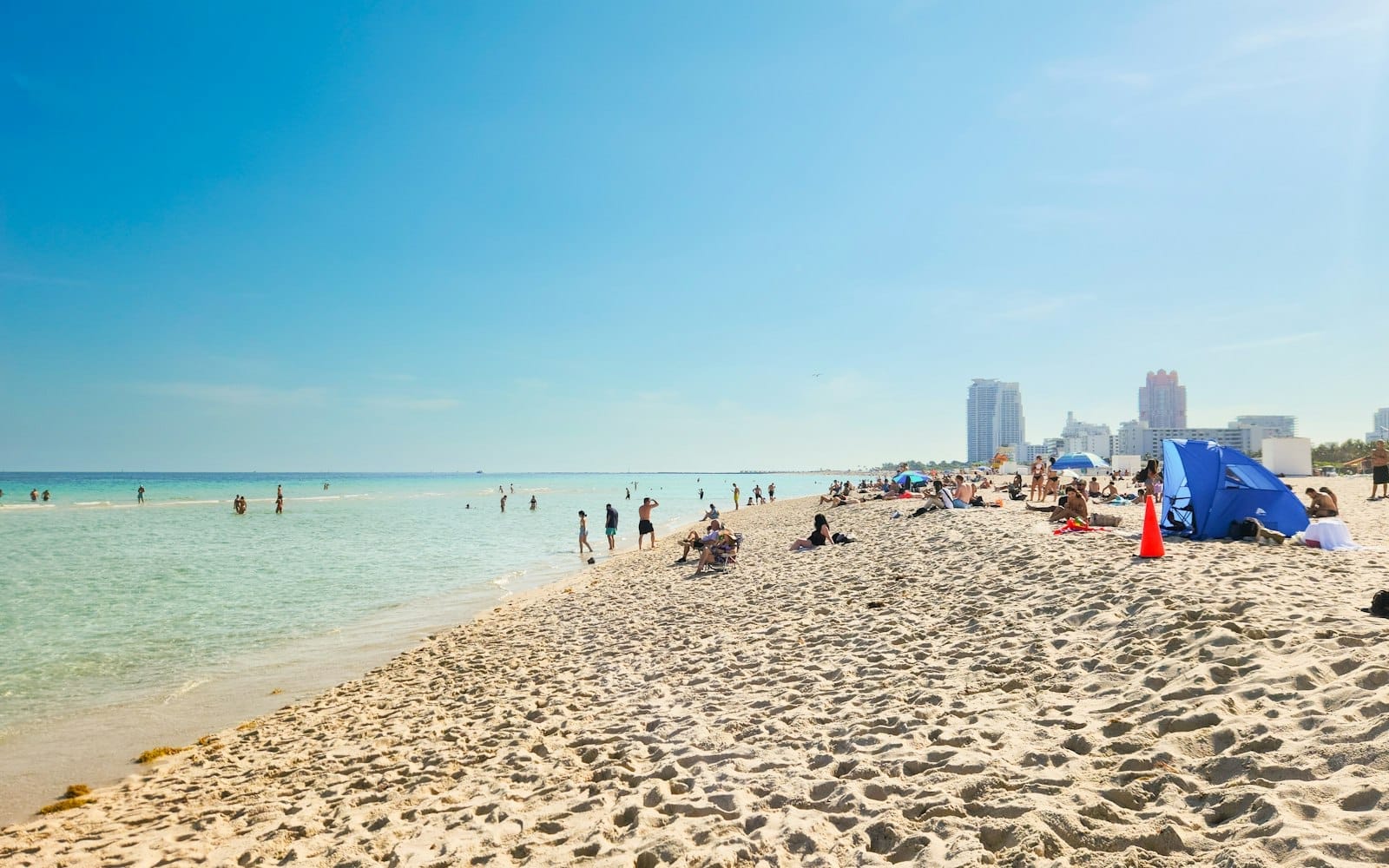
Lummus Park Beach is the stretch of Atlantic-facing sand that runs directly behind Ocean Drive in South Beach, from 5th Street north to 14th Place. It is managed by the City of Miami Beach, listed officially as Lummus Park, and covers approximately 26 acres of beachfront land within a larger 74-acre park. This is not a remote or discovery-type destination. It is one of the most photographed urban beaches in the United States, and it earns that reputation honestly: the combination of wide, pale sand, warm water, and the preserved Art Deco skyline of Ocean Drive as a backdrop is genuinely hard to replicate elsewhere.
The park is free, open daily from sunrise to 12:00 a.m., and fully accessible with paved paths running its length. Public restrooms are maintained at 6th, 10th, and 14th Streets. Despite the high tourist volume, the beach itself is wide enough that you rarely feel cramped once you move past the first 50 feet of sand.
ℹ️ Good to know
Lummus Park Beach is free to access at all times. The only costs you are likely to incur are optional: beach chair and umbrella rentals from private vendors on the sand, and food or drinks from the beachside cafes and kiosks along the path.
How the Beach Changes Through the Day
Early morning, roughly 7:00 to 9:00 a.m., is when Lummus Park Beach shows a quieter side that most visitors never see. The light comes in low from the east over the Atlantic, hitting the white sand at an angle that makes everything glow. Local runners and cyclists use the paved path. Fitness trainers lead small groups through workouts in the open grass areas toward the northern end of the park. The water is calm at this hour, often flat, and the smell of salt and sea grass is strong. If you are a photographer, this is the window that matters.
By 10:00 a.m., the crowds begin to build noticeably, particularly on weekends and during peak season from December through April. Families, couples, and groups of international visitors spread across the sand. The vendor stations set up their rows of chairs and umbrellas. From midday to around 4:00 p.m., this is the beach at full capacity: loud, social, packed near the water's edge, and harder to navigate if you are looking for solitude. The water itself stays warm, typically in the mid-70s to low 80s Fahrenheit depending on the month, and the surf is generally gentle enough for casual swimming.
Late afternoon brings one of the more underrated experiences on the beach. As the sun moves behind the Art Deco buildings to the west, the intense midday heat eases, the crowd thins, and the light on the water shifts to warmer gold tones. Sunset here is not directly over the ocean but rather behind you, casting long shadows and a diffused pink light across the sand. It is worth staying for.
Tickets & tours
Hand-picked options from our booking partner. Prices are indicative; availability and final rates are confirmed when you complete your booking.
Everglades admission ticket with airboat ride and wildlife show
From 24 €Instant confirmationFree cancellationKey West day trip with glass bottom boat ride
From 110 €Instant confirmationFree cancellationEverglades airboat ride with Biscayne Bay boat tour and transportation
From 67 €Instant confirmationFree cancellationGrand Bahama tour with optional Pig Beach visit
From 309 €Instant confirmationFree cancellation
The Art Deco Backdrop: Why It Matters
What separates Lummus Park Beach from a generic city beach is the architectural context immediately behind it. Ocean Drive, which runs parallel to the park's western edge, is lined with some of the best-preserved Art Deco buildings in North America. These pastel-painted hotels and apartment blocks, most constructed between the late 1920s and the 1940s, were protected from demolition through the efforts of preservationists in the 1970s and 80s and now form part of a nationally recognized historic district.
Standing on the sand and looking west, you see the distinctive horizontal banding, porthole windows, and cantilevered eyebrow shades of the Art Deco style framing your view. It is an unusual thing: a working city beach that also functions as a live architecture exhibit. The Art Deco Historic District extends well beyond Ocean Drive, but this stretch gives you the most concentrated and visually dramatic view of the style from sea level.
If you want to understand the architecture more deeply, the Wolfsonian-FIU Museum on Washington Avenue holds an extensive collection of design and decorative arts from this exact period, and it is within easy walking distance of the beach's southern end.
Getting There: Practical Options
Lummus Park Beach sits on a barrier island, separated from mainland Miami by Biscayne Bay. This geography shapes how you arrive. Driving is possible, but parking on and near Ocean Drive is limited, metered, and genuinely frustrating during peak hours. Most visitors find that arriving by alternative means reduces stress considerably.
Miami-Dade Transit Metrobus routes serve South Beach, connecting to the Metrorail network on the mainland. From Brightline's MiamiCentral Station in Downtown Miami, the beach is approximately 5.4 miles away, reachable by bus or ride-hail service. For broader context on navigating the city, the getting around Miami guide covers transit options in detail. Cycling is a practical option from elsewhere in Miami Beach: the paved path through the park connects directly to the Miami Beach Boardwalk to the north.
💡 Local tip
If you arrive by car, the Collins Avenue and Washington Avenue parking garages a block or two west of Ocean Drive generally have more availability than street spots and charge by the hour. Arrive before 10:00 a.m. on weekends to avoid circling.
What to Bring and What to Expect on the Sand
The beach has no natural shade. The few palm trees scattered through the park do not provide meaningful cover from the Miami sun, which is intense from roughly 10:00 a.m. to 4:00 p.m. year-round. Bring high-SPF sunscreen, reapply it, and bring more than you think you need. A hat and UV-protective clothing matter more here than at many other beach destinations because of the combination of direct sun and reflection off the pale sand.
Beach chair and umbrella rentals are available from vendors operating on the sand. The chairs are a reasonable investment if you are planning a longer stay, particularly during summer months when the UV index regularly hits extreme levels. Bring cash as well as a card since smaller vendors may not accept cards reliably. Tap water in Miami meets U.S. EPA drinking standards, so a refillable water bottle is practical; staying hydrated in Miami's summer heat is not optional.
The Atlantic here is generally swimmable, with lifeguards on duty during staffed hours. The surf is mild compared to Atlantic beaches further north. However, always check posted flag conditions before entering the water: yellow and red flags indicate increased caution and danger respectively, and this beach does see occasional rip current warnings.
Weather, Seasons, and When to Come
Miami Beach has a tropical monsoon climate. The dry season, roughly November through April, brings lower humidity, average highs in the mid-70s to mid-80s Fahrenheit, and the most comfortable conditions for a full day on the beach. This is also peak tourist season, which means the beach is at its most crowded. December through February offer the most temperate temperatures, and weekend crowds during Art Basel in early December make this the busiest single week of the year.
The wet season, May through October, brings afternoon thunderstorms, high humidity, and temperatures regularly in the high 80s to low 90s Fahrenheit. The beach is significantly less crowded during summer, which has its advantages, but afternoon storms can roll in rapidly from the west, and the heat by midday is serious. The guide to Miami in summer addresses how to plan around the weather during these months. Hurricane season runs from June 1 through November 30; while direct hits on Miami Beach are rare, any tropical activity in the region can cause beach closures and dangerous surf conditions.
⚠️ What to skip
During summer afternoons, lightning storms can develop quickly over South Beach. If you hear thunder, leave the water and open sand immediately and seek shelter in a nearby building. The storms typically pass within 30 to 60 minutes.
Accessibility and Facilities
The City of Miami Beach lists Lummus Park as accessible. Paved paths run the length of the park, suitable for walking, cycling, and wheelchair use. Public restrooms are located at 6th, 10th, and 14th Streets along the park, reducing the need to cross back into the commercial strip on Ocean Drive. The transition from the paved path to the sand itself is not paved, which can be a practical challenge for wheelchair users; beach wheelchairs may be available through the city's parks department, but availability should be confirmed directly with Miami Beach Parks and Recreation before your visit.
Honest Assessment: Is This Beach Worth It?
Lummus Park Beach is exactly what it looks like in photographs, which is rare. The sand is clean, the water is warm, the Art Deco backdrop is real, and the access is free. That said, this is not a beach for people seeking a quiet or natural experience. On busy weekend afternoons it is loud, crowded near the water, and heavily commercialized along the park's western edge. If you want a beach with fewer people and more nature, Crandon Park Beach on Key Biscayne or Bill Baggs Cape Florida State Park offer significantly quieter alternatives.
For first-time visitors to Miami, Lummus Park Beach is the right place to start. It delivers the image of Miami that most people come to see, and it does so without an admission charge. Pair it with a walk along the Ocean Drive strip and you have a full afternoon. For repeat visitors or anyone who finds large crowds draining, it is worth weighting your beach time toward early morning or choosing one of the city's less trafficked alternatives.
Insider Tips
- The 12th Street area of the beach is historically known as a gathering spot for the LGBTQ+ community and is generally one of the more social and lively sections. If you prefer a calmer stretch, head toward 5th or 6th Street, which see fewer vendors and a noticeably more local crowd.
- The paved path that runs through the park connects northward to the Miami Beach Boardwalk, which extends for over 40 blocks. Walking or cycling the boardwalk in the early morning before beach traffic picks up is one of the most pleasant urban walks in Miami.
- South-facing sections near 5th Street hold the light longer in the late afternoon and are almost always less crowded than the central section near 10th Street. This is where you want to be for late-day photography without strangers walking through your frame.
- Freshwater rinse stations are available at beach access points. Use them before and after swimming — saltwater in your bag and gear adds up quickly, and the sand at Lummus sticks with determination.
- During Art Basel Miami Beach in early December, the beach and surrounding streets reach peak density. Book accommodations months ahead if you plan to visit during this period, and expect Ocean Drive restaurant wait times to be significantly longer than normal.
Who Is Lummus Park Beach For?
- First-time Miami visitors wanting the classic South Beach experience
- Swimmers and sunbathers who want warm Atlantic water and wide open sand
- Photographers interested in the Art Deco and beach combination, particularly at golden hour
- Early morning walkers and runners looking for a paved beachside route
- Families who need accessible facilities, restroom availability, and lifeguard coverage
Nearby Attractions
Other things to see while in South Beach:
- Art Deco Historic District
The Miami Beach Art Deco Historic District preserves more than 800 historic buildings along Ocean Drive, Collins Avenue, and Washington Avenue, making it one of the world's largest concentrations of Art Deco architecture. Listed on the National Register of Historic Places in 1979, the district is free to explore on foot and rewards visitors at every hour of the day.
- Española Way
Conceived in the early 1920s as an artists' colony and largely completed by 1925, Española Way is a roughly two-block pedestrian stretch in South Beach where Spanish Revival architecture, open-air restaurants, and a quieter pace of life offer a genuine contrast to the Ocean Drive scene. Admission is free and the street is open around the clock.
- Jewish Museum of Florida–FIU
Occupying two landmark synagogue buildings from 1929 and 1936 at 301 and 311 Washington Avenue, the Jewish Museum of Florida–FIU tells the story of Jewish life in Florida across more than 250 years. The 1936 building alone, designed by Art Deco master Henry Hohauser, is worth the visit for its copper dome and 80 stained-glass windows.
- Lincoln Road Mall
Lincoln Road Mall is an eight-block pedestrian promenade running through the heart of Miami Beach, flanked by over 200 shops, restaurants, galleries, and cafés. Redesigned in the late 1950s by architect Morris Lapidus, it is often cited as one of the earliest open-air pedestrian malls in the United States. Free to enter and open around the clock, it offers a very different experience at 9 a.m. than it does at 10 p.m.