Bill Baggs Cape Florida State Park: Beach, Lighthouse, and Wilderness at Miami's Southern Edge
Bill Baggs Cape Florida State Park occupies the southern tip of Key Biscayne, combining a historic 1825 lighthouse, a wide Atlantic-facing beach, and roughly 440 acres of subtropical coastal habitat. It offers one of the most complete outdoor escapes within easy reach of central Miami.
Quick Facts
- Location
- 1200 South Crandon Blvd, Key Biscayne, FL 33149 — southern tip of Key Biscayne, ~15 min drive from Downtown Miami
- Getting There
- Drive or rideshare via Rickenbacker Causeway; bikeable from Miami via causeway path; no direct bus to park entrance
- Time Needed
- 2–5 hours depending on activities; half-day recommended for beach + lighthouse climb
- Cost
- $8/vehicle (2–8 people); $4 single-occupant vehicle; $2 pedestrians/cyclists (verify current fees)
- Best for
- Beach days, history lovers, cyclists, families, nature walks
What Bill Baggs Actually Is
Bill Baggs Cape Florida State Park is roughly 440 acres of coastal Florida at the southern end of Key Biscayne, a barrier island connected to the Miami mainland by the Rickenbacker Causeway. The park stretches from the Atlantic shoreline on the east across a belt of Australian pines, sea grapes, and native coastal scrub to No Name Harbor on the west side, a sheltered anchorage popular with boaters. At its southernmost point stands the Cape Florida Lighthouse, completed in 1825 and the oldest standing structure in Miami-Dade County.
The name honors Bill Baggs, a Miami News editor and conservation advocate whose lobbying helped prevent the site from being developed in the 1960s. The state established it as a recreation area in 1967. Today it offers something genuinely uncommon this close to a major city: a beach that feels like it belongs to a quieter Florida, backed by wind-bent vegetation rather than hotel towers.
ℹ️ Good to know
The park is open 8:00 a.m. until sundown, 365 days a year, including holidays. Arrive before 10:00 a.m. on weekends between November and April if you want a beach spot without waiting at the entrance gate.
The Beach: What to Expect When You Get There
The Atlantic-facing beach at Bill Baggs runs roughly a mile along the park's eastern edge. The sand is white and fine, and the water color shifts from pale aquamarine in the shallows to deep blue further out, without the murky tint common to bay-side beaches nearby. Waves are mild on most days, though the beach faces open ocean, so conditions after a storm or during a strong onshore wind can be rough enough to trigger yellow or red flag warnings.
Early morning is the most atmospheric time here. By 8:00 a.m., the light comes in low and golden from the southeast, the beach is nearly empty, and the only sounds are the surf and the occasional osprey. Seabirds work the shallows close to shore. By mid-morning on a weekend in winter, the entrance line of cars grows, families spread out picnic gear under the coconut palms, and the rentable beach chairs near the concession stands fill up. Weekday mornings between November and April strike the best balance between good weather and manageable crowds.
Two concession restaurants operate within the park, both serving Cuban-influenced food. They are the right level of casual for a beach lunch, and the outdoor tables face the water. Beach chair and umbrella rentals are available at the concession area. The park also has picnic facilities with grills scattered along the interior paths.
💡 Local tip
Beach wheelchairs and a swimming wheelchair are available free of charge at the bicycle rental area on a first-come, first-served basis. No advance reservation is needed.
Tickets & tours
Hand-picked options from our booking partner. Prices are indicative; availability and final rates are confirmed when you complete your booking.
Self-guided driving tour from Miami to the Florida Keys
From 15 €Instant confirmationUltimate Florida Self-Guided Driving Audio Tour
From 26 €Instant confirmationFree cancellationEverglades admission ticket with airboat ride and wildlife show
From 24 €Instant confirmationFree cancellationKey West day trip with glass bottom boat ride
From 110 €Instant confirmationFree cancellation
The Cape Florida Lighthouse: A Proper Historical Landmark
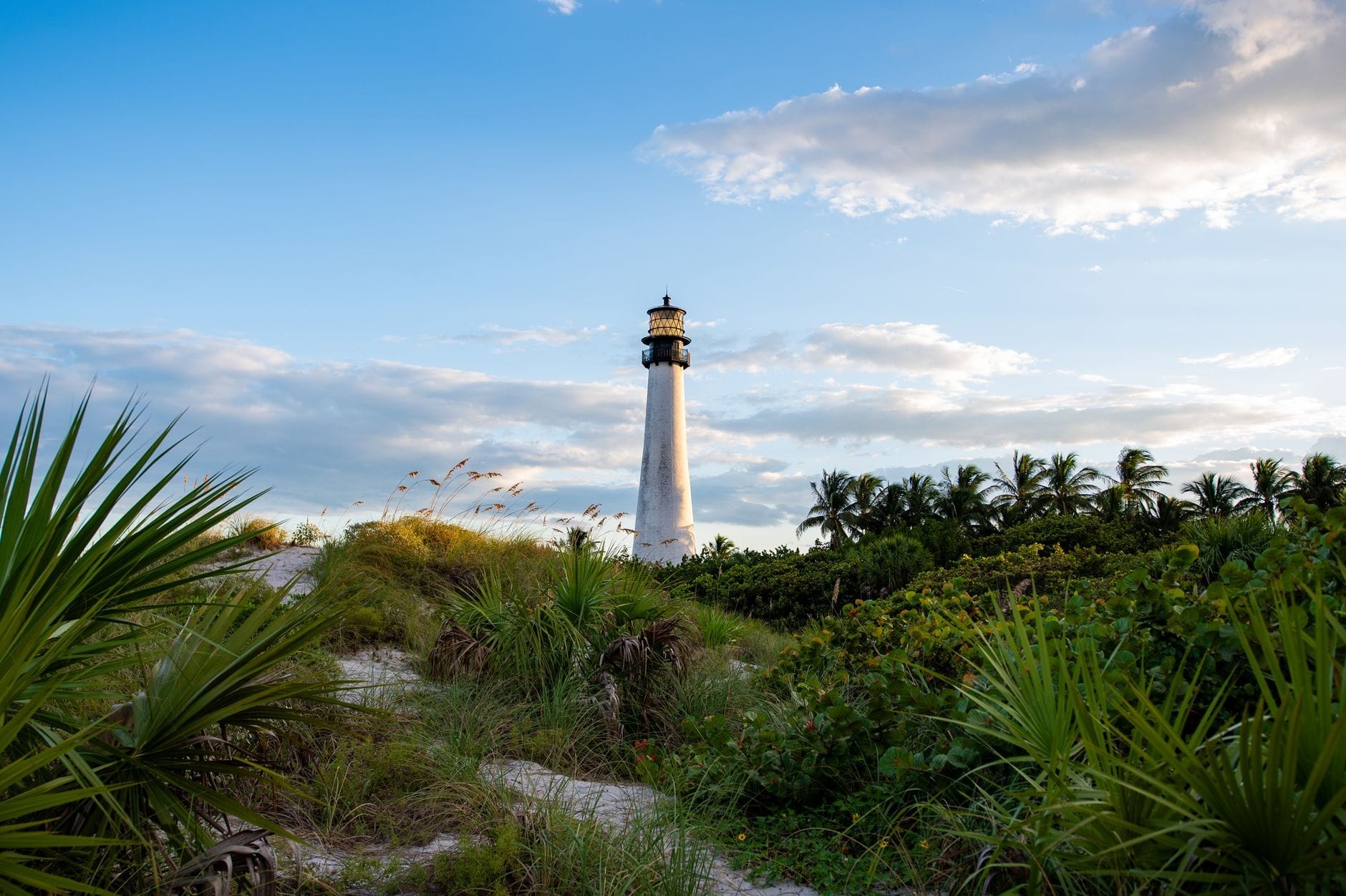
The Cape Florida Lighthouse deserves more attention than it typically gets. Completed in 1825 and rebuilt in 1846 after an attack during the Second Seminole War partially destroyed the original structure, it predates the City of Miami's incorporation by seven decades. At 95 feet tall, the whitewashed brick tower is visible from the beach long before you reach it, and walking the path through the scrub vegetation toward its base gives a clearer sense of how isolated this southern tip of Key Biscayne actually is.
Guided lighthouse tours currently run at 10:00 a.m. and 1:00 p.m., Thursday through Monday, but you should confirm the latest schedule directly with the park before visiting, as offerings can change. The climb involves 109 spiral steps up a narrow staircase in the lighthouse tower. Visitors must be at least 42 inches tall to ascend. The balcony at the top provides an unobstructed 360-degree view: the Atlantic to the east, Biscayne Bay to the west, the Miami skyline to the north, and the beginning of the Florida Keys visible on a clear day to the south. It is the kind of view that reframes the whole geography of the city.
In September 2004, Cape Florida was designated a National Underground Railroad Network to Freedom site, recognizing its historical role as a point of escape for enslaved people who sought freedom by reaching the Bahamas and, in some cases, Seminole communities to the south. This layer of history is easy to overlook if you are only here for the beach, but it gives the park a significance well beyond its scenic value. For more historical context about the region, the HistoryMiami Museum in Downtown expands on this period in depth.
Getting There and Moving Around the Park
The most straightforward approach from Miami is by car or rideshare. Take the Rickenbacker Causeway from the mainland, continue south through the village of Key Biscayne on Crandon Boulevard, and the park entrance is at the road's southern terminus. The drive from Downtown Miami takes roughly 15 minutes outside of peak traffic, depending on conditions. The causeway itself has a toll for vehicles; factor this into your planning.
Cycling is a genuinely practical option. The Rickenbacker Causeway has a dedicated shared-use path that extends from the Miami mainland all the way to Key Biscayne, and the park has a 1.5-mile paved internal bike path. Bicycle rentals are available inside the park. The round trip from central Miami is on the order of a dozen or so miles and is largely flat, making it accessible to recreational cyclists. Cyclists pay the $2 per-person pedestrian/cyclist entry fee.
Boaters can anchor or dock at No Name Harbor on the western side of the park. Overnight anchoring is permitted for a fee. The harbor is a popular weekend anchorage for local boaters, and arriving by water gives a completely different perspective on the park's geography than arriving by road.
⚠️ What to skip
There is no direct Metrobus route that terminates at the park entrance. The nearest bus service stops in Key Biscayne village, leaving roughly a mile to the park gate. Confirm current transit options with Miami-Dade Transit before relying on public transportation.
How the Experience Changes Through the Day and Year
The dry season, roughly November through April, is when the park is at its most appealing. Temperatures are in the low-to-mid 80s Fahrenheit, humidity is lower, and the afternoon thunderstorms that dominate Miami summers are largely absent. This is also peak visitor season, so weekend mornings in January and February can see significant entrance queues. Arriving at 8:00 a.m. when the gates open avoids both the crowds and the heat.
Summer visits are possible and the crowds thin out considerably, but the combination of heat, high humidity, and near-daily afternoon thunderstorms changes the calculation. If you visit in summer, aim for a morning session, leave by early afternoon before the storms develop, and bring significantly more water and sun protection than you think you need. The water temperature in summer is warm enough that the ocean provides genuine relief from the heat.
Sunset from the western side of the park overlooking Biscayne Bay is worth planning for, particularly in winter when the sun sets at a more southwesterly angle and casts light across the water. The park closes at sundown, so timing your exit around the sunset is entirely possible. For general guidance on making the most of Miami's seasons, the best time to visit Miami guide covers the trade-offs in detail.
Photography, Wildlife, and What Else to Notice
The lighthouse photographs best in the morning with the sun to the east illuminating the white tower. The beach itself, especially the stretch north of the lighthouse, offers clean compositions without buildings in the frame, which is rarer on the Miami coast than people expect. The sea grape and coastal scrub vegetation along the interior paths has a sculptural quality, and the light through the canopy on the path toward No Name Harbor in the early morning is genuinely striking.
Wildlife is present throughout the park year-round. Brown pelicans and double-crested cormorants are common along the beach and in the harbor. Roseate spoonbills occasionally appear in the shallower tidal areas on the bay side. The park's native coastal scrub supports a range of butterfly species. American crocodiles have been documented in the waters around Key Biscayne, though sightings inside the park are uncommon.
If the level of natural habitat here interests you, note that Crandon Park sits immediately to the north on Key Biscayne and covers the central portion of the island with a different character: broader family facilities, a marina, and a large beach. The two parks together make for a full day on the island.
Honest Assessment: Who Should Rethink This Trip
Bill Baggs is not ideal for anyone expecting the lively, social atmosphere of South Beach. There are no beach bars with music, no vendors walking the shore, and the restaurant options are limited to the two concession stands inside the park. The setting is deliberate and nature-focused. If that is not what you are after, South Beach is a better fit.
The park is also a 15-minute drive from central Miami at minimum, with no practical direct transit. Without a car, bicycle, or rideshare budget, getting here is inconvenient. Travelers focused on walkable urban experiences should note that Lummus Park Beach in South Beach is far more accessible by public transit and on foot.
In strong summer heat, the park can be physically demanding for young children or older visitors. There is limited shade on the beach itself, and the walk from parking areas to the lighthouse is exposed. Come prepared with water, hats, and sunscreen regardless of season.
Insider Tips
- The lighthouse tour schedule is not daily and the times vary — check the Florida State Parks official page or call the park directly before making the lighthouse the main reason for your visit.
- No Name Harbor on the western side of the park has a small concrete pier and a bait shop. On weekday mornings it is almost deserted and offers quiet views across Biscayne Bay toward the Miami skyline, completely different from the Atlantic side.
- The park's Annual Individual Entrance Pass (available from Florida State Parks) admits the pass holder and reduces the entry cost for their vehicle party. If you plan to visit two or more state parks during your trip, the pass can pay for itself quickly.
- Bicycles rented inside the park are a practical way to cover the 1.5-mile paved path between the beach entrance and the lighthouse without backtracking on foot in the heat. The rental area is near the main beach facilities.
- The strip of beach just north of the lighthouse, away from the main concession area, tends to stay less crowded even on busy weekends because it requires a longer walk from the parking areas. The sand and water quality are identical to the main beach.
Who Is Bill Baggs Cape Florida State Park For?
- Travelers who want a proper Florida beach without the South Beach scene
- Cyclists looking for a scenic half-day loop from Miami via the Rickenbacker Causeway
- History-focused visitors interested in pre-city Miami and the Cape Florida Lighthouse
- Families with children old enough for a moderate beach outing and optional lighthouse climb
- Anyone who wants to photograph the Miami skyline from across open water with natural foreground
Nearby Attractions
Other things to see while in Key Biscayne:
- Cape Florida Lighthouse
Standing at the southern tip of Key Biscayne, the Cape Florida Lighthouse is the oldest standing structure in Miami-Dade County. Built in 1825 and scarred by a Seminole attack in 1836, it offers guided tower tours, a restored keeper's cottage, and panoramic views over Biscayne Bay and the Atlantic. The lighthouse sits inside Bill Baggs Cape Florida State Park, one of Miami's most rewarding half-day escapes.
- Crandon Park Beach
Crandon Park Beach stretches two miles along the Atlantic edge of Key Biscayne, offering calm turquoise water, wide sandy flats, and generous shade from palm groves. It's the kind of beach Miami locals return to again and again, precisely because it never feels like a performance.
- Rickenbacker Causeway
Stretching about 5.4 miles from the Brickell shoreline to Key Biscayne, the Rickenbacker Causeway is the only road connecting Miami to Virginia Key and Key Biscayne. Whether you cross it by car, bicycle, or on foot, the views of Biscayne Bay and the downtown skyline rank among the best in South Florida.