Cape Florida Lighthouse: Miami's Oldest Structure and the Views That Earn the Climb
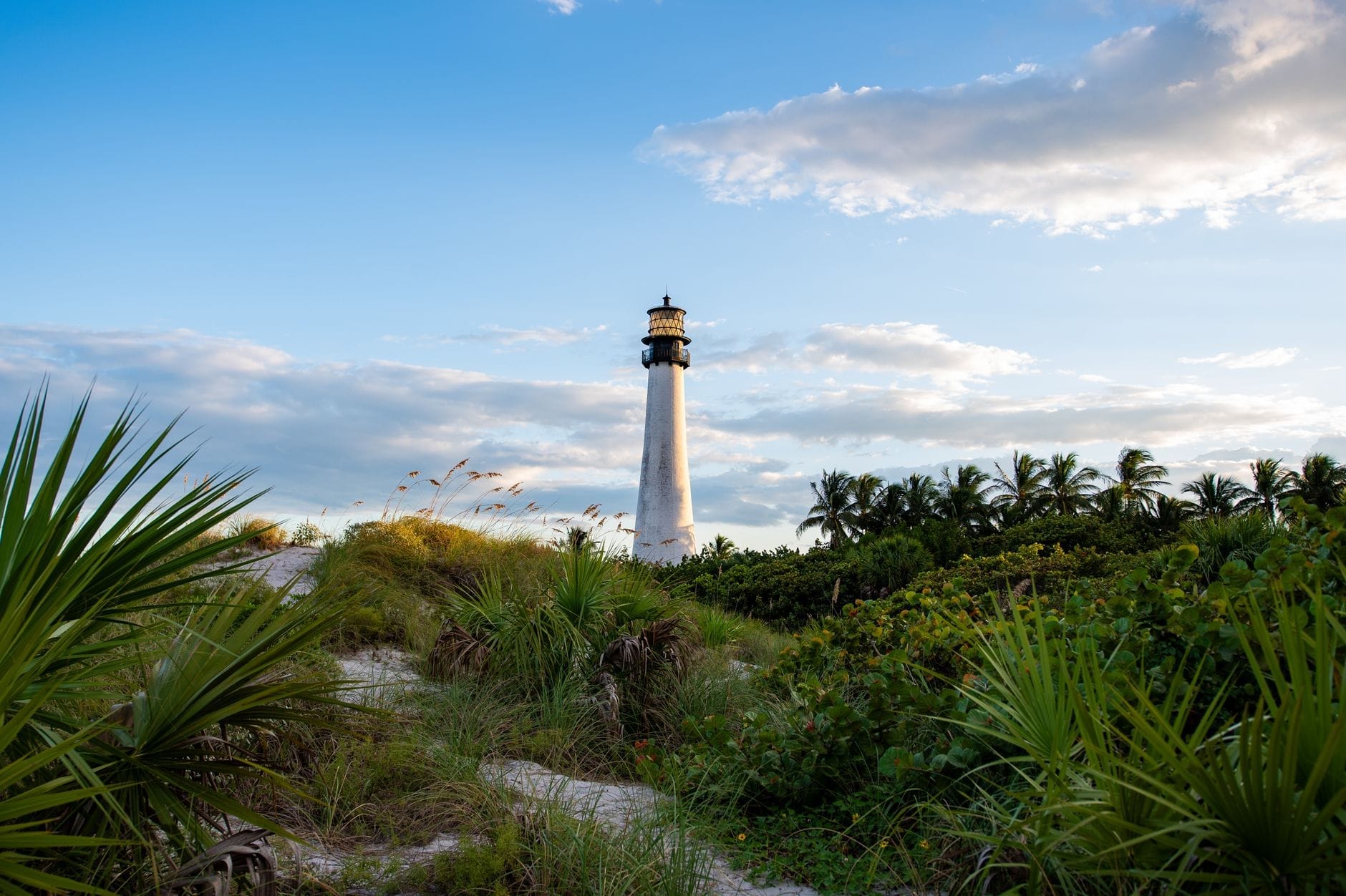
Standing at the southern tip of Key Biscayne, the Cape Florida Lighthouse is the oldest standing structure in Miami-Dade County. Built in 1825 and scarred by a Seminole attack in 1836, it offers guided tower tours, a restored keeper's cottage, and panoramic views over Biscayne Bay and the Atlantic. The lighthouse sits inside Bill Baggs Cape Florida State Park, one of Miami's most rewarding half-day escapes.
Quick Facts
- Location
- 1200 Crandon Blvd, Key Biscayne, FL 33149 (southern tip of Key Biscayne)
- Getting There
- Drive or rideshare via Rickenbacker Causeway; cyclists and pedestrians welcome with per-person entry fee
- Time Needed
- 2–3 hours including tower tour, grounds, and beach time
- Cost
- Park entry $8/vehicle (2–8 people), $4 single-occupant vehicle, $2 pedestrians/cyclists; motorcycles pay the $4 single-occupant rate. No separate lighthouse fee.
- Best for
- History enthusiasts, photographers, families with older children, and anyone who wants Miami skyline views from outside the city
What You Are Actually Visiting
The Cape Florida Lighthouse is not a museum exhibit or a replica. It is a working piece of American coastal history, still standing after nearly two centuries of hurricanes, warfare, and neglect. Completed in 1825 as a 65-foot brick tower with walls roughly four feet thick at the base, it was later raised to approximately 95 feet to increase its visible range. It holds the distinction of being the oldest standing structure in Miami-Dade County, which becomes more striking when you consider how thoroughly South Florida reinvents itself every generation.
The lighthouse stands within Bill Baggs Cape Florida State Park, a 494-acre park at the very southern tip of Key Biscayne. The two are inseparable as a visit: you pay park entry, and lighthouse access is included. There is no separate ticket counter and no online reservation required for the guided tower tours.
ℹ️ Good to know
Tower tours are offered free with park entry at 10:00 a.m. and 1:00 p.m., Thursday through Monday; the tower is closed for tours on Tuesday and Wednesday, and hours are subject to change. Arrive at least 15 minutes before your chosen tour time, as group sizes can be limited.
A History That Goes Beyond Lighthouse Lore
The station was established in 1825, just four years after Florida was ceded to the United States from Spain. Its primary purpose was practical: to warn ships away from the treacherous shallow reefs running along Florida's southeastern coastline. In the decades before the lighthouse, those reefs had already destroyed countless vessels.
The lighthouse's most defining moment came on July 23, 1836, during the Second Seminole War, when a group of Seminole warriors attacked the station. The keeper, John Thompson, and an assistant were driven up the lighthouse tower. The Seminoles set fire to the wooden stairs and the lantern room, effectively trapping the men inside. Thompson survived by lowering a keg of gunpowder from the top, which he detonated to drive back his attackers. The attack left the tower severely damaged and the lighthouse dark for years.
The tower was restored and raised to its current height in 1855 before being decommissioned in 1878, when the offshore Fowey Rocks Light took over its role in marking the Florida Reef. Decades of abandonment and hurricane damage followed before the state of Florida undertook a careful restoration completed in 1996. Today the brick exterior, the keeper's cottage, and the spiral staircase inside have all been restored to reflect the mid-19th century period.
Tickets & tours
Hand-picked options from our booking partner. Prices are indicative; availability and final rates are confirmed when you complete your booking.
Self-guided driving tour from Miami to the Florida Keys
From 15 €Instant confirmationUltimate Florida Self-Guided Driving Audio Tour
From 26 €Instant confirmationFree cancellationEverglades admission ticket with airboat ride and wildlife show
From 24 €Instant confirmationFree cancellationKey West day trip with glass bottom boat ride
From 110 €Instant confirmationFree cancellation
The Tour Experience: What the Climb Is Actually Like
The guided tour is the centerpiece of the visit. A park ranger leads a small group from the base of the tower through the history of the lighthouse, pointing out architectural details in the brick construction before the group begins the 109-step ascent on a narrow spiral staircase. The steps are steep, the stairwell is tight, and anyone with claustrophobia or a serious fear of heights should think carefully before committing. That said, the pace is relaxed and rangers are patient.
At the top, the view is the payoff. On a clear day you can see the Miami skyline to the north, the vast shallow green of Biscayne Bay to the west, and open Atlantic to the east and south. The perspective makes it immediately obvious why this spot mattered to sailors: there is nothing between this tower and the Bahamas.
⚠️ What to skip
Children must be at least 42 inches (106 cm) tall to climb the tower and must be able to ascend independently. Infants may only be brought up if carried in a front harness, keeping the adult's hands free for the railings. Pets are not permitted in the tower.
The keeper's cottage adjacent to the tower is also part of the tour and worth your time. It has been restored with period furnishings and gives a concrete sense of what sustained isolation in 19th-century South Florida actually looked like. The grounds around the lighthouse are shaded and relatively quiet compared to the park's beach areas, making them a pleasant place to linger after the tour.
How the Park Changes by Time of Day
The park opens at 8:00 a.m. daily, and arriving in the first hour is consistently the best approach. The air is cooler, the light is soft and golden on the lighthouse brick, and the Atlantic-facing beach is largely empty. Photographers who want clean shots of the tower without crowds or harsh midday shadows should plan their arrival for 8:00–9:00 a.m.
By late morning, especially on weekends between November and April, the park fills quickly. Families stake out beach spots, cyclists stream in from the causeway, and the area around the lighthouse grows more crowded just before the 10:00 a.m. tour. If you want the early tour without competing for spots, being at the lighthouse base by 9:45 a.m. gives you a comfortable buffer.
The 1:00 p.m. tour tends to draw fewer visitors but falls in the hottest part of the day during summer months, when temperatures routinely reach 89–91°F (32–33°C) and humidity makes direct sun genuinely punishing. In summer, the 10:00 a.m. tour is the more comfortable option. The park closes at sundown, and the late afternoon light over the bay is spectacular from the grounds even without climbing the tower.
Getting There and Practical Logistics
Key Biscayne is connected to the mainland by the Rickenbacker Causeway, which runs from Brickell. The drive from Downtown Miami takes roughly 15 minutes in normal traffic, though weekend mornings can add 10–20 minutes. There is no direct Metrobus or Metrorail service to the park's entrance, so most visitors arrive by car, rideshare, or bicycle.
Cyclists have it particularly good here. The causeway has a dedicated bike lane, and the ride from Brickell to the lighthouse is about 8 miles each way with Biscayne Bay on both sides for much of the route. Bicycles enter the park for the $2 pedestrian rate. There is a bike rental concession inside the park for those who prefer to rent on arrival.
Parking at the park is straightforward, with a large lot near the main entrance. On busy weekend days in peak season the lot can fill by mid-morning, so an early arrival solves both the parking problem and the heat. Rideshare drop-off works well for those without cars, though you will need to call for pickup when leaving since the location is somewhat remote.
💡 Local tip
The park's beach wheelchairs are available free of charge on a first-come, first-served basis at the bicycle rental area. The lighthouse tower itself, with its 109 narrow spiral steps, is not accessible to visitors who cannot climb independently.
Beyond the Lighthouse: What Else the Park Offers
Bill Baggs Cape Florida State Park is one of the more underused day-trip options on the Key Biscayne shoreline. Its Atlantic-facing beach stretches about a mile and a half, with calmer water than South Beach and none of the density. The sand is clean and the water is clear enough to see the bottom in the shallows.
Two concession restaurants operate inside the park: a casual café near the main beach and a more substantial waterfront restaurant at the northern end. Both are operated by the same concessionaire and serve Cuban-influenced food. The food is decent and convenient, though the prices reflect the captive audience. Bringing a cooler with snacks and drinks is a perfectly practical alternative.
Nature-focused visitors will find more than they expect. The park sits on the Atlantic Flyway migration corridor, making it a productive bird-watching location, particularly in spring and fall. The interior areas away from the beach include coastal hammock and mangrove habitat. Families with younger children who find the lighthouse tower off-limits due to the height requirement will still get full value from the beach and grounds. For a broader look at what Key Biscayne offers in one day, it pairs naturally with a stop at Crandon Park Beach to the north, which has calmer waters and more family infrastructure.
When to Visit and When to Reconsider
The dry season from November through April is the most comfortable time to visit, with temperatures in the 76–85°F (24–29°C) range during the day and significantly lower humidity than summer. This period also coincides with Miami's peak tourism season, so winter visits to Miami require early timing to beat the crowds at the park. Weekday visits in the dry season offer a noticeably quieter experience than weekends.
Summer visits (June through August) are not impossible but require genuine heat tolerance. The Miami summer brings daily afternoon thunderstorms, and the park can close temporarily during lightning events. If you visit in summer, arrive at 8:00 a.m., do the 10:00 a.m. tower tour, and plan to leave by 1:00 p.m. before the afternoon storms build.
Who should skip this: visitors with serious mobility limitations will find the lighthouse tower inaccessible, though the park itself has beach wheelchair availability. Travelers looking for a purely urban experience or those on extremely tight schedules who only have time for Miami's major museum district may find the 15-minute drive and half-day commitment more than they want to spend. The lighthouse is genuinely impressive, but it is not a quick stop.
Insider Tips
- The 10:00 a.m. tour on a Thursday or Friday in January or February is the sweet spot: peak-season weather without weekend crowds. The 1:00 p.m. tour slot on those same days often has even fewer takers.
- For lighthouse photography, position yourself to the southwest of the tower in the morning hours. The light falls directly on the white and brick face, and you can frame the tower against the blue sky without shooting into the sun.
- Bring water shoes if you plan to swim on the Atlantic beach side. The bottom near the shore has occasional rocky patches and shell fragments that catch bare feet off guard.
- The keeper's cottage tour content often goes deeper when the group is small and curious. Rangers can spend significantly more time on the 1836 attack and the restoration process if visitors ask follow-up questions, making for a richer experience than the standard script.
- If you are cycling from Brickell, consider timing your arrival so you hit the 10:00 a.m. lighthouse tour, then spend the beach hours mid-day and cycle back in the late afternoon when the causeway headwind typically dies down.
Who Is Cape Florida Lighthouse For?
- History and architecture enthusiasts who want context beyond Art Deco
- Photographers seeking Miami skyline and Atlantic views from an unusual vantage point
- Families with children over 42 inches tall who can handle the climb
- Cyclists looking for a scenic destination with genuine historical payoff
- Visitors spending more than three days in Miami who want to move beyond the standard beach circuit
Nearby Attractions
Other things to see while in Key Biscayne:
- Bill Baggs Cape Florida State Park
Bill Baggs Cape Florida State Park occupies the southern tip of Key Biscayne, combining a historic 1825 lighthouse, a wide Atlantic-facing beach, and roughly 440 acres of subtropical coastal habitat. It offers one of the most complete outdoor escapes within easy reach of central Miami.
- Crandon Park Beach
Crandon Park Beach stretches two miles along the Atlantic edge of Key Biscayne, offering calm turquoise water, wide sandy flats, and generous shade from palm groves. It's the kind of beach Miami locals return to again and again, precisely because it never feels like a performance.
- Rickenbacker Causeway
Stretching about 5.4 miles from the Brickell shoreline to Key Biscayne, the Rickenbacker Causeway is the only road connecting Miami to Virginia Key and Key Biscayne. Whether you cross it by car, bicycle, or on foot, the views of Biscayne Bay and the downtown skyline rank among the best in South Florida.