Crandon Park Beach: Key Biscayne's Best-Kept Shoreline
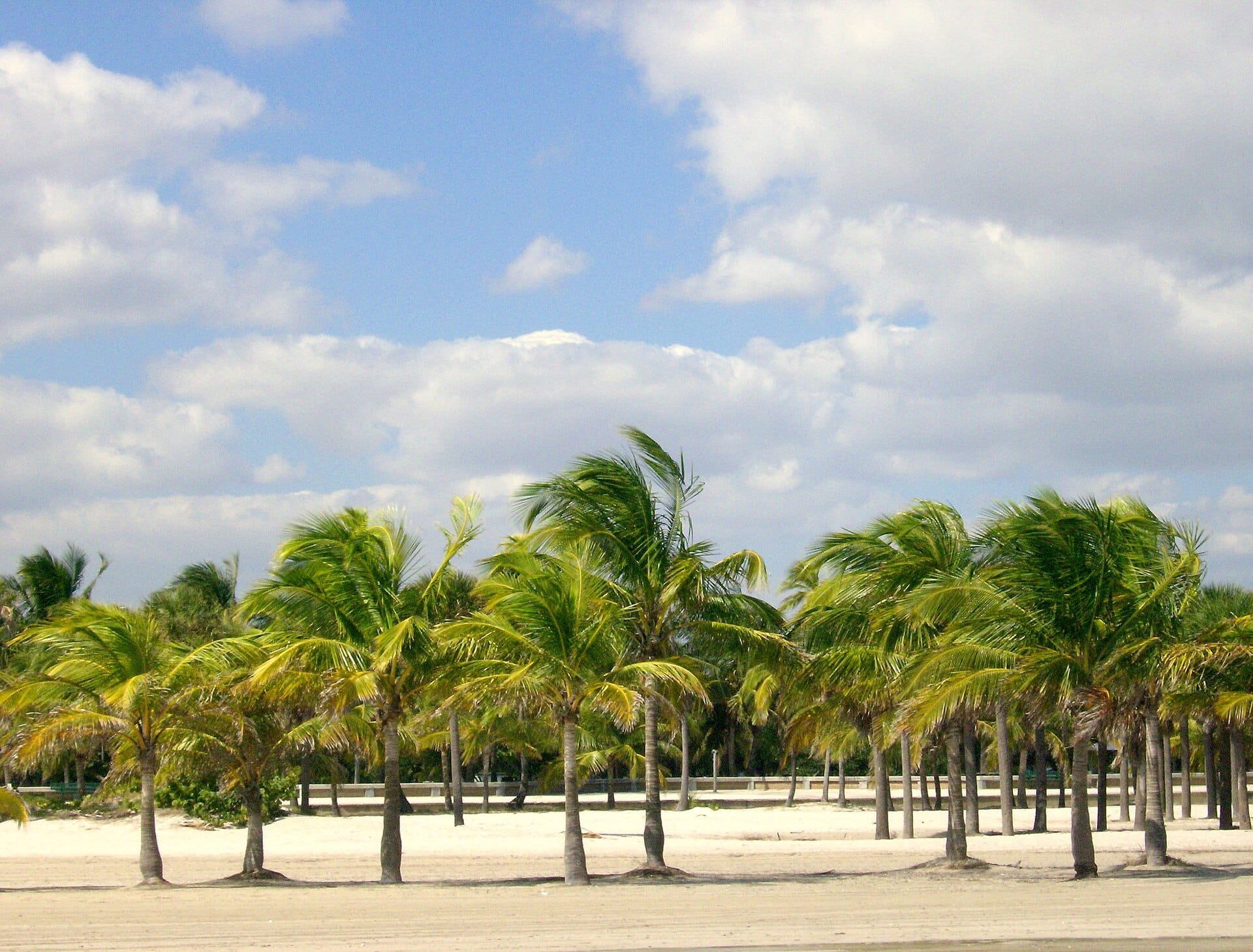
Crandon Park Beach stretches two miles along the Atlantic edge of Key Biscayne, offering calm turquoise water, wide sandy flats, and generous shade from palm groves. It's the kind of beach Miami locals return to again and again, precisely because it never feels like a performance.
Quick Facts
- Location
- 6747 Crandon Blvd, Key Biscayne, FL 33149 — northern Key Biscayne, via Rickenbacker Causeway
- Getting There
- By car via Rickenbacker Causeway (~16 min from Downtown Miami); Metrobus Route 102 connects Brickell Metrorail station to Key Biscayne
- Time Needed
- 2–4 hours for the beach; half a day if exploring the full 808-acre park
- Cost
- No per-person admission; parking Mon–Thu $7 + tax, Fri–Sun $10 + tax per vehicle
- Best for
- Families, swimmers, snorkelers, locals escaping South Beach crowds
- Official website
- www.miamidade.gov/parks/crandon.asp
What Crandon Park Beach Actually Is
Crandon Park Beach is a two-mile public Atlantic shoreline within Crandon Park, an 808-acre Miami-Dade County park on the northern half of Key Biscayne. The island itself sits just south of downtown Miami, separated from the mainland by Biscayne Bay and accessible only via the Rickenbacker Causeway. The beach faces east toward the open Atlantic, but a barrier reef and the gentle curve of the shoreline keep wave action low. The water here is typically clear and shallow for a long stretch before it deepens, which makes it unusually safe for children and comfortable for unhurried swimmers.
The park was born from a private coconut plantation. In 1908, William John Matheson purchased roughly 1,700 acres on northern Key Biscayne and cultivated it extensively. After his death, his heirs donated the land to Miami-Dade County in 1940, with the explicit condition that it be preserved as public parkland. The county honored that condition: the park was formally established in 1947 and named after Charles H. Crandon, who served as county commission chairman and championed the project. That legacy of protected public access shapes the experience today — the park has no commercial resort layered on top of it, no private beach clubs, and no admission gate.
💡 Local tip
Parking is the only real cost. On weekdays the fee is $7 + tax per vehicle; on weekends it rises to $10 + tax. Arriving before 9 a.m. on weekends can improve your chances of finding a spot.
The Beach Itself: What You'll See and Feel
The sand at Crandon is wide and pale, with a texture that's finer than the compacted strips found at many urban beaches. The beach is backed by coconut palms and Australian pines that cast real, usable shade — a meaningful detail on a summer afternoon when the heat index routinely pushes past 95°F (35°C). Families claim the shaded margins early; by late morning on a weekend, the best spots under the palms are taken.
The water color shifts from pale aquamarine in the shallows to a deeper teal as you move out. On calm mornings — which are common from November through April — visibility underwater can reach several feet, and small tropical fish are occasionally visible near the sandbar. The bottom is sandy and soft underfoot, without the rocks or seagrass patches that complicate wading at some other South Florida beaches.
The beach runs nearly two miles from end to end, so finding uncrowded space is rarely a problem even on peak weekend days if you're willing to walk. The southern sections see less foot traffic than the areas nearest the parking lots and facilities. Sound levels shift accordingly: close to the picnic pavilions there's the noise of families and portable speakers, while the far ends of the beach settle into wind, waves, and the occasional pelican.
Tickets & tours
Hand-picked options from our booking partner. Prices are indicative; availability and final rates are confirmed when you complete your booking.
Everglades admission ticket with airboat ride and wildlife show
From 24 €Instant confirmationFree cancellationKey West day trip with glass bottom boat ride
From 110 €Instant confirmationFree cancellationEverglades airboat ride with Biscayne Bay boat tour and transportation
From 67 €Instant confirmationFree cancellationGrand Bahama tour with optional Pig Beach visit
From 309 €Instant confirmationFree cancellation
How the Experience Changes by Time of Day
Early morning arrivals — say, before 8:30 a.m. — encounter a beach that is almost entirely empty. The low angle of the sun makes photography straightforward without the harsh midday glare, and the water tends to be glassier before the afternoon sea breeze picks up. Joggers use the promenade path, and occasionally a kayaker or paddleboarder cuts across the bay in the distance. This is the best window for anyone who wants the setting without the social scene.
Midday on weekends brings the bulk of the crowd: local families with coolers and beach chairs, groups of teenagers, and a sizable number of international visitors who have read about Key Biscayne as an alternative to South Beach. The pavilions get busy, and the parking lots fill. The water is warm by this point and swimming is comfortable, but the sensory experience is social rather than contemplative.
Late afternoon, roughly from 4 p.m. onward, is underrated. Families with young children begin leaving, the light goes golden and soft, and the beach quiets noticeably. The Rickenbacker Causeway toll is $2 each way by car, and some visitors factor that into their decision to leave early — which can work in your favor if you stay. Sunset from the beach itself is blocked by the tree line to the west, but the light on the water in the east is warm and worth it.
⚠️ What to skip
During Miami's wet season (May through October), afternoon thunderstorms develop quickly and the beach clears fast when lightning is detected. Build flexibility into afternoon plans. The storms usually pass within 30–60 minutes.
Getting There and Getting Around the Park
Most visitors arrive by car via the Rickenbacker Causeway, which connects Brickell and downtown Miami to Key Biscayne. From downtown Miami, the drive runs approximately 16 minutes in normal traffic. The causeway itself has a toll of $2 per vehicle each way. Once on Key Biscayne, Crandon Boulevard runs straight to the park entrance. Parking lots are inside the park and are generally adequate on weekdays; weekends in winter and spring see heavier competition for spaces.
Without a car, Metrobus Route 102 connects the Brickell area to Key Biscayne and stops near the park. It is not fast — allow around 45 minutes from Brickell — but it is functional and the fare is low. For context on getting around Miami more broadly, the Miami transit and transport guide covers all the main options including Metrorail, Metrobus, and ride-hailing.
Inside the park, the beach promenade runs along much of the shoreline and is flat and paved, which makes it accessible for visitors using wheelchairs or strollers. Miami-Dade County provides specially designed beach wheelchairs at the beach facilities for visitors with mobility impairments — it is worth calling ahead to confirm availability. The Crandon Park Tennis Center, also within the park, is wheelchair accessible.
Beyond the Waterline: What Else Is in the Park
Crandon Park covers 808 acres, and the beach is only part of it. The park includes a marina, a golf course, a nature center, a restored carousel from the 1940s, and the Crandon Park Tennis Center — a hardcourt facility that has hosted ATP Tour events. There are also extensive picnic areas with covered pavilions, barbecue grills, and playgrounds, which is why this park functions as a genuine recreational hub for Miami-Dade families rather than just a sunbathing spot.
The park sits at the northern end of Key Biscayne. If you drive south through the island, you reach Bill Baggs Cape Florida State Park, which contains the Cape Florida Lighthouse — one of the oldest standing structures in Miami-Dade County — and a different style of beach that is narrower and more exposed to wind. Combining both parks into one Key Biscayne day is a popular itinerary, and the two parks are only about 10 minutes apart by car.
Crandon Park vs. South Beach: An Honest Comparison
Crandon Park Beach is often discussed as an alternative to Lummus Park Beach on South Beach — and the comparison is accurate but requires context. South Beach has the architecture, the density of restaurants and bars, the nightlife, and the international spectacle. Crandon has none of that, and that is its defining quality. There are no vendors walking the sand, no beach clubs with day-rate loungers, and no DJ sets at noon.
The water at Crandon is generally calmer and clearer than at South Beach, which faces the open Atlantic with more wave energy. For families with children, the shallow and gentle shoreline at Crandon is a practical advantage. For solo travelers or couples looking for the Art Deco streetscape, the Ocean Drive energy, and easy access to restaurants and bars, South Beach makes more sense — Crandon will feel isolated.
Visitors exploring Key Biscayne as a destination should also know that the island has limited dining and shopping compared to South Beach or Brickell. Plan your meals before you go, or pack food. For a broader look at Miami's beach options, the guide to Miami's best beaches covers the full range, from urban strips to quieter barrier island shores.
Photography, Wildlife, and Practical Notes
The beach faces east, which means sunrise photography works well from the shoreline and golden-hour light lands on the water in the morning. A polarizing filter helps cut glare off the shallow water and brings out the teal and aquamarine tones. Midday light is flat and harsh from roughly 11 a.m. to 3 p.m. — fine for swimming, not ideal for photography.
Seabirds are consistently present: brown pelicans cruise low over the water, laughing gulls work the shoreline, and royal terns perch on the sandbar when the tide is low. Bottlenose dolphins are occasionally spotted from the beach in the early morning, moving parallel to the shore. These sightings are not guaranteed but happen with enough regularity that a pair of binoculars is worth packing.
For visitors interested in Miami's wider natural environment, Crandon Park sits at the edge of Biscayne National Park — just a short distance south, the national park protects extensive reef systems and mangrove coastline. Boat tours into the park depart from the Convoy Point visitor center. It is a natural pairing for anyone drawn to Key Biscayne for its ecology rather than its social scene.
ℹ️ Good to know
Bring everything you need for the day: sunscreen, water, snacks, and shade gear. While the park has picnic facilities and some amenity buildings, food options inside are limited. The nearest concentration of restaurants is back on Crandon Boulevard and in the Key Biscayne village area.
Insider Tips
- Arrive before 9 a.m. on weekend mornings to secure a shaded spot under the palms near the promenade. The shade disappears as the sun moves, and by 11 a.m. the tree-line coverage is limited to a narrow strip.
- The far southern end of the beach, a 15-minute walk from the main parking area, sees significantly lighter crowds even on busy weekend afternoons. The sand quality and water clarity are identical to the sections near the entrance.
- If you are visiting between November and April, weekday mornings offer near-solitude. The beach draws mostly local regulars at that time: early swimmers, dog walkers on the promenade, and the occasional paddleboarder launching from the marina.
- The Rickenbacker Causeway toll is $2 per vehicle each way — cash and SunPass are accepted. Keep coins or small bills ready if you do not have a transponder; the toll booth does not always have attendants.
- Snorkeling directly off the beach is modest at best, but the sandbar area in waist-deep water often has small fish visible on clear-water mornings. Bring a basic mask and fins if underwater visibility is a priority.
Who Is Crandon Park Beach For?
- Families with young children who need calm, shallow water and picnic facilities
- Miami locals and repeat visitors looking for a quieter, less commercial beach day
- Swimmers and snorkelers who prioritize clear water over beach-scene atmosphere
- Cyclists and active travelers combining a beach visit with a ride along the Rickenbacker Causeway
- Nature-focused visitors using Key Biscayne as a base to explore Biscayne National Park and Bill Baggs Cape Florida
Nearby Attractions
Other things to see while in Key Biscayne:
- Bill Baggs Cape Florida State Park
Bill Baggs Cape Florida State Park occupies the southern tip of Key Biscayne, combining a historic 1825 lighthouse, a wide Atlantic-facing beach, and roughly 440 acres of subtropical coastal habitat. It offers one of the most complete outdoor escapes within easy reach of central Miami.
- Cape Florida Lighthouse
Standing at the southern tip of Key Biscayne, the Cape Florida Lighthouse is the oldest standing structure in Miami-Dade County. Built in 1825 and scarred by a Seminole attack in 1836, it offers guided tower tours, a restored keeper's cottage, and panoramic views over Biscayne Bay and the Atlantic. The lighthouse sits inside Bill Baggs Cape Florida State Park, one of Miami's most rewarding half-day escapes.
- Rickenbacker Causeway
Stretching about 5.4 miles from the Brickell shoreline to Key Biscayne, the Rickenbacker Causeway is the only road connecting Miami to Virginia Key and Key Biscayne. Whether you cross it by car, bicycle, or on foot, the views of Biscayne Bay and the downtown skyline rank among the best in South Florida.