Biscayne National Park: Where Miami Meets the Ocean Floor
Biscayne National Park protects one of the largest coral reef ecosystems in North America, about 35 miles south of downtown Miami. With 95% of its 172,971 acres underwater, this is not a typical roadside park — it rewards those who come prepared to snorkel, dive, kayak, or sail.
Quick Facts
- Location
- 9700 SW 328th Street, Homestead, FL 33033 — approx. 35 miles south of Downtown Miami
- Getting There
- Car required (1–1.5 hrs from Downtown Miami via Florida Turnpike, Exit 6). Seasonal weekend trolley from Downtown Homestead, late Nov–Apr.
- Time Needed
- Half day minimum for a boat tour; full day if snorkeling, diving, or island camping
- Cost
- Free park entry. Camping: $35/night per site. Boat tours and rentals extra — verify current prices with concessionaires.
- Best for
- Snorkelers, divers, kayakers, nature lovers, history seekers
- Official website
- www.nps.gov/bisc/index.htm
What Biscayne National Park Actually Is
Biscayne National Park is not the kind of place you stumble into. It sits at the southern edge of Miami-Dade County, about 35 miles from downtown, and the moment you arrive at the Dante Fascell Visitor Center at Convoy Point, you are standing at the edge of a watery world that stretches all the way to the Florida Keys. The park covers roughly 172,971 acres, and approximately 95% of that area is water: Biscayne Bay, the upper Florida Keys, and a stretch of living coral reef that ranks among the most significant in North America.
On land, you get a narrow coastal fringe of mangrove shoreline and two accessible keys — Elliott Key and Boca Chita Key — both reachable only by boat. The mainland section amounts to a few miles of shoreline and the visitor center. This distinction matters enormously for trip planning: if you drive out and expect a conventional national park experience with hiking trails and panoramic overlooks, you will be disappointed. The park's rewards are entirely aquatic, and accessing them requires either joining a guided boat tour or bringing your own vessel.
⚠️ What to skip
There are no roads to the islands and no ferry service to the reef. If you visit without a boat or tour booking, you are limited to the visitor center area and the shoreline at Convoy Point. Book guided tours in advance, especially during winter weekends when demand is high.
The Landscape: Four Ecosystems in One Park
The park is organized around four distinct ecosystems arranged roughly north to south: the mangrove shoreline, Biscayne Bay, the barrier islands, and the offshore coral reef. Together they form an ecological corridor that has supported human habitation for roughly 10,000 years, from the Tequesta people to 19th-century homesteaders to the fishing families who shaped the keys before federal protection arrived.
The mangroves at the park's western edge are the nursery for much of what lives in the bay. Walking the short shoreline path near the visitor center at low tide, you can see the prop roots of red mangroves dropping into the shallows, the water slightly tannin-stained, the air carrying the faint brine smell that is characteristic of productive coastal wetlands. Ibis and herons pick through the shallows. Mullet scatter in small silver flashes when a kayak passes. It is quiet in a way that feels genuinely distant from the city, even though you are less than an hour and a half from downtown.
Biscayne Bay itself is a shallow, protected lagoon — in many places no deeper than 10 feet — and its seagrass beds are critical habitat for the West Indian manatee, sea turtles, and juvenile fish. Kayakers crossing the bay on calm mornings frequently encounter manatees drifting just below the surface, their backs breaking the water in slow, unhurried arcs. The reef, further offshore, is where divers find elkhorn and staghorn corals, parrotfish, barracuda, and the wrecks of ships that miscalculated the reef's position over the last four centuries.
Tickets & tours
Hand-picked options from our booking partner. Prices are indicative; availability and final rates are confirmed when you complete your booking.
Everglades airboat ride with Biscayne Bay boat tour and transportation
From 67 €Instant confirmationFree cancellationMiami skyline luxury sunset cruise of Biscayne Bay
From 30 €Instant confirmationFree cancellationMiami City Tour with Biscayne Bay Boat Tour
From 63 €Instant confirmationFree cancellationBiscayne Bay millionaire's row sightseeing boat tour
From 26 €Instant confirmation
Getting There and Getting On the Water
Driving is the only practical way for most visitors to reach the park. From Downtown Miami, take the Florida Turnpike south to Exit 6 (Speedway Boulevard), turn left, continue south to SW 328th Street (North Canal Drive), then turn left and follow it approximately four miles to the end. The Dante Fascell Visitor Center is on the left, just before Homestead Bayfront Marina. Allow 1 to 1.5 hours from downtown, more during peak traffic on Friday afternoons.
A seasonal trolley connects Downtown Homestead to the visitor center on weekends from late November through April, which is useful if you are staying in Homestead or taking the Metrorail to the Homestead area. However, for anyone coming from Miami proper, a car or ride-share to the park entrance is the realistic option.
Once at Convoy Point, boat tours to the reef, islands, and snorkel sites are operated by a park concessionaire. Tours include glass-bottom boat trips, snorkeling excursions, and island-hopping trips to Elliott Key and Boca Chita Key. Kayaks and canoes can also be rented from the visitor center area for bay exploration close to shore. If you own or charter a private vessel, the park's waters are accessible 24 hours a day year-round, though you should check NPS navigation charts and regulations before anchoring near the reef.
💡 Local tip
Book concessionaire tours before you go, particularly for snorkeling trips during the November–April dry season. Weekend slots fill up, and the drive out without a confirmed tour booking can be a frustrating experience.
The Visitor Center and What You Can Do Without a Boat
The Dante Fascell Visitor Center at Convoy Point is open daily from 9:00 to 17:00, except Thanksgiving, Christmas, and New Year's Day. The building itself sits right on the waterfront and has a small but well-organized exhibition on the park's ecology and history. Rangers are genuinely knowledgeable and can advise on current water conditions, wildlife sightings, and tour availability. Entry to the park and visitor center is free.
The surrounding grounds at Convoy Point offer a short nature trail through the mangrove fringe, a picnic area, and a fishing pier where local families often spend weekend mornings. In the early morning, before the tour boats depart, the bay is glassy and the sky over the water turns from deep blue to pale orange. Herons stand motionless on the dock pilings. It is one of the more peaceable moments you can find anywhere near Miami.
For visitors who want to combine Biscayne with another natural area, the park's southern boundary practically neighbors Everglades National Park, making it possible to visit both in a single long day trip from Miami — though each deserves more time than that.
The Islands: Boca Chita Key and Elliott Key
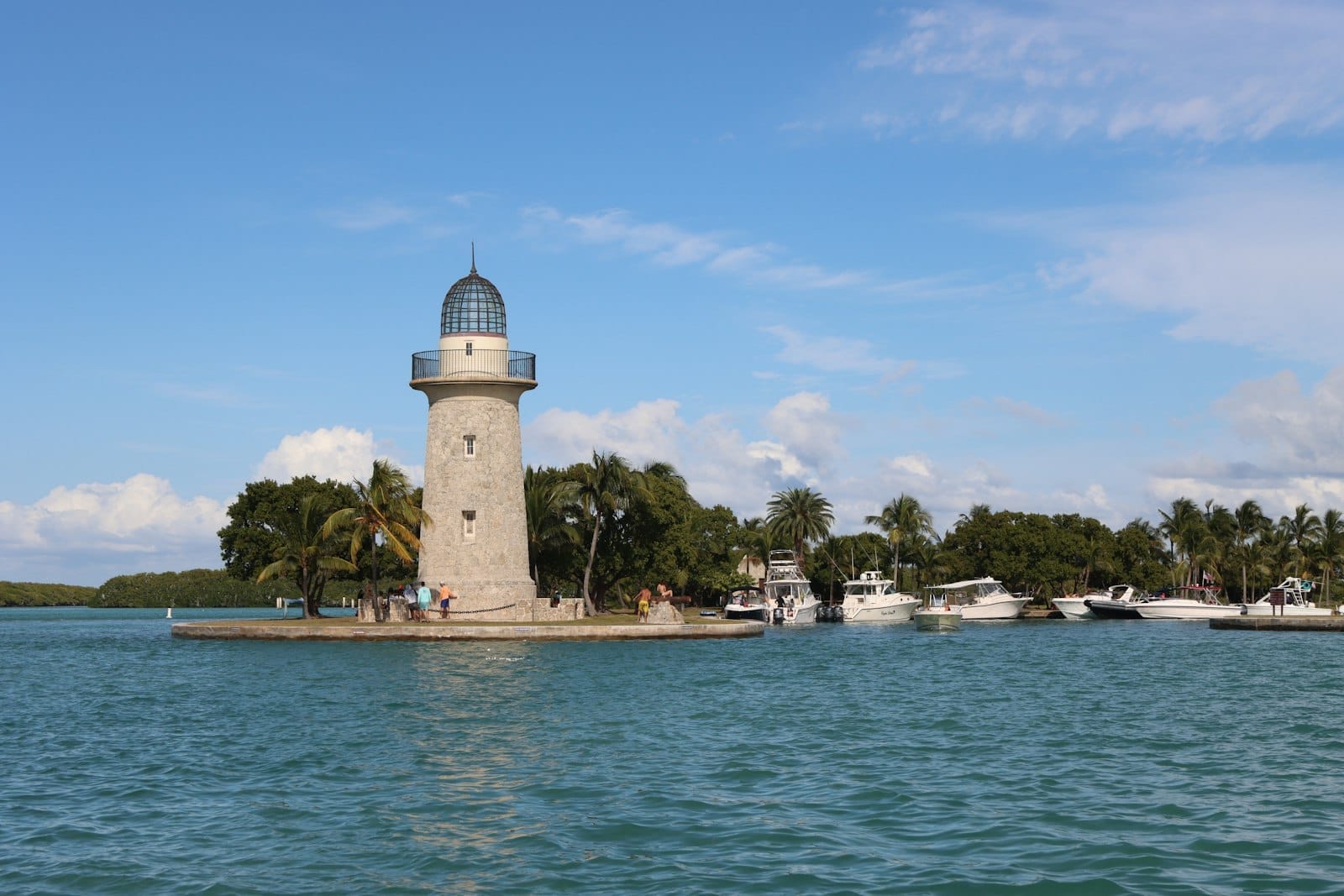
Boca Chita Key is the more visited of the two accessible islands, known for its ornamental lighthouse built by Mark Honeywell (of the Honeywell corporation) in the 1930s as part of a private estate. The lighthouse was never approved by the U.S. Coast Guard and has never guided ships; it is purely decorative. The key has a small harbor, camping sites, a composting restroom, and a grassy picnic area shaded by gumbo-limbo trees. From the top of the lighthouse on a clear day, the Miami skyline is visible to the north and the reef line is visible as a darker stripe of green against the lighter blue of the bay.
Elliott Key is the largest of the park's islands and the only one with a freshwater tap and a short hiking trail. The so-called Spite Highway, a bulldozed road that developers cut through the island's hardwood hammock in 1968 in an attempt to prevent federal protection, is now largely revegetated and forms the basis of the trail. The island has a campground with basic facilities. Camping costs $35 per site per night (up to six people) at Elliott Key and Boca Chita Key; there is currently no stated seasonal fee waiver and sites are assigned first-come, first-served rather than reservable on Recreation.gov.
When to Visit and How Weather Shapes the Experience
The dry season, roughly November through April, is the optimal window. Water visibility on the reef is at its best during this period, often exceeding 30 feet, and afternoon thunderstorms are rare. Air temperatures in winter hover in the mid-70s Fahrenheit, making snorkeling comfortable in a standard wetsuit. This is also when the park sees its highest visitor numbers, particularly on weekends.
The summer months from June through October bring Miami's wet season. Afternoon thunderstorms are frequent and can develop quickly over the open water, which makes boating and snorkeling potentially dangerous if you are not monitoring weather closely. Visibility on the reef decreases somewhat due to summer runoff, and sea surface temperatures climb into the low-to-mid 80s Fahrenheit, which can contribute to coral bleaching stress. That said, summer mornings can be calm and beautiful, and typically lower summer visitation can make island stays feel more secluded despite the heat and storms.
⚠️ What to skip
Hurricane season runs June 1 through November 30. Always check NOAA forecasts before heading out on the water. Even tropical weather systems that do not make direct landfall can generate dangerous swells and squalls in Biscayne Bay.
For a broader overview of when Miami's climate suits outdoor activities, the best time to visit Miami guide covers seasonal conditions across the region.
Snorkeling and Diving: What You Will Actually See
The park's reef is part of the Florida Reef Tract, the only living barrier coral reef in the continental United States. The shallowest sections sit in as little as three feet of water, accessible to confident snorkelers. Deeper sites go to 60 feet and beyond. Common reef fish include queen angelfish, yellowtail snapper, stoplight parrotfish, and blue tang. Sea turtles, particularly loggerheads and greens, are regularly seen. Nurse sharks rest under coral ledges during the day; they are docile and will move away if approached.
The park also contains a Maritime Heritage Trail, a self-guided underwater dive trail connecting six historic shipwrecks. The wrecks include vessels from the 19th and early 20th centuries and are now encrusted with coral and populated by reef fish. Underwater plaques mark each site. For divers, this trail is one of the more unusual experiences in South Florida, combining marine biology with maritime archaeology.
Those interested in pairing this with other water-based experiences around Miami should consult the Miami water activities guide for a full overview of kayaking, paddleboarding, and diving options across the area.
Practical Notes for Visiting
Wear reef-safe sunscreen. Some Florida localities have restricted sunscreens containing oxybenzone and octinoxate in certain marine areas, and while enforcement varies, the coral you are swimming over is genuinely under stress. Mineral-based SPF 50 is widely available at outdoor retailers and pharmacies throughout Miami.
Bring more water than you think you need. The South Florida sun is intense even on overcast days, and the boat deck reflects heat. A rash guard or long-sleeve swim shirt is worth having both for sun protection and for warmth if you spend extended time snorkeling in winter-cooled water.
The visitor center and shoreline at Convoy Point are accessible, with paved paths and accessible parking. However, roughly 95% of the park's area is accessible only by boat, which significantly limits the experience for visitors with mobility restrictions. The concessionaire boats may accommodate some needs — contact them directly in advance to assess options.
Biscayne is worth combining with a stop at the Deering Estate on the way back to Miami, which preserves another significant stretch of Biscayne Bay shoreline and contains one of the largest contiguous tracts of native pine rockland and tropical hardwood hammock remaining in Miami-Dade County.
Insider Tips
- Arrive at Convoy Point before 8:00 AM on weekends. The parking lot fills faster than most people expect, and the early light on the bay is genuinely worth seeing before the tour boats start their engines.
- If you are snorkeling on a concessionaire tour, ask the guide specifically about the Maritime Heritage Trail wrecks. Not all tours include them by default, but rangers and guides can often point you toward the best-preserved sites.
- The quieter visitation between May 1 and September 30 can make Elliott Key and Boca Chita Key remarkably peaceful compared with peak winter weekends. If you can tolerate heat and afternoon storms, a September night on Boca Chita Key with virtually no other campers is unlike any other experience within reach of Miami.
- Serious divers should bring their own gear rather than renting. Rental equipment at the visitor center is functional but basic, and the Maritime Heritage Trail wrecks reward better-equipped divers who can stay down longer.
- For the clearest water and calmest bay conditions, plan for a weekday morning in December, January, or February. Winter cold fronts occasionally push through South Florida and stir up the bay, but the days between fronts are spectacularly clear.
Who Is Biscayne National Park For?
- Snorkelers and divers who want access to living coral reef without traveling to the Keys
- Kayakers looking for a calm, shallow bay environment with genuine wildlife encounters
- Campers who want island solitude within reach of a major city
- History and archaeology enthusiasts drawn to the Maritime Heritage Trail shipwrecks
- Day-trippers from Miami combining Biscayne with Everglades National Park in a single drive south
Nearby Attractions
Combine your visit with:
- Aventura Mall
Aventura Mall is Florida's largest enclosed shopping center, spanning roughly 2.7 million square feet with more than 300 stores, dozens of restaurants, and a growing collection of public art. Positioned between Miami and Fort Lauderdale, it draws shoppers from across South Florida and beyond. Whether you are hunting flagship luxury brands or simply escaping the afternoon heat, the mall delivers a surprisingly complete half-day experience.
- Deering Estate
The Deering Estate is a 444-acre historic preserve in South Miami-Dade that combines 1920s-era architecture, fossil-rich limestone terrain, coastal mangroves, and a surprisingly ambitious arts program. It rewards slow exploration and offers a side of Miami most visitors never see.
- Everglades National Park
Everglades National Park protects the largest subtropical wilderness in the United States, just an hour from Miami. From alligator-lined boardwalks to silent sawgrass prairies stretching to the horizon, it rewards visitors who prepare — and humbles those who don't.
- Fruit & Spice Park
Tucked into Homestead's Redland agricultural district, the Fruit & Spice Park packs over 500 varieties of tropical fruits, herbs, nuts, and spices across 37 acres. It's a genuine working botanical park, built on Florida's unique subtropical growing conditions, and one of the few places in the continental United States where you can walk beneath breadfruit trees, taste a carambola, and watch jackfruit the size of a basketball hang from a trunk.