Everglades National Park: What to Know Before You Go from Miami
Everglades National Park protects the largest subtropical wilderness in the United States, just an hour from Miami. From alligator-lined boardwalks to silent sawgrass prairies stretching to the horizon, it rewards visitors who prepare — and humbles those who don't.
Quick Facts
- Location
- Multiple entrances; nearest from Miami is Shark Valley (~25 miles west on US-41) or Main Entrance via Homestead (~40 miles south)
- Getting There
- Private car or guided tour required; no direct public transit to park entrances
- Time Needed
- Half day minimum; full day recommended for Main Entrance or combining two entrances
- Cost
- Private vehicle: US$35 (7 days); Individual on foot/bike: US$20; Children 15 and under: free. Verify current fees at nps.gov/ever
- Best for
- Wildlife watching, photography, nature walks, family day trips, ecotourism
- Official website
- www.nps.gov/ever/index.htm
What Everglades National Park Actually Is
Everglades National Park is not a swamp in the colloquial sense. It is a slow-moving, shallow river of grass — a freshwater sheet flow roughly 50 miles wide and just inches deep — flowing southward from Lake Okeechobee toward Florida Bay. The park, established in 1947 after being authorized by Congress in 1934, covers approximately 1,508,976 acres, protecting roughly the southern 20 percent of the original Everglades ecosystem. It is the largest tropical wilderness in the United States and the largest wilderness of any kind east of the Mississippi River.
The landscape does not announce itself dramatically. There are no cliffs, no waterfalls, no mountain vistas. What it offers instead is an almost unsettling flatness broken by cypress domes, mangrove tunnels, and sawgrass prairies stretching to a horizon that feels too far away. For visitors accustomed to landmark-driven tourism, this can be disorienting at first. For those who slow down and watch the water, it becomes one of the most compelling natural environments in North America.
ℹ️ Good to know
The park is open 24 hours a day, 7 days a week, year-round — but visitor centers, tram tours, and some facilities operate seasonally. Check nps.gov/ever for current hours before your visit.
Which Entrance to Use from Miami
The park has multiple access points, and choosing the right one shapes your entire experience. From central Miami, two entrances are practical for a day trip.
Shark Valley, reached via U.S. Highway 41 (the Tamiami Trail) about 25 miles west of central Miami, is the most accessible and arguably the best introduction to the Everglades for first-time visitors. The main draw is a 15-mile paved loop road that cuts through open sawgrass marsh. You can walk it, rent a bicycle at the visitor center, or take the park's two-hour narrated tram tour, which ends at a 65-foot observation tower. The tram tour is particularly good for wildlife: the road shoulders are frequently lined with alligators sunning themselves, and great blue herons stand so close you can hear them breathing.
The Main Entrance (Ernest F. Coe Visitor Center) near Homestead, approximately 40 miles south of Miami via Florida's Turnpike or U.S. 1, gives access to a different set of ecosystems entirely. The road continues 38 miles through pine flatwoods, hardwood hammocks, and mangrove forests to Flamingo on Florida Bay. Along the way, short boardwalk trails branch off at regular intervals. Pa-hay-okee Overlook, roughly midway, offers one of the few elevated vantage points over the sawgrass prairie and is worth the brief walk even in heat.
💡 Local tip
If you only have half a day, Shark Valley is the better choice: closer, easier to navigate, and consistently reliable for wildlife sightings. If you want more variety and solitude, the Main Entrance rewards the extra drive.
Tickets & tours
Hand-picked options from our booking partner. Prices are indicative; availability and final rates are confirmed when you complete your booking.
Everglades admission ticket with airboat ride and wildlife show
From 24 €Instant confirmationFree cancellationEverglades airboat ride with Biscayne Bay boat tour and transportation
From 67 €Instant confirmationFree cancellationBest of Miami tour with airboat ride at the Everglades
From 170 €Instant confirmationFree cancellationEverglades National Park Self-Guided Driving Audio Tour
From 15 €Instant confirmationFree cancellation
Wildlife: What You Will See and When
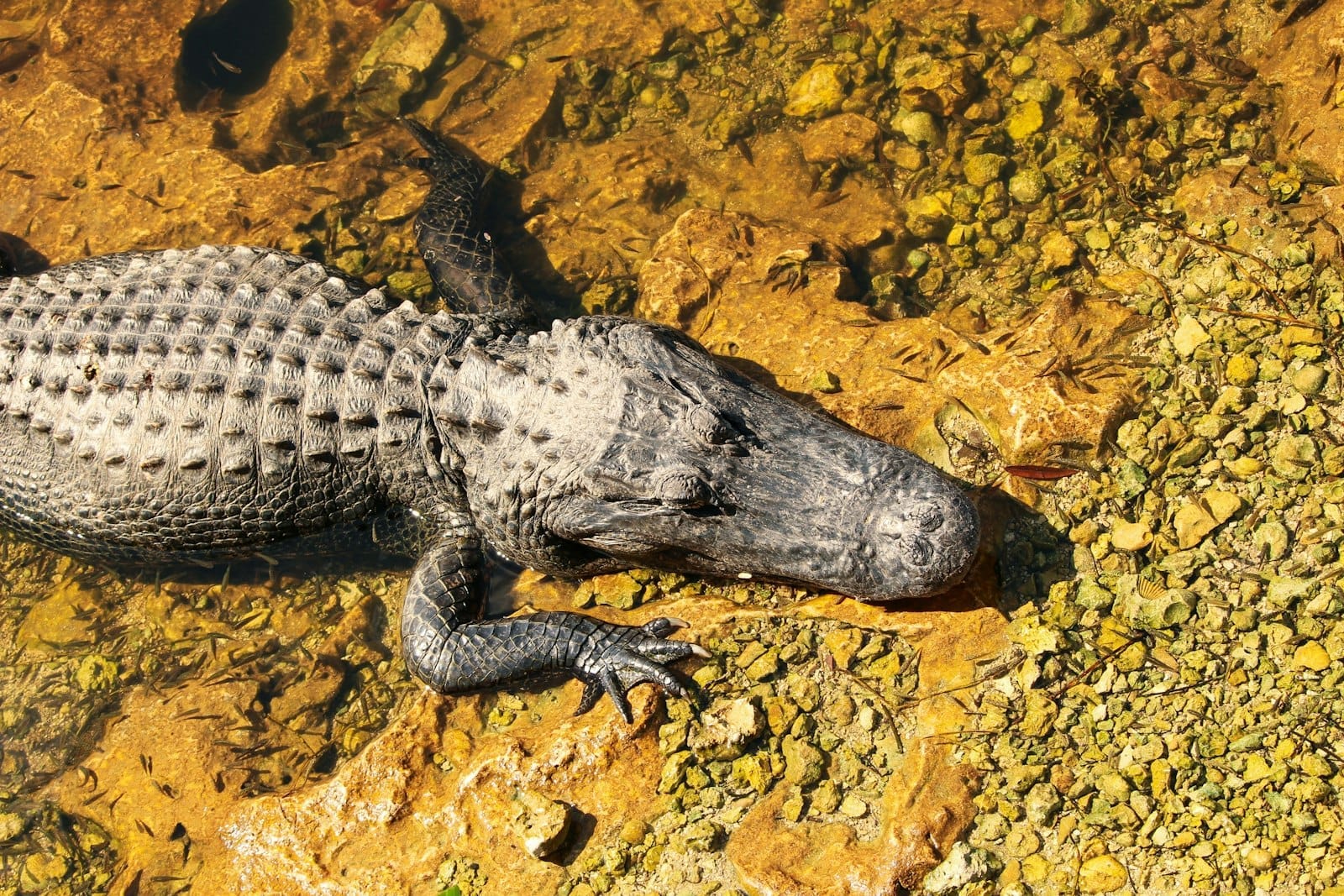
The Everglades supports an extraordinary concentration of wildlife. American alligators are a near-constant presence at Shark Valley and along canals near the Main Entrance, especially in the dry season when animals congregate around shrinking water sources. American crocodiles, a separate and rarer species, inhabit the brackish and saltwater zones near Flamingo and are far less commonly encountered. Both species are wild animals — the alligators at Shark Valley may appear calm and indifferent, but they move fast and should never be approached.
The park is a globally significant birding site. Wading birds — great blue herons, great egrets, snowy egrets, roseate spoonbills, wood storks, and anhingas — are visible throughout, but population densities are highest in the dry season (November through April) when retreating water concentrates fish in accessible pools. During winter mornings at Anhinga Trail near the Main Entrance, anhingas perch on low branches within arm's reach to dry their wings, and the path can feel more like a nature documentary than a national park. Migratory songbirds pass through in large numbers during spring and fall.
Manatees appear in Florida Bay and in canal areas near Flamingo, most commonly in winter. The Florida panther, the park's most famous large mammal, inhabits the backcountry but is almost never seen by day visitors. West Indian manatees and bottlenose dolphins are occasional sights from the Flamingo marina area.
The Best Time to Visit and Why It Matters More Than Most Parks
The difference between the dry season (November through April) and the wet season (May through October) is not merely a matter of comfort. It fundamentally changes what you see and how accessible the park is.
The dry season is when the Everglades puts on its best show. Water levels drop, wildlife concentrates, mosquito populations are lower, and temperatures are manageable — highs typically in the mid-70s to low 80s Fahrenheit. Most guided tours and ranger programs are scheduled during this period, trails are fully accessible, and the tram tour at Shark Valley is reliably operational. January through March is widely considered the peak window for wildlife observation.
The wet season brings high heat, humidity in the high 80s and 90s, and afternoon thunderstorms that can arrive with almost no warning. More critically, mosquitoes reach densities that make prolonged outdoor activity genuinely unpleasant without serious protection. Wildlife disperses across the flooded landscape, making sightings less predictable. That said, summer visitors who come early in the morning can have trails entirely to themselves, and the park's lush greenery and dramatic storm skies make for compelling photography. If you visit between June and October, bring DEET-based repellent, lightweight long sleeves, and plan to be done outdoors by early afternoon.
⚠️ What to skip
Lightning is a serious risk during wet-season afternoon storms. If you hear thunder, move to your vehicle or a substantial building immediately. The open sawgrass marsh at Shark Valley offers no shelter.
For a broader picture of Miami's seasonal weather patterns and how they affect day trips, the Miami weather guide covers month-by-month conditions across the region.
A Practical Walkthrough of the Main Trails
At Shark Valley, the Tram Road loop is the centerpiece. On foot, the full 15 miles is a serious commitment in any weather and most visitors either rent a bicycle (available at the visitor center, with limited supply — arrive early) or take the tram. The observation tower at the midpoint of the loop gives a panoramic view across the sawgrass that makes the flatness suddenly legible: you can see the slight elevation changes that determine whether an area is open water, marsh, or tree island.
At the Main Entrance, Anhinga Trail is a 0.8-mile paved loop through Royal Palm Hammock that consistently delivers close wildlife encounters and requires minimal effort. Royal Palm Hammock, where the trailhead is located, also connects to Gumbo Limbo Trail, a short loop through a dense hardwood hammock where the light filters differently and the air is noticeably cooler. These two trails together take about 45 minutes and are appropriate for all fitness levels.
Further along the main road, Pinelands Trail passes through South Florida slash pine forest — an ecosystem most visitors skip but worth a brief stop to understand the range of habitats compressed into this landscape. Near Flamingo, the Eco Pond loop is a reliable spot for roseate spoonbills, especially in early morning and late afternoon.
Getting There: Transport and Logistics
There is no practical public transit option to Everglades National Park. Miami-Dade Transit does not serve either the Shark Valley or Homestead entrances. The only realistic options for independent travelers are a rental car, a personal vehicle, or a guided tour departing from Miami.
Driving to Shark Valley from central Miami takes roughly 45 to 60 minutes depending on traffic. The route is straightforward: take U.S. 41 west. To the Main Entrance, allow 60 to 75 minutes via Florida's Turnpike south to Homestead, then follow signs west toward the park. Parking is available at both entrances and is included with the vehicle entrance fee.
Guided day tours from Miami are a legitimate option for those without a car. They typically combine both entrances or focus on Shark Valley, and many include an airboat experience (note: commercial airboats operate on private Everglades land outside the national park boundary, not inside it). For a full comparison of how to organize this as a day trip, the Everglades from Miami guide covers tour operators and logistics in detail.
Accessibility and What to Bring
The park has made significant accommodations for visitors with mobility limitations. The Ernest F. Coe Visitor Center, the Anhinga Trail, and the Shark Valley Visitor Center area all have accessible parking, restrooms, and paved surfaces. The tram tour at Shark Valley can accommodate wheelchairs, though advance confirmation with the park is recommended. The main road through Shark Valley is paved and flat, making it suitable for wheelchair users on bicycles with appropriate hand cycles.
Regardless of season, water is essential. Vending machines and water refill stations exist at visitor centers, but there are no services along the Shark Valley loop road or between most trail heads. Bring at least two liters per person. Sun protection is not optional: the sawgrass marsh offers no shade, and Florida sun at any time of year is intense. Closed-toe shoes with grip are recommended — trails are mostly paved or boardwalk, but wet seasons can leave surfaces slippery.
Everglades makes a natural pairing with other nature-focused experiences in the Miami area. Biscayne National Park lies just east of the Homestead entrance and protects the northernmost Florida Keys reef — possible to visit on the same day if you start early.
Who This Attraction Is Not For
Everglades National Park will disappoint visitors looking for a theme-park-style experience with guaranteed, close-up animal encounters. Wildlife sightings are highly probable in dry season but never certain, and the park does not stage or bait animals. The landscape rewards patience and attention rather than rapid stimulus. Visitors expecting the dramatic scenery of western national parks — Yellowstone's geysers, Yosemite's cliffs — will find the Everglades visually understated.
Very young children who tire quickly in heat should be planned for carefully, with early start times and realistic mileage expectations. The park is not a bad choice for families, but the lack of shade and the scale of the environment require more preparation than a city attraction.
Insider Tips
- Arrive at Shark Valley when the gates open, particularly in dry season. Alligators are most active in the first two hours of morning before temperatures rise, and the tram tour fills up by mid-morning. Booking the tram in advance online via the NPS concessions page is strongly recommended from December through March.
- The Anhinga Trail at the Main Entrance is best before 9 AM. Anhinga birds roost overnight in the trees immediately beside the boardwalk and are feeding in the water at dawn. By 11 AM, crowds and heat change the experience significantly.
- Bring binoculars even if you are not a dedicated birder. The roseate spoonbill is one of the most visually striking birds in North America — pink in a way that looks digitally altered — and seeing one clearly at Eco Pond near Flamingo is a genuine surprise.
- The America the Beautiful Annual Pass (US$80, sold by the National Park Service) covers entrance to all federal lands including Everglades and pays for itself quickly if you plan to visit more than two national parks or monuments. Available at the entrance gate.
- Cell service is unreliable or absent along most of the main park road and throughout Shark Valley. Download an offline map before you leave Miami, and note that GPS does not always accurately represent park road layouts.
Who Is Everglades National Park For?
- Nature and wildlife enthusiasts who want to see wading birds and alligators in their actual habitat
- Photographers, particularly those interested in landscape and wildlife work with long lenses
- Families with children old enough to walk a mile or more and engage with the natural environment
- Miami visitors who want a complete change of pace from the urban coast, achievable in a single day
- Cyclists looking for a flat, paved, wildlife-rich route (Shark Valley loop)
Nearby Attractions
Combine your visit with:
- Aventura Mall
Aventura Mall is Florida's largest enclosed shopping center, spanning roughly 2.7 million square feet with more than 300 stores, dozens of restaurants, and a growing collection of public art. Positioned between Miami and Fort Lauderdale, it draws shoppers from across South Florida and beyond. Whether you are hunting flagship luxury brands or simply escaping the afternoon heat, the mall delivers a surprisingly complete half-day experience.
- Biscayne National Park
Biscayne National Park protects one of the largest coral reef ecosystems in North America, about 35 miles south of downtown Miami. With 95% of its 172,971 acres underwater, this is not a typical roadside park — it rewards those who come prepared to snorkel, dive, kayak, or sail.
- Deering Estate
The Deering Estate is a 444-acre historic preserve in South Miami-Dade that combines 1920s-era architecture, fossil-rich limestone terrain, coastal mangroves, and a surprisingly ambitious arts program. It rewards slow exploration and offers a side of Miami most visitors never see.
- Fruit & Spice Park
Tucked into Homestead's Redland agricultural district, the Fruit & Spice Park packs over 500 varieties of tropical fruits, herbs, nuts, and spices across 37 acres. It's a genuine working botanical park, built on Florida's unique subtropical growing conditions, and one of the few places in the continental United States where you can walk beneath breadfruit trees, taste a carambola, and watch jackfruit the size of a basketball hang from a trunk.