Miami Riverwalk: The Downtown Waterfront Walk Worth Taking
The Miami Riverwalk traces the north bank of the Miami River through the heart of Downtown, offering skyline views, working tugboats, and a rare ground-level connection to the water. It costs nothing, fits into any itinerary, and looks entirely different depending on when you go.
Quick Facts
- Location
- North bank of the Miami River, Downtown Miami, FL
- Getting There
- Riverwalk or Bayfront Park Metromover stations (free Metromover service)
- Time Needed
- 30–90 minutes depending on pace and distance covered
- Cost
- Free, no tickets required
- Best for
- Morning joggers, afternoon walkers, skyline photography, casual sightseeing
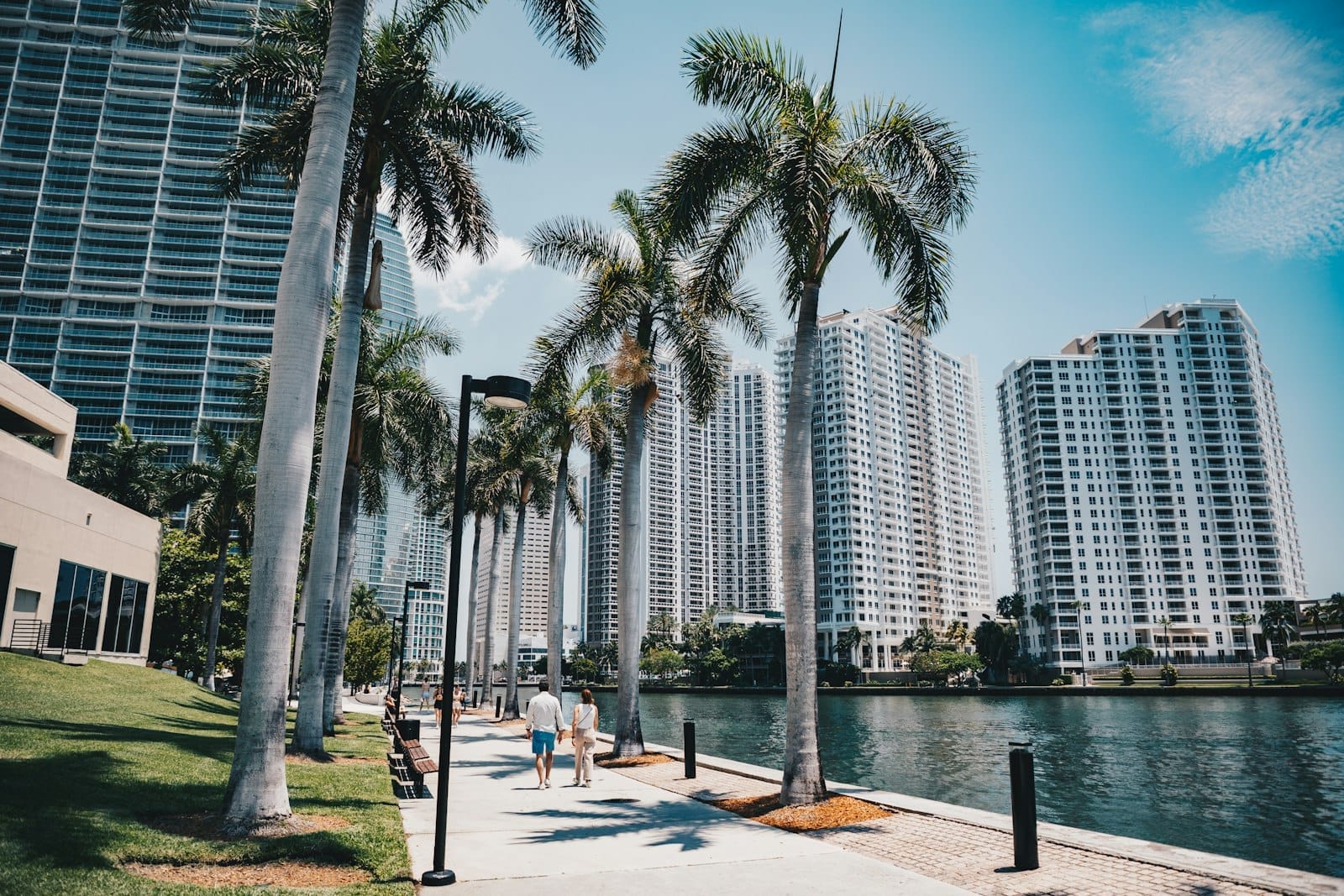
What the Miami Riverwalk Actually Is
The Miami Riverwalk is a paved public promenade running along the north bank of the Miami River through Downtown Miami. It forms the most accessible completed segment of the longer Miami River Greenway project, an initiative formalized in the late 1990s that aims to eventually link roughly 10 miles of riverfront trail on both banks, with historical markers, public art installations, and waterside seating along the way.
The walkable section most visitors encounter stretches from Bayfront Park westward to a point just beyond the SW 2nd Street Bridge, passing under several downtown bridges along the way. It is not a polished resort promenade and it is not trying to be. What it offers instead is something rarer in Miami: a genuine street-level window into the city's working waterfront, with container vessels, tour boats, fishing charters, and private yachts all competing for space on the same narrow river.
ℹ️ Good to know
The Riverwalk has no admission fee and is generally accessible at all hours, though specific segments may occasionally close for construction or maintenance. Benches, decorative lighting, and occasional public art installations are present along various segments, though quality and upkeep can vary by block.
The River Itself: Context and Character
The Miami River is the oldest commercial waterway in South Florida and one of the shortest navigable rivers in the United States, stretching about 5.5 miles from its headwaters in the Everglades system to Biscayne Bay. Long before Art Deco hotels defined Miami Beach or steel towers rose over Brickell, the river was the reason a city existed here at all. The Tequesta people lived along its banks for centuries. Fort Dallas, one of the earliest American military posts in the region, occupied the northern bank in the mid-19th century near the site now roughly corresponding to the eastern end of the Riverwalk.
Today the river still moves goods. You will see freighters loaded with supplies bound for the Caribbean, tugboats nudging barges under low clearance bridges, and the occasional derelict hull moored beside gleaming condominiums. That contrast, between the working port and the luxury skyline directly above it, is one of the more honest views Miami offers. It does not feel curated. It feels like a city still figuring out what it wants to be along this particular stretch of water.
For broader context on what surrounds this area, the Downtown Miami neighborhood page covers the full district from Bayfront Park to the arts corridor.
Tickets & tours
Hand-picked options from our booking partner. Prices are indicative; availability and final rates are confirmed when you complete your booking.
Double Decker sightseeing bus tour of Miami
From 34 €Instant confirmationFree cancellationMiami private sunset airplane tour with champagne
From 127 €Instant confirmationFree cancellationBest of Miami tour with airboat ride at the Everglades
From 170 €Instant confirmationFree cancellationMiami beach private plane tour with drinks
From 85 €Instant confirmationFree cancellation
What the Walk Looks and Feels Like
The path is wide enough for joggers and walkers to share comfortably, paved in concrete, and largely flat. Under the bridges, the texture shifts: the air drops a few degrees, the city sounds compress and echo, and the smell of river water and diesel becomes more pronounced. Pigeons cluster on the girders overhead. Come out the other side and you are back in open sky with brickwork office towers rising to your left and the river glinting to your right.
Benches appear at intervals, most of them positioned toward the water. On weekday mornings, downtown workers use them for coffee breaks. On weekend afternoons, families from the surrounding neighborhoods spread out for picnics near the eastern end. The lighting fixtures installed along certain segments give the path a pleasant atmosphere after dark, though some western blocks feel more isolated once foot traffic thins out in the evening.
The vegetation is sparse by design: this is an urban walkway, not a botanical trail. Palm trees appear occasionally, but the dominant aesthetic is concrete and river. What you gain from that openness is sightline: at certain points you can see the full width of the river with boats passing in both directions, the distant Brickell skyline to the south, and the downtown towers directly behind you.
💡 Local tip
Photography tip: The eastern end of the Riverwalk near Bayfront Park offers the widest, most unobstructed view of the river with the downtown skyline as backdrop. Early morning light (roughly 7–9 AM) hits the towers from the east and creates clean reflections on the water when conditions are calm.
Time of Day: How the Experience Changes
Early Morning
Before 8 AM, the Riverwalk belongs to joggers, dog walkers, and a handful of people who have clearly been awake for a long time. The river traffic is already active: commercial vessels operate early and the sound of engines and ropes being cast carries clearly across the water. The air is noticeably cooler, especially from November through April when temperatures can drop into the low 60s Fahrenheit overnight. This is comfortably the best time to walk in summer months, when midday heat and humidity make outdoor activity genuinely uncomfortable.
Midday
Between roughly 11 AM and 2 PM on weekdays, the path sees a surge of downtown office workers on lunch breaks. It gets more animated but also more crowded near the Bayfront Park end. In summer, the sun reflects hard off the concrete and the water; sunglasses and a hat are not optional. Restaurant terraces along nearby streets start filling up, and food delivery cyclists weave through the area at speed.
Evening
After 6 PM, the eastern section of the Riverwalk has a genuinely pleasant atmosphere, particularly from fall through spring. The light goes golden, the river traffic slows, and the towers along Brickell to the south begin to light up floor by floor. This is when the path draws couples and casual strollers rather than commuters or athletes. The western sections, beyond the first bridge or two, become quieter and less populated as evening progresses, which is worth factoring in if you are walking alone.
⚠️ What to skip
Summer afternoons (June through September) on the Riverwalk can be genuinely punishing: temperatures regularly reach 89–91°F (32–33°C) with high humidity, and the path has almost no shade. Plan your visit for early morning or after 5 PM during these months.
How to Get There and How to Combine It
The Metromover, Miami-Dade Transit's free automated people-mover system, is the easiest access point. The Riverwalk Metromover station and the Bayfront Park Metromover station both deposit you within a short walk of the path's eastern end. If you are arriving by Metrorail from Miami International Airport or from further south, transfer to the Metromover at Government Center. Metromover service, including the downtown loop, is free.
Paid parking is available at Bayfront Park (301 N Biscayne Blvd), which makes the most logical starting point if you are driving. Street parking in the immediate area is metered and competitive during weekday business hours.
The Riverwalk connects naturally with Bayfront Park at its eastern end, where you can access the amphitheater, waterfront lawns, and the bay views that the river itself does not provide. Heading further along the bay brings you to Bayside Marketplace, an open-air shopping and dining complex popular with visitors.
If you plan to spend a full day in this part of the city, the things to do in Miami guide includes a broader downtown itinerary that fits the Riverwalk into a logical sequence alongside other attractions.
Honest Assessment: Who This Is and Is Not For
The Miami Riverwalk is genuinely worthwhile if you want to understand downtown Miami at ground level, if you are a jogger or walker looking for a flat waterfront route, or if you are connecting between Bayfront Park and Brickell on foot. It is free, accessible, and requires no planning.
It is not the polished waterfront destination that some guidebook descriptions imply. Portions of the path pass through less-maintained stretches where the city's infrastructure shows its age. The planned amenities of the full Miami River Greenway project, including comprehensive historical markers, public art, and seating throughout, have not been uniformly delivered. Some sections feel incomplete relative to the ambition of the original design.
Travelers who arrive expecting a manicured riverwalk comparable to those in San Antonio or Chicago will find something rawer and more urban. That is not a flaw, but it is a fair expectation to set. Visitors primarily interested in beaches, nightlife, or museums should treat the Riverwalk as a transit corridor or a brief orientation walk rather than a destination in its own right.
For travelers building a broader Downtown itinerary, the Pérez Art Museum Miami and the Frost Museum of Science are both within walking distance to the north, near Museum Park on Biscayne Bay.
Practical Notes for Your Visit
- Wear comfortable walking shoes; the surface is paved concrete throughout.
- Bring water, especially in summer; there are no reliable water fountains along the path.
- Sunscreen is essential for any midday visit from April through October.
- The path is generally stroller and wheelchair accessible due to its flat, paved surface, though some transitions near bridge underpasses may have uneven sections.
- Dogs are commonly walked here; leash rules apply as per Miami city ordinances.
- Tap water in Miami is safe to drink and meets EPA standards, so refill bottles at any nearby café before heading out.
Insider Tips
- Start at the Bayfront Park end and walk west toward the SW 2nd Avenue Bridge rather than the reverse. The light, the river traffic, and the visual sequence all work better in that direction, especially in the morning.
- Look for the working tugboats in the mid-river section. The Miami River handles a surprising volume of cargo traffic bound for the Caribbean, and watching a tug maneuver a barge under a low bridge is one of the more unexpected things you will see in downtown Miami.
- If you want the skyline reflection shot without other pedestrians in the frame, arrive before 7:30 AM on a weekday. By 8:15 AM the joggers and commuters are already filling the path near Bayfront Park.
- The under-bridge sections are noticeably cooler than open stretches, making them useful rest stops during hot-weather visits. They also offer the most distinctive acoustic experience on the entire walk.
- Combine the Riverwalk with a walk north through Bayfront Park to reach the Museum Park area. The combined route gives you river, bay, and skyline views in a single continuous walk of about 45–60 minutes.
Who Is Miami Riverwalk For?
- Morning joggers and walkers wanting a flat, waterfront route through Downtown
- First-time visitors getting oriented to Downtown Miami's geography and scale
- Photography enthusiasts interested in urban industrial and skyline compositions
- Travelers connecting between Bayfront Park, Bayside Marketplace, and Brickell on foot
- Anyone looking for a free, low-effort outdoor experience that does not require advance planning
Nearby Attractions
Other things to see while in Downtown Miami:
- Bayfront Park
Bayfront Park is a free, 32-acre public park on the edge of Biscayne Bay in Downtown Miami, with roots going back to 1896. It offers open lawns, shaded waterfront paths, and sweeping bay views within steps of the Metromover — making it one of the most accessible green spaces in the city.
- Bayside Marketplace
Bayside Marketplace is an open-air shopping and entertainment complex on the edge of Biscayne Bay in Downtown Miami. Free to enter and easy to reach by public transit, it draws a mix of tourists, locals catching live music, and visitors boarding bay cruises. The setting does most of the work.
- Freedom Tower
Standing at 600 Biscayne Boulevard, Freedom Tower at Miami Dade College is one of downtown Miami's most architecturally striking and historically significant buildings. Built in 1925 as the Miami News headquarters, it later served as the federal Cuban Refugee Center, processing hundreds of thousands of Cuban exiles after 1962. Today it functions as a museum, gallery, and cultural institution — a rare place where architecture, immigration history, and civic identity converge in a single tower.
- HistoryMiami Museum
Founded in 1940 and recently rebranded from HistoryMiami Museum to Museum of Miami, this Smithsonian Affiliate in downtown Miami is dedicated to telling roughly 10,000 years of South Florida's layered past. From Tequesta settlements to Caribbean immigration waves, it's one of the major history institutions in the region.