Pérez Art Museum Miami (PAMM): Art, Architecture, and Waterfront Drama in One Building
The Pérez Art Museum Miami occupies one of the most architecturally striking buildings in Florida, a Herzog & de Meuron structure suspended over the edge of Biscayne Bay. It combines serious contemporary art with theatrical open-air terraces, making it as compelling from the outside as within.
Quick Facts
- Location
- 1103 Biscayne Blvd, Maurice A. Ferré Park, Downtown Miami, FL 33132
- Getting There
- Metromover (College/Bayside or Museum Park stops); Metrobus routes along Biscayne Blvd
- Time Needed
- 1.5 to 3 hours depending on exhibition depth
- Cost
- Paid admission in USD; verify current pricing at pamm.org before visiting
- Best for
- Contemporary art, architecture enthusiasts, waterfront atmosphere, rainy-day culture
- Official website
- www.pamm.org/en
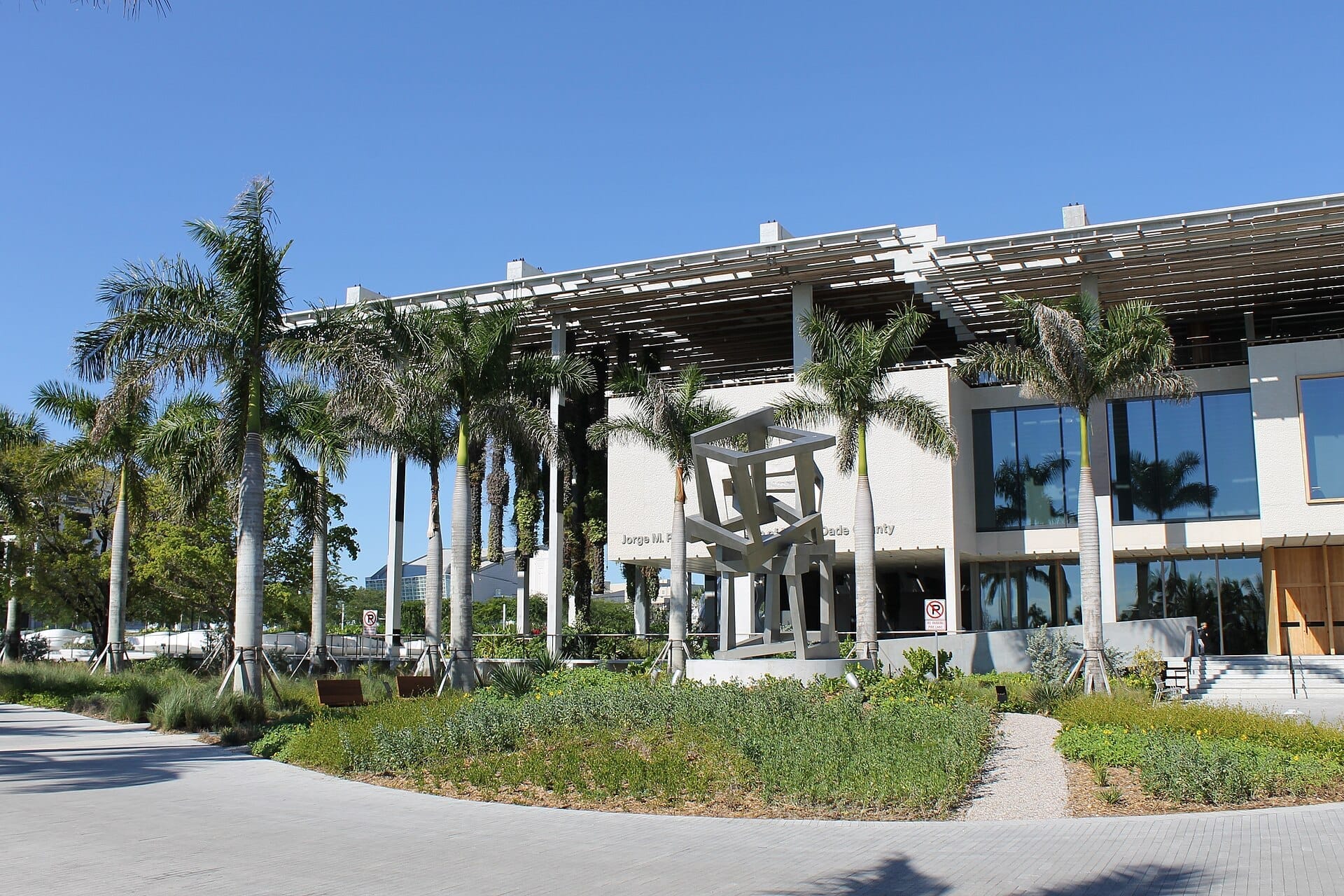
What PAMM Actually Is, and Why It Stands Apart
The Pérez Art Museum Miami is Downtown Miami's primary contemporary and modern art institution, formally known as the Jorge M. Pérez Art Museum of Miami-Dade County. It opened on December 4, 2013, in its current waterfront building, though the museum's roots stretch back to 1984, when it was established as the Center for the Fine Arts. After years under the name Miami Art Museum, it relocated to this purpose-built structure on the edge of Biscayne Bay and was renamed to reflect a major gift from developer Jorge M. Pérez.
The collection focuses primarily on 20th and 21st century art from Africa, Latin America, the Caribbean, and their diasporas, which makes it a genuinely distinctive institution rather than a generalist museum trying to cover everything. Given Miami's geographic and cultural position, this curatorial identity feels earned rather than marketed. You are unlikely to find this particular combination of perspectives at comparable depth in any other U.S. museum of similar size.
ℹ️ Good to know
PAMM is closed Tuesdays and Wednesdays. Thursday hours extend to 9:00 PM, making it the best evening option in the downtown cultural district. Monday and Friday through Sunday, the museum closes at 6:00 PM. Always confirm current hours and ticket prices at pamm.org before your visit.
The Building: Herzog & de Meuron's Tropical Experiment
Swiss firm Herzog & de Meuron, the architects behind London's Tate Modern and Beijing's National Stadium, designed the PAMM building as a response to the specific conditions of South Florida. The structure measures approximately 119,749 square feet and rises to about 70 feet. From the outside, the most immediately striking feature is the hanging garden system: dense curtains of tropical vegetation suspended from the overhanging roof structure, watered by a drip-irrigation system fed by collected rainwater. Up close, you can hear the faint trickle of irrigation against the ambient noise of the park.
The deep overhanging roof serves an actual climatic function. It shields the open-air terraces from direct midday sun and deflects afternoon rain, allowing the outdoor spaces to remain usable during much of the year. The concrete and wood structure sits on a raised platform, positioning gallery floors above potential flood inundation, a practical consideration for a building at sea level in a hurricane-prone city. The exterior louvres and shading elements also reduce solar heat gain inside the galleries.
The indoor-outdoor transition is unusually seamless. Wide sliding glass panels on the bay-facing terrace open completely during mild weather, and the boundary between gallery circulation and exterior walkway blurs in a way that is rare for a serious art institution. The view from the terrace, looking north across Biscayne Bay toward the Venetian Causeway islands and south toward the Brickell skyline, is one of the better urban waterfront views available in Miami without a boat.
Tickets & tours
Hand-picked options from our booking partner. Prices are indicative; availability and final rates are confirmed when you complete your booking.
Miami night party boat cruise
From 26 €Instant confirmationMiami boat party with free open bar and live Dj
From 151 €Instant confirmationFree cancellationDouble Decker sightseeing bus tour of Miami
From 34 €Instant confirmationFree cancellationWynwood graffiti golf cart tour
From 38 €Instant confirmationFree cancellation
The Experience at Different Times of Day
Arriving at opening time (11:00 AM) on a weekday means you will often have the ground-floor galleries to yourself for the first twenty minutes. The morning light through the bay-facing glazing is warm and horizontal, angling across the polished floors and gallery walls in a way that disappears by midday. The terraces are pleasant in the morning before temperatures peak.
Midday is the most crowded period on weekends, particularly when visiting cruise passengers from the nearby Port of Miami add to the local attendance. The galleries remain air-conditioned and comfortable regardless, but the cafe and terrace fill quickly. If you visit during Miami's summer months, when outdoor temperatures regularly reach the low 90s Fahrenheit with high humidity, the museum's cool interiors make it a logical midday refuge. The outdoor terraces lose some of their appeal in July and August but become genuinely pleasant again around 5:00 PM as the sun lowers.
Thursday evenings are the best-kept scheduling secret at PAMM. The museum stays open until 9:00 PM, and by 6:30 PM on a Thursday, attendance drops sharply, the light over the bay shifts to orange and pink, and the terraces take on a quality that is hard to replicate during daylight hours. This is the visit to prioritize if your schedule allows.
💡 Local tip
Thursday evenings offer the most atmospheric PAMM visit: lower crowds, extended hours until 9:00 PM, and a sunset view over Biscayne Bay from the outdoor terraces that rewards lingering.
What to Expect Inside: Galleries and Permanent Collection
The permanent collection includes works spanning painting, sculpture, photography, video, and mixed media, with particular depth in Latin American modernism and contemporary Caribbean art. Rotating exhibitions supplement the permanent holdings throughout the year, and PAMM periodically undertakes major loaned exhibitions from international institutions. The gallery spaces are well-proportioned for large-scale contemporary works, with ceiling heights that accommodate ambitious installations.
The layout across multiple levels is navigable without a map, though one is available at entry. The building's internal circulation encourages discovery: the path between levels moves through varying light conditions and spatial scales, and the connection to the exterior terraces is accessible at multiple points. Visitors who take the time to step outside between gallery visits get a fundamentally different experience from those who move through the building without engaging the outdoor spaces.
If you want to place PAMM within the broader Miami art landscape, it helps to understand how it relates to the city's other institutions. The Institute of Contemporary Art Miami in the Design District focuses exclusively on emerging work and is free to enter, which makes the two institutions complementary rather than competing. PAMM's larger footprint and permanent collection give it more range, while ICA Miami's smaller scale makes it quicker to absorb.
Getting There and Navigating the Surrounding Area
PAMM sits within Maurice A. Ferré Park, the green waterfront strip that runs along Biscayne Bay between downtown Miami and the water. The park borders Biscayne Boulevard, and the museum's main entrance faces the park interior rather than the street, which means first-time visitors sometimes walk past the entrance while looking for it from the sidewalk. From Biscayne Boulevard, follow the signage into the park.
The nearest Metromover stops are College/Bayside and Museum Park, both within a short walk. The Metromover is free to ride and connects to the broader Metrorail network at Government Center and Brickell stations. Metrobus routes along Biscayne Boulevard also stop nearby. Driving is possible, with a parking garage adjacent to the museum, but traffic on Biscayne Boulevard during weekend afternoons can be slow, and transit is generally faster from downtown.
PAMM sits directly next to the Phillip and Patricia Frost Museum of Science, making a combined visit to both on the same day practical. The two institutions are literally adjacent in Maurice A. Ferré Park, and the contrast between them works well for mixed groups. Plan for at least three to four hours total if you intend to do both seriously.
⚠️ What to skip
During Art Basel Miami Beach (typically held in early December), PAMM programming intensifies significantly and crowds increase. Check the museum's website in advance during Art Week, as special events may require separate reservations or affect regular gallery access.
Photography, Accessibility, and Practical Details
Non-flash photography for personal use is generally permitted in the permanent collection galleries, though individual exhibitions may restrict photography depending on lender agreements. The most photogenic spots are the exterior terraces and the hanging gardens viewed from below, where the vegetation and the Biscayne Bay backdrop combine in a way that is distinctive to this building. The interior gallery light is designed for art viewing rather than photography, so expect some exposure challenges on phones without manual control.
Accessibility is handled well for a multi-level building. Elevators serve all floors, paths through the park and into the building are paved and level, and the modern construction means there are no period-era accessibility compromises. Dedicated accessibility information is available through the museum's official site and via Wheel the World. Visitors with mobility considerations should check the museum's accessibility page before arrival for the most current information.
The museum's location in downtown Miami puts it within walking distance of Bayfront Park and the Bayside Marketplace waterfront, and about fifteen minutes by Metromover from the Brickell financial district. It is worth noting that the neighborhood around the museum transforms noticeably after dark: Maurice A. Ferré Park is well-lit and actively used on weekend evenings, but the blocks north of the museum along Biscayne Boulevard become quieter and emptier quickly.
Honest Assessment: Is PAMM Worth Your Time?
For visitors primarily interested in beaches or nightlife, PAMM will feel like an obligation rather than a discovery. The collection is serious and the programming is genuinely ambitious, but this is not a crowd-pleasing spectacle museum. There are no interactive touch screens every ten feet, no gimmicks for restless visitors, and the curatorial focus on non-European modern art means the names and movements on display will be less familiar to many visitors than those at, say, a major encyclopedic museum.
For anyone with genuine interest in contemporary art, architecture, or the cultural geography of the Atlantic world, PAMM consistently over-delivers relative to what most people expect from Miami as an art destination. The building alone justifies a visit from architecture enthusiasts. And for travelers spending several days in the city, it provides a counterweight to the more sensory and hedonistic dimensions of Miami that makes the overall trip feel more complete.
Those planning a broader cultural itinerary in Miami should also consider the Vizcaya Museum and Gardens in Coconut Grove and the Wolfsonian-FIU Museum on Miami Beach, both of which offer very different but equally serious experiences. Together with PAMM, these three institutions give a strong picture of Miami's cultural range across different eras and neighborhoods.
Insider Tips
- Thursday evenings are genuinely uncrowded after 6:30 PM, the extended hours run until 9:00 PM, and the western-facing terraces catch one of the better urban sunsets in downtown Miami over Biscayne Bay.
- The ground-floor cafe has a terrace that is open to the public regardless of museum admission, so you can have a coffee with a bay view without paying entry. It is a good orientation stop before deciding whether to go inside.
- The hanging gardens on the building's exterior are best viewed from the park below, looking up. Most visitors approach from the street level and miss the full visual effect of the vegetation cascading from the roof structure.
- During Art Basel Miami Beach week in early December, PAMM hosts special programming that goes well beyond normal gallery hours. Check the website at least two weeks in advance if you plan to visit during that period.
- Combined tickets or packages with the adjacent Frost Science Museum are sometimes available. Check both institutions' websites before buying individual tickets if you plan to visit both on the same day.
Who Is Pérez Art Museum Miami (PAMM) For?
- Travelers with a genuine interest in contemporary and modern art, particularly from Latin America, the Caribbean, and Africa
- Architecture enthusiasts wanting to experience a major Herzog & de Meuron building in use
- Visitors seeking a midday indoor refuge during Miami's hot and humid summer months
- Cultural travelers who want Miami to amount to more than beaches and nightlife
- Couples or small groups looking for a relaxed evening out on Thursdays, combining gallery browsing with waterfront views
Nearby Attractions
Other things to see while in Downtown Miami:
- Bayfront Park
Bayfront Park is a free, 32-acre public park on the edge of Biscayne Bay in Downtown Miami, with roots going back to 1896. It offers open lawns, shaded waterfront paths, and sweeping bay views within steps of the Metromover — making it one of the most accessible green spaces in the city.
- Bayside Marketplace
Bayside Marketplace is an open-air shopping and entertainment complex on the edge of Biscayne Bay in Downtown Miami. Free to enter and easy to reach by public transit, it draws a mix of tourists, locals catching live music, and visitors boarding bay cruises. The setting does most of the work.
- Freedom Tower
Standing at 600 Biscayne Boulevard, Freedom Tower at Miami Dade College is one of downtown Miami's most architecturally striking and historically significant buildings. Built in 1925 as the Miami News headquarters, it later served as the federal Cuban Refugee Center, processing hundreds of thousands of Cuban exiles after 1962. Today it functions as a museum, gallery, and cultural institution — a rare place where architecture, immigration history, and civic identity converge in a single tower.
- HistoryMiami Museum
Founded in 1940 and recently rebranded from HistoryMiami Museum to Museum of Miami, this Smithsonian Affiliate in downtown Miami is dedicated to telling roughly 10,000 years of South Florida's layered past. From Tequesta settlements to Caribbean immigration waves, it's one of the major history institutions in the region.