Bayfront Park: Downtown Miami's Waterfront Breathing Room
Bayfront Park is a free, 32-acre public park on the edge of Biscayne Bay in Downtown Miami, with roots going back to 1896. It offers open lawns, shaded waterfront paths, and sweeping bay views within steps of the Metromover — making it one of the most accessible green spaces in the city.
Quick Facts
- Location
- 301 Biscayne Blvd, Downtown Miami, FL 33132
- Getting There
- Bayfront Park Metromover station (~3-min walk); First St Metromover station (~5-min walk)
- Time Needed
- 45 minutes to 2 hours
- Cost
- Free park entry; some activities (e.g., yoga) suggest a $15 donation
- Best for
- Morning walkers, photography, a midday break from Downtown, waterfront views
- Official website
- www.bayfrontparkmiami.com
What Bayfront Park Actually Is
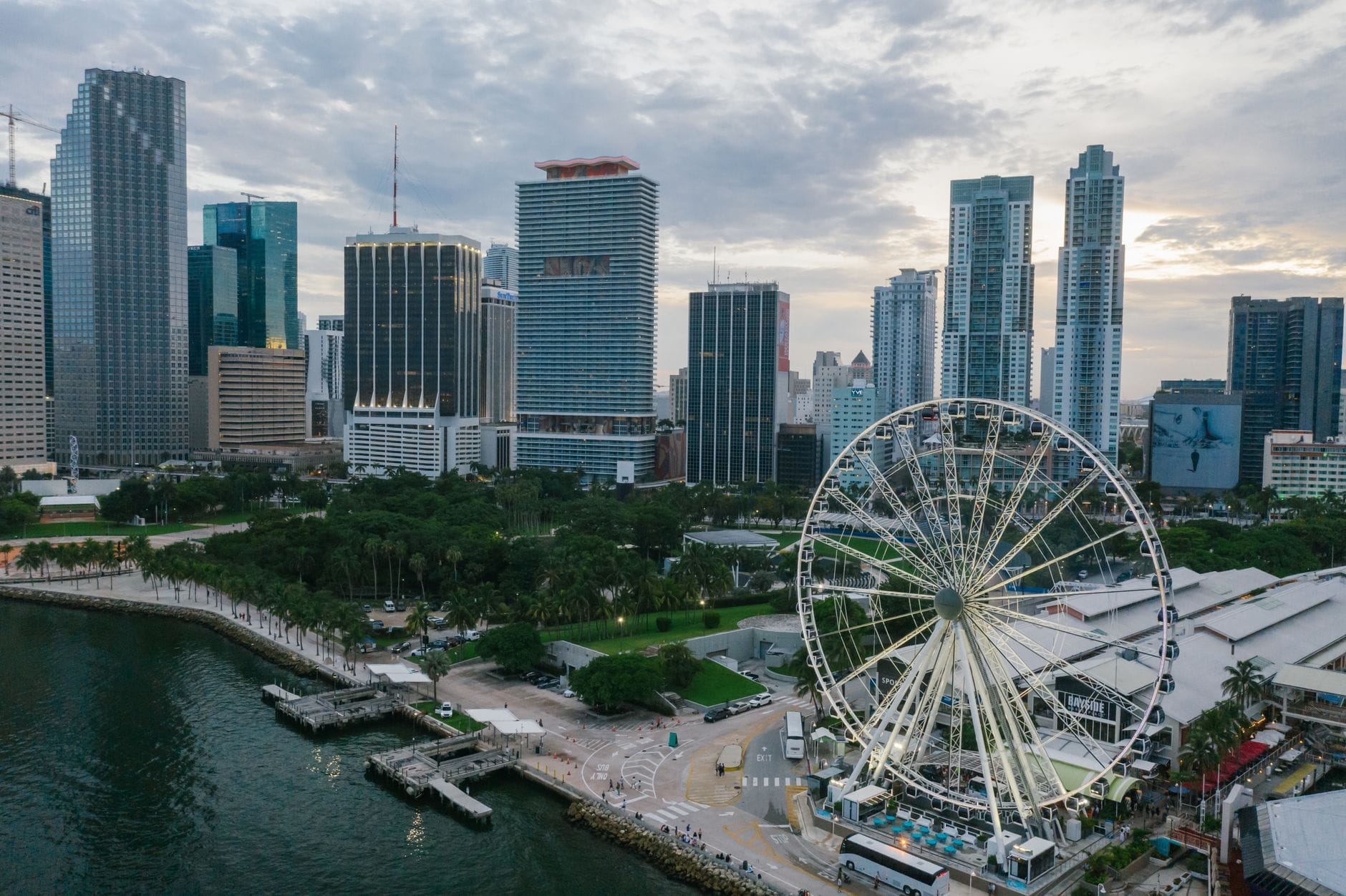
Bayfront Park is a 32-acre public urban park stretching along the western edge of Biscayne Bay in Downtown Miami. It sits between Bayside Marketplace to the north and the Port of Miami to the south, with the Miami skyline rising at its back and the open bay directly in front. Entry is free, it opens daily from 7:00 AM to 11:00 PM, and it requires no planning beyond showing up.
The park is not a destination in the way that a museum or a beach demands a half-day commitment. It works better as a place to decompress between appointments, a morning run route, or a quiet spot to watch the water before Bayside fills up with afternoon crowds. That said, on event days — the park hosts large concerts, cultural festivals, and New Year's Eve celebrations — it transforms completely, drawing tens of thousands of visitors into a tightly managed venue space.
ℹ️ Good to know
Bayfront Park is free to enter. Check the Bayfront Park Management Trust website before visiting if you are coming on a weekend evening, as large concerts and events close portions of the park to the general public.
A History That Predates Miami Itself
The land where Bayfront Park sits has been a public gathering place longer than the City of Miami has existed as an incorporated municipality. Originally known as Royal Palm Park, it is considered the oldest public gathering space in Greater Miami, with origins as a pavilion and sports ground dating to 1896 — the same year Miami was formally incorporated. The current Bayfront Park was established in 1924, and the grounds were expanded over subsequent decades, including the addition of a historic waterfall structure dating to 1926.
The park carries some weight beyond its green lawns. It was the site of an assassination attempt on President-elect Franklin D. Roosevelt in February 1933, when Giuseppe Zangara opened fire near the bandshell. Roosevelt was unhurt, but Chicago Mayor Anton Cermak, who was with him, was fatally wounded. A marker in the park commemorates the event. That history adds an unexpected gravity to what can otherwise feel like a routine city park.
The park has also played a central role in Miami's cultural calendar for decades. The Downtown Miami waterfront has long been the city's civic front porch, and Bayfront Park remains its most democratic expression — no ticket required, no dress code, no car needed.
Tickets & tours
Hand-picked options from our booking partner. Prices are indicative; availability and final rates are confirmed when you complete your booking.
Everglades admission ticket with airboat ride and wildlife show
From 24 €Instant confirmationFree cancellationKey West day trip with glass bottom boat ride
From 110 €Instant confirmationFree cancellationEverglades airboat ride with Biscayne Bay boat tour and transportation
From 67 €Instant confirmationFree cancellationGrand Bahama tour with optional Pig Beach visit
From 309 €Instant confirmationFree cancellation
What You See When You Walk Through
The park is essentially flat, which makes it very walkable. The main path follows the bayfront, and from it you get unobstructed views across Biscayne Bay toward the Venetian Causeway, the Port of Miami, and on clear days the low silhouette of Miami Beach across the water. The light here in the late afternoon is particularly good: the bay catches a warm, diffused reflection as the sun begins to drop behind the Downtown towers, and the contrast between the glass-and-steel skyline and the open water is sharp.
Inside the park, you will find open lawns suitable for lying out or tossing a frisbee, tree-lined paths that provide genuine shade in the middle of the day, and a few monument installations including a memorial to Japanese-American astronaut Ellison Onizuka, who died in the 1986 Space Shuttle Challenger disaster. There is also an outdoor amphitheater used for major concerts and a smaller performance space closer to the water.
One practical note on sensory experience: the park borders Biscayne Boulevard, a busy arterial road, and traffic noise is a constant presence on the western edge. Once you move toward the water, the sound opens up and the bay breeze takes over. The smell of salt air is noticeable most mornings, particularly after overnight rain when the bay kicks up. On humid summer afternoons, the grass stays damp well into late morning.
The Park at Different Times of Day
Early morning, roughly 7:00 to 9:00 AM, is the most peaceful window. Joggers use the bayfront path as part of longer runs that often continue south toward Brickell or north along the waterfront. The light is soft and flat, the bay is calm, and the skyline buildings reflect in the water. Dog walkers claim the lawn areas. The air is cooler than it will be in two hours, which in Miami's summer months makes this the only comfortable time to spend extended time outdoors.
Midday is harder. In the dry season (November through April), a noon visit is entirely manageable if you stick to the shaded tree corridors. In the wet season (May through October), the combination of high humidity, direct sun, and temperatures in the upper 80s to low 90s Fahrenheit makes the middle of the day genuinely unpleasant without shade. Afternoon thunderstorms are also common during summer months, often arriving with little warning. If clouds start building over the Everglades to the west, take that as your cue to head indoors.
Evenings are when the park gets a second life. After around 6:00 PM, office workers from the surrounding Downtown towers cut through on their way to the Metromover. Couples walk the bayfront path as the lights of the city begin to reflect on the water. On nights when no event is scheduled, the park is quiet and the bay views are genuinely striking — the cruise ships docked at Port Miami are visible to the southeast, lit up like floating buildings.
⚠️ What to skip
During Miami's wet season (May to October), afternoon thunderstorms can develop quickly. The park offers very little shelter. If you see lightning over the water, leave the open bayfront immediately.
Getting There and Getting Around
Bayfront Park is one of the easiest attractions in Miami to reach without a car. The Bayfront Park Metromover station is approximately a three-minute walk from the park's main entrance, and the First Street Metromover station adds another option about five minutes away. The Metromover is free to ride, connecting to the broader Metrorail network at Government Center and Brickell stations. From Brightline's MiamiCentral station, the park is roughly one mile south — a walkable distance on a comfortable day, though the route along Biscayne Boulevard is not particularly scenic.
Parking exists nearby, including at Bayside Marketplace, but it is not free and adds unnecessary cost given the transit options. If you are already visiting Bayside Marketplace or the Miami Riverwalk, Bayfront Park fits naturally into the same walking circuit along the waterfront.
Photography: What Works and What Doesn't
The park's best photography comes from the bayfront promenade itself. Facing east across the water, you get the bay and the Port of Miami in the background; facing west toward the park, you get the Miami skyline rising above the palms and lawns. Golden hour, roughly 30 to 45 minutes before sunset, is the most useful window for cityscape shots — the low angle creates long shadows across the grass and turns the glass towers warm amber.
Wide-angle lenses work better here than telephoto. The park's appeal is the contrast between dense urban infrastructure and the open water in front of it, and you need field of view to capture both. Night photography from the waterfront path is also viable — the city lights reflect well in calm bay conditions, and the cruise ships at anchor add scale.
💡 Local tip
For the best skyline reflections in the bay, come on a calm morning after a clear night. Wind disrupts the water surface quickly after sunrise, so the window is narrow — usually between 7:00 and 8:30 AM.
Honest Assessment: Who This Park Is For
Bayfront Park is a solid urban green space, but it is worth being clear-eyed about what it is. It does not have the scale or ecological interest of a place like Bill Baggs Cape Florida State Park, and it does not have the curated beauty of Vizcaya Museum and Gardens. What it has is location, accessibility, and a genuine connection to the water. For travelers based in Downtown Miami who want to step outside without organizing a half-day expedition, it is the obvious option.
Visitors primarily interested in beaches should note that the park has no swimming access — for that, the Lummus Park Beach in South Beach is a short drive or Metromover-plus-bus ride away. Travelers wanting nature immersion rather than urban green space should look instead toward the Everglades National Park or Biscayne National Park for a more meaningful outdoor experience.
Travelers with limited time who need to choose between Bayfront Park and another Downtown attraction should understand that the park works best as a complement to other stops, not as a standalone half-day destination. Pair it with a walk through Bayside, a loop on the Metromover, or an evening stroll before dinner in Brickell.
Insider Tips
- The park hosts free outdoor yoga classes on select mornings — a $15 donation is suggested but not required. Check the Bayfront Park Management Trust website for the current schedule before your visit.
- If a major concert is scheduled at the amphitheater, the surrounding streets and Metromover stations get congested after 9:00 PM. Either time your departure before the show ends or be prepared to wait 20–30 minutes for the crowd to clear.
- The northern end of the park, closest to Bayside Marketplace, gets the most foot traffic. Walk south along the bayfront path for quieter sections with cleaner water views and fewer vendors.
- The park's historic 1926 waterfall feature is easy to miss — it sits in a garden section away from the main bayfront promenade. Look for it in the interior of the park rather than along the water's edge.
- On weekday lunchtimes, food trucks and vendors sometimes set up near the Biscayne Boulevard entrance, making it a practical stop for a quick, inexpensive lunch if you are spending time Downtown.
Who Is Bayfront Park For?
- Early risers looking for a peaceful waterfront walk before Downtown crowds arrive
- Photographers chasing Miami skyline and bay reflections at golden hour
- Budget travelers: free entry, free Metromover access, no planning required
- Business travelers with a few hours between Downtown meetings who need fresh air
- Couples looking for a low-key evening waterfront stroll with city light views
Nearby Attractions
Other things to see while in Downtown Miami:
- Bayside Marketplace
Bayside Marketplace is an open-air shopping and entertainment complex on the edge of Biscayne Bay in Downtown Miami. Free to enter and easy to reach by public transit, it draws a mix of tourists, locals catching live music, and visitors boarding bay cruises. The setting does most of the work.
- Freedom Tower
Standing at 600 Biscayne Boulevard, Freedom Tower at Miami Dade College is one of downtown Miami's most architecturally striking and historically significant buildings. Built in 1925 as the Miami News headquarters, it later served as the federal Cuban Refugee Center, processing hundreds of thousands of Cuban exiles after 1962. Today it functions as a museum, gallery, and cultural institution — a rare place where architecture, immigration history, and civic identity converge in a single tower.
- HistoryMiami Museum
Founded in 1940 and recently rebranded from HistoryMiami Museum to Museum of Miami, this Smithsonian Affiliate in downtown Miami is dedicated to telling roughly 10,000 years of South Florida's layered past. From Tequesta settlements to Caribbean immigration waves, it's one of the major history institutions in the region.
- Miami Riverwalk
The Miami Riverwalk traces the north bank of the Miami River through the heart of Downtown, offering skyline views, working tugboats, and a rare ground-level connection to the water. It costs nothing, fits into any itinerary, and looks entirely different depending on when you go.