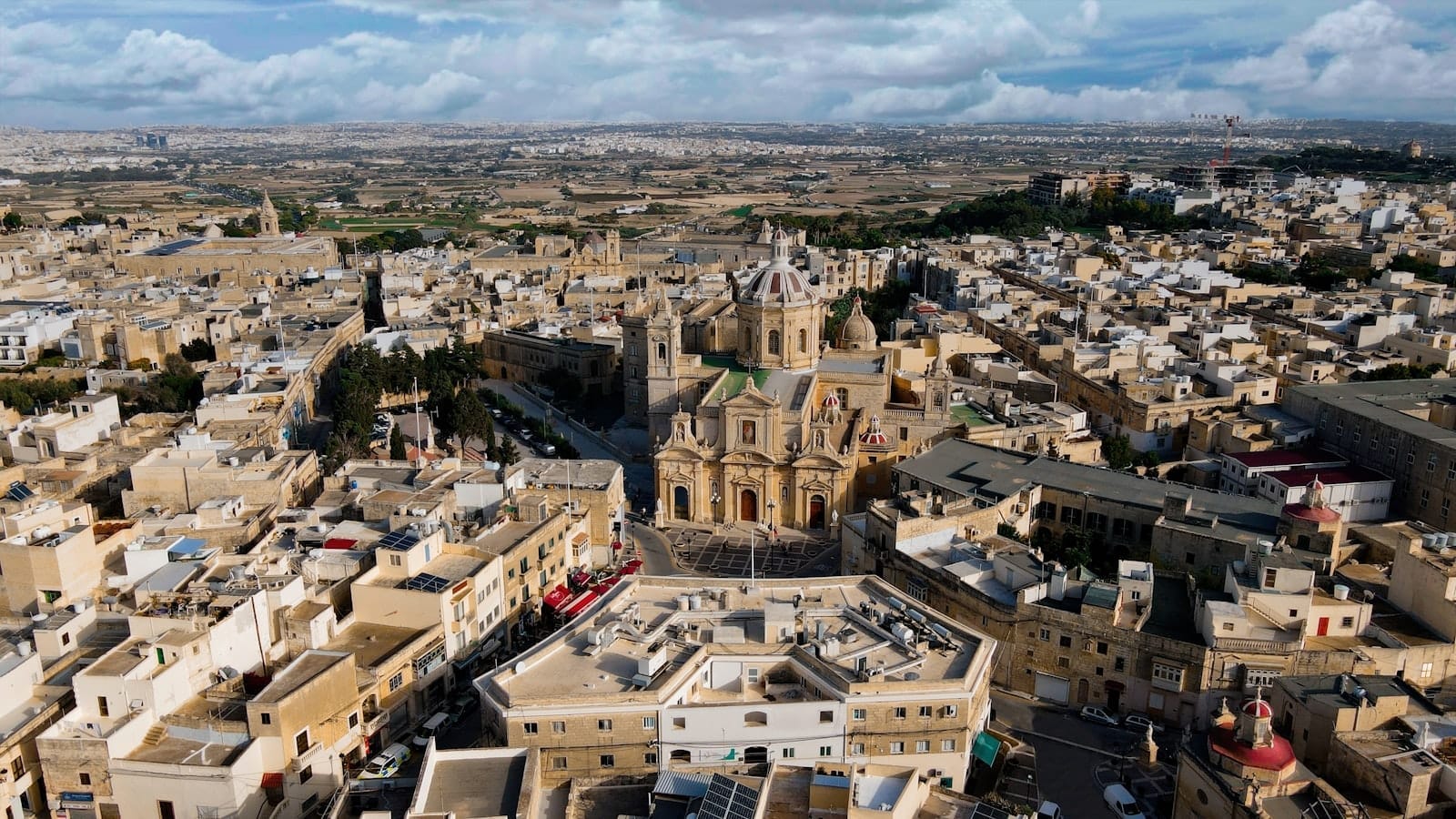
Rabat sits immediately outside the walls of Mdina in central Malta, carrying centuries of history in its narrow limestone streets and underground catacombs. Where Mdina draws the crowds, Rabat rewards those who linger with Roman ruins, parish church squares, and a genuine sense of daily Maltese life.
Rabat is the town that Mdina forgot to absorb. Pressed against the famous walled city's southern and western flanks, it contains some of Malta's most significant Roman and early Christian sites, yet most visitors pass through in an hour or less. That pace suits Rabat perfectly: it is a working town, not a stage set, and its character is all the stronger for it.
Orientation
Rabat occupies the high ground of central Malta, sitting at roughly 35°52'N, 14°23'E on the ridge that runs across the island's spine. Its most important geographic fact is simple: it shares a boundary wall with Mdina. The two settlements developed from the same Roman town of Melite, but when the Arabs arrived in the ninth century they compressed the fortified city inward, and everything outside the new walls became Rabat, meaning 'suburb' in Arabic. That origin explains the name and the relationship: Mdina is the enclosed jewel, and Rabat is the living town that grew up around it.
The town spreads south and west from Mdina's main gate, with the parish church of St Paul anchoring the central square. Parish Road and St Paul's Street form the main commercial spine. Walking north from the square, you reach Mdina's City Gate in under five minutes. To the south and west, residential streets give way toward Buskett Gardens and the agricultural interior of Malta. The nearest coastal towns, Sliema and St Julian's, lie roughly 12 kilometres to the northeast, and the capital Valletta is about 13 kilometres by road to the east. This central position makes Rabat one of the best-placed bases for exploring the whole island.
ℹ️ Good to know
Rabat and Mdina are two separate towns but function as a single destination for most visitors. Mdina is the fortified medieval city; Rabat is the populated town immediately outside its walls. Allow time for both when you visit.
Character & Atmosphere
Early mornings in Rabat belong to its residents. By seven o'clock, the square outside the Parish Church of St Paul is already active: small vans making deliveries to the local mini-markets, elderly men occupying benches in the shade of limestone walls, the smell of bread from bakeries on the side streets. The pace is quiet and deliberate in a way that feels completely removed from the bustle of the coastal resorts, even though they are only twenty minutes away by bus.
By mid-morning, the first tour groups arrive from Mdina, following guides past the catacombs entrances on St Agatha's Street. The tourist footprint is real but contained: it concentrates around the archaeological sites and the square, leaving most of Rabat's residential streets undisturbed. In the heat of a summer afternoon, the limestone buildings glow a deep amber in the direct sun, and the narrow alleys between them offer pockets of shade that make the town genuinely comfortable to walk even in July and August.
Evenings shift the mood again. As Mdina's day-trippers clear out, Rabat retains a modest but authentic after-dark life centered on its restaurants and the parish church square. The church is floodlit at night, and the square fills with locals in a way that it simply does not during the tourist hours of the day. Feast days are a different experience entirely: Rabat's traditional village festas, with brass bands, fireworks, and church decorations, transform the streets into something that has been largely unchanged for generations.
What to See & Do
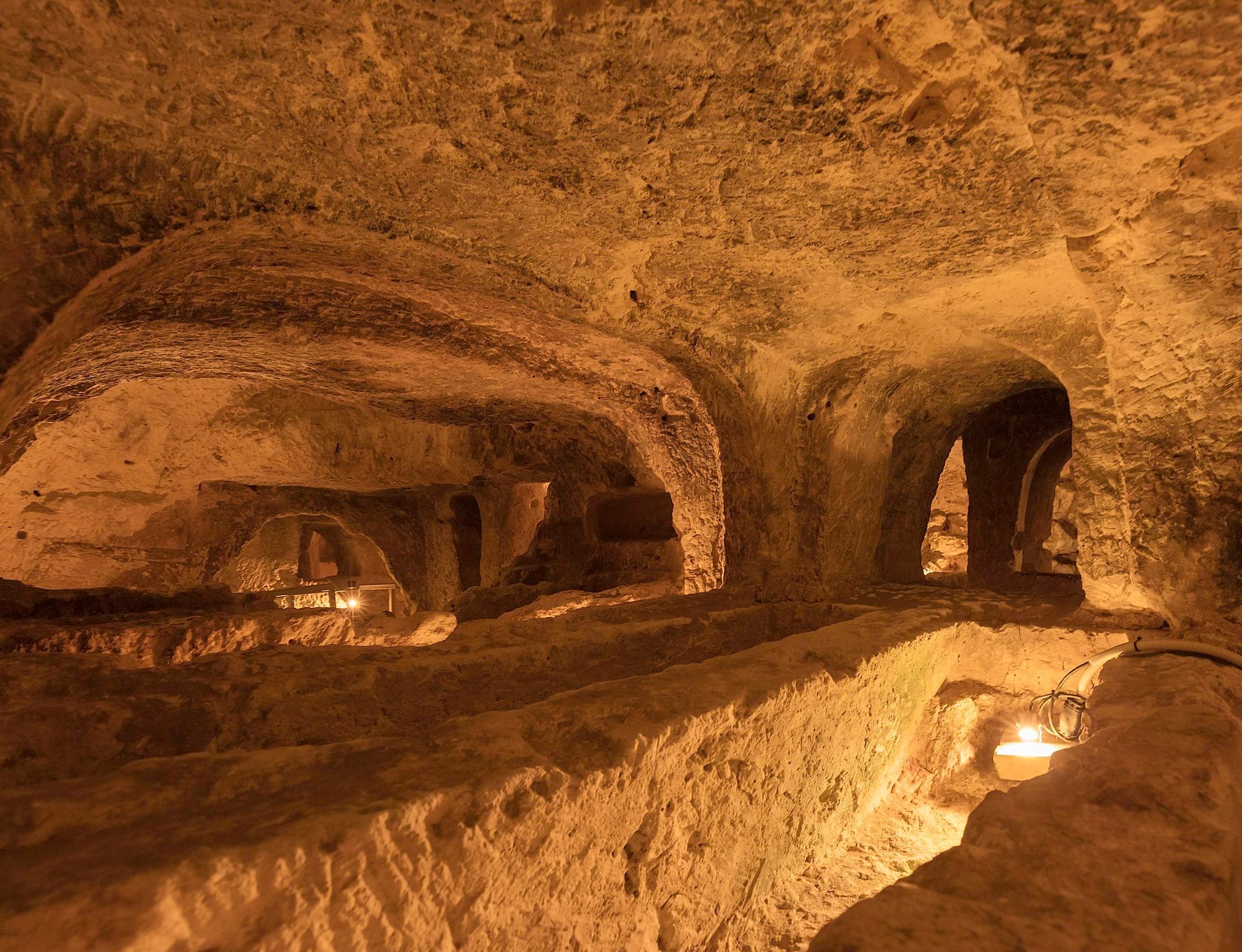
The undisputed centerpiece of Rabat is its network of Roman and early Christian catacombs. St Paul's Catacombs is the largest known catacomb complex in Malta, covering over 2,000 square metres of underground passageways and burial chambers dating from the third to eighth centuries AD. The site is managed by Heritage Malta and can be explored with a self-guided audio tour. A short walk away, St Agatha's Catacombs are smaller but include a museum with Roman-era artifacts and painted murals that survive in remarkable condition.
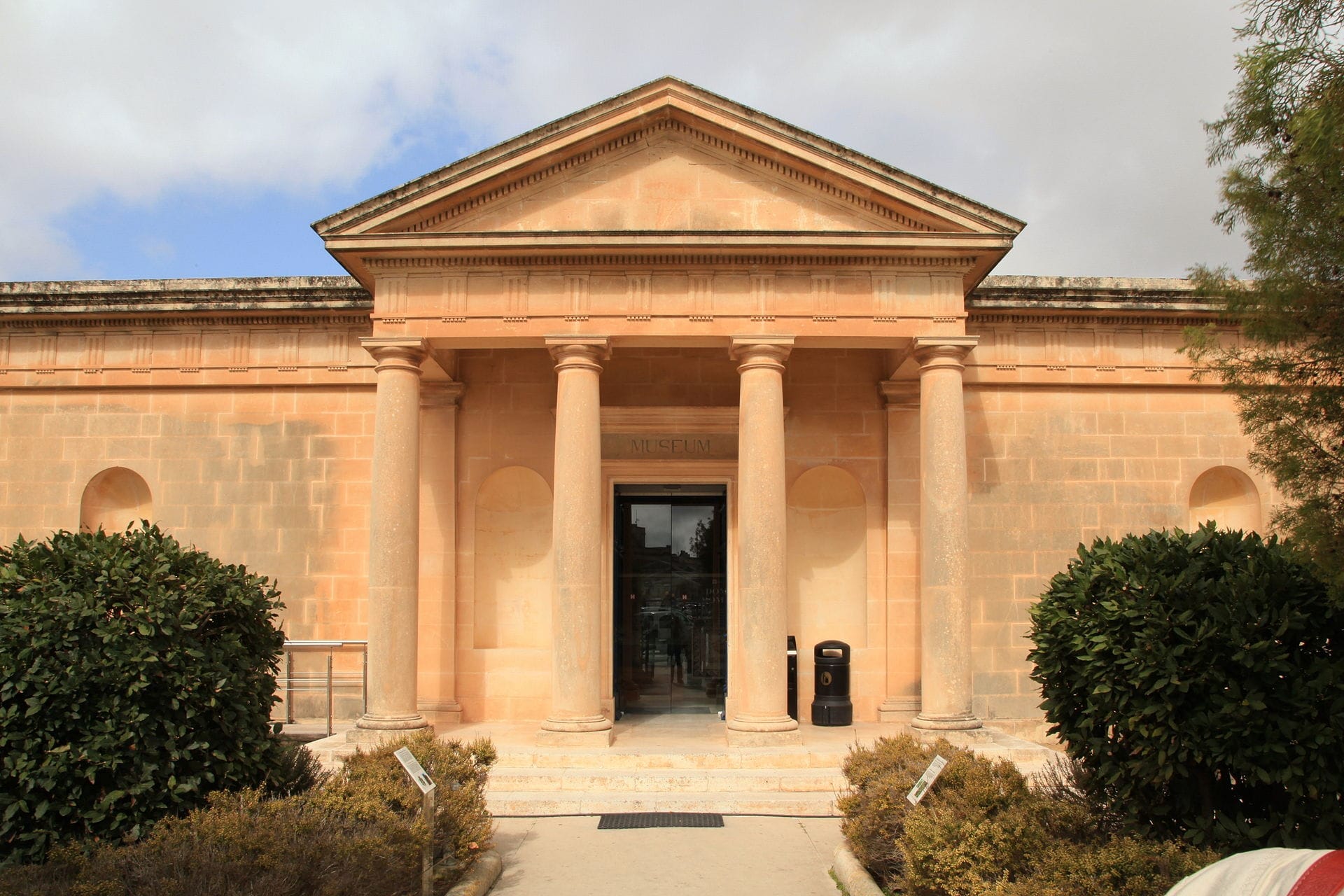
Above ground, the Wignacourt Museum, housed in a complex beside the Parish Church of St Paul, contains one of Malta's more varied collections: Maltese folklore objects, religious art, and Roman artifacts displayed across multiple rooms and a courtyard. The museum also provides access to a section of the catacombs beneath it. The Parish Church of St Paul itself, built on the site traditionally associated with St Paul's stay in Malta following his shipwreck in 60 AD, is an imposing seventeenth-century structure with an interior that rewards a slow look. Just beyond the town boundary, the adjacent walled city of Mdina Old City is accessible on foot within minutes and is essential to include in any visit.
A short drive or taxi ride south of Rabat brings you to Buskett Gardens, Malta's only significant area of natural woodland, planted by the Knights of St John in the sixteenth century as a hunting ground for the Grand Masters. Adjacent to it stands Verdala Palace, the official summer residence of the President of Malta, set within its own grounds. Neither is open for regular public access, but the gardens themselves are a genuine escape, particularly in the heat of summer. For those interested in pre-history, Hagar Qim Temples and the Mnajdra Temples are reachable in under thirty minutes by car from Rabat.
St Paul's Catacombs: largest catacomb complex in Malta, open daily except public holidays
St Agatha's Catacombs: smaller complex with a museum and well-preserved painted chambers
Wignacourt Museum: folklore, religious art, and Roman artifacts beside the parish church
Parish Church of St Paul: seventeenth-century baroque church on a site of deep historical significance
Buskett Gardens: Malta's only woodland, good for walking in spring and autumn
Mdina Old City: five-minute walk through the main gate from Rabat's central square
💡 Local tip
A combined ticket covering St Paul's Catacombs and several other Heritage Malta sites across the island offers good value if you plan to visit more than two or three sites during your trip. Check current pricing at Heritage Malta's official website before you arrive, as rates are updated periodically.
Eating & Drinking
Rabat's food scene is small but genuinely good, and offers more quality than its size might suggest. The area around the parish church square has a cluster of restaurants and cafes that cater to a mix of tourists visiting the catacombs and locals who live here year-round. Because Rabat is not primarily a tourist resort, menus tend to be more honest about price and portion, and the kitchens are cooking for a repeat local clientele as well as passing trade.
Traditional Maltese dishes show up consistently on menus here: rabbit stew (fenkata) is the national dish and appears in various forms, from slow-braised in wine and garlic to fried and served with thick chips. Bigilla, a broad bean dip seasoned with garlic and herbs, often arrives as a starter with Maltese bread. The parish area also has a handful of pastizzerias, the small bakery counters that sell pastizzi (flaky pastry parcels filled with ricotta or mushy peas) for around thirty to fifty euro cents each. These are a breakfast institution and make for an excellent cheap start to a morning of sightseeing.
For a more formal meal, several restaurants in and around Rabat have received recognition in the Michelin Guide Malta, which has in recent years elevated the island's dining profile considerably. The town's proximity to Mdina, which has its own established dining scene, gives visitors a reasonable range of options within a short walk. If you want broader context on Maltese cuisine before visiting, the what to eat in Malta guide covers local specialties island-wide.
Pastizzerias near the parish church: quick, cheap, deeply local breakfast option
Rabbit dishes (fenkata): the definitive Maltese main course, available in several local restaurants
Bigilla with Maltese ftira bread: a good starter or snack at most traditional restaurants
Maltese wine: the island produces its own reds and whites, worth trying alongside food
Coffee culture: Maltese espresso is strong and short; most cafes open by 7:30am
Getting There & Around
Rabat is well served by Malta Public Transport buses, which operate frequent services from Valletta Bus Terminus, the central hub for the island's network. Routes 51, 52, 53, and 201 (among others) stop in Rabat or pass through the nearby Mdina Road stop, with journeys from Valletta taking approximately 30 to 40 minutes depending on traffic. The standard fare is €2 for a single journey (as of the most recent published rates; verify current fares via Malta Public Transport before travel). For more on getting around the island, the guide to getting around Malta covers all transport options in detail.
From Sliema or St Julian's, buses connect through Valletta or via direct services, making the journey roughly 45 to 60 minutes. Taxis and ride-hailing apps (Bolt and Uber both operate in Malta) are a faster option if you are travelling in a group, and the journey from Valletta by taxi typically takes around 20 to 25 minutes. Parking is available on the approach roads to Mdina and Rabat for those travelling by hire car, though the streets inside Rabat itself are narrow and not suitable for confident driving without local knowledge.
Once in Rabat, everything is walkable. The town is compact, and all of the major sites, the catacombs, the parish church, the museums, and the gate into Mdina, are within a ten-minute walk of each other. Flat shoes are advisable as some of the older streets have uneven limestone surfaces. The walk from Rabat's square through Mdina's gate to the far end of the walled city and back takes around 40 minutes at a comfortable sightseeing pace.
💡 Local tip
If you are combining Rabat and Mdina in a single day trip from Valletta or Sliema, arrive early, before 9am if possible. The coach tour groups tend to arrive between 10am and 11am, and the narrow streets of Mdina in particular can feel very different once they are full.
Where to Stay
Rabat is not a primary accommodation hub in the way that Sliema, St Julian's, or Valletta are, but it does offer a small and interesting range of boutique guesthouses and character properties, many of them converted from traditional Maltese townhouses. Staying here gives you immediate access to Mdina after day-trip crowds have left, which is a genuine advantage: the walled city at dusk, with almost no one else around, is one of the more atmospheric experiences in Malta. For a broader view of where to base yourself across the island, the where to stay in Malta guide compares all the main areas.
The accommodation in Rabat tends toward the boutique end: small guesthouses, restored stone buildings with a handful of rooms, and occasional apartment rentals in the surrounding streets. Prices are generally lower than comparable quality in Valletta or Sliema. The trade-off is limited nightlife and fewer restaurants within walking distance. Rabat suits independent travellers who are using Malta to explore heritage sites rather than beach resorts, and couples looking for a quieter base with good transport connections. It is not ideal for families with young children who need beach access or for travellers whose priority is nightlife.
Honest Assessment: Strengths and Drawbacks
Rabat is genuinely one of the most historically dense places on an already historically dense island. The catacombs alone justify a dedicated visit, and the combination with Mdina makes this the strongest single day trip itinerary for first-time visitors to Malta. If you are building a three-day Malta itinerary, a half-day in Rabat combined with the same half-day in Mdina is a natural pairing.
The drawbacks are real and worth stating clearly. Rabat has no beach access; the nearest coastal swimming is a 25-minute drive. The town is quiet in the evenings, and if you are staying here and looking for lively bars or a range of restaurants, you will need to travel. In high summer, the heat on the exposed limestone streets can be intense between noon and 3pm, and some of the catacomb visits, though underground, involve narrow passages that can feel airless when groups are present. The town also hosts traditional village festas which are wonderful local events but can bring significant noise and crowds to otherwise quiet streets, particularly on feast days in July and August.
None of these drawbacks diminish what Rabat actually is: an exceptionally well-preserved Maltese town with a layered history that runs from Roman times through Arab occupation, the Knights of St John, and into the present day. For travellers interested in the deeper story of Malta beyond the beach resorts, and you can read more about why that story is worth your time in the Knights of Malta history guide, Rabat is not optional. It is essential.
⚠️ What to skip
Some catacombs sections involve low ceilings, narrow passages, and uneven steps. If you have mobility limitations or are travelling with young children, check accessibility details with the individual site before purchasing tickets. St Paul's Catacombs has the most accessible layout of the main sites.
TL;DR
Rabat sits directly outside Mdina's walls in central Malta and is best visited in combination with the walled city as a half-day or full-day excursion from anywhere on the island.
St Paul's Catacombs and St Agatha's Catacombs are the headline attractions: significant, well-presented, and unlike anything else in Malta.
The town has an authentic local character that survives the daily tourist flow, with good traditional Maltese food and a genuine parish-town atmosphere in the evenings.
Accommodation options are limited but characterful; Rabat suits history-focused independent travellers and couples more than families seeking beach access.
Arrive early to avoid tour groups, wear comfortable shoes for uneven stone streets, and budget at least two hours to do justice to the catacombs before moving into Mdina.
Malta's megalithic temples are among the oldest free-standing stone structures on Earth, predating Stonehenge by over a thousand years. This guide covers every major site, practical logistics, seasonal advice, and the archaeological context that makes these temples worth the trip.
Malta's coastline is far more varied than the island's small size suggests. From the turquoise waters of Comino's Blue Lagoon to Gozo's red-sand Ramla Bay and Malta's dramatic rocky inlets, this guide covers every type of beach the archipelago has to offer — with candid notes on crowds, access, and the best times to go.
Malta is a year-round destination, but the timing of your trip changes everything. This guide breaks down every season honestly — weather, crowds, prices, and what's actually open — so you can choose the right month for your priorities.
For a country this small, Malta packs a remarkable density of dramatic scenery. These are the viewpoints that earn the detour, from clifftop sunsets and fortress panoramas to harbor vistas and Gozitan sea inlets.
Malta is small enough to explore fully in a week, but the islands around it reward dedicated day trips. From the prehistoric temples of Gozo to the sea caves of the Blue Grotto and the medieval streets of Mdina, these are the best excursions to take from Malta's main island.
Malta packs an extraordinary amount of history, scenery, and culture into a tiny island, and much of it costs nothing. From UNESCO-listed prehistoric temples to cliff-top walks, baroque city streets, and crystal-clear swimming coves, this guide covers the best free experiences across Malta, Gozo, and Comino.
Malta is small — just 316 sq km — but navigating it efficiently takes some planning. This guide covers every transport option available, from the Tallinja bus network to Gozo ferries, ride-hailing apps, and car rental, with straightforward takes on what works and what doesn't.
Gozo is smaller, quieter, and slower-paced than Malta — and that is exactly the point. This guide covers the ferry, the best things to do, where to focus your time, and why two days here beats a rushed day trip.
Malta rewards curious travelers who look beyond the postcard highlights. From sheltered limestone inlets and rock-cut swimming holes to ancient temples and baroque palaces lost in the countryside, these are the places where the real Malta reveals itself.
Malta packs prehistoric temples, Baroque cityscapes, clear-water diving, and surprisingly good food into just 316 square kilometres. But summer crowds, rocky beaches, and rising prices give some travellers pause. Here is a clear-eyed breakdown of what you get and what to watch out for.
The Knights of Malta left an indelible mark on this archipelago across more than two centuries of rule. This guide traces their history through the fortresses, cathedrals, and palaces they built, with practical advice on visiting each key site today.
Three days is enough to cover Malta's greatest hits if you plan smartly. This itinerary takes you through UNESCO-listed Valletta, the ancient Silent City of Mdina, the prehistoric temples of the south coast, and the rural island of Gozo, with practical advice on timing, transport, and what to skip.
Malta is best understood from the water. Whether you want to drift through sea caves glowing electric blue, anchor above the clearest lagoon in the Mediterranean, or cruise past 700 years of Grand Harbour fortifications, these are the boat trips worth planning your days around.
Malta is one of the Mediterranean's top diving destinations, with crystal-clear water, dramatic underwater topography, and wrecks accessible to every skill level. This guide covers the best dive sites on Malta and Gozo, what to expect at each depth, seasonal conditions, and everything you need to plan a successful dive trip.
Malta makes a compelling case as a romantic destination despite its size. Medieval walled cities, cliff-top sunsets, private boat trips to turquoise lagoons, and candlelit wine bars in a Baroque capital — this guide covers the best romantic experiences in Malta for couples, with clear advice on what's worth booking and what to skip.
Seven days is enough time to experience Malta's greatest hits without burning out. This day-by-day itinerary covers the UNESCO capital of Valletta, the island of Gozo, the Blue Lagoon at Comino, medieval Mdina, and the fishing villages of the south coast, with practical advice on what to skip and how to get around without a car.
Malta's nightlife ranges from the dense club strip of Paceville to the refined jazz bars of Valletta's Strait Street. This guide breaks down where to go by neighbourhood, what to expect at each type of venue, and how to avoid the most common tourist mistakes.
Malta surprises most travelers: it is an EU country with a UNESCO capital, 7,000 years of history, and genuinely affordable daily costs if you know where to look. This guide breaks down realistic daily budgets, free and cheap attractions, transport costs, food prices, and the seasonal timing that makes the biggest difference.
Malta consistently ranks among the world's top 10 countries for personal safety, but that doesn't mean risks don't exist. This guide covers crime statistics, common scams, road dangers, beach hazards, and neighborhood-by-neighborhood safety so you can visit with confidence.
The Malta to Sicily ferry is one of the most rewarding short trips in the Mediterranean. This guide covers the Virtu Ferries catamaran route, ticket prices, seasonal schedules, what to do in Pozzallo and beyond, and everything you need to plan a seamless day trip from Malta.
Malta is a surprisingly strong family destination for its size. English is widely spoken, the country is genuinely safe, distances are short, and the mix of beaches, history, and interactive attractions keeps children of all ages engaged. This guide covers the best kid-friendly spots, seasonal advice, transport logistics, and frank assessments of what works and what doesn't.
Malta packs an extraordinary range of experiences into just 316 square kilometres. This guide covers the best things to do across the archipelago, from Valletta's Baroque cathedrals and prehistoric temples to sea caves, clifftop walks, and the famous Blue Lagoon, with practical advice on what's worth your time and what to skip.
Valletta packs more history per square metre than almost any capital in Europe. This guide covers the top things to do in Valletta, from its world-class Baroque cathedral and a 500-year-old star fort to harbour boat tours and the best spots for Maltese coffee. Practical, opinionated, and built for real trips.
Maltese food is one of the Mediterranean's most underrated culinary traditions. This guide covers the essential dishes, the best street food, seasonal specialities, and practical advice on where to eat well without overpaying.
Choosing where to stay in Malta shapes your entire trip. This guide breaks down the best neighborhoods, from the historic capital Valletta to the beach towns of the north, with honest advice on what each area actually delivers.